The story
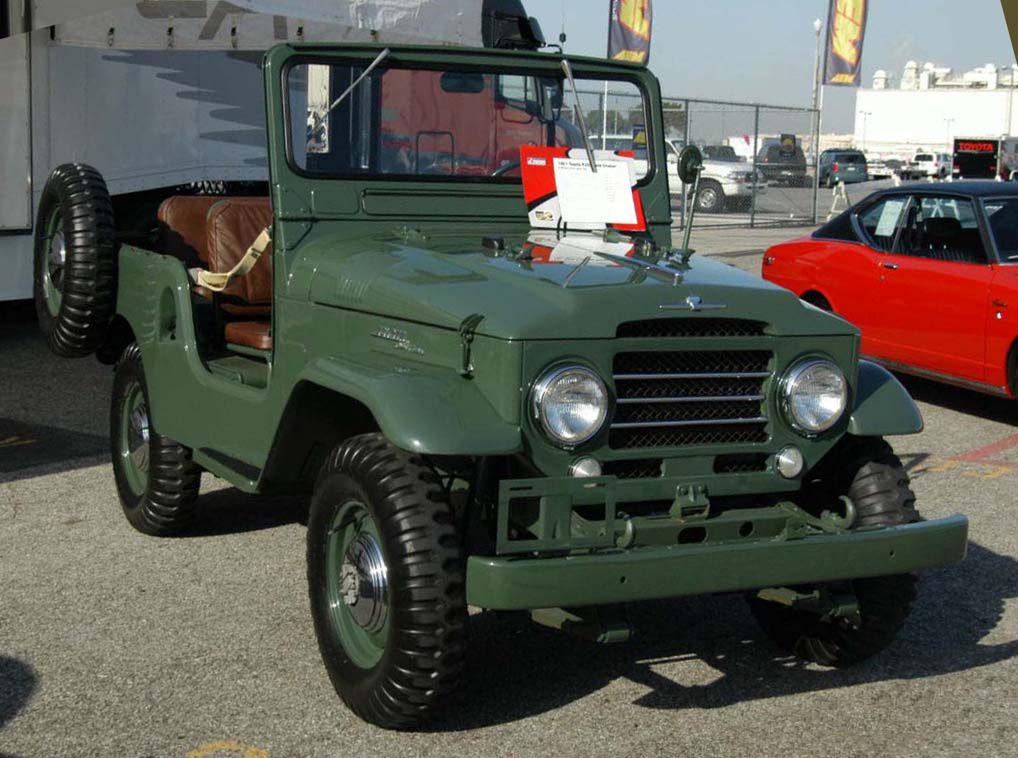
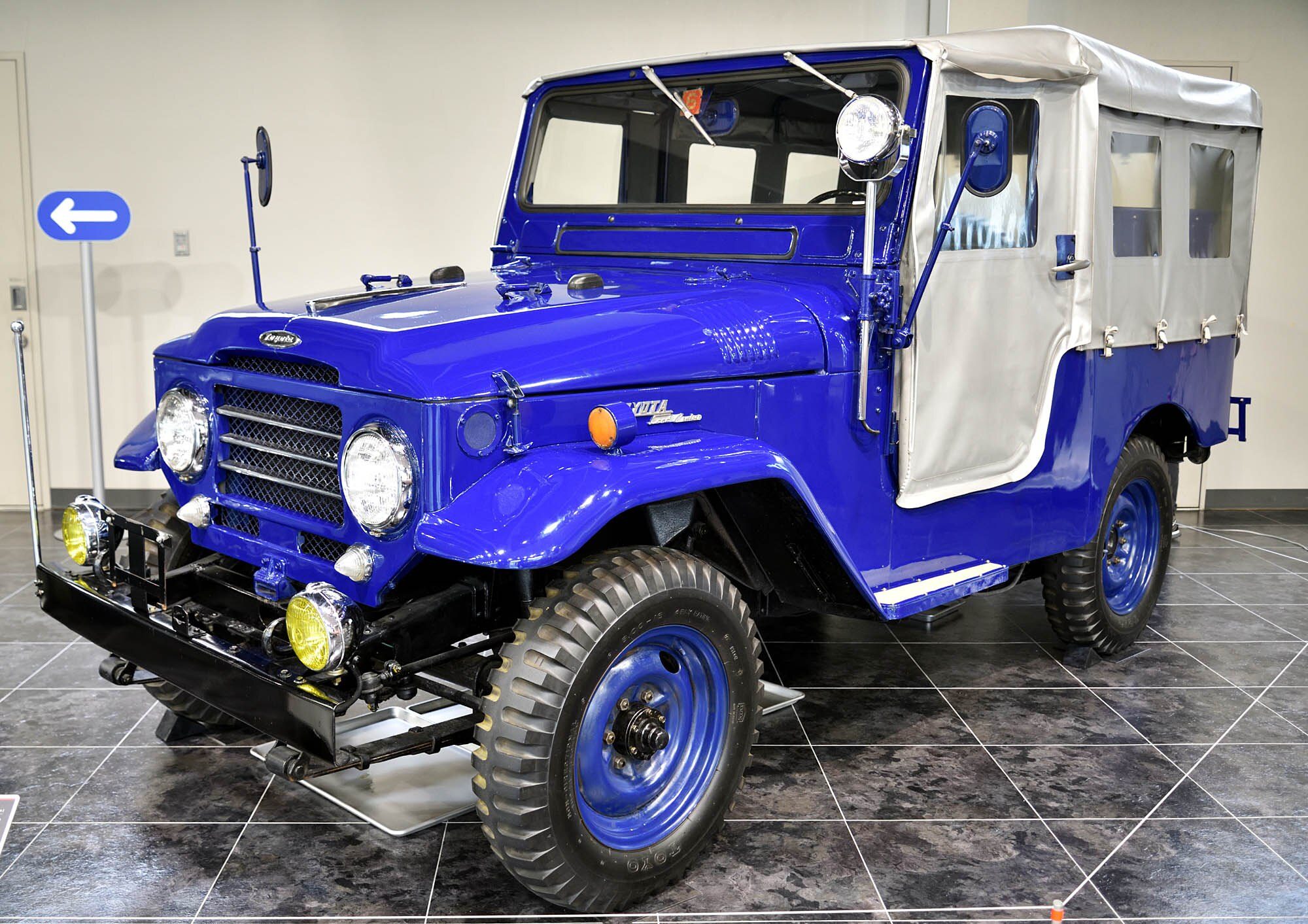
The 20 Series is where the Land Cruiser stopped being a police jeep and became a product. Toyota had renamed its BJ 'Jeep' the Land Cruiser in June 1954, after Willys objected to the use of its trademark, and the second-generation truck that followed in 1955 was redesigned for civilian buyers. Toyota's own lineage pages date the launch to November 1955 (its UK history says August). It got rounder bodywork, a roomier cabin and, within months, the 3.9-litre F straight-six. The short-wheelbase FJ25 is the one everyone remembers, but the family also included the longer FJ28, early B-engined BJ trucks and a run of vans and fire engines.
FROM POLICE JEEP TO EXPORT HERO
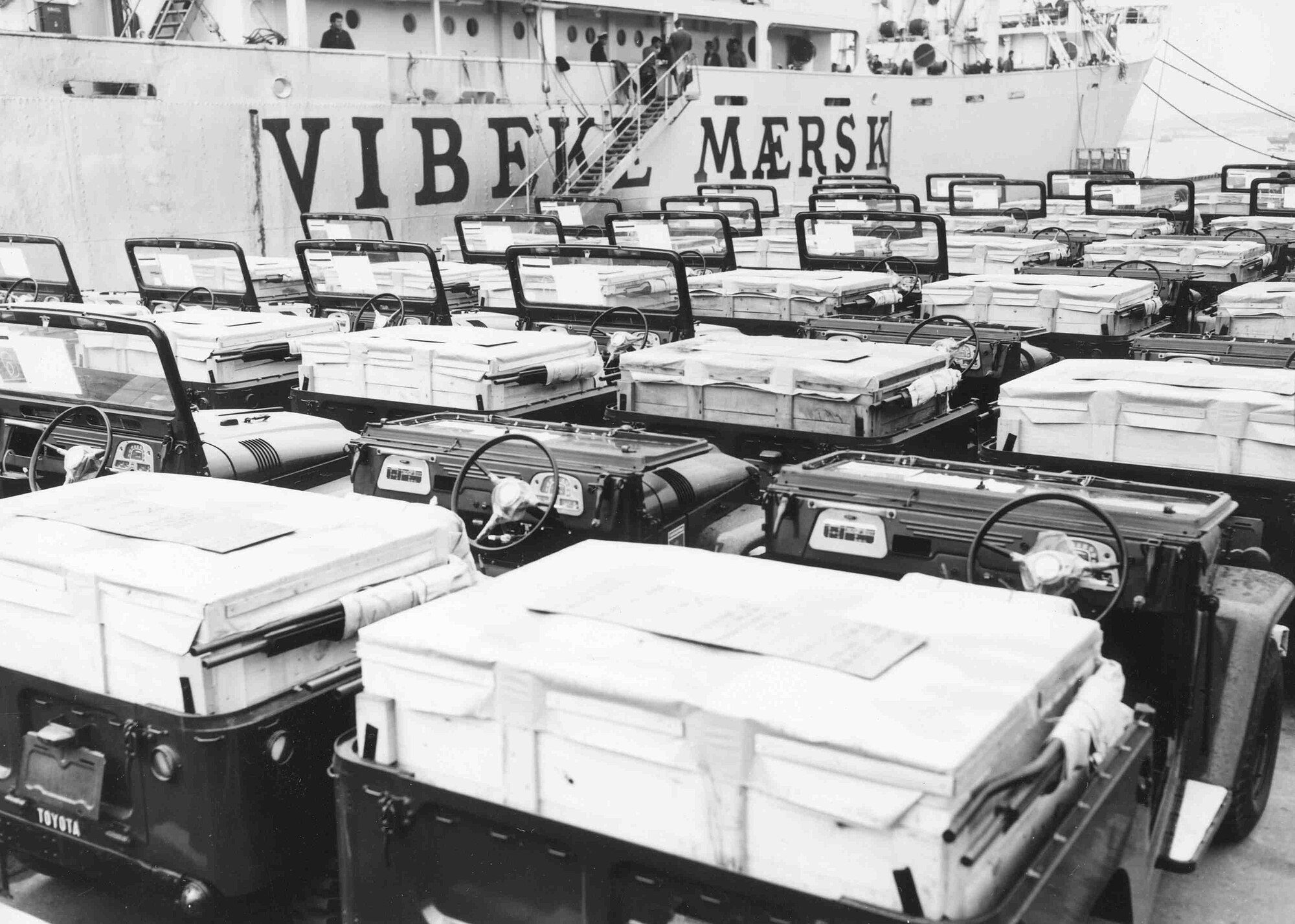
The name came first. Wikipedia quotes technical director Hanji Umehara explaining that Toyota's real rival in export markets was Land Rover, so the new name had to sound no less dignified than 'Land Rover.' Toyota's UK history says the first export shipment went to Pakistan in 1954 and Saudi Arabia followed in 1955. That makes the J20 the first Land Cruiser built with export in mind: Toyota says the 20 Series was the generation that began shipping to North America and other overseas markets in large volume. It came with export suspension uprated over the Japanese spec, because, as Toyota UK puts it, Japan had no highways at the time.
Toyota's 75-year history tracks the numbers. Land Cruiser exports went from 98 in 1955 to 518 in 1956, then jumped to 2,502 in 1957, when Toyota tried to make up for weak domestic sales overseas. Venezuela took 52 in autumn 1956 and 795 in 1957 for oilfields and cattle ranches. Burma got 22 in July 1956 as war reparations, and Australia got a dozen in August 1957. Toyota UK adds that after US military trials in 1957, Land Cruisers made up 38.2 percent of all vehicles exported from Japan that year, across every brand. The cheap little Toyota had become Japan's most important export.
THE F ENGINE AND A VERY SIMPLE DRIVELINE
At launch the J20 offered two petrol sixes: the 3.4-litre B from the BJ and the 3.9-litre F, which had previously been used only in the fire-engine chassis. Toyota says the range was cut to the F alone in mid-1956. Toyota's lineage page rates the FJ25's F at 105 PS (net) at 3,200 rpm. A period US dealer checklist posted on IH8MUD pitched the FJ25 against the CJ-5 as having 'almost twice the horsepower at no extra cost.' Wikipedia says the engine was also moved 120 mm forward to free up cabin space, and that the ride improved with longer leaf springs adapted from Toyota's light truck.
The rest is crude by modern standards. Toyota describes the four-wheel-drive J20 as having a one-speed transfer case: no low range, which didn't arrive until the FJ40 in 1960. A four-speed floor-shift manual (as listed by Bring a Trailer, RM Sotheby's and Barrett-Jackson for surviving trucks) did the work instead. Toyota also built a rear-drive version for police patrol work. Wheelbases were 2,285 mm (FJ25) and 2,430 mm (the longer FJ28), with a 2,650 mm chassis added near the end in 1959. Brakes were drums all round.
AMERICA, AUSTRALIA AND BRAZIL
America came late and slowly. Autoblog's visit to the Land Cruiser Heritage Museum describes the first Land Cruiser sold in the US: a 1958 FJ25 ordered by Rose Toyota and delivered at the port, because the dealership wasn't finished yet, to a Long Beach schoolteacher. It was the only Land Cruiser Toyota sold in America that year, alongside 287 Toyopet Crowns. The import figures compiled in IH8MUD's FJ2X registry show 61 Land Cruisers in 1959 and 162 in 1960.
Australia was a bigger deal. Wikipedia credits B&D Motors with importing FJ25/28 cab-chassis trucks from 1959 and says the Land Cruiser was the first Japanese vehicle regularly exported to Australia. A handful went to work for Thiess on the Snowy Mountains Scheme. In Brazil, Toyota began building the FJ25L in São Bernardo in May 1959. Its 75-year history calls this its first full-fledged overseas knockdown production. Brazil switched to Mercedes-Benz diesels and the Bandeirante name in 1962 and kept building the 25-based truck until 1968. Japan replaced the J20 with the 40 Series in 1960.
THE COLLECTOR'S TRUCK
Today the FJ25 is a collector's piece first and an off-roader a distant second. IH8MUD's FJ25 Owners Group runs a worldwide count of surviving 20 Series trucks and a VIN registry, and warns about 'Frankencruisers': FJ40 tubs wearing an FJ25 frame number. Most of the FJ25s sold on Bring a Trailer since 2019 were restored in Colombia or Costa Rica and imported later. On Bring a Trailer, FJ25s sold for $14,001 to $39,000 between 2019 and 2026, and RM Sotheby's got $70,000 for a restored 1960 soft-top in 2019.
SIDEBAR · THE NAME
Why it isn't called a Jeep
Toyota's prototype of 1951 was literally the 'Toyota Jeep BJ', named for its B engine and the American vehicle it imitated. Toyota says the National Police Reserve preferred Mitsubishi's licence-built Willys, so the BJ went into civilian production in 1953. It was renamed in June 1954 because 'Jeep' was a Willys-Overland trademark.
Umehara's reasoning, as Wikipedia quotes him, was aimed at Britain rather than America: 'In England we had another competitor – Land Rover.' The name had already been used on a Studebaker, which ended production the same year. The J20 was the first truck designed from the start to wear it, and the first to carry it abroad in numbers. The Series Land Rover it was named against is still its natural rival in a vintage line-up.