The story
The FJ Cruiser began as a show car. Toyota unveiled the concept, painted Voodoo Blue, at the Detroit auto show in January 2003, showed the production version at Chicago in February 2005, and had its subsidiary Hino Motors start building it at Hamura, Japan, in January 2006. Underneath was a ladder frame closely related to the Land Cruiser Prado's; on top sat a cartoon of the FJ40, white roof and all. America got it for model years 2007 through 2014. Other markets kept it until a 1,000-unit Final Edition for the Middle East closed out production in December 2022.
A FORTY FOR A NEW CENTURY
By the time FJ40 production ended in 1984, the Land Cruiser had grown bigger and plusher. According to Larry Edsall's book on the truck, the idea of a new FJ with the old one's toughness came from product planner Dave Danzer and sales vice-president Yoshi Inaba in the mid-1990s. Danzer and Akio Toyoda quietly set up a shop at the NUMMI plant to test it, putting the bodies of Brazilian Toyota Bandeirantes, which descended from the FJ40, on Tacoma underpinnings. Toyota's Calty design studio in California then took over.
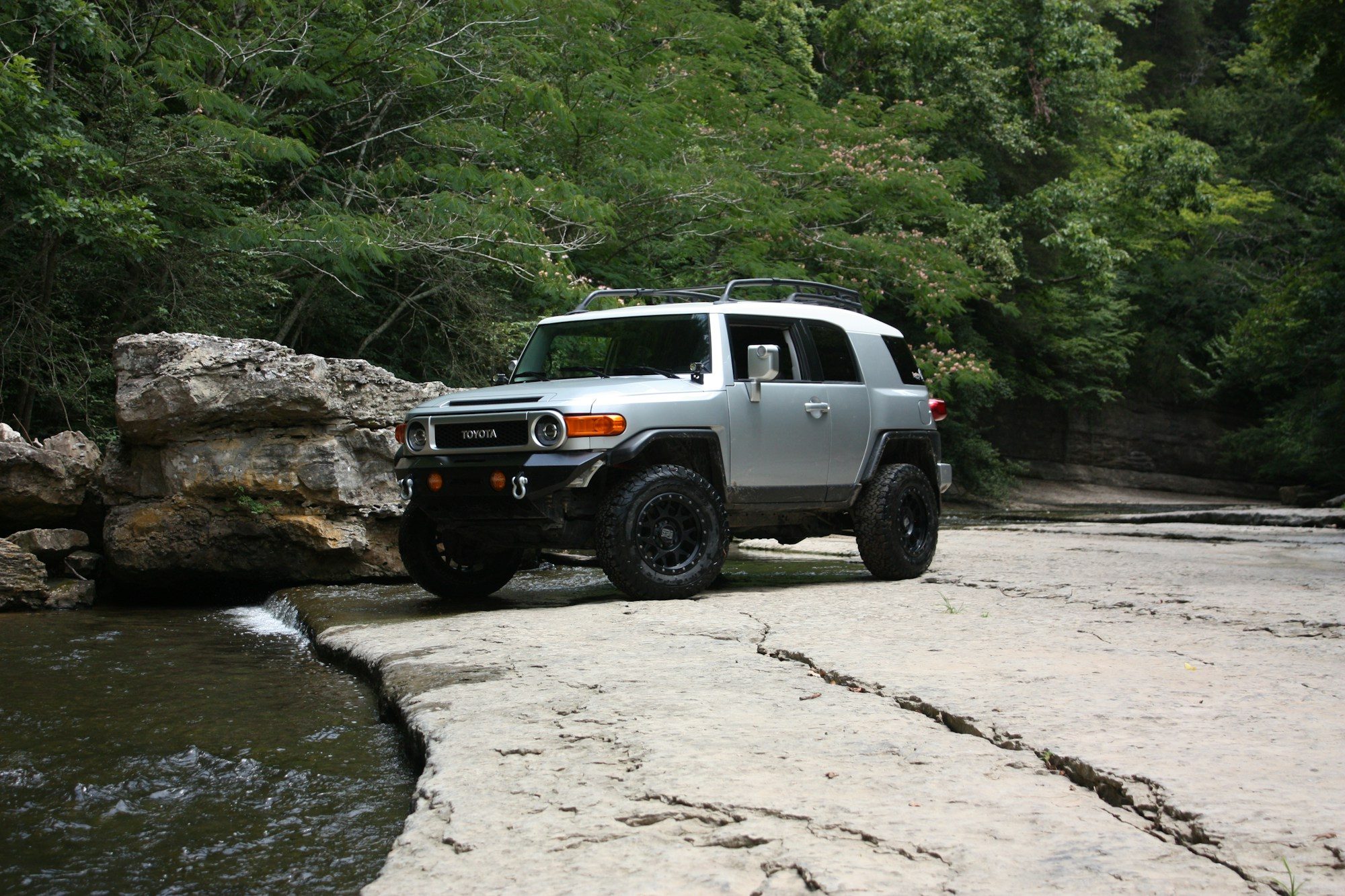
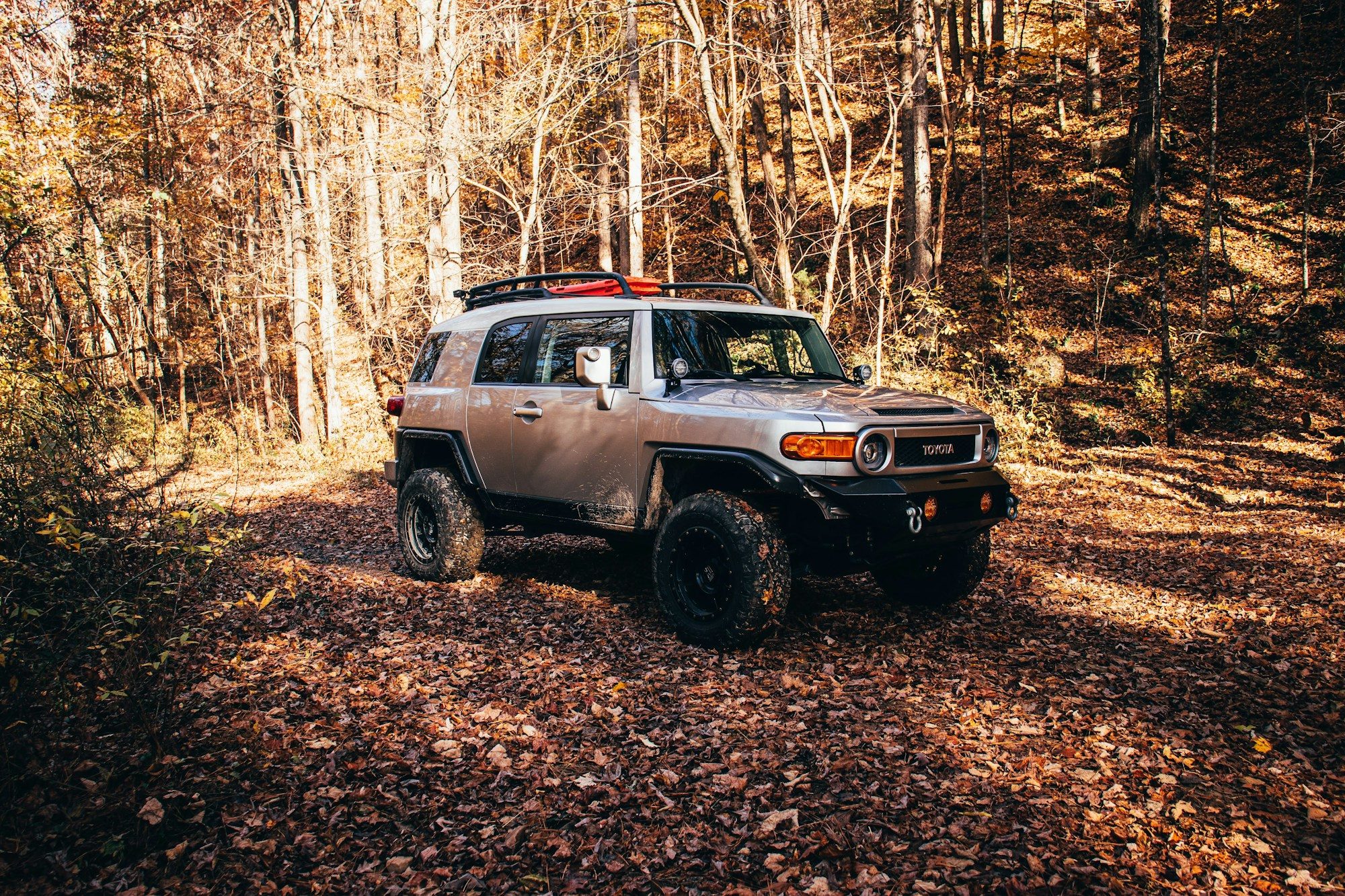
Inside Toyota the project was called the Rugged Youth Utility, aimed at young male buyers the company felt it was losing. Several concepts were tried before a retro design by Jin Won Kim, a 24-year-old Calty designer, won, with William Chergosky drawing the interior. The FJ40 cues are everywhere: a near-vertical windshield with three wipers, TOYOTA spelled out across the grille instead of the corporate badge, round headlights and a white roof. Rear-hinged access doors replaced the B-pillars, and high-strength steel took over their side-impact job.
DEVELOPED ON THE RUBICON
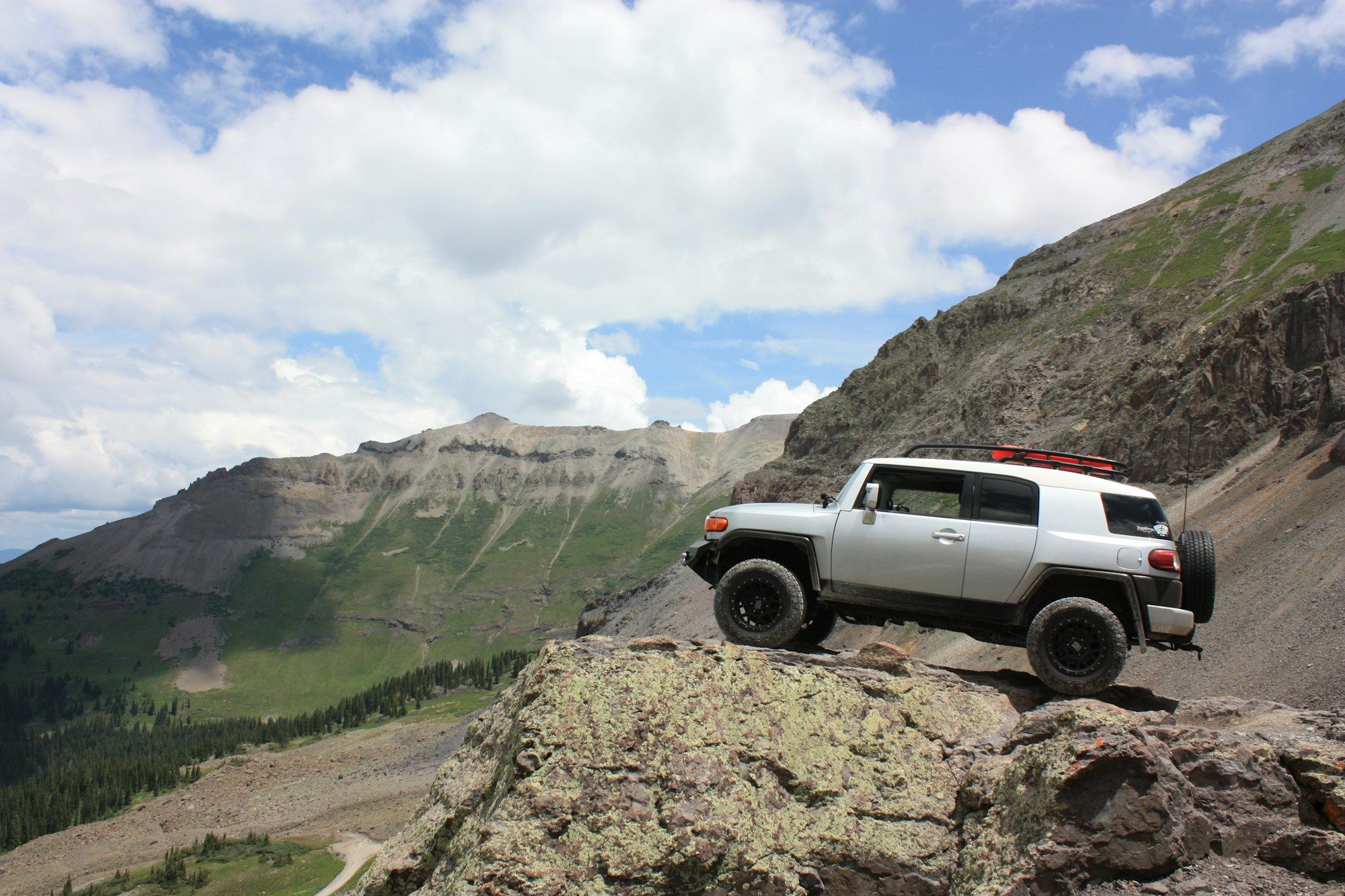
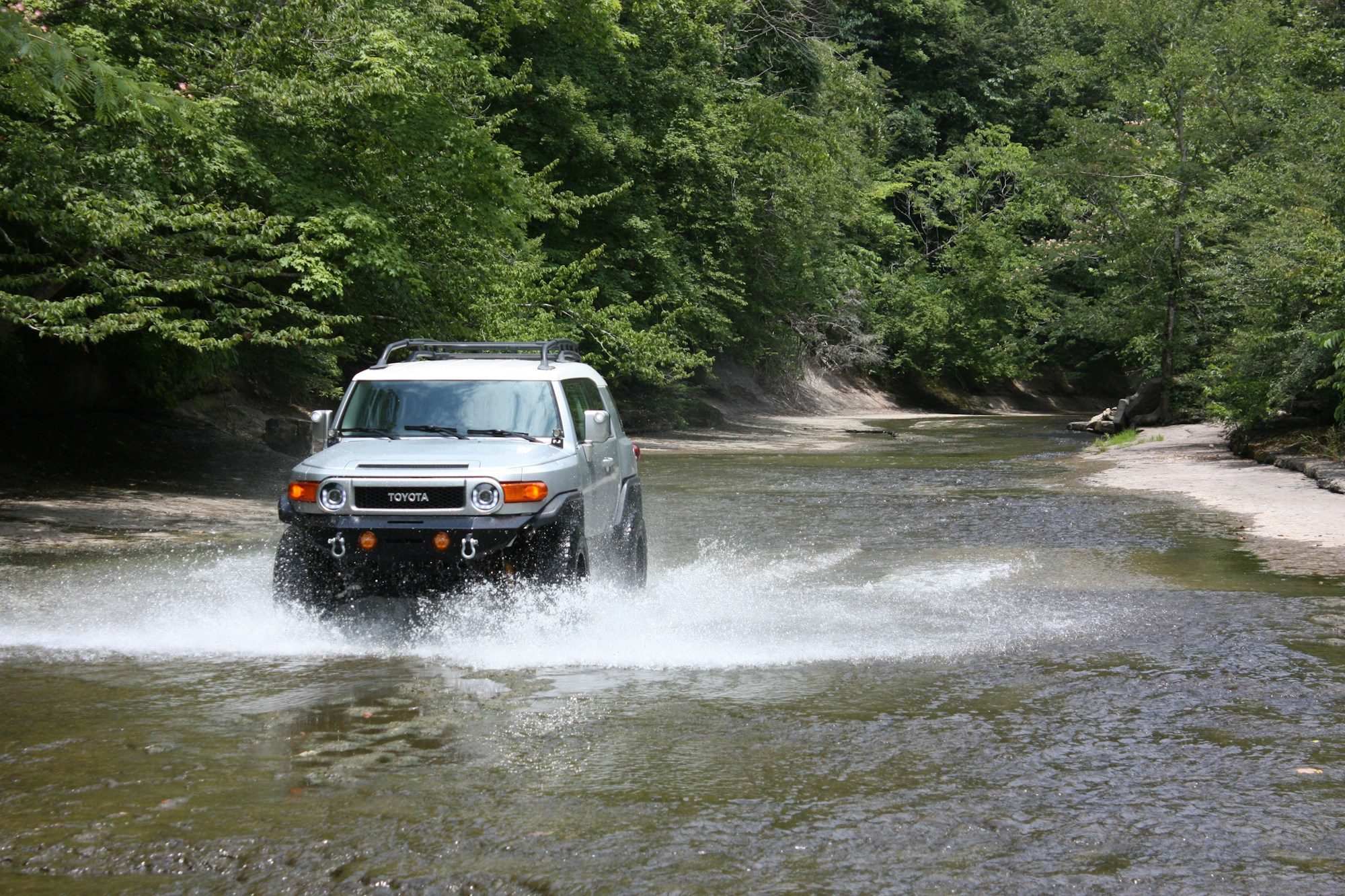
From mid-2004 Toyota ran development mules over the hardest trails it could find, including Moab, the Angeles National Forest, the Mojave Desert and the Rubicon, and retuned the A-TRAC traction control and the suspension as a result. Underneath, the FJ shares hardware with the 120-series Prado, the 4th-gen 4Runner and the GX 470: double-wishbone front suspension, a four-link coil-sprung rear axle with a lateral rod, and the 4.0-liter 1GR-FE V6. A 4x4 FJ has 9.6 inches of ground clearance and, Toyota says, can wade 28 inches of water.
The drivetrain choice is the interesting part. The six-speed manual came only with full-time 4WD: a Torsen center differential splits torque 40:60, locks at 50:50, and 3.909 axle gears give a 41.84:1 crawl ratio. The five-speed automatic got part-time 4WD, 3.727 gears and a 33.76:1 crawl ratio, and was also sold as a 4x2. Toyota's 2014 specifications list the rear electric locker as standard with the manual and optional with the automatic, and A-TRAC as part of an option package on 4x4s.
THE PRICE OF STYLE
The styling that sold the truck also held it back. Reviewers praised its off-road ability and criticized its huge blind spots, small cargo area and cramped, awkward rear seat. Toyota added an optional backup camera for 2009 and new front-seat hinges for easier rear access in 2011. US sales fell from 56,225 in 2006 to 11,941 in 2009, and critics blamed rising fuel prices, more competition in the segment and the Jeep Wrangler.
Toyota's answer for 2010 was a dual VVT-i version of the 1GR-FE, with 259 hp on 87-octane fuel instead of 239 hp on 91, and slightly better economy. Early trucks also had a structural problem. The inner fender aprons in the engine bay of 2007 and some early 2008 trucks could bulge and crack, and Toyota changed the design. Owners still report cracked aprons on early trucks, so that's the first thing to look for when you open the hood.
HOW IT ENDED
From 2008, Toyota built short runs of Trail Teams Special Editions, each in one color with blacked-out trim, TRD wheels and Bilstein shocks. On 5 November 2013 it announced that 2014 would be the last US model year, and the final Trail Teams truck became the Ultimate Edition: 2,500 built in Heritage Blue with a white grille surround, remote-reservoir rear Bilsteins, an aluminum front skid plate and, on automatics, CRAWL control. By the end of 2013, US sales alone had passed 200,000.
Production continued for other markets. Exports to Australia ended in August 2016, Japan got a Final Edition in September 2017 and stopped sales in January 2018, and the Middle East Final Edition closed production in December 2022. Toyota reused the name, though not the formula, for the 2026 Land Cruiser FJ, a smaller Hilux-based truck with a 2.7-liter four that isn't planned for North America. The original is now a collectible: on Bring a Trailer in late 2026, prices ran from $12,500 to more than $56,000.
SIDEBAR · VOLUNTEERS WITH TOW STRAPS
The FJ Cruiser Trail Teams
Before customers had their trucks, Toyota recruited volunteer Trail Teams from Toyota and Land Cruiser clubs. Paul Williamsen, Toyota's product education manager at the time, wrote that truck marketing manager Paul Czaplicki proposed the program in 2005, and that Bill Burke ran a week-long boot camp for the volunteers in Grand Junction, Colorado, in March 2006. Two of the volunteers he names drove FJ80s.
Each team drove two pre-production FJ Cruisers, towing enclosed trailers, to public trail events including Moab, Tellico and the Rubicon. They marked trails, gave first aid, recovered stuck vehicles, picked up trash and cooked camp meals until the passes snowed shut in November 2006. Toyota funded the program again for 2007 and 2008, and its success led to the Trail Teams special editions.