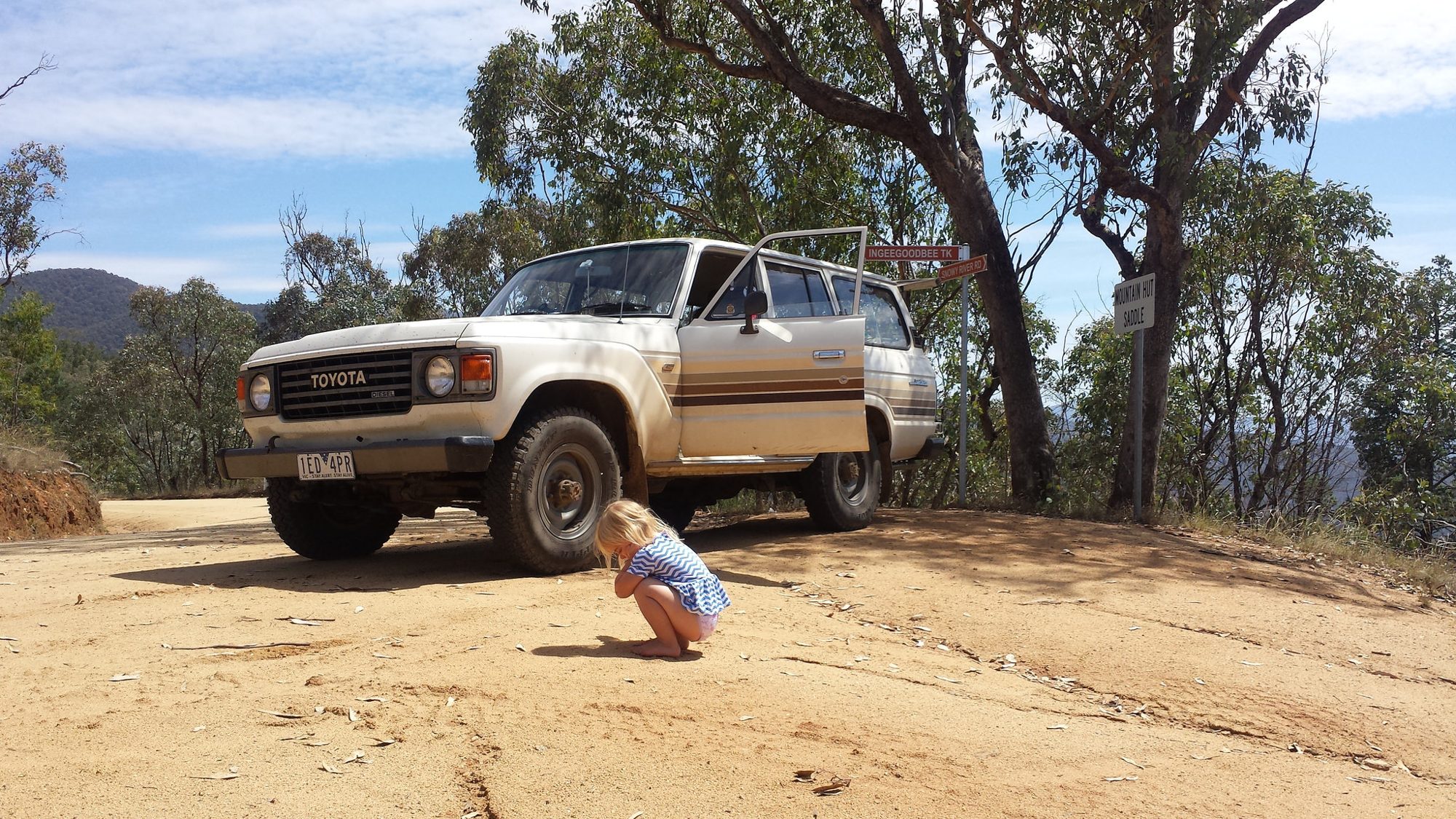
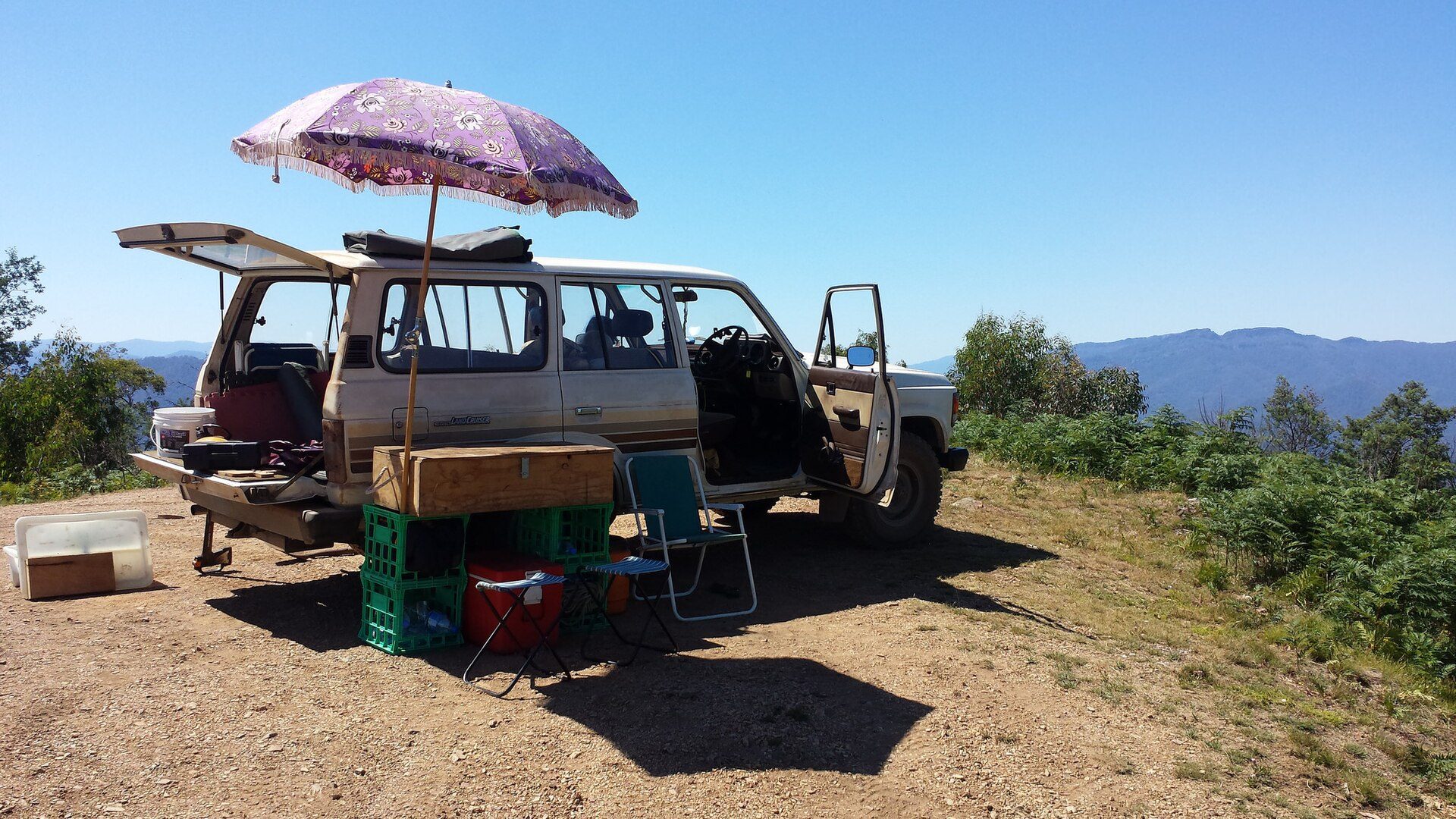
The story
Toyota introduced the 60 Series in 1980, in the middle of the second oil crisis, to compete in a market that was just starting to call itself 'SUV.' It replaced the FJ55 Iron Pig and kept the old recipe underneath: ladder frame, leaf springs and solid axles. What changed was the cabin. Wikipedia lists air conditioning, a rear heater and an upgraded interior. Toyota UK adds that it was the first Land Cruiser with sound insulation and wall-to-wall upholstery, plus a front anti-roll bar and softer springs.
A WAGON FOR THE EIGHTIES
The new body was rounder, with front wings integrated into the bodywork for the first time and a wide-set grille. An optional high-roof version arrived in 1981, the same year Land Cruiser sales passed one million. Toyota offered five-, six-, eight-, nine- and ten-seat layouts in different markets, and Flexmotor says the 60 was the first Land Cruiser offered in named trim levels (STD, GX and, later, VX). Silodrome compares the step up in comfort to a Range Rover of the period, which is generous, but not by as much as you'd think.
American FJ60s kept the 4.2-liter 2F straight-six from the FJ40, carbureted and rated at 135 hp and 210 lb-ft, with a four-speed manual and a two-speed, part-time transfer case. Other markets moved faster. Wikipedia dates the five-speed to 1982 (Toyota UK says 1983), and says the 4.0-liter carbureted 3F replaced the 2F outside North America in 1984 (as the FJ61), and the 12H-T turbo-diesel appeared in 1985. US buyers got none of that and stuck with the 2F until the FJ62 arrived for 1988.
LIVING WITH ONE
On the road the FJ60 is slow; Corsetti Cruisers says it tops out around 65 mph. In the dirt it is the same tough truck as the 40, with closed-knuckle Birfield front axles and plenty of clearance. The weak points are age and the smog system. Corsetti lists carburetor rebuilds, tangled vacuum lines, knuckle sludge, steering wobble on lifted trucks, worn engines past 200,000 miles and, above all, rust. Its rust list starts with the windshield corners and ends with the rear wheel wells, which it calls the place every 60 starts to rot.
1981–87 trucks also carry a High Altitude Compensation system that, Corsetti says, advances ignition timing above about 3,930 feet. Many owners have replaced the factory carburetor with a Weber, but Corsetti recommends sticking with the factory carb because the Weber bypasses HAC and brings emissions and jetting headaches. The other common upgrade is a five-speed. In April 1985 Toyota lengthened the H42 four-speed with a spacer where the H55F's fifth gear sits, so on later trucks the five-speed is close to a direct swap.
THE COLLECTOR'S 60
The FJ60 gave way to the fuel-injected, automatic FJ62 for the 1988 US model year, and Toyota UK says the 60 Series ended Japanese production in December 1989 after 406,700 were built (Wikipedia says 1990), and Venezuela kept assembling them until 1992. For years they were cheap old wagons. Hagerty now calls the round-headlight, manual FJ60 the more collectible of the two, and its wagon-values piece (around 2020) put the median quote for FJ60s and FJ62s at $18,500, with demand apparently overtaking that for Jeep Grand Wagoneers.
That interest has spawned a restomod industry. Shops such as Corsetti Cruisers build FJ60s with modern engines and interiors, while IH8MUD's 60 Series Wagons forum remains the place to learn how to keep a stock one running. The 80 Series replaced the whole line in 1990, swapping leaf springs for coils, but the FJ60 has its own following of owners who like its simplicity.
SIDEBAR · THE ONE AMERICA DIDN'T GET
HJ61: the 60 with the turbo-diesel
Outside North America, the 60 that people talk about is the HJ61. Wikipedia dates the 12H-T direct-injection turbo-diesel to 1985, and Silodrome describes it as a 3,980 cc straight-six with an 18.6:1 compression ratio and 7 psi of boost, making 134 bhp and about 315 lb-ft. Silodrome calls the GX with this engine the most desirable 60.
None were sold new in the US. Under the 25-year import rule they can now be brought in as grey imports. Silodrome says the 12H-T was offered with a five-speed manual or an automatic, and that collectors prefer the manual.