The story
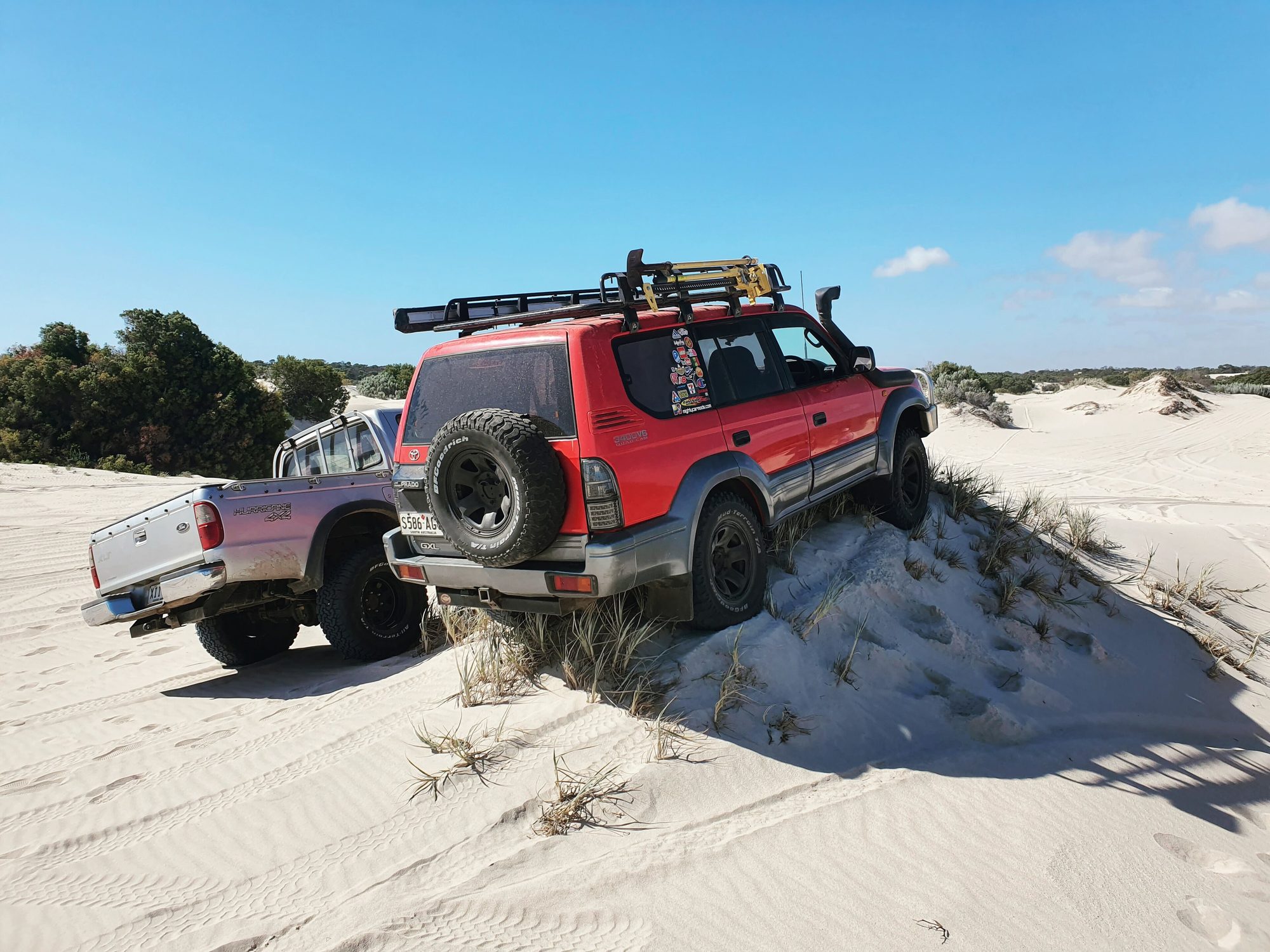
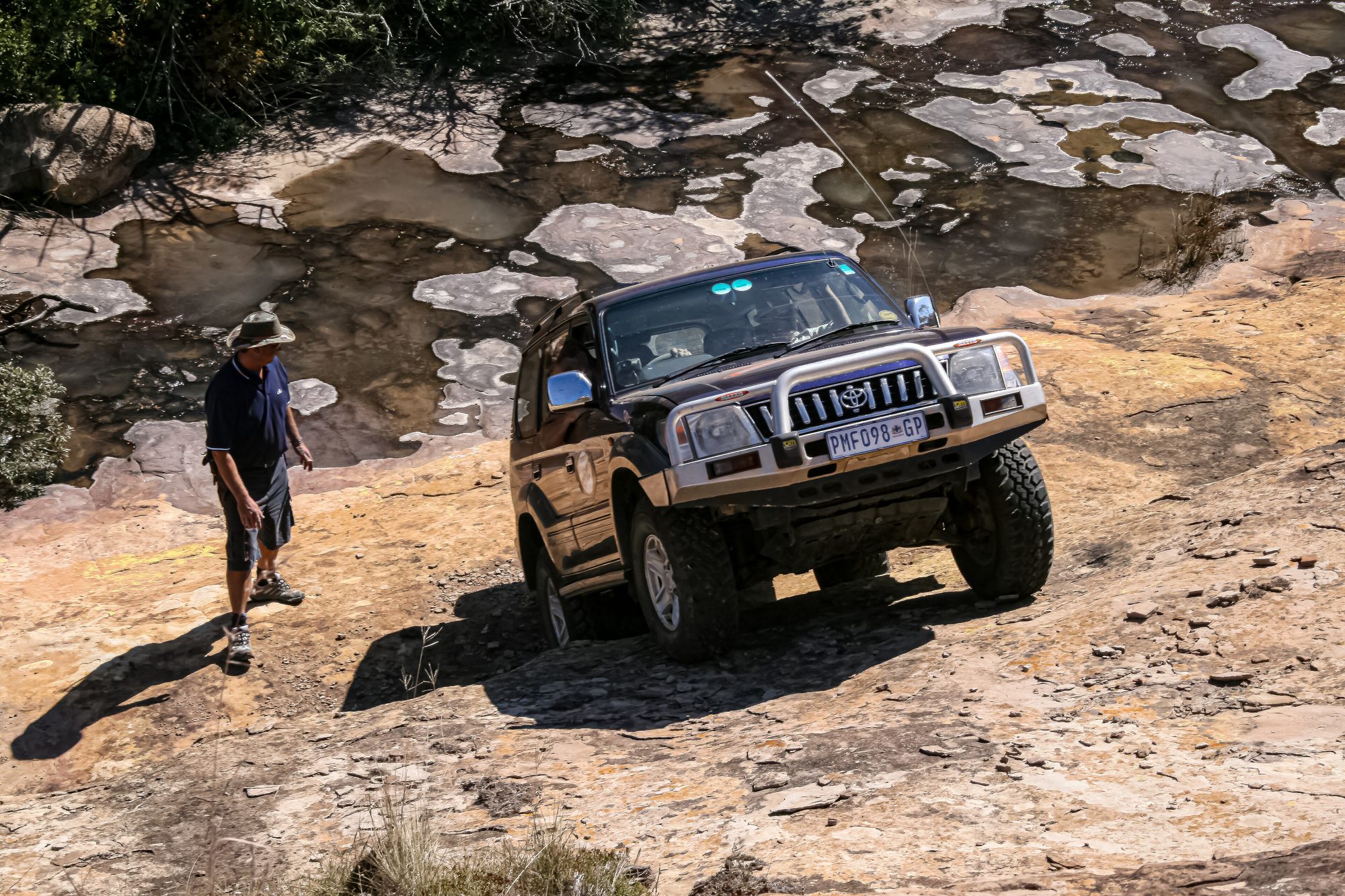
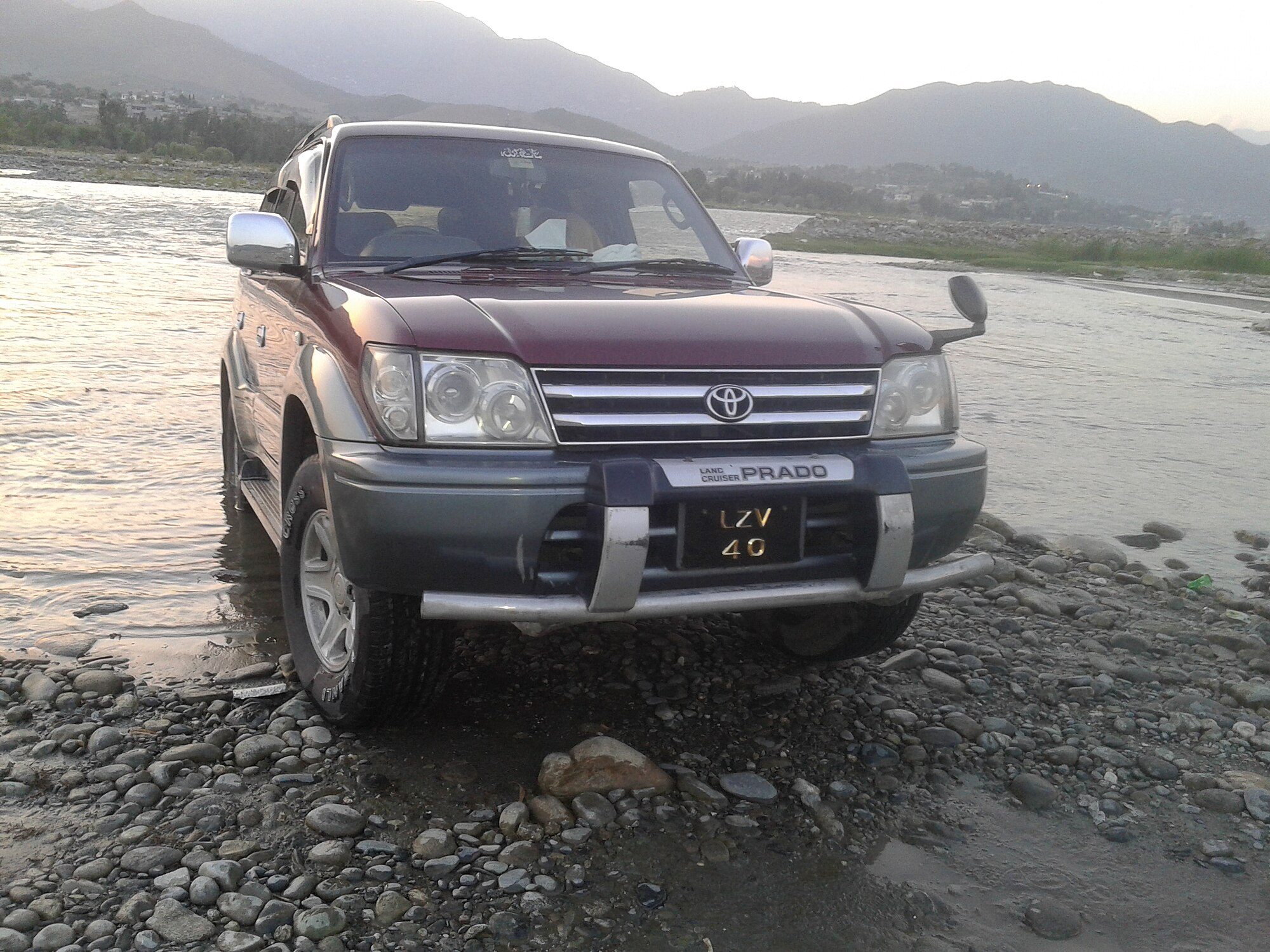
On 8 May 1996 Toyota launched a Land Cruiser that most Americans have never seen in the metal. The second-generation Prado, the J90, was the mid-size Land Cruiser: a ladder-frame wagon with full-time four-wheel drive, coil springs at both ends, and the independent front suspension it shared with the Hilux Surf, the truck North America bought as the 3rd-gen 4Runner. It went on sale in Japan, Australia, Britain and Latin America, but never in the United States. That held for a quarter of a century, until the 25-year import rule started letting them in.
A LAND CRUISER FOR PEOPLE
The first Prado had been a lighter-duty offshoot of the 70 Series. Toyota made the J90 a series of its own and, in its own words, pointed it toward a more passenger-oriented four-wheel drive. There were two bodies: a three-door, five-seat short wheelbase on 2,370 mm and a five-door, eight-seat long wheelbase on 2,675 mm. Toyota gave the short one a sportier face and the long one a more rugged one. The drivetrain switched from part-time to full-time 4WD, and the suspension (double wishbones at the front, a four-link coil-sprung axle with a lateral rod at the back) was the same as the Hilux Surf's. 'Prado', Toyota notes, is Portuguese for a meadow or field.
FOUR ENGINES AND NO V8
At launch you had a choice of two engines. The new one was the 3.4-liter 5VZ-FE V6 with 185 PS, the same family of V6 Americans got in the 4Runner. The carry-over was the 3.0-liter 1KZ-TE four-cylinder turbo-diesel, which gained an intercooler and 140 PS. A 2.7-liter 3RZ-FE four with 150 PS followed in April 1997. In July 2000 Toyota replaced the 1KZ-TE in Japan with the 1KD-FTV, its new common-rail D-4D: 170 PS and 352 Nm, and the first vehicle that engine ever went into.
Market by market, the line-up varied. Australia launched the Prado in July 1996 with petrol engines only and didn't get a diesel until March 2000, when the 96 kW 1KZ-TE arrived with a five-speed manual; an automatic followed that October. 4X4 Australia's buyer's guide, written with hindsight, advises steering clear of the 2.7 four. Britain called the truck the Land Cruiser Colorado, to tell it apart from the bigger 'Amazon', and Venezuela sold the three-door as the Toyota Merú.
THE 1999 FACELIFT
Toyota gave the J90 its minor change on 9 June 1999. Both bodies got big multi-reflector headlights and clear-lens lamps front and rear, plus a new grille, bumper, door trim and instruments, including a newly offered Optitron cluster and a Field Monitor display that switched to color. Underneath, Toyota added 'Active TRC' traction control for loose and muddy surfaces, and from August 1999 vehicle stability control on the main automatic grades. A TX Limited special edition arrived at the same time with roof rails, wood-grain trim and the Optitron gauges. Five-door trucks grew slightly, to 4,690 mm long.
WHY AMERICANS ARE BUYING THEM NOW
The J90 was replaced in October 2002 by the Prado 120, although Sofasa kept assembling it in Colombia until 2009. In the US it stayed off-limits until each truck turned 25, counted from its month of manufacture, so the first J90s became legal imports in 2021. In January 2022 IH8MUD started a 90 Series FAQ because 'Prado 90's [were] finally available for US import'. By 2026 Bring a Trailer had a model page for them, and most of the trucks sold there went for $10,000 to $16,000.
Living with one in America is easier than you'd think. The front suspension and plenty of hardware are shared with the 3rd-gen 4Runner. IH8MUD members have fitted 4Runner front rotors (Toyota 43512-35210), the rear rotors match the 80 Series, and US Land Cruiser specialists now stock 9x Prado ball joints, brakes and axle kits. The rest is a job for a Japanese parts catalogue and a VIN or frame number. Just remember the Prado has rear discs where many 4Runners have drums, and that its rear axle shafts have a different bolt pattern.
SIDEBAR · THE PRADO ON TRACKS
The 1999 Prado Crawler
On 22 October 1999 Toyota announced a factory 'Crawler' version of the Prado (and a matching Hilux Surf) through its TECS special-vehicle program. It went on sale on 1 November. Each road wheel was replaced by a triangular, rubber-belted crawler unit, turning a 3.4 V6 TZ into a snow vehicle for passengers and cargo. Araco built the bodies, and the crawler units could be swapped back for wheels outside the snow season.
Because the controls were unchanged, Toyota said the Crawler could be driven on an ordinary Japanese licence, unlike purpose-built tracked snow vehicles. The tracks added 440 kg (2,420 kg against the donor's 1,980 kg) and raised ground clearance from 230 mm to 330 mm. A speedometer switch corrected the reading between tracks and wheels. Launch price was ¥5,240,000 before tax.