The story
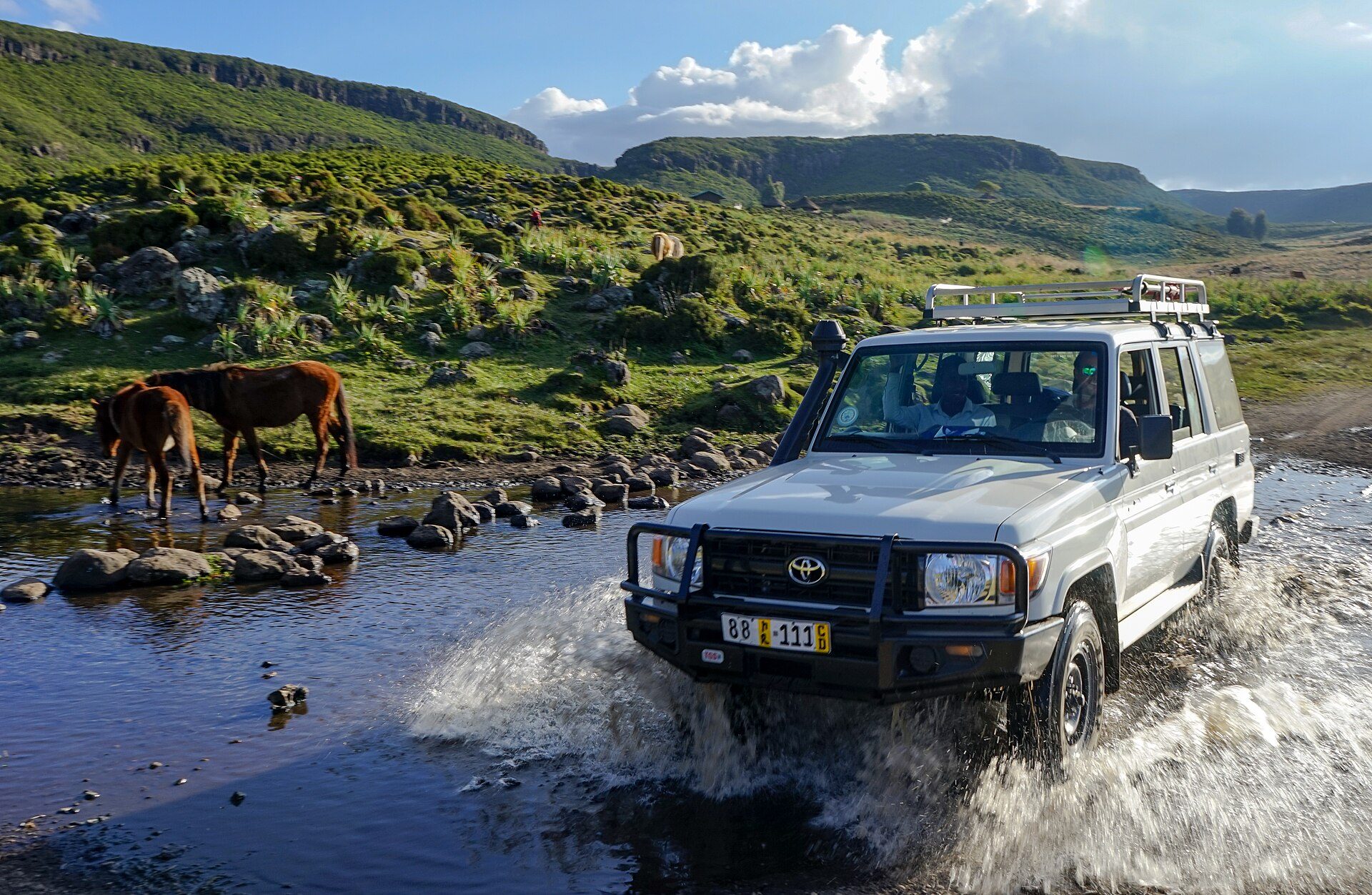
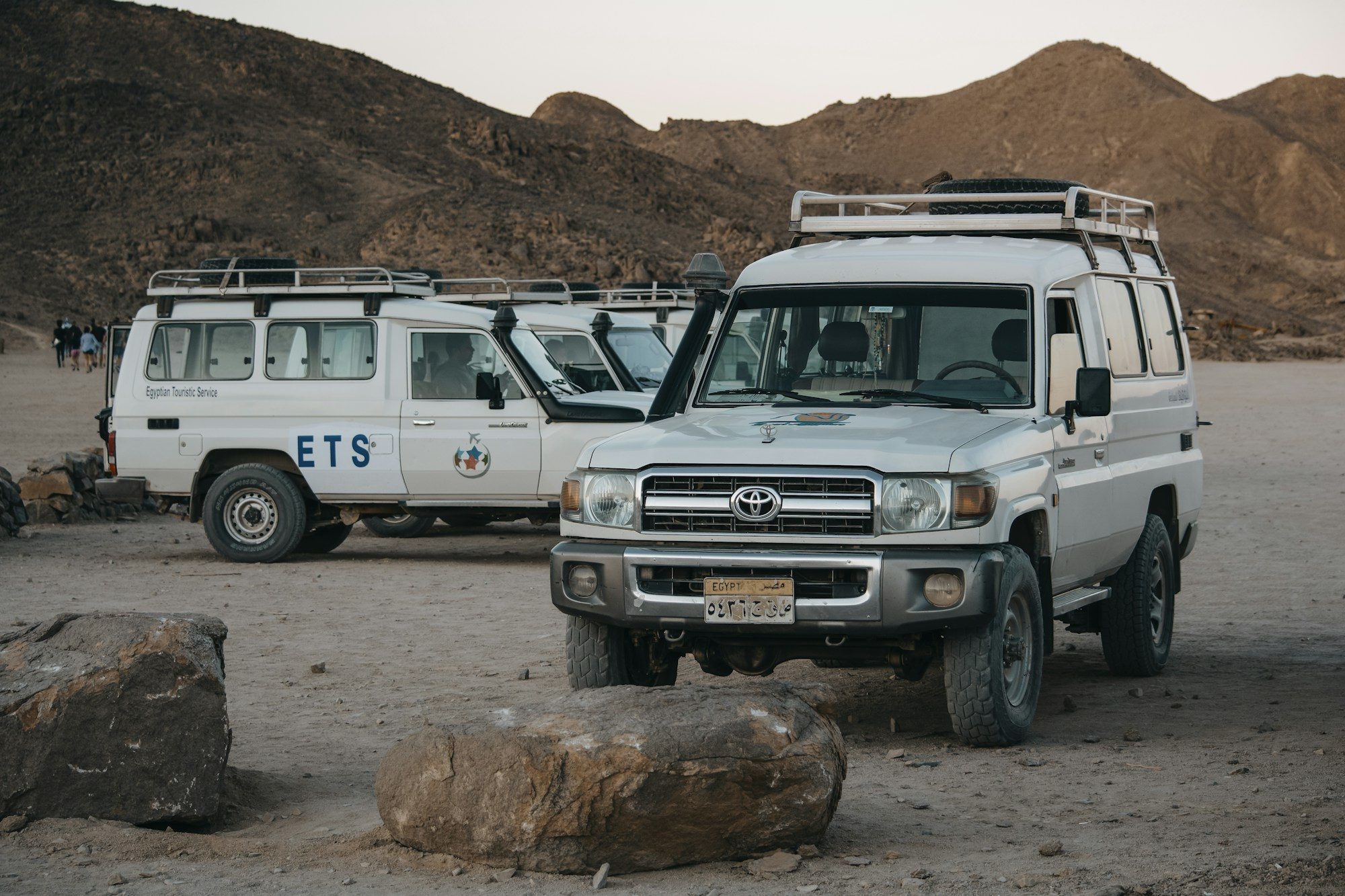
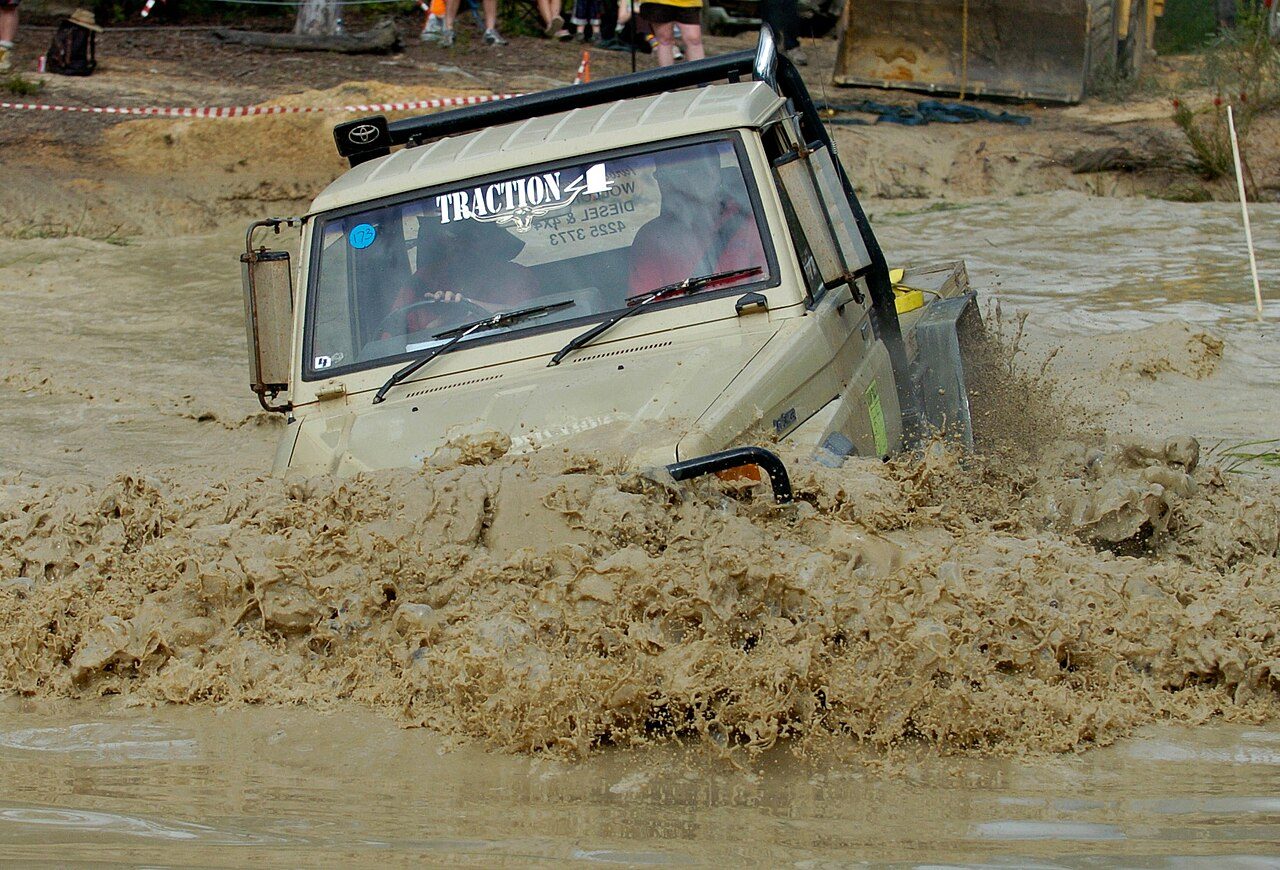
The 70 Series arrived in 1984 to replace the 25-year-old 40 Series as the Land Cruiser that does the hard work, while the 60 Series wagon line drifted toward comfort and, eventually, the 80 Series. More than four decades later it is still in production. It has been built in Japan, Portugal, Venezuela and Colombia, and it has served as a troop carrier, a mine truck and a military patrol vehicle. What it has never been is a new car you can buy at an American Toyota dealer.
A 40 SERIES IN A SQUARER SUIT
The styling kept a family resemblance to the 40 but went more angular, and the range came in every length a farmer could want. Wikipedia's breakdown is the one owners use: 70 and 71 were the short wheelbase, 73 and 74 the medium, 75 and later 78 and 79 the long-wheelbase pickups and troop carriers, and 76 and 77 the semi-long four-door wagons. The letters in front give the engine away, so an FJ70 has the 3F petrol six, an HJ75 the 2H diesel, and an HZJ75 the 1HZ.
There were lighter-duty 70s as well, sold as the Bundera, the Land Cruiser II and eventually the Prado. That branch grew softer with each update, and by 1997 the Prado had become the 90 Series with no real connection to the workhorse. Some markets got odd variants, too: Portugal, Spain and Italy received a BJ73 with a VM Motori five-cylinder turbo-diesel, built by Salvador Caetano in Portugal.
LEAVES, COILS AND A V8
The big mechanical change came with the August 1999 facelift. The front axle moved from leaf springs to coils with leading arms, the rear leaves got longer for more articulation and a better ride, wheels went from six studs to five, and the long-wheelbase models were renamed 78 (troop carrier) and 79 (pickup). The short-wheelbase truck disappeared from most markets, and Japanese sales ended in June 2004 because the truck couldn't meet Japan's NOx and particulate rules.
In 2007 Toyota fitted the 4.5-liter 1VD-FTV turbo-diesel V8. It needed a wider chassis, a wider front axle and a new nose that finally did away with the flat fenders every commercial Land Cruiser had worn since the 40. The four-door 76 wagon was added to the range, and a dressed-up GXL trim arrived. Petrol 70s swapped the 1FZ six for the 1GR-FE V6 in 2009, and a double-cab 79 with a 130-liter tank followed in 2012.
THE TRUCK THAT WON'T RETIRE
In Australia, where the 70 is part of the furniture, the V8 picked up a diesel particulate filter and piezo injectors in late 2016 to meet Euro 5. The same update gave the single-cab ute curtain and driver's-knee airbags and a thicker, stronger chassis, which earned it five ANCAP stars. In 2023 came a 2.8-liter four-cylinder turbo-diesel with a six-speed automatic, LED headlights and a 40 Series-style gauge cluster. Japan, which had already given the 70 a one-year 30th-anniversary run in 2014–15, put it back on sale in November 2023.
The V8 didn't survive. Toyota Australia ended production of the V8 wagon and troop carrier in September 2024, citing 'changing regulations and community expectations,' and kept only the GXL pickups going into 2025. The four-cylinder makes 201 hp and 369 lb-ft (500 Nm) with the automatic, and from October 2024 it was also offered with a five-speed manual, detuned to 332 lb-ft. Unsealed 4X4's verdict is that plenty of enthusiasts still prefer the pre-DPF 2007–2016 V8s, mainly because they're mechanically simpler.
HOW AN AMERICAN GETS ONE
Toyota never offered the 70 in the United States. Canada got a few BJ70s for the 1985–87 model years with the 3B and 13B-T diesels, and as of 2022 Canadian mines could still buy them through Toyota Industrial Sales Canada. For everyone else in North America, the route is the gray market. Since 1989 NHTSA has exempted vehicles more than 25 years old from the rules it administers, so each year a new batch of older 70s becomes legal to import.
That's why the IH8MUD 70-Series Tech forum is full of American owners with BJ74s, HJ75s and 1HZ troopies, and why the 80 Series and the 70 often share a driveway. If you want the 80's toughness without the 80's comfort, the 70 is the purer version. It also makes the 100 Series and 200 Series look positively soft.
SIDEBAR · THE 70 GOES TO WAR
The Al-Thalab and other militarized 79s
The same qualities that make the 79 a good station truck — a heavy-duty chassis, simple mechanicals that can be fixed in the field and little reliance on electronics — made it the base for a long-range patrol vehicle. In 2000 the UK firm Jankel, working with Jordan's King Abdullah Design and Development Bureau, started designing the Al-Thalab on the Land Cruiser 79 chassis.
In base form it carries up to four crew and 1,700 kg of equipment, with three firing positions and two radio stations. Jordan's army ordered it in 2004 and now runs more than 200, Mauritania has used it since 2006, and British special forces were seen in Al-Thalabs in Syria in 2016. More recently, Babcock built its GLV on the 79 chassis and France's Technamm Masstech T4 used the HZJ76.