The story
Steyr-Daimler-Puch started work on a second Pinzgauer in 1980, and after six years of development it reached production in the mid-1980s: German Wikipedia puts the switch in 1985, English Wikipedia says the first trucks rolled off the line in 1986. The recipe was the 710 and 712 with a modern heart. The air-cooled petrol four made way for a liquid-cooled 2.4-liter Volkswagen turbo-diesel six, and the new names followed the axle count: 716 for the 4×4 and 718 for the 6×6.
THE SAME BONES, A DIFFERENT ANIMAL
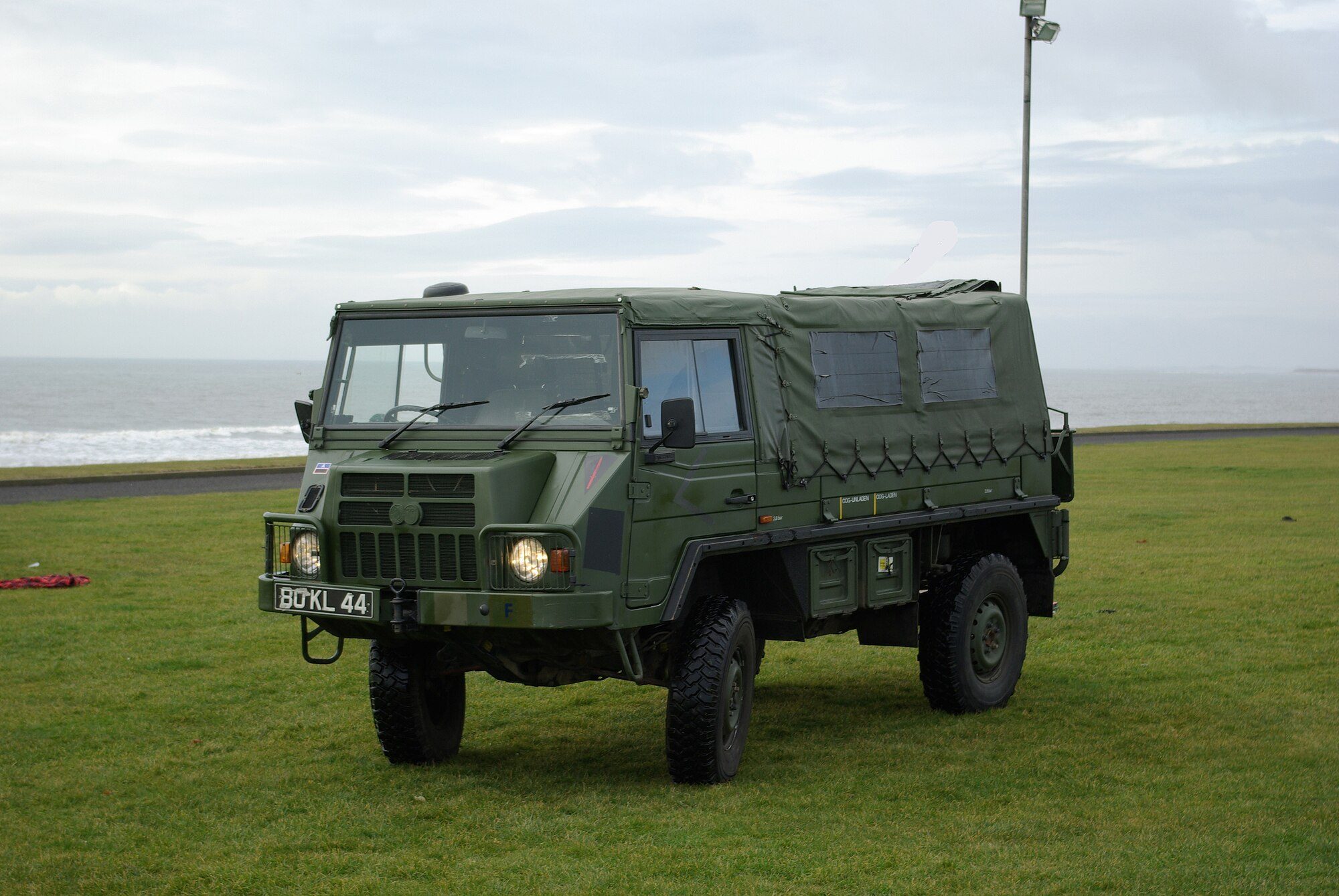
Underneath it is still a Pinzgauer: a central backbone tube with the drivetrain inside it, swing half-axles, portal hubs and pneumatically engaged differential locks. What changed was everything you touch. The Turbo D got disc brakes, a slightly wider track, bigger tires and, on most trucks, a ZF four-speed automatic, with a five-speed manual as the option. The 716 carries what the old 6×6 712 carried, and the 718 carries more.
Owners on the Real 4x4s Pinzgauer forum are blunt about how little interchanges. 'Don't use anything you read for the 710/712 for the 716/718,' says one long-time owner. 'Very few things apply.' The wheel bolt pattern, outer axle housings and portals all differ, and the 716 got a self-levelling rear air spring that the petrol trucks never had.
P80, P90, P93 AND THE BRITISH YEARS
The Turbo D was built in batches, with revisions that owners know by the year they were designed: P80 for the original, P90 for a 1990 update, and P93 for the 1993 version, which added an intercooled engine. The cooling system went through four versions, and the radiator cover (the 'nose') grew with them. One owner's P80 716 had the small nose and the 105 hp engine without an intercooler.
In 2000 Magna, which by then owned Steyr-Daimler-Puch, sold the Pinzgauer rights to Automotive Technik Ltd in the UK. Owners say the tooling moved from Graz between 2000 and 2002, and Austrian-built trucks carry chassis numbers below 6000. ATL fitted a five-cylinder 2.5-liter VW TDI from 2002–03 to meet Euro 3. After a run of takeovers that ended with BAE Systems, UK production ended around 2007.
SOLDIERS, FIRE CREWS AND TWENTY AMERICAN 718s
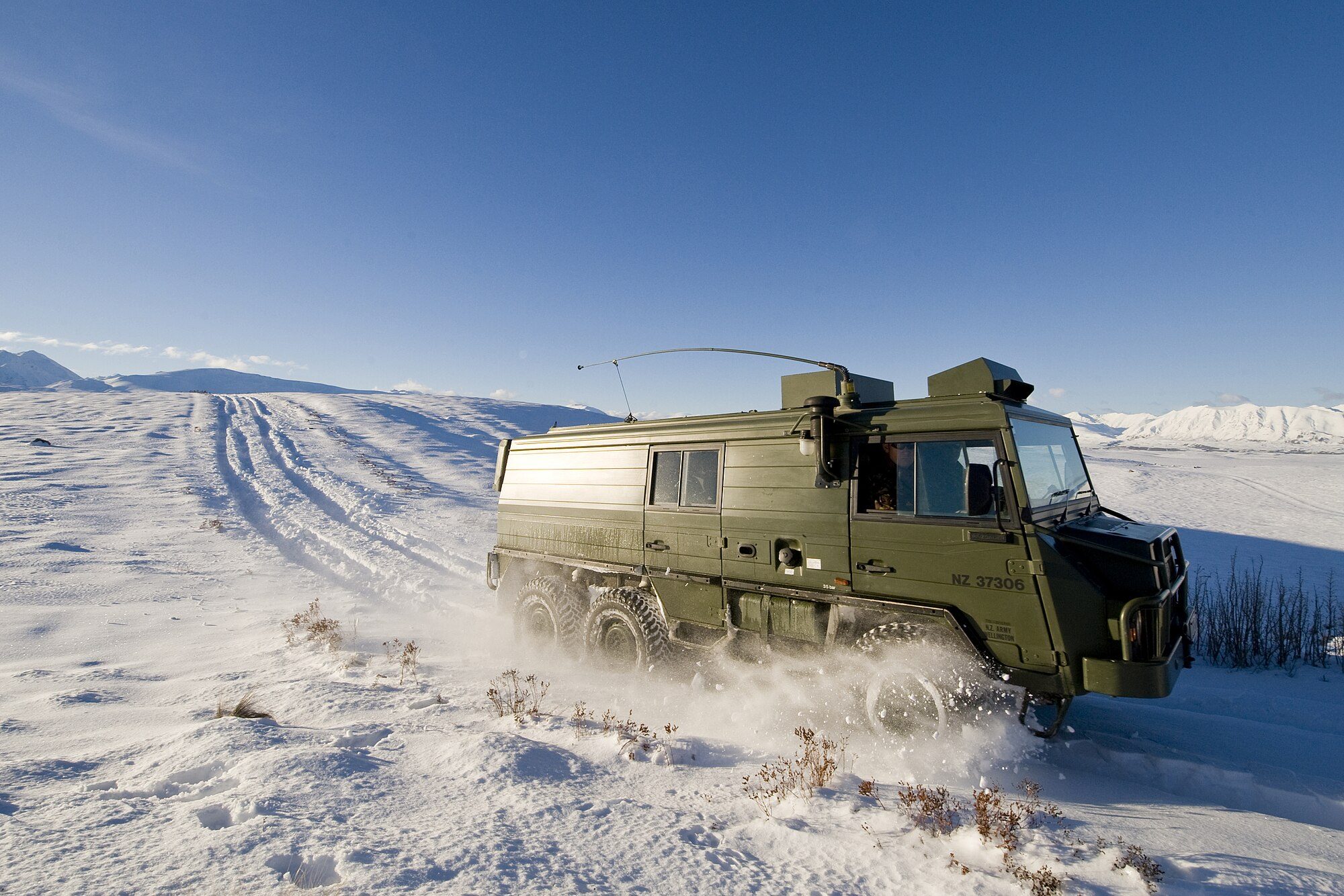
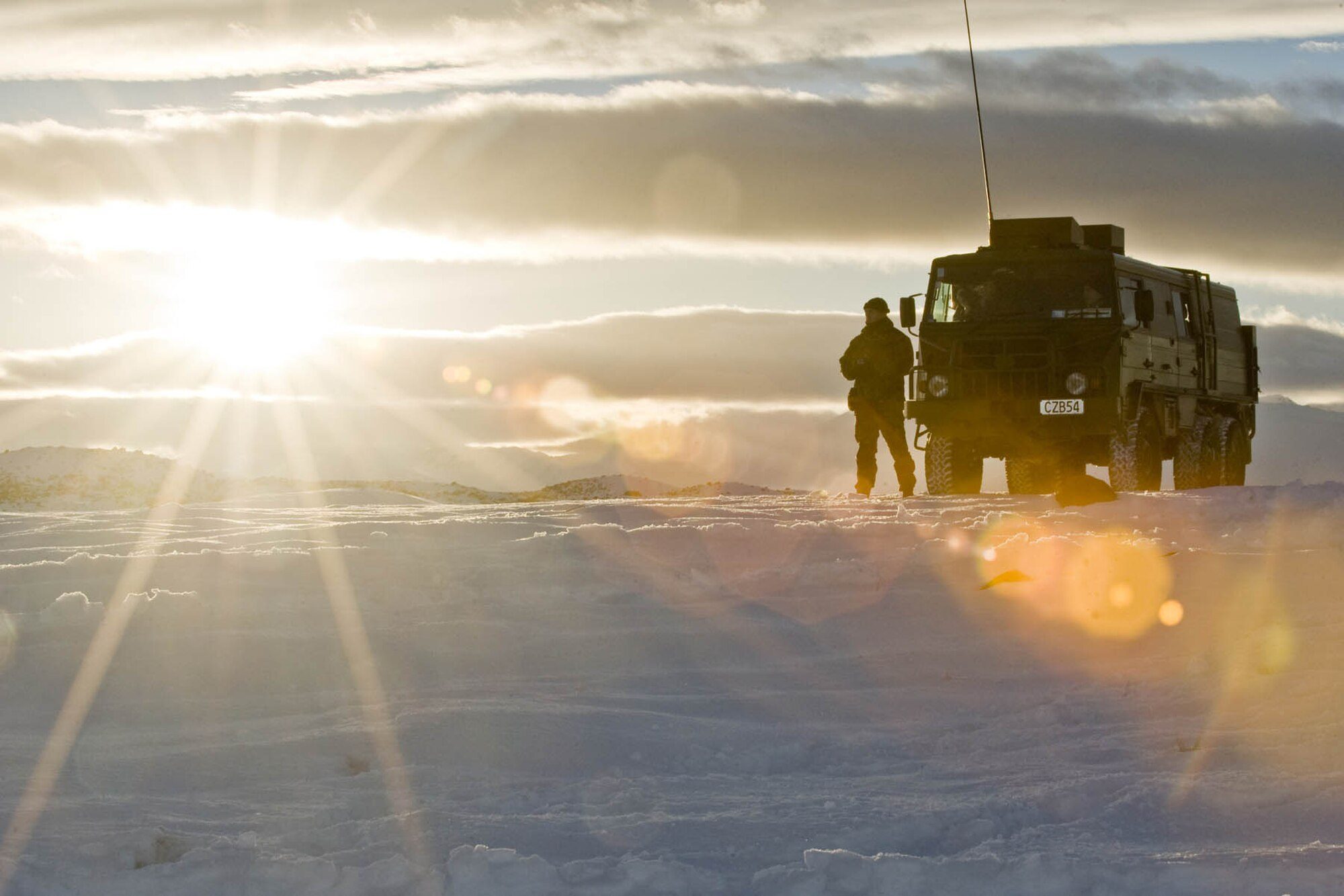
Almost every Turbo D went to a government. The British Army used them as light gun tractors for the 105 mm Light Gun, New Zealand bought 321 in eight variants as its Light Operational Vehicle, and Malaysia took 168 716 gun tractors and 164 718 mortar carriers. Fire brigades, mountain rescue teams and oil companies bought the rest, often with bodies built to order.
The US Army bought about 20 turbo-diesel 718Ms in the early 1990s for special operations deep reconnaissance. They served in both Gulf wars before being phased out around 2010–11. Some of these were then sold as surplus, and they remain the rare Turbo Ds with an American paper trail. Everything else in the US arrived as a 25-year import.
SIDEBAR · THE GOVERNMENT LIQUIDATION TRUCKS
How a handful of special-ops 718s ended up in barns
In 2011, several Real 4x4s members bought ex-US military 718s through government surplus sales and compared notes. They reported that the trucks were set up as P90s, though some VINs suggested they had been built in the 1980s and upgraded before delivery. One importer said the upgraded trucks had their cowls cut by hand to clear the bigger radiator hoses.
The trucks came with lever ignition switches and military fittings, and some came without doors, windshields or roll bars. One buyer bought the take-off parts from another owner, then used wiper arms and heater parts from a G-Wagen and seat belts from an old Mercedes 280 SE. An importer converted the lever switch to a keyed one in about eight minutes using a lock and switch shared with the G-Wagen.
 YT