The story
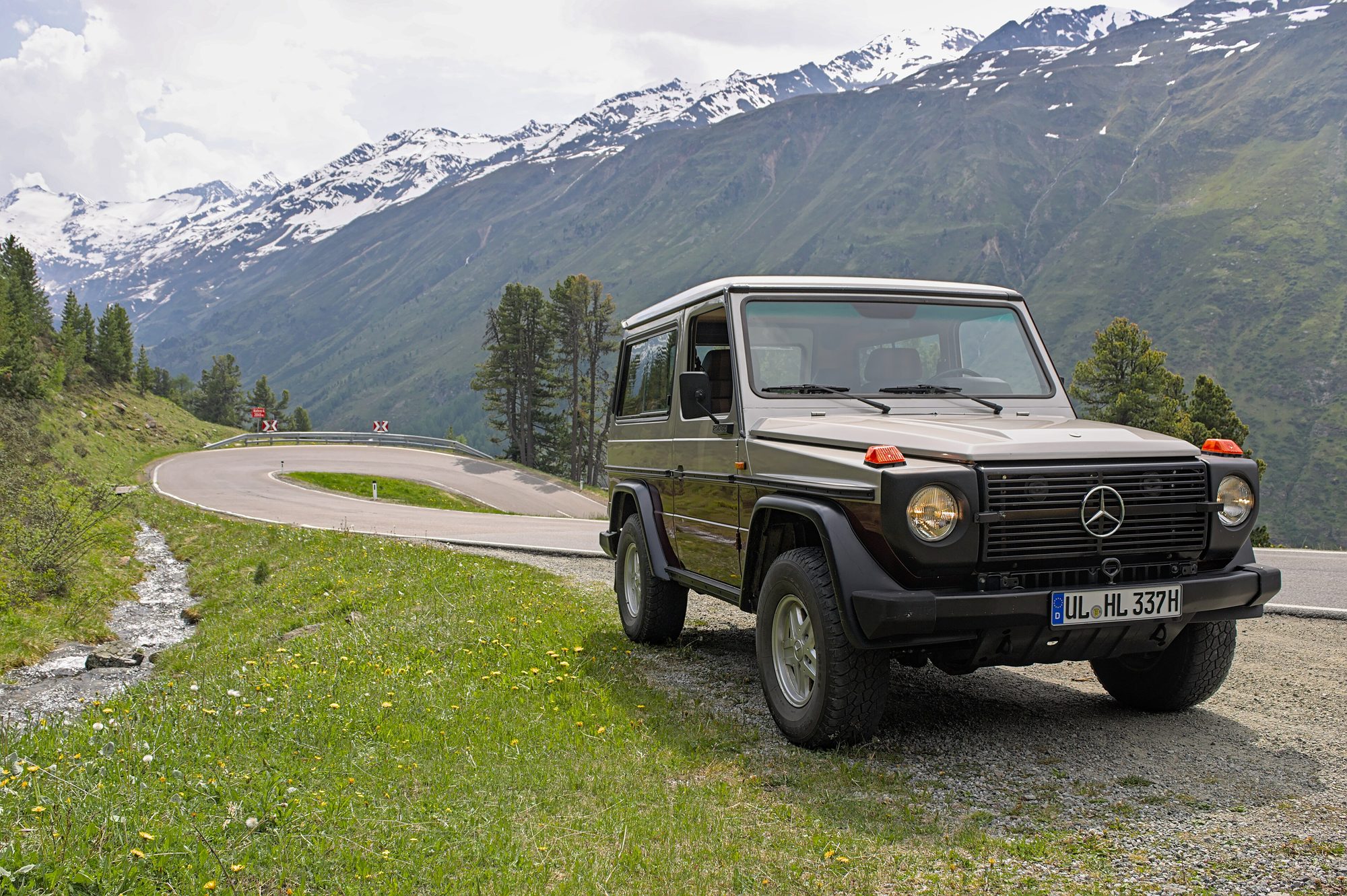
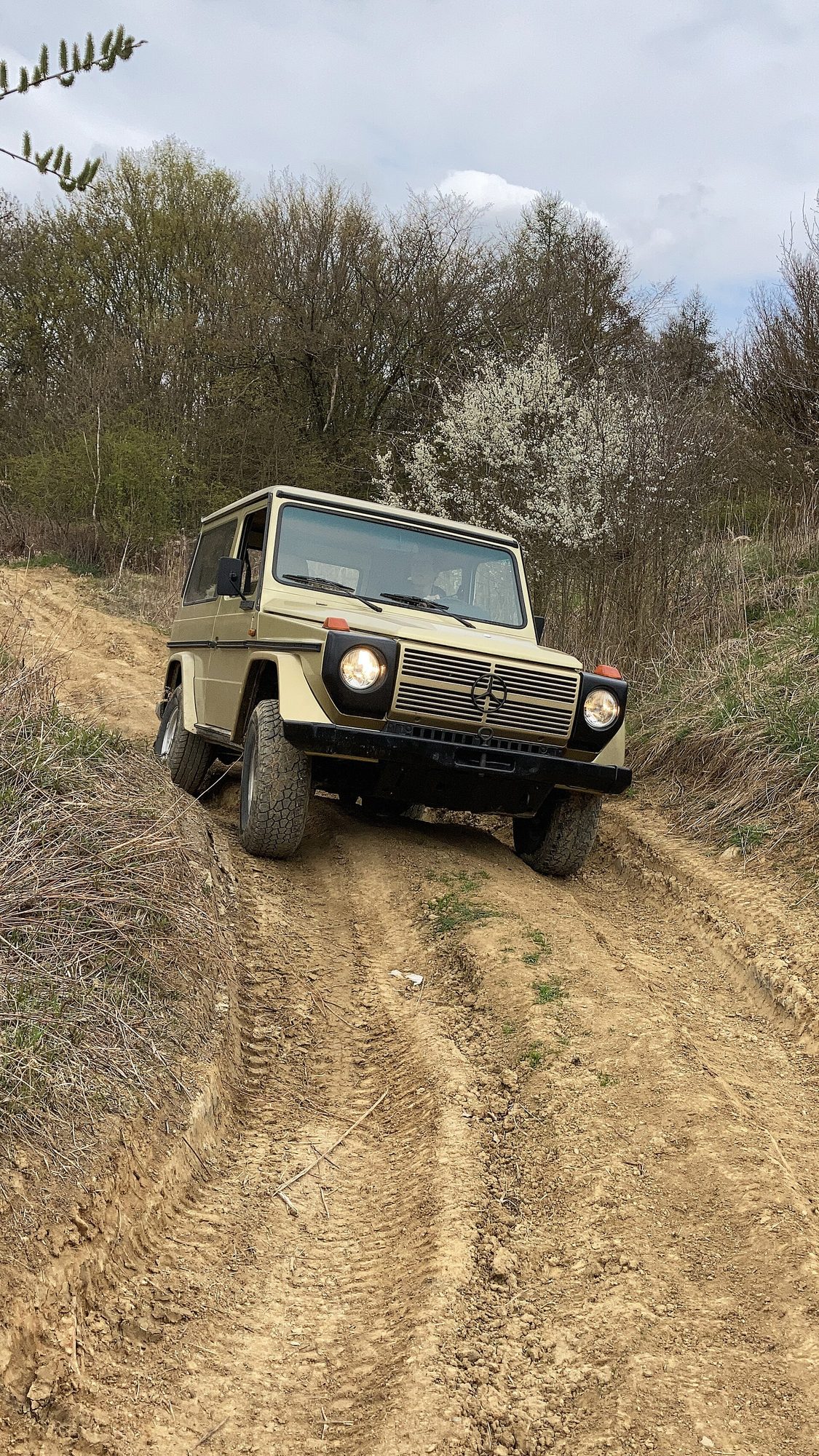
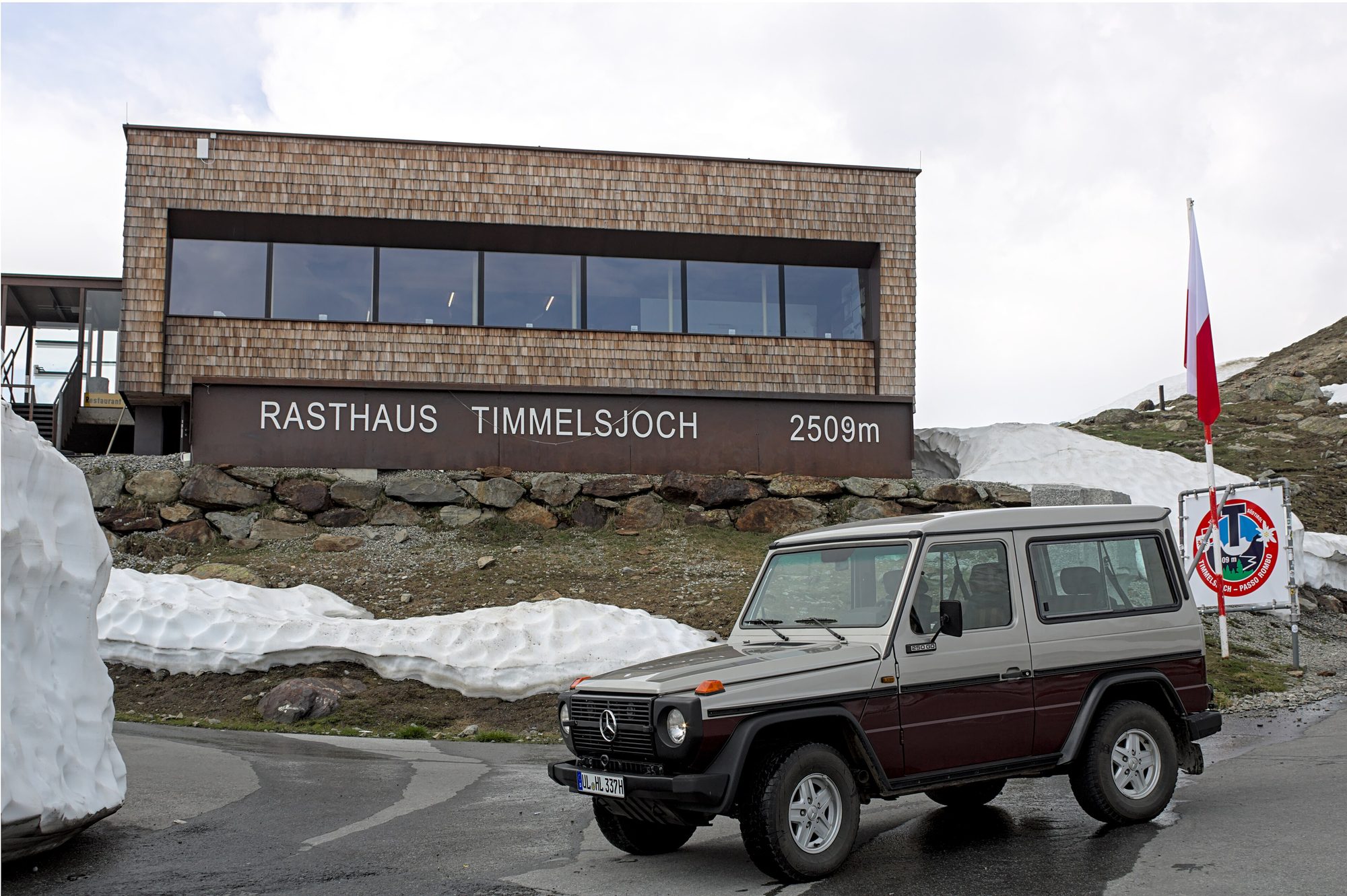
Every G-Class that has ever crushed a trail or a valet stand descends from this one. The W460 is a ladder frame, two coil-sprung rigid axles, a lever for the front axle and a choice of engines that ranged from leisurely to geological. Mercedes engineered it, Steyr-Daimler-Puch hand-built it in Graz, and for twelve years it was sold mainly to people who needed it: border guards, soldiers, farmers and the occasional explorer. Nothing about it was designed to impress the neighbours, which is exactly why off-roaders still want one.
A SHAH, A WOODEN MOCK-UP AND GRAZ
Development began in 1972 under a cooperation agreement between Daimler-Benz and Steyr-Daimler-Puch, pushed along by the Shah of Iran — then a major Mercedes shareholder — who pre-ordered some 20,000 military vehicles. Design studies were built in wood in 1973, and prototypes were tested everywhere from the Arctic Circle to the Sahara. The Shah lost his throne in 1979, the year production began, and the order never happened.
The W460 was launched at a press event on the off-road proving ground in Toulon, France, and went on sale in September 1979 with three engines and five body variants on two wheelbases: 2,400 mm and 2,850 mm. In Austria, Switzerland, Yugoslavia and the COMECON countries it was badged Puch G, and in France Peugeot built a licensed military version, the P4, with its own engine and gearbox. The French Army ordered 15,000, later cut to 13,500.
BORDER GUARDS, A POPE AND THE DAKAR
Customers arrived quickly. In 1980 Germany's Federal Border Guard and riot police took delivery of short-wheelbase 230 Gs and long-wheelbase 280 GEs, and Mercedes built a Popemobile on a 230 G cabriolet for Pope John Paul II's first visit to Germany. The Argentine Army started using the military model in 1981, and in 1982 Mercedes won the Swiss Army tender.
Then it went racing. In 1983 Jacky Ickx and Claude Brasseur won the car category of the Paris–Dakar Rally in a 280 GE, which ended any argument about whether this was a real off-roader. Porsche even built a G with a 928 V8 as a support vehicle for its 959 rally programme in the mid-1980s.
SLOWLY GETTING CIVILISED
The W460 picked up comforts gradually. In 1981 came an automatic gearbox, air conditioning, an auxiliary fuel tank, headlamp grilles and a cable winch. Fuel injection arrived with the 230 GE in 1982, along with better seats, wider tyres and fender flares. From 1985 front and rear differential locks, central locking and a tachometer were standard on every W460, and by 1986 more than 50,000 G Models had been built.
The engines barely changed. The 300 GD's five-cylinder OM617 diesel was the most popular, the 280 GE's straight-six was the most powerful, and although Mercedes put turbodiesels in its saloons, it never fitted one to a W460. Mercedes didn't sell the truck in America either. Grey-market importers federalised a few in the 1980s until the 1988 Imported Vehicle Safety Compliance Act made that much harder and more expensive.
HOW IT ENDED — AND DIDN'T
At the 1989 Frankfurt show Mercedes revealed the G for the next era: permanent four-wheel drive, a wood-trimmed cabin and optional ABS. That truck became the W463, and it took the G-Class upmarket. The W460 ended production in 1991, but its job didn't. Its body and chassis carried on as the W461, a working G for armies and agencies built with W463 running gear.
That makes the W460 the last G built purely as a tool. Today it is a classic with a strong following, and Classic & Sports Car notes that a pre-1990 soft-top in show condition can make £75,000 or more. Rust-free W460s are rare, because most spent their lives in wet European winters.
SIDEBAR · OTTO
The 300 GD that drove around the world, for 26 years
In 1989 Gunther Holtorf, a former Lufthansa manager, left his job to spend 18 months exploring Africa in his 1988 G-Wagen, a 300 GD he called Otto. He didn't come home for a quarter of a century. Holtorf and his partner Christine travelled through Africa, South America, North America, Australia and Asia, mostly sleeping in the truck with the rear seats removed, and Holtorf became the first Westerner to drive in North Korea.
By the time Otto came home in 2014 it had covered roughly 560,000 miles (about 900,000 km) and, by Mercedes-Benz's count, 215 countries and territories (Guinness World Records credits him with 180 countries). In some of them Otto was the first private car a foreigner had been allowed to bring in. It now sits in the Mercedes-Benz Museum in Stuttgart, about as good a reference as any classic truck could have.