The story
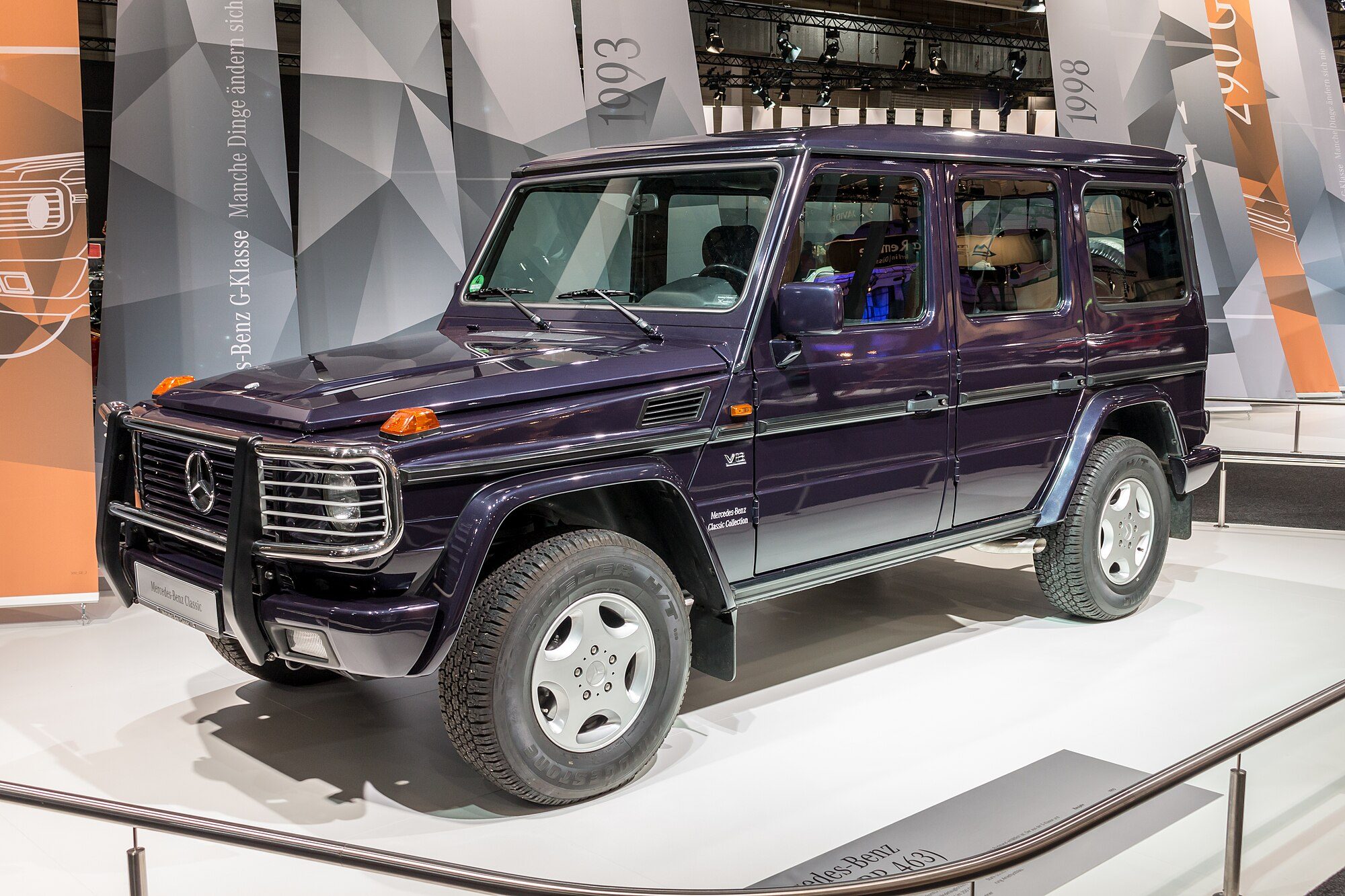
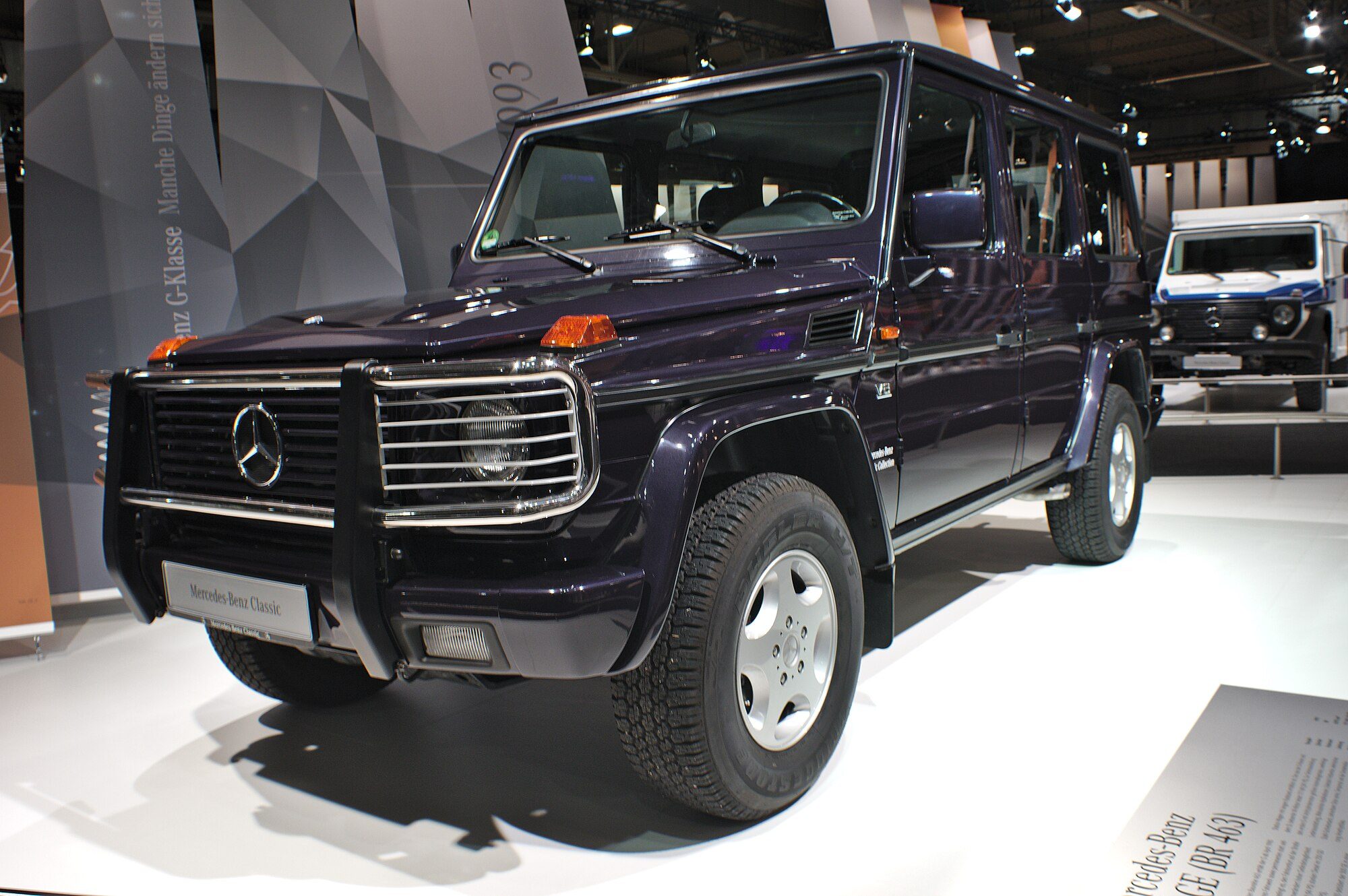
The 500 GE is the G-Class that answered a question nobody had asked yet: what if the army truck had a V8? Shown at the Geneva Motor Show in March 1993, it was the first eight-cylinder G, sold only as a long-wheelbase five-door. It came in one standard colour and with every comfort option fitted, and the price was roughly double a G 320's. Mercedes planned 500. It built 446, and the reason has nothing to do with marketing.
A PILE OF ENGINES AND A SMALL ENGINE BAY
By 1993 the old two-valve M117 V8 was on its way out. Mercedes' newer four-valve M119 had replaced it in the saloons, but the M119 was too big for the G's engine bay. That left a limited supply of M117s, so the 500 GE's production run was set by the number of engines on hand. Mercedes' own anniversary history says the run stopped at 446, built over about two years. Wikipedia describes it as a leftover batch of 446 engines.
The engine is the 4,973 cc M117, rated by Mercedes at 177 kW (240 PS) and 375 Nm. That was enough for 0–100 km/h in 11.4 seconds and a 180 km/h top speed, which felt quick for a long-wheelbase brick in 1993. An automatic gearbox was standard; a surviving owner-documented example has the four-speed automatic. Wikipedia says the body and chassis were adapted for the V8 at AMG in Affalterbach, then still an independent tuner; Mercedes' own anniversary story doesn't mention AMG.
WHAT DM 178,250 BOUGHT YOU
At launch the 500 GE cost DM 178,250. A six-cylinder G 320 cost DM 88,500, and even a 500 SE S-Class was DM 129,030. Standard equipment included air conditioning, cruise control, an electric sliding sunroof, heated seats and a leather steering wheel. The cabin was black leather with medium-grey contrast panels and walnut veneer on the console, handbrake and both selector levers. Outside, the Amethyst Blue Metallic paint ran onto the bumpers, wheel-arch flares and mirror housings, so not a single black plastic panel showed.
Off-roaders should note the compromises. Mercedes deleted the front differential lock, leaving the centre and rear locks. The suspension was softened for comfort, and fording depth is slightly less than a standard G's. The tyres were Bridgestone 265/70 R16 H on alloy wheels, which Mercedes says were the only off-road tyres then approved to 210 km/h. In other words, this is a G meant for the Autobahn that can still handle a dirt road.
AMG, PUCH AND A SAUDI PRINCE
The standard 500 GE was the tame version. Later in 1993 AMG offered the 500 GE 6.0, with the M117 enlarged to 5,959 cc and 220 kW (about 300 PS), according to Mercedes. It was a one-off customer order on top of an already expensive truck, and RM Sotheby's believes only around 13 were officially converted. The option code to look for is ZB6. Not every special 500 GE is a 6.0, though: one car built for Saudi Prince Sultan bin Abdulaziz has the 5.0 but was specified with a wider track, larger front wings and Avantgarde green paint. It sold at RM Sotheby's for $148,500.
Then there are the Puchs. In Austria and Switzerland the G was sold under the Puch name, and RM Sotheby's describes a Puch-badged 500 GE as the first of only three. Steyr-Daimler-Puch used it for homologation, testing and press drives. As for what replaced it, the V8 dropped out of the range until the G 500 arrived with the M113 in 1998. The G 55 AMG followed in 1999 and turned the 500 GE's limited-run idea into a regular model.
OWNING ONE NOW
Mercedes never sold the 500 GE in the US, and it was never part of the Europa International programme. American examples arrived later through private importers. One car on the German Cars For Sale Blog went through Wallace test labs in 2005, after a costly and slow process, and has been registered in California ever since. Thirty years on, a well-kept 500 GE in Germany can qualify for historic H plates. Prices run from the twenties for a high-mileage import, as the blog judged one, to six figures for documented AMG and special-order cars at auction.
SIDEBAR · THE PUCH 500 GE
Same truck, different badge
The G-Class was built in Graz by Steyr-Daimler-Puch from day one, and in Austria and Switzerland it carried the Puch name instead of the three-pointed star until 2000. According to RM Sotheby's, only three 500 GEs got Puch badges. The one it offered at Essen has a VIN with "VA", showing it was built in Austria by Puch. Finished in Amethystblau Metallic (paint code DB3338) with two-tone leather, it was used for homologation, testing and press drives.
It didn't sell. RM's estimate was €60,000–90,000 and the lot ended unsold. That says something useful about this corner of the market: the badge story is great, but buyers pay most for originality, documentation and condition.