The story
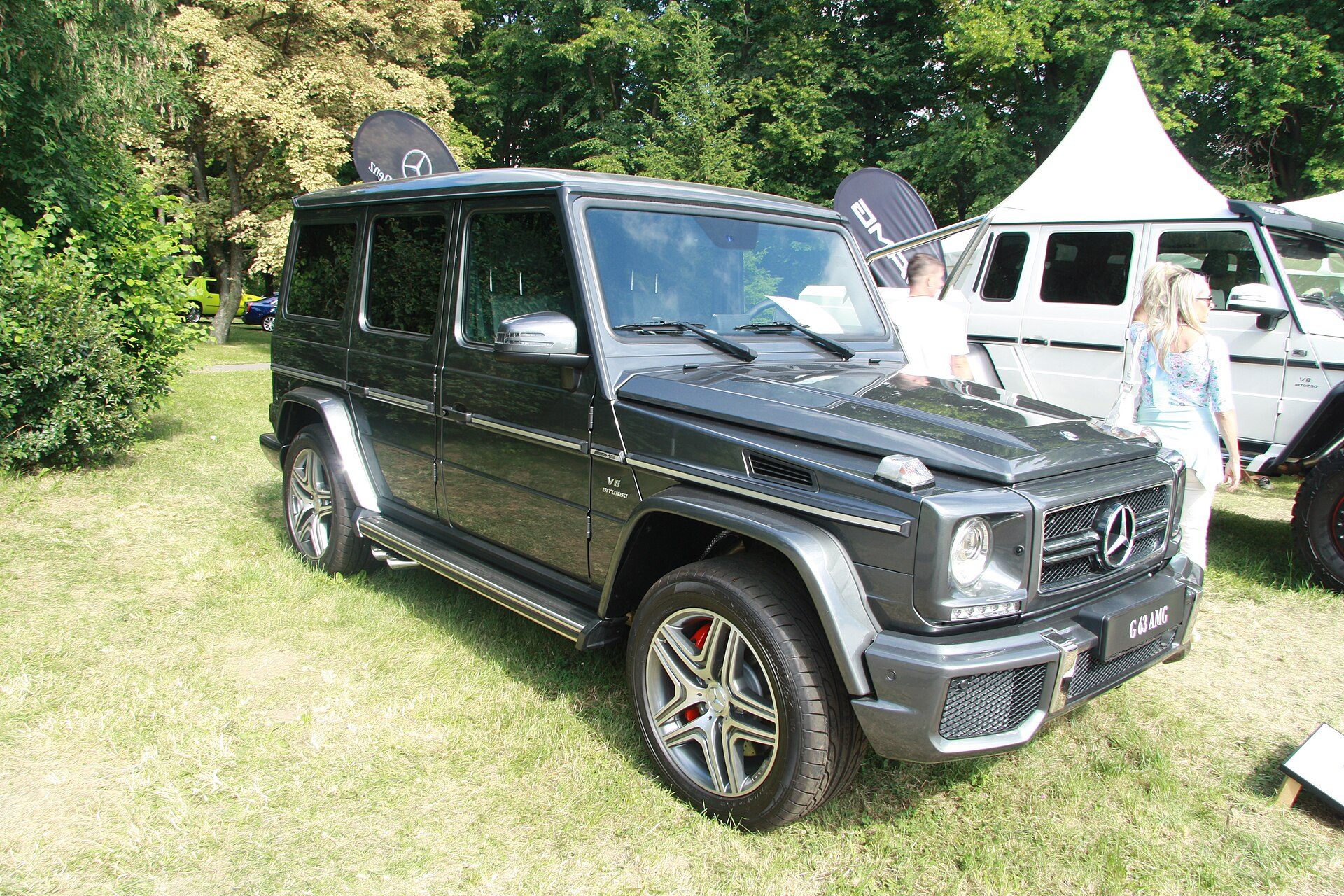
The G 63 AMG replaced the supercharged G 55 AMG in 2012 and reached American showrooms that August as a 2013 model. It ran until the 2018 model year, the last before the redesigned second-generation G. It uses AMG's 5.5-litre biturbo V8 and a seven-speed automatic, and it was the first AMG G with neither a supercharger nor a five-speed. The W463 underneath is unchanged: ladder frame, solid axles on coils, a two-speed transfer case and three locking differentials. AMG gave the truck a much bigger engine and left the off-road hardware alone.
TURBOS REPLACE THE SUPERCHARGER
Mercedes revealed the G 63 and the V12 G 65 in April 2012, ahead of the Beijing show. The M157 V8 displaces 5,461 cc and makes 544 PS with 760 Nm (560 lb-ft) from 2,000 rpm. Mercedes quoted 0–60 mph in 5.3 seconds and a 130 mph limiter, and claimed 13 per cent lower fuel consumption on the European cycle than the G 55. The engine drives an AMG SPEEDSHIFT PLUS 7G-TRONIC with three modes, automatic throttle blips on downshifts and ECO start/stop.
The rest of the update came from the 2012 G-Class refresh. The dashboard and centre console came from the ML, and the truck gained a colour TFT instrument cluster, a tablet-style COMAND screen, DISTRONIC PLUS, Blind Spot Assist and LED daytime running lights. AMG added a twin-blade grille, a bumper with three large intakes, six-piston front calipers from the ML 63 on 14.8-inch discs, and 20-inch wheels on 275/50 R20 tyres. AutoGuide priced a 2013 US truck at $134,300, about $20,000 more than a G 550.
WHY OFF-ROADERS SHOULD CARE
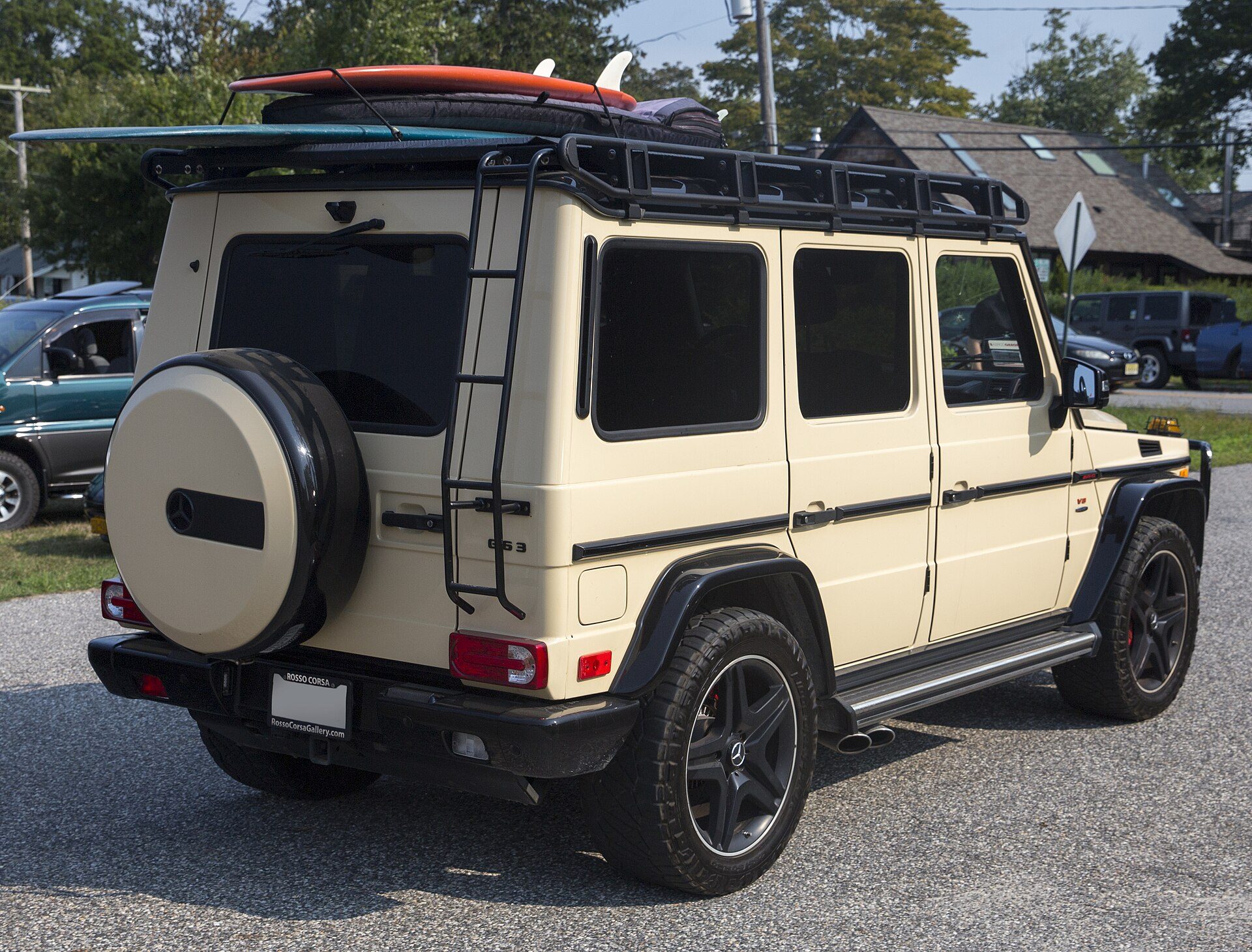
In the bodywork that matters off-road, a G 63 is the same truck as a G 550. Kelley Blue Book listed a 36-degree approach angle and a 7,716 lb tow rating. MotorTrend gave 27 degrees of departure, 21 degrees of breakover, about 8 inches of ground clearance and 24 inches of wading depth. It still has a low-range transfer case and centre, rear and front locks controlled by dashboard buttons. The off-road weak points are AMG's own choices: low-profile 20s, a side exhaust that exits ahead of the rear wheels, and huge front brakes that limit which wheels will fit.
Buyers liked it. MotorTrend reported in late 2013 that the G 63 had become the best-selling AMG product in the US. That's why so many are on the used market. Most owners drove them on pavement, so the lockers on a typical used truck have rarely been used.
2016 UPDATE AND THE END
For the 2016 model year the truck was renamed Mercedes-AMG G 63. Output rose by 27 PS to 571 PS (563 hp), with torque unchanged at 760 Nm and 0–100 km/h in 5.4 seconds. All G-Class models got new shock absorbers, revised ASR and ABS calibration, new bumpers and new instrument dials. AMG also offered an Edition 463 package with 21-inch wheels and a stainless underguard, and a colour package with bright paints such as alien green and sunset beam. The G 550 switched to the 4.0-litre twin-turbo M176 at the same time, and the 4×4² followed in 2015 on a shortened chassis from the G 63 AMG 6×6, AMG's six-wheeler derived from the Australian Army's W461-family truck.
The 2018 model year was the last for this body in the US. Its successor kept the G 63 name but moved to the twin-turbo 4.0-litre M177 and independent front suspension. That makes the 2013–2018 truck the last AMG G with a solid front axle. On Bring a Trailer it has also become the cheapest way into a biturbo AMG G: from 2025 to October 2026, the median sale was about $65,500.
SIDEBAR · 2013–15 OR 2016–18?
Pre- and post-facelift G 63s
The 2013–2015 trucks have 544 PS (Mercedes USA quoted 544 hp) and the original dampers. The 2016–2018 trucks have 571 PS (563 hp), new shocks, updated ESP and ABS calibration and revised gauges. Torque, the seven-speed and the three lockers are the same throughout. EPA ratings barely change: 12 mpg city and 14 highway every year, with 2018 rated 15 highway.
In 2025–26 Bring a Trailer sales, 2013–15 G 63s had a median of about $61,000 and 2016–18 trucks about $76,750. A buyer who plans to lift the truck and fit tyres gets little extra off-road from the newer trucks. The extra money mostly buys lower mileage, newer electronics and recall work that's more likely to have been done.