The story
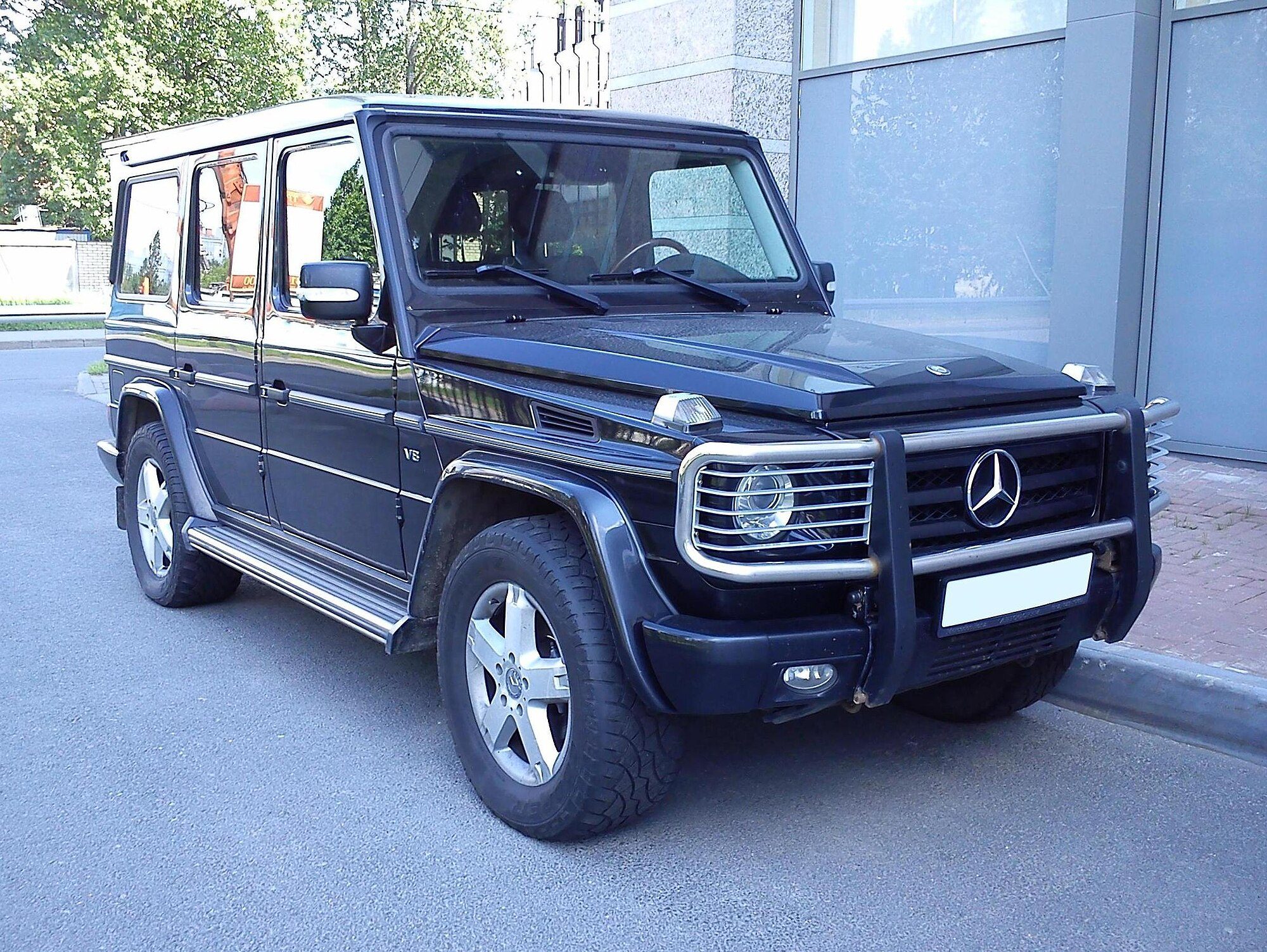
The G 550 is the old G-Class at the height of its contradictions. By 2009 the boxy W463 cost north of a hundred grand, wore a navigation screen and was more likely to be photographed outside a gym than in a riverbed. Yet nothing that mattered had been diluted: a separate ladder frame, solid axles at both ends, permanent four-wheel drive with low range and three fully locking differentials. For the US the name changed and the engine grew; the truck itself carried on until 2018, when an all-new G with independent front suspension finally replaced it.
A NEW NAME, A BIGGER V8
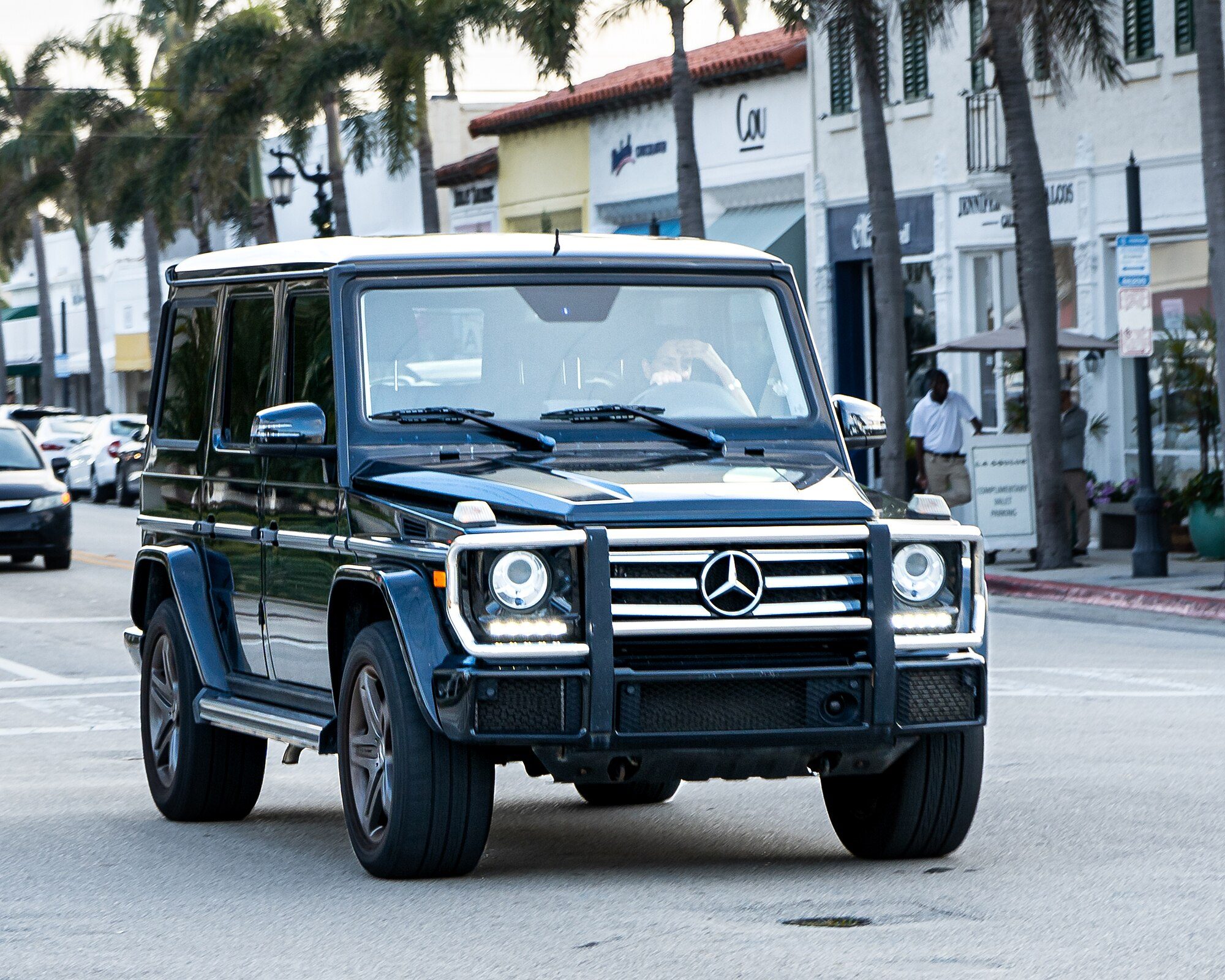
For 2009 the US-market G 500 became the G 550, swapping the 5.0-litre M113 for the 5.5-litre M273 V8: 382 hp and 391 lb-ft. Mercedes had begun phasing the 722.9 seven-speed automatic into the US G 500 during 2007, so the G 550 arrived with seven ratios from the start. The 2008 update had also brought a new grille with three thicker horizontal fins and a COMAND APS system with its own off-road menu.
A later update lifted the dashboard and centre console from the ML-Class and added LED daytime running lamps, new mirrors, DISTRONIC cruise and blind-spot monitoring. Along the way came special editions — the 2011 Edition Select, a Japan-only G 550 Night Edition of 100 trucks, and a 30th-anniversary G 500/G 550 with designo leather — none of which changed the hardware underneath.
TWIN TURBOS AND A LONG GOODBYE
For 2016 the naturally aspirated V8 gave way to the 4.0-litre twin-turbo M176, with its turbochargers tucked between the cylinder banks: 416 hp and 450 lb-ft. Mercedes-Benz USA quoted 0–60 mph in 5.8 seconds and an electronically limited 130 mph — for a 5,724-lb brick with the drag coefficient of a filing cabinet. The 2016 G 550 started at $119,900.
The off-road numbers barely moved over the decade: 9.3 inches of ground clearance, 23.6 inches of wading depth, 30° approach and departure angles and a 24° breakover, per Mercedes-Benz USA. The same twin-turbo engine went into the outrageous portal-axle G 550 4×4² for 2017. Then, at Detroit in January 2018, Mercedes revealed the second-generation G — and the solid front axle was gone.
WHY OFF-ROADERS STILL WANT ONE
A solid front axle is a simple, strong, articulating thing, and it makes the G 550 the most modern G you can lift and tire the old-fashioned way. One Expedition Portal member put BFGoodrich KO2s in 275/70R18 on his stock-height 2014 G 550, with no rubbing even when flexing the axles in opposite directions, then added a Gobi roof rack — which knocked his fuel economy from about 12–13 mpg to 10–11.
The same owner later dropped the truck into a sinkhole in a creek. Recovery took about five hours, three tow services and, finally, a family member’s tractor; he noted the doors hadn’t leaked a drop. That’s the G 550 in a sentence: tougher than its reputation, and nowhere near as clever as a lifted 80 Series at avoiding trouble in the first place. Its contemporaries — the Land Cruiser 200, LX 570 and Range Rover L322 — were all softer, newer designs with independent fronts.
SIDEBAR · ONE TRUCK, TWO HEARTS
5.5-litre or 4.0 twin-turbo?
2009–2015 trucks use the M273 5.5-litre V8, a naturally aspirated engine shared with the S- and E-Class of the era. Its known weak points are well mapped: the map-controlled thermostat (the single most common failure, according to FCP Euro), intake-manifold swirl-flap levers, crankcase-breather seals and oil wicking up the camshaft-magnet connectors. The infamous idler-gear wear problem is attributed to early 2004–2008 production engines, which puts the G 550 largely after it — but scan for cam-timing codes anyway.
2016–2018 trucks get the M176 4.0-litre twin-turbo: 34 more horsepower and 59 more lb-ft, but turbos, intercooling and more heat in a tight engine bay. EPA fuel economy didn’t reward the change — every G 550 from 2010 to 2018 is rated 13 mpg combined — so choose on budget and service history, not on the window sticker.