The story
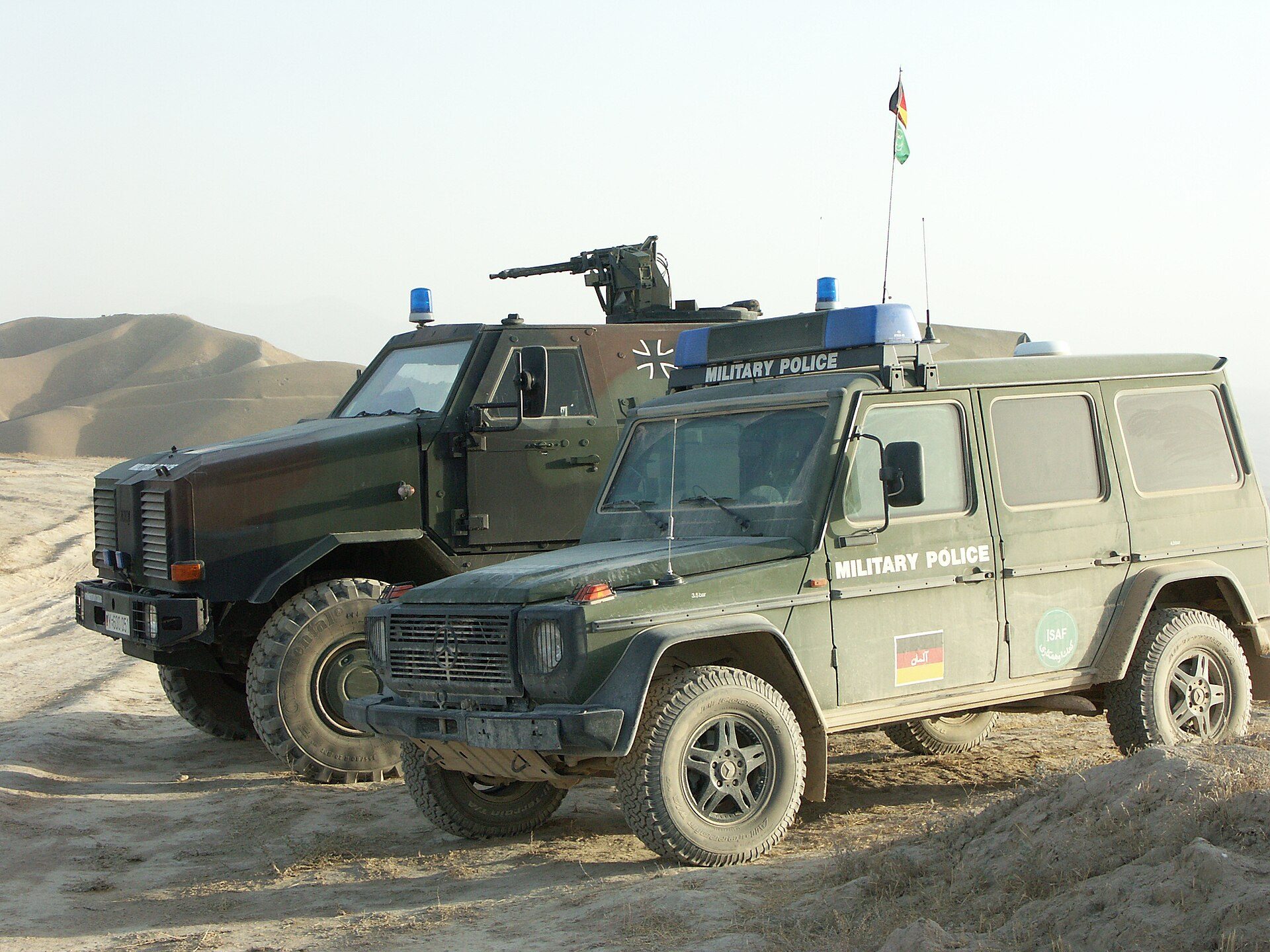
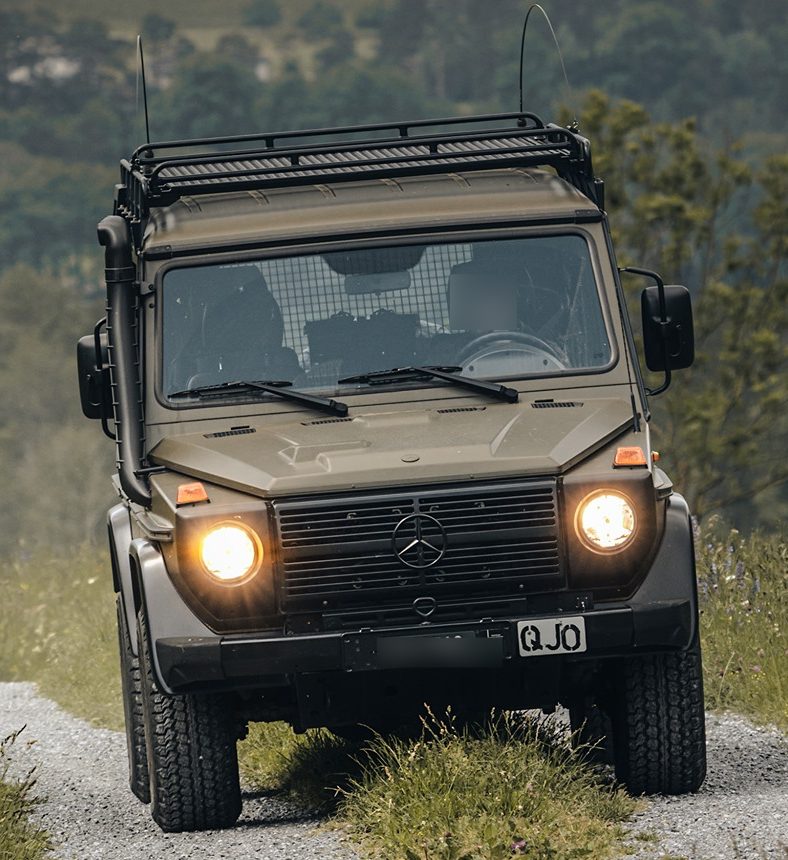
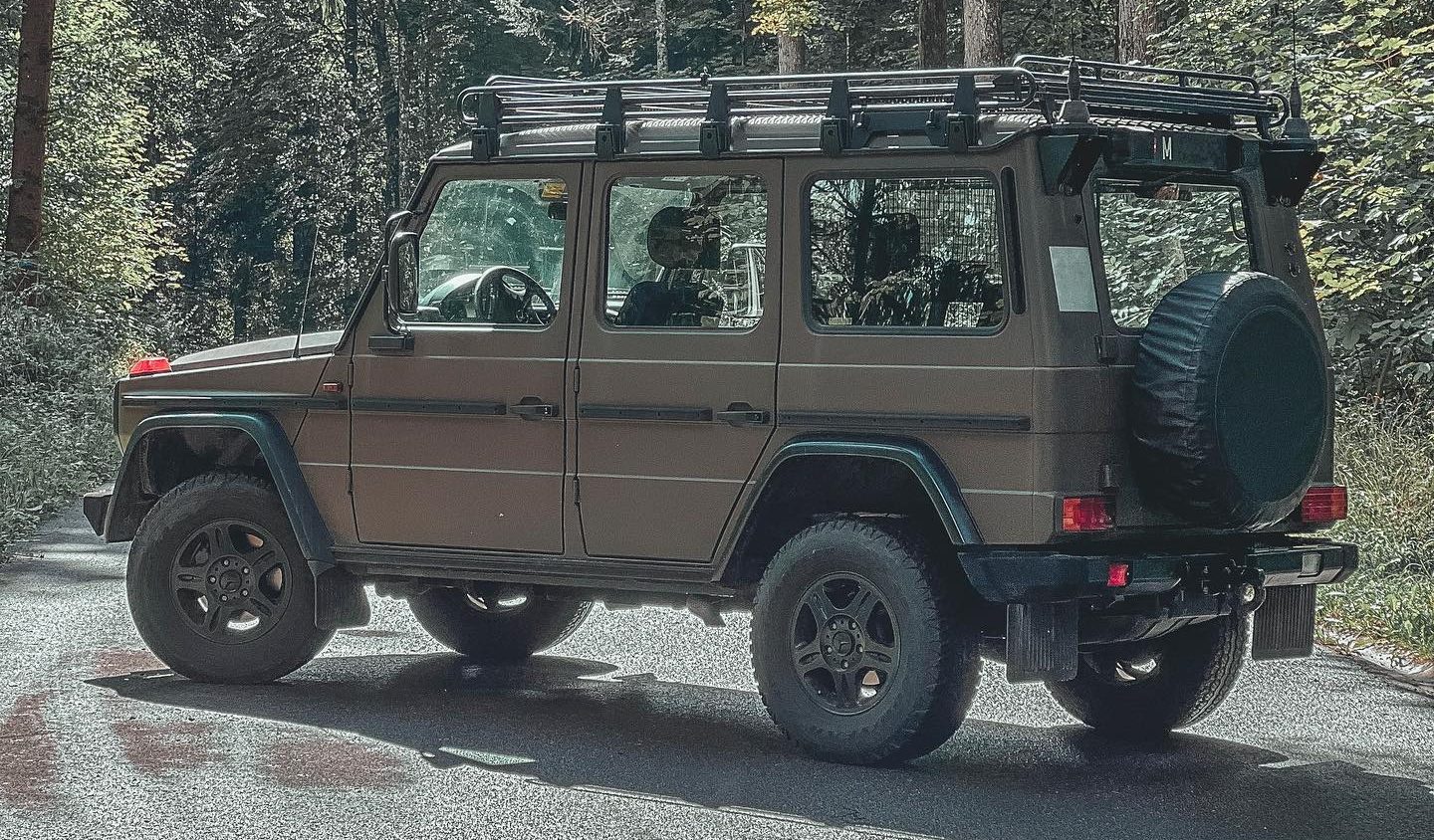
When the G-Class split in two at the end of the 1980s, the W463 got the leather, the wood and the attention. The W461 got the work. It kept the W460's body and chassis, gained the W463's drivetrain, and spent three decades carrying soldiers, medics, foresters and border police where roads give out. It's the G-Class with the luxury removed and the useful parts kept: barn doors, panel vans, cab-chassis trucks, three locking diffs and, on military trucks, a 24-volt electrical system.
TWO Gs FROM ONE
Mercedes showed the luxurious W463 in 1989, and W460 production ended in 1991. For buyers who needed a tool rather than a status symbol, the W460 became the W461 in 1990, initially as the 230 GE and 290 GD, and the series was formally introduced in 1992. Wikipedia sums up the formula as the W460's chassis and body with the W463's powertrain, built specifically for militaries, public authorities and NGOs.
The split shows in the details. The W463 got no panel vans and no barn doors; those stayed exclusive to the W461. The W461 kept the narrow body, the plain dash and, on government trucks, 24-volt electrics. Some military trucks carried the 461 designation even earlier: the Argentine Army began using a 'model 461' in 1981.
THE WOLF AND ITS PACK
Mercedes' own timeline lists the Bundeswehr receiving 12,500 'Wolf' G-Wagens under 1992; Wikipedia, which dates deliveries from 1993, puts the total at more than 12,000. Expedition Motor Company, which restores them, describes the 250 GD Wolf as an ex-military W461. By its definition a true Wolf is a two-door convertible with a fold-down windscreen and frameless windows, and it left the factory with a diesel engine.
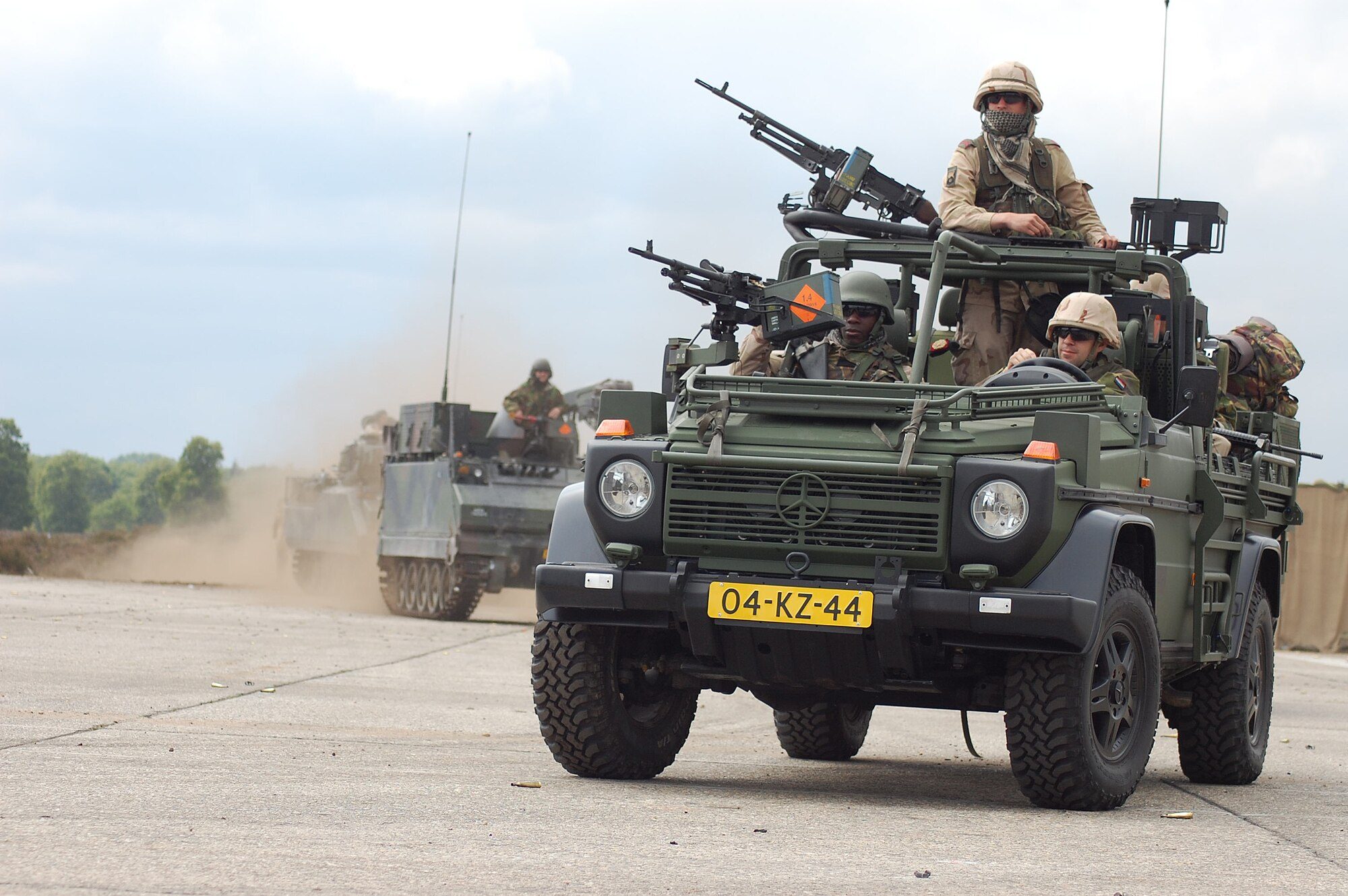
Other armies joined the pack. Canada ordered 1,159 G-Wagons from late 2003 as its Light Utility Vehicle Wheeled, replacing the VW Iltis, with turreted, non-turreted and military-police versions. The US Marine Corps bought 157 Interim Fast Attack Vehicles based on a modified 290. Norway, Greece and Finland ran Gs from 240 GDs to armoured 270 CDIs. Australia replaced its army Land Rovers with W461s, and a 2010 Australian tender produced a 6×6 version of the 461 range.
DIESELS THAT GOT SERIOUS
The engines started out painfully slow. The 1992 290 GD made 95 PS from a naturally aspirated 2.9-litre five-cylinder and took more than 25 seconds to reach 100 km/h. In 1998 the 290 GD Turbodiesel replaced it, with direct injection, about 120 hp, a driver's airbag and an automatic gearbox only. Common rail arrived with the G 270 CDI in 2001. For 2007 the G 280 CDI brought the 3.0-litre V6 diesel, detuned to 135 kW and 400 Nm so it could cope with poor-quality fuel.
CIVILIANS ALLOWED, BRIEFLY
For the G-Class's 30th birthday in 2009, Mercedes sold the W461 to civilians as the G 280 CDI EDITION.30 PUR. It was a long-wheelbase wagon with four hard-wearing seats, rubber floors, drain holes in the footwells, a walk-on bonnet, flexible wheel-arch flares, headlamp grilles and barn doors. It sold well enough to spawn the G 280 CDI Professional in 2009 and the G 300 CDI Professional in 2010, offered as a wagon, panel van, cabriolet and cab-chassis.
Australia, where the army had adopted the W461, got the cab-chassis in 2016 and the wagon in 2017. Civilian production ended in 2019. Military trucks continued until 2022, when the W464 replaced them; Mercedes announced it on 1 October 2021. The W461 is the bridge between the W460 and today's working Gs, and the closest thing to a new W460 anyone could buy in the 2010s.
SIDEBAR · CANNING STOCK ROUTE
The day the plain G rescued the posh ones
To demonstrate what the G-Class could do, seven of them set out from Halls Creek to Wiluna along the Canning Stock Route, one of the country's most notorious tracks. On day seven its corrugations broke the shock absorbers on six of them: five civilian G 350s and one military model.
Mercedes-Benz Australia flew replacement shocks to Perth and then by light plane to a remote Aboriginal settlement near Well 33, about 1,000 km from Wiluna. The truck that went to fetch them was the only one still running: a G-Professional, the W461.