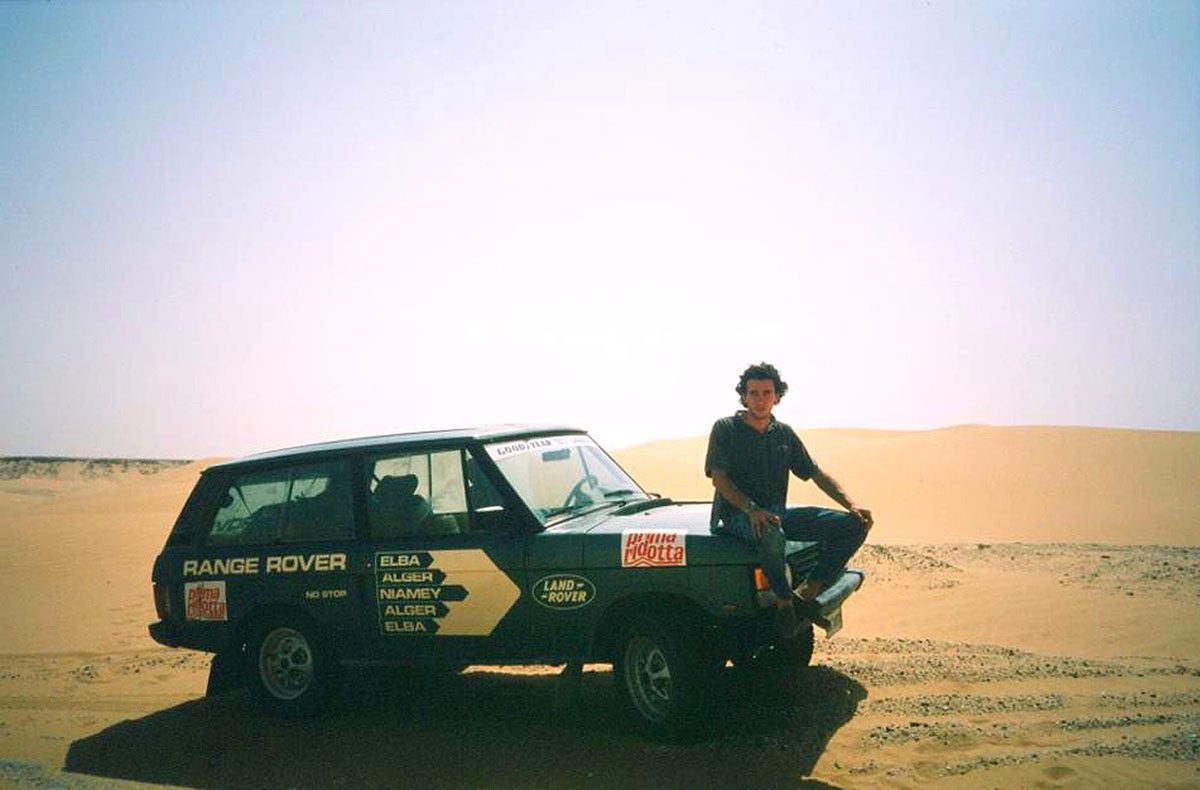
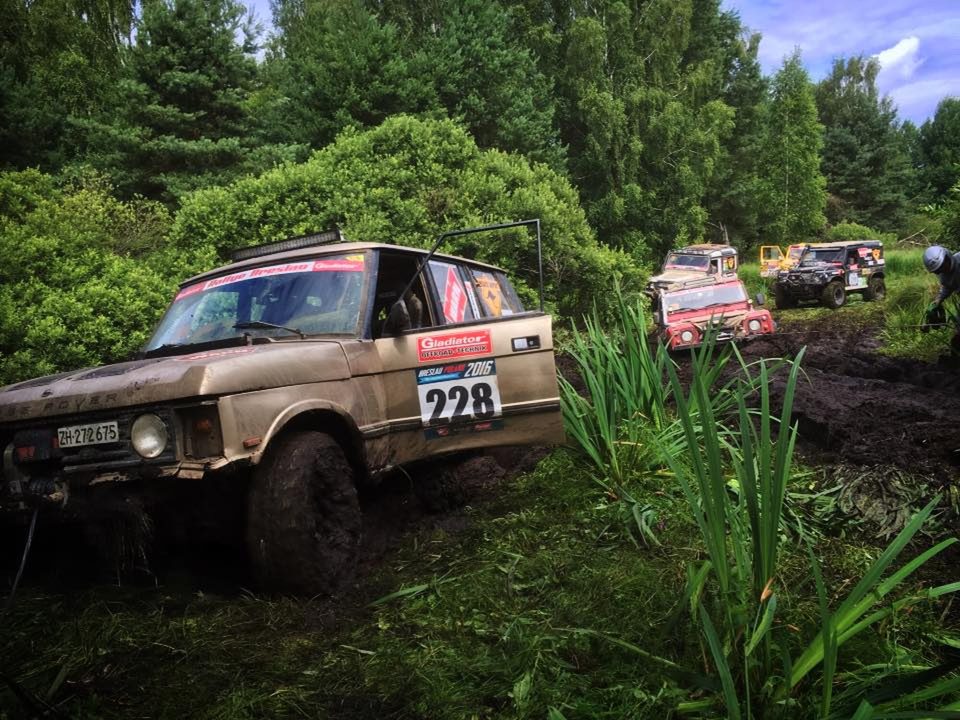
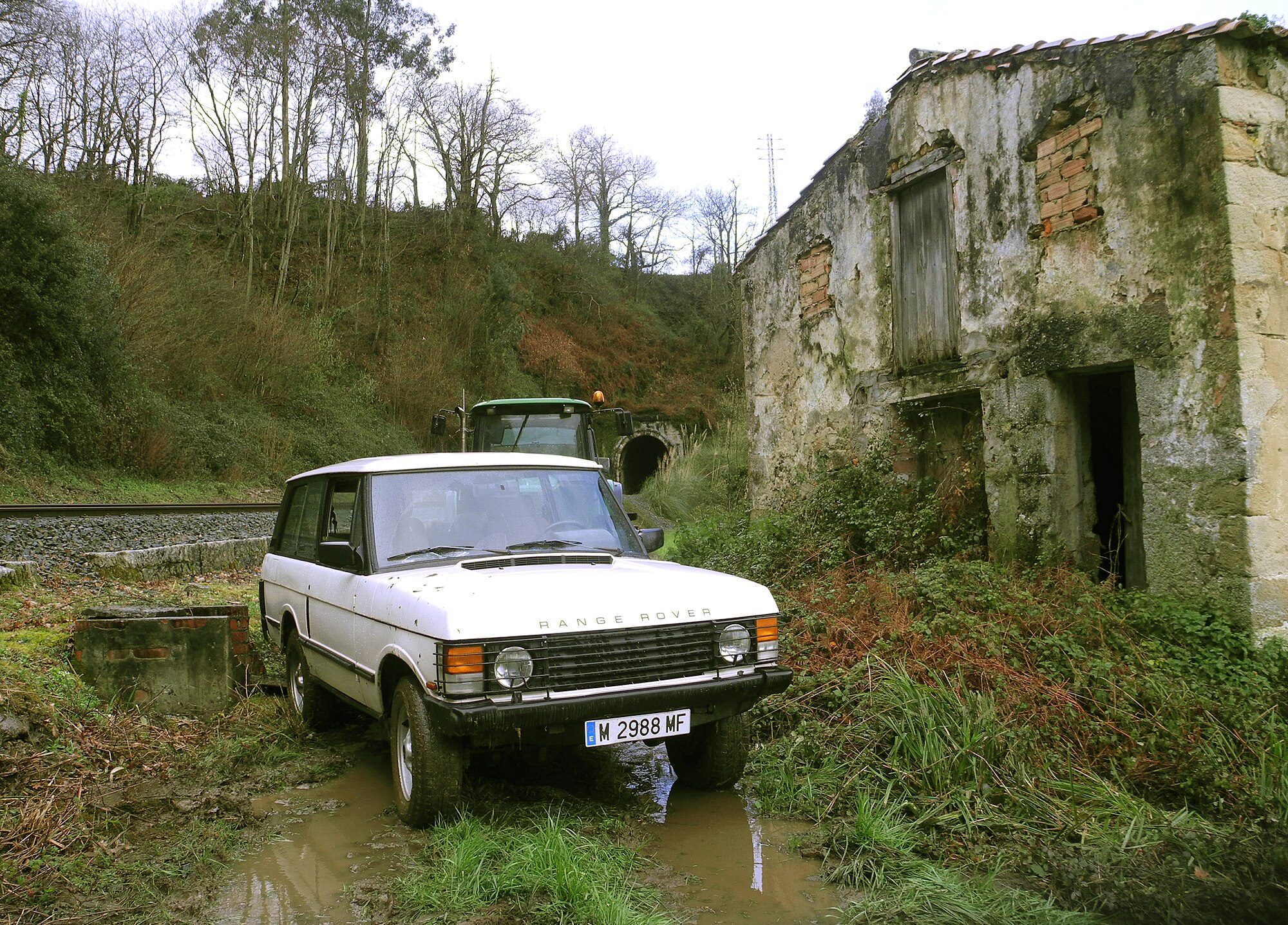
A white two-door Range Rover Classic on a waterlogged track beside a ruined mill in the Carasa marshes, Cantabria
LAND ROVER RANGE ROVER · CLASSIC · 1970–1996

Range Rover Classic

100-IN / 108-IN LWBROVER V8 3.5 · 3.9 · 4.2PERMANENT 4WDCOIL OR AIR (1993+)

“The original luxury 4x4, with the soul of a farm truck. Buy the rust-free one and you'll forgive it everything — buy the shiny rusty one and it'll teach you to weld.”

PART 01

Overview

Where it came from, why it matters, and how it changed year to year.

The story

In June 1970, Rover launched a two-door wagon with a 100-inch wheelbase, long-travel coil springs, permanent four-wheel drive, disc brakes at every corner and an all-alloy 3.5-litre V8 — and called it "A Car For All Reasons." Nobody had built anything quite like it. It would cross a ploughed field at lunchtime and the M1 at teatime, and it would go on doing so for 26 years and 326,070 examples. The Range Rover Classic is the reason "luxury SUV" is a phrase. Happily for us, under the walnut it is still a ladder frame, two beam axles and a V8 you can fix with spanners.

A WAGON IN DISGUISE

The project began in 1967 as the "100-inch Station Wagon", led by Charles Spencer "Spen" King with Gordon Bashford, with David Bache shaping the body. Prototypes wore "Velar" badges — from the Latin velare, "to veil or cover", according to Land Rover — to keep the press guessing. The recipe was radical for a Land Rover: coil springs rather than leaf springs, a Buick-derived all-alloy V8, and aluminium body panels hung on a steel frame. It was so well resolved visually that in 1971 a quarter-scale model took a leading role in the 'Idea and Form' design exhibition at the Musée des Arts Décoratifs, in the Louvre's Pavillon de Marsan — which Land Rover still bills as the first vehicle displayed at the Louvre.

For its first 11 years the Range Rover was a two-door only, with a rubber-and-vinyl interior. The four-door finally arrived in July 1981, and two-door UK sales ended in 1984, although two-door production carried on until January 1994, mostly for France. Through the 1980s the truck crept upmarket: Lucas electronic fuel injection replaced carburettors in 1986, the ZF four-speed automatic joined the range, and the luxury Vogue badge became the template for everything that followed.

AMERICA, LONG WHEELBASES AND AIR

A US launch was first pencilled in for mid-1971 at $5,300, but federal regulations and British Leyland's finances killed it. Grey-market importers (including Aston Martin's US arm) filled the gap until the factory US model was officially introduced at the Los Angeles Auto Show in January 1987, with imports beginning on 16 March. Only four-doors came over, through Baltimore and Long Beach, and in 1988 Playboy named it the "Best 4x4" — which tells you exactly which crowd the marketing department was chasing.

The engine grew with the image: 3.9 litres for the 1989 model year, and 4.2 litres in 1992 for the new long-wheelbase model, sold as the LSE in Britain and the County LWB in the US. That truck stretched the wheelbase to 108 inches and introduced electronic air suspension, which reached customers in late 1992 for the 1993 model year. The last big change was the "soft dash" of the 1995 model year, which replaced the original hard-plastic dashboard owners nicknamed the "Airfix dash" and was derived from the facelifted Discovery's dashboard, with Rover 800 switches.

WHAT MADE IT SPECIAL

The Classic's party trick was articulation with comfort. Long-travel coils on beam axles let it flex like a farm truck yet ride like a saloon, and the permanent 4WD with a dual-range transfer box meant there was no lever-pulling panic when the mud arrived. Early trucks used the LT95 four-speed with an integral transfer box; from 1983 the five-speed LT77 got a separate LT230 transfer case, and from 1989 a chain-driven Borg Warner unit with a viscous coupling replaced the manually locked centre differential. Range Rovers won the first Paris–Dakar in 1979 and won again in 1981, and in 1987 a Turbo D set speed and endurance records, including 24 hours at over 100 mph.

The engineering also trickled down. The coil-sprung, permanent-4WD layout was carried into the One Ten and Ninety — later the Defender 90/110 — which also borrowed the Range Rover's 3.5 V8 and, initially, its LT95 gearbox. And in 1989 Land Rover built the Discovery on the Range Rover's 100-inch chassis with a cheaper interior and a smaller diesel. Every boxy Land Rover of the next three decades owes something to Spen King's wagon.

THE LONG GOODBYE

The successor, internally P38A, was unveiled in September 1994 as the "New Range Rover" — and the old truck refused to leave. Renamed the "Range Rover Classic", it stayed in production alongside the P38A until 1996, with the 1995 County and County LWB marking the final US model year. Today the Classic sits in the odd spot of being both a collector car and a genuinely useful trail truck. Hagerty UK says values rose almost tenfold over a decade, with Velar prototypes and early two-doors at the top. But the bones that matter — frame, axles, coils, V8 — remain refreshingly agricultural, and that is exactly why it still belongs on a trail.

SIDEBAR · 1971–72 EXPEDITION

Two Range Rovers vs. the Darién Gap

Barely a year after launch, Rover lent two Range Rovers to the British Trans-Americas Expedition, led by John Blashford-Snell, to drive the Pan-American Highway from Alaska to Tierra del Fuego — roughly 18,000 miles, including the roadless Darién Gap between Panama and Colombia. The trucks carried capstan winches, double front bumpers, roof racks and bridging ladders as long as the trucks themselves.

The Darién transit alone took 96 days. Big, mud-packed swamp tyres broke three differentials, so Rover development engineer Geof Miller flew out, the axles and diffs were replaced, the trucks were lightened, and smaller cross-country tyres were fitted. The team used chainsaws and explosives to get through the Atrato Swamp. Both trucks survive: one at the British Motor Museum in Gaydon, the other (VXC 765K) in the Dunsfold Collection.
Year by year

What changed, model year by model year. Sweet spot Beware

  1. 1970Launched in June as a two-door: carburettored 3.5 Rover V8 (135 hp), coil springs, four-wheel discs and permanent dual-range 4WD with a manual centre diff lock.
  2. 1973Power steering added.
  3. 1981Factory four-door arrives in July, following approved conversions such as Monteverdi's.
  4. 1983LT77 five-speed and separate LT230 transfer box replace the LT95 combined box.
  5. 1985ZF four-speed automatic replaces the three-speed Chrysler TorqueFlite; new instrument pod.
  6. 1986Lucas fuel injection replaces carburettors in most markets; VM 2.4 Turbo D diesel launched for Europe; facelift with plastic slatted grille.
  7. 1987Factory US imports begin 16 March 1987 — four-door only.
  8. 19893.9 V8 replaces the 3.5; Borg Warner chain transfer case with a viscous-coupling centre diff replaces the manually locked unit; VM diesel grows to 2.5.
  9. 1992108-in LSE (UK) / County LWB (US) with the 4.2 V8; Land Rover's own 200Tdi replaces the VM diesel.
  10. 1993Electronic air suspension arrives on high-end 1993 model-year trucks (mainly LWB). Rides beautifully; pumps, sensors and valve blocks fail, and many have since been coil-converted.
  11. 1994–95Renamed 'Classic' alongside the new P38A; Discovery-derived 'soft dash' fitted to run-out trucks; 300Tdi replaces 200Tdi late 1994.
  12. 1996Production ends after 26 years.
PART 02

Specs & capability

How it’s built, what it can do, and what fits under it.

How it’s built

Underneath the Vogue badges, the Classic is pure Land Rover: a steel ladder frame, live axles front and rear on long-travel coil springs, permanent four-wheel drive through a two-speed transfer box, and an all-alloy V8. The body is unstressed aluminium panels on a steel frame — the panels don't rust, the steel under them does. That simplicity is why so many survive, and why the hard parts (frame, crossmembers, sills) are where your money goes.

CHASSISSteel ladder frame100 in (2,540 mm) wheelbase; LSE / County LWB stretched to 108 in (2,743 mm) from 1992.
BODYAluminium panels on a steel frameUnstressed alloy skins; the steel frame, sills and floors are the rust risk.
SUSPENSIONCoil springs, live axlesLong-travel coils from day one; electronic air suspension on 1993-on LWB and some upper trims.
DRIVETRAINPermanent 4WD, two-speedLT95 with integral transfer; LT77 + LT230 from 1983; chain-drive Borg Warner with viscous coupling from 1989.
ENGINERover all-alloy V83.5 (carb, then Lucas EFI from 1986), 3.9 from 1989, 4.2 for LWB from 1992. VM and Tdi diesels outside the US.
BRAKESFour-wheel discsDisc brakes at all four corners from launch; ventilated fronts and ABS added around 1990.

Variants & engines

YEARSPLATFORMENGINEOUTPUTWORTH KNOWING
1970–1985100-in, 2-door (4-door from 1981)3.5 V8, carburettors135 hp (101 kW) at launchLT95 4-speed with integral transfer box; power steering added 1973; 5-speed LT77 from 1983.
1986–1989100-in, 2/4-door3.5 V8, Lucas EFI110 kW (Australian spec)EFI and ZF 4-speed auto; US imports start March 1987 (4-door only).
1986–1992100-in, non-USVM 2.4 then 2.5 turbo-diesel—VM Motori diesel; Turbo D set 24-hour records at over 100 mph in 1987.
1989–1995100-in, 4-door3.9 V8 EFI130 kW claimed (Australian spec)Borg Warner chain transfer with viscous coupling; ABS arrives.
1992–1995108-in LSE / County LWB4.2 V8 EFINearly 200 hpElectronic air suspension (1993 MY on); soft dash for 1995.
1992–1996100-in, non-US200Tdi, then 300Tdi (from late 1994)—Land Rover's own direct-injection diesels; keep the timing belt current.

Capability numbers

Towing3.5 tonsclaimed at the 1970 launch
Fuel tank81.8 L (21.6 US gal)1992 3.9 V8
Fuel economyEPA 11 city / 15 hwy / 13 combined1990 3.9 automatic; 1995 County LWB 4.2 rated 11/15/12
Wheelbase100 in (2,540 mm); LWB 108 in (2,743 mm)

Wheels & tires

FACTORY TIRES
205R16 on 6J x 16 (ET33)235/70R16 on 7J x 16 (ET33)
Bolt pattern5x165.1 (5x6.5")
OffsetET33 (stock steel/alloy, 31–35 mm range)
Center bore114.3 mm
Lug threadM16x1.5 per wheel-spec databases [CONFIRM ON YOUR STUDS — not verified against a factory source]
Lug-nut torque96 lb-ft (130 N·m)
LIFTBIGGEST TIREWHAT IT TAKES
Stock245/75R16Fits on stock coils once the steering stops are adjusted to stop rubbing at full lock; some owners squeeze in 265/75R16 with slight chassis rub cured by the stops.
2 in235/85R16 or 265/75R16Owners on a 2-in OME lift run either size with no trimming. Expect to wind the steering stops out; the 265s cost turning circle and some owners needed longer stop bolts to stop them hitting the radius arms.

Forum consensus, not a guarantee: wheel offset, tire brand and suspension wear all change clearance. Confirm before you buy.

Production & special editions

Built at Solihull from 1970 to 1996, with CKD assembly in Australia (Enfield, 1979–1983) and Venezuela (Las Tejerías, 1973–1981).

Total built326,070 (James Taylor (Crowood), via Wikipedia; other sources quote 317,615 or 325,490)
US launch16 March 1987 (Four-door only; 36 dealers at launch, 65 by 1988)
CSK1990200 UK-built: Beluga Black paint, chrome bumpers, a recalibrated 3.9 V8 and anti-roll bars, named for Spen King. Australia built a separate run of 400 CSKs based on the Vogue.
Great Divide Expedition trucks1989Eight special-edition trucks prepared for a 12-day, 1,128-mile Rocky Mountain trek in Colorado to launch the brand's US reputation.
LSE / County LWB1992–1995108-in wheelbase, 4.2 V8 and air suspension; the luxury run-out model.
PART 03

Buying one

What to pay, what to check, and how to tell a good one from a clone.

What they cost

Prices are wide: rough coil-sprung SWBs and diesel projects are still cheap, clean County LWBs and two-doors bring real money, and V8-swapped restomods sit in their own price band.

Project / needs work$5k–13k
Driver$16k–28k
Excellent / low-mile / special edition$39k–77k
Restomod (e.g. ECD LS3/6.2 builds)$115k–153k

Based on 20 Bring a Trailer sales between July and October 2026 ($5,500–$153,000, median about $24,000). Original-owner and low-mile County LWBs and a clean two-door sat at the top of the stock-truck range. Prices move; checked October 2026. See live listings below.

What to check before you buy

  1. 01
    Get under it before you look at the paintThe aluminium skins hide a steel frame. Check body mounts, the rear crossmember, frame sides, inner rear wheel arches, inner front wings and both sills. Pre-1983 trucks are mostly bolted together and easier to repair.
  2. 02
    Lift the carpets and open the bootOwners say to check under the front carpets for floor rot. Boot floors are suspect on post-1989 trucks, and the steel upper tailgate commonly rusts.
  3. 03
    Listen to the V8Listen for bottom-end knocks and timing-chain rattle. Look for weeping head gaskets — cheap if caught early — and be wary of anything that hints at a slipped liner, which means a rebuild.
  4. 04
    Test the viscous coupling (1989-on)Tyres scrubbing or chirping on tight, slow turns means the centre viscous coupling may have seized, turning the truck into a permanently locked 4x4. With the transfer case in neutral and the handbrake on, a jacked front wheel should turn slowly with resistance — not stay locked solid.
  5. 05
    Interrogate the air suspensionOn EAS trucks, pumps, height sensors and valve blocks fail and leak, and few parts are shared with the later P38A system. Many have been converted to coils — fine, as long as it was done with a proper kit.
  6. 06
    Look for oily swivelsLeaking swivel-ball seals are chronic. Check the chrome balls for pitting and wet seals, and confirm the swivel housing has its own lubricant; it is separate from the front diff.
  7. 07
    Check the small electricsWindow switches and seat controls often fail (usually cheap). On cars with electric seats, a leaking battery can kill the seat ECU and stop seats and mirrors moving.
  8. 08
    Ask about LPG and the timing beltOne UK specialist recommends removing LPG conversions because they are often poorly fitted and can harm the engine. On 200Tdi and 300Tdi diesels, get proof the timing belt was changed in the last five years.

Spotting the real thing

Classics were built for 26 years in two- and four-door, two wheelbases, carb and injected, coil and air — and US buyers also meet grey-market and 25-year imports, so it pays to know what you're looking at.

  1. ID
    US-spec vs grey marketFactory US imports began on 16 March 1987 and were four-door only. Any US two-door, any pre-1987 truck, and any diesel came in through grey-market converters in the early 1980s or as a later 25-year import.
  2. ID
    Wheelbase and suspensionStandard trucks have a 100-in (2,540 mm) wheelbase. The LSE / County LWB (1992 on) has a 108-in (2,743 mm) wheelbase, the 4.2 V8 and electronic air suspension; check whether a previous owner has fitted a coil conversion.
  3. ID
    Transfer casePre-1989 trucks have a manual centre-diff lock (vacuum servo on the LT95, mechanical on the LT230). From 1989 a chain-driven Borg Warner box with a viscous coupling locks automatically, and a seized coupling makes the truck scrub on tight turns.
  4. ID
    Hard dash vs soft dashUntil 1994 the Classic kept its original hard-plastic 'Airfix' dashboard. Run-out trucks got the Discovery-derived 'soft dash' with Rover 800 switches, the version enthusiasts call 'soft dash' models.
  5. ID
    CSKThe 1990 CSK, named for Spen King, ran to 200 UK-built trucks: Beluga Black paint, chrome bumpers, silver coachlines, a recalibrated 3.9 V8 (185 bhp) and front and rear anti-roll bars. Australia separately built 400 CSKs based on the four-door Vogue.

Recalls & service bulletins

Open recalls follow the VIN, not the model. Run yours through NHTSA before you buy, and ask the seller for dealer records showing recall work.

Check a VIN at NHTSA ↗
Notable recalls
Fuel tank bottom corrosion ↗1987–1990 · NHTSA 95V-155The bottom of the fuel tank can corrode over time and leak fuel.
Fuel filter bracket corrosion ↗1987–1988 · NHTSA 88V-116Corrosion can occur between the fuel filter and its retaining bracket.
Brake pedal pivot circlip ↗1987–1988 · NHTSA 89V-012A wrongly installed circlip can let the brake-pedal pivot shaft move out of position.
Seat belt retractor pivot pin ↗1987–1988 · NHTSA 88V-034An oversized nylon pivot pin in the retractor lock mechanism.
Rear brake line chafe ↗1990 · NHTSA 91V-069The right rear metal brake line can rub on the top of the shock and leak one brake circuit.
Brake light switch ↗1990 · NHTSA 91V-222The brake-lamp switch by the pedal may fail to operate.

Importing & legality

Land Rover didn't sell the Range Rover in the US until 16 March 1987, and then only as a four-door. In the early 1980s Americans bought grey-market trucks converted to US rules by Los Angeles-area dealers and, from 1984, by Aston Martin's US division. Two-doors, diesels (VM, 200Tdi, 300Tdi) and manual-gearbox Euro trucks were never US-market vehicles.

Every Classic is now more than 25 years old, so under NHTSA rules any of them can be imported without meeting FMVSS; the 25 years are counted from the manufacture date, and the truck is declared under Box 1 on the HS-7 form. State titling and emissions rules still apply, so check your state's requirements, especially California's, before buying a diesel or a carbureted import.

Rules change and vary by state and country. Confirm with your DMV and a licensed importer before you buy.

The one you’ll own someday

For sale now

1987–1992 · USCoil-sprung SWB (3.5 / 3.9)
1993–1995 · USCounty / County LWB (4.2, air)
1970–1996 · AllEverything Classic incl. imports
PART 04

Owning one

Baseline service, the repairs you’ll actually do, and where the manuals live.

Post-purchase baseline

After you buy it

Most Classics are now 30 to 50 years old, and their records rarely cover the transfer box, swivels or ATF. Change every fluid and fix the cooling system before anything else, because the aluminium V8 doesn't tolerate overheating. Identify your transfer box before you buy oil: the chain-drive Borg Warner (with a viscous coupling) and the gear-drive LT230 take different fluids.

Engine oil & filterAPI SG, SAE 10W-40 or 10W-50 · ≈6.7 L (1991 3.9 V8 data). Later 3.9/4.2: [CONFIRM IN MANUAL]At purchase, then every 3,000–5,000 mi

These engines aren't fussy about oil brand; Hagerty UK's specialist uses about 7 L of 20W-50 every 6,000 miles or 12 months. A fresh filter matters. The ERR3340 filter covers the RRC, P38 and Defender V8s.

Air filterOE-type elementAt purchase

Check the airbox dump valve and the intake hoses for splits. Unmetered air upsets the Lucas/GEMS fuelling.

Fuel filterOE-type EFI filter [CONFIRM IN MANUAL]At purchase

Old fuel lines and rusty tanks are common on trucks that have sat. Inspect the rubber lines while you're under there.

Spark plugs & ignitionPlug type and gap per manual [CONFIRM IN MANUAL]At purchase if there's no record

Fit new plugs, leads, a distributor cap and rotor as a set. Tired leads cause a lot of rough running on these V8s.

Coolant50/50 ethylene glycol antifreeze and water · ≈11.4 LAt purchase, then every 2 years

Replace the hoses and thermostat at the same time. Check the viscous fan and the radiator core. See the cooling refresh in the repairs above.

Automatic transmission (ZF 4HP22 / 4HP24)Dexron IID ATF · ≈9.5 L total fill (1991 data)Drain and refill at purchase

A pan drain only exchanges part of the fluid. Do two drain-and-fills and change the pan filter rather than pressure-flushing an unknown box.

Transfer boxBorg Warner chain case: Dexron IID ATF (M2C33G / Texaco 4291 also listed) · ≈1.7 L. Gear-driven LT230 trucks: EP90 GL-4/5 · ≈2.3 LAt purchase

Do the jacked-wheel viscous-coupling test while you're under the truck (see repairs). A seized coupling causes driveline wind-up on tight turns.

Front & rear axles80W/90 EP gear oil, API GL-4 or GL-5 · ≈1.7 L eachAt purchase, then every 2 years

Fill to the level plug on level ground. Pinion seal weeps are common on old trucks.

Swivel housingsGear oil 90 EP/80W EP · ≈0.33 L per side (1991 data), or one-shot swivel grease STC3435 on later trucksCheck at purchase and at every service

Lucky8 lists the STC3435 sachet for the RRC ('87–'95). Owners regrease when they fit new seals (see repairs). Oil on the chrome ball means it's time for a seal.

Power steeringDexron IID ATF · ≈2.8 L systemCheck at purchase

Leaks from the steering box are common, so watch the reservoir level for a few weeks.

Brake fluidDOT 4At purchase, then every 2 years

ABS trucks (from about 1990) have a pump and accumulator. Bleed per the manual and check that the pump doesn't run constantly.

Air suspension (1993–95 LWB / air trucks)No fluid. Leak-check the springs, valve block, compressor and reservoir [CONFIRM IN MANUAL for dryer service]At purchase

An overnight sag at one corner or a compressor that runs constantly means there's a leak. Many owners convert to coils (see repairs).

Propshafts & UJsMultipurpose lithium greaseAt purchase, then at every service

Grease the UJs and sliding joints. A clunk on take-up usually means a dry UJ.

For the hands-on owner

Common repairs

The jobs owners actually end up doing, rated for a competent home mechanic with a decent tool kit. Always confirm torque figures, fluids and procedures against the factory service manual for your VIN, and work safely — support the truck on stands, never just a jack. You do this work at your own risk; see the disclaimer. Some parts links are affiliate links.

Swivel ball seal replacement and regrease
DIFFICULTY · 2 / 5TIME · VariesSHOP COST · Parts plus labor
SYMPTOMSOil weeping from the swivel housings onto the chrome balls and wheels; the truck rolling while in park can mean a CV joint ran dry and failed.
THE FIXRemove the bracket that retains the swivel seal on the back of the hub. Cut out the old seal (Dremel or heavy side cutters). Pull the spring from the new seal and cut the seal so it can be wrapped around the axle housing, then refit it with the cut at the top, rejoin the spring, and seal the cut with silicone. Let it cure for a day, drain the old oil, and refill the swivel with the correct Land Rover swivel grease. For peace of mind, strip and repack the CV joints too (owners estimate 3–4 hours).
TOOLS & PARTSDremel or heavy side cutters · basic sockets · new swivel seals · silicone · swivel grease
Viscous coupling replacement (Borg Warner transfer case)
DIFFICULTY · 3 / 5TIME · ≈ 3 hoursSHOP COST · Exchange VC about £340 + VAT, plus a £75 core deposit (Ashcroft)
SYMPTOMSTyres scrub or chirp on tight, slow turns; premature tyre wear on the edges; the truck needs a lot of throttle in slow, tight corners; driveline wind-up. A jacked-up wheel won't turn by hand.
THE FIXConfirm the diagnosis: transfer case in neutral, handbrake on, jack one front wheel — it should turn slowly with resistance. If it is locked solid, replace the coupling before it damages the diffs or CV joints. One owner swapped it with the transfer box still in the truck in about three hours.
TOOLS & PARTSJack and stands · basic hand tools · viscous coupling RTC6044 (same part on Classic and P38A)
Air suspension to coil conversion (1993–95)
DIFFICULTY · 3 / 5TIME · ≈ 3.5 hoursSHOP COST · Kit plus labor (replacing a failed air system can cost around $4,000)
SYMPTOMSTruck sagging at one corner overnight, the compressor running constantly, height-sensor or valve-block faults, or a truck that won't rise to off-road height.
THE FIXFit a purpose-built conversion kit, which replaces the air springs with coils and comes with the required hardware and instructions, and removes the compressor and valve block from the system. Atlantic British says its kit gives about 2 inches of lift on a short-wheelbase truck; one LWB owner reported 1.5–2 inches.
TOOLS & PARTSSpring compressor · jack and stands · Rovers North RNK5105 or Atlantic British RRC 93–95 coil conversion kit
Heater core / blower motor (dash out)
DIFFICULTY · 4 / 5TIME · ≈ 9–10 hours (owners report about 12 book hours)SHOP COST · Core about $150 (as reported by owners); labor is the cost
SYMPTOMSNo heat, a sweet smell or fogged windows (core), or a dead or noisy blower — Atlantic British suggests replacing the blower around 150,000 miles.
THE FIXDisconnect the battery and note the radio code. Drain the coolant, remove both front doors, the left footwell panels, the dash fascia, the instrument panel, the radio surround and the dash top. Lower the A/C unit without discharging it. Disconnect the heater hoses at the firewall and remove the four heater-box bolts. Split the box, swap the core (owners recommend the all-metal type) and/or the blower, test before reassembly, then refill and bleed the cooling system.
TOOLS & PARTSPhillips and flat screwdrivers · 10 mm deep sockets · trim and radio tools · drill · soldering iron and heat-shrink · new hose clamps · Atlantic British kit #8844 for blower upgrade
Front radius arm bushes (chassis end)
DIFFICULTY · 2 / 5TIME · VariesSHOP COST · Terrafirma poly kit about $66
SYMPTOMSVague or wandering steering, clunks over bumps, and cracked or perished rubber where the radius arms meet the chassis.
THE FIXSupport the chassis on stands, take the weight off the front axle, unbolt the radius arm at the chassis mount and swap in the new bushes.
TOOLS & PARTSJack and axle stands · large sockets · pry bar · Terrafirma TF1003 (replaces NRC4514; also fits Defender and Discovery 1)
Rear crossmember replacement
DIFFICULTY · 5 / 5TIME · ≈ 1–2 full daysSHOP COST · Parts plus labor
SYMPTOMSRust holes in the boxed rear crossmember, a sagging or bulging rear floor, cracked welds, movement under load, or a tailgate that no longer lines up.
THE FIXStrip the load floor, carpets and trim. Cut out the rotten section and clean back the mating edges. Trial-fit the new crossmember so it is square and level, then clamp and tack it, recheck it, and weld it out without overheating the frame. Dress the welds, then prime, seam-seal and paint. Refit the floor and check that the tailgate still aligns.
TOOLS & PARTSAngle grinder · spot-weld cutter · MIG welder · clamps · squares and straightedge · rust treatment, primer, seam sealer · replacement crossmember
Cooling system refresh
DIFFICULTY · 2 / 5TIME · VariesSHOP COST · Parts plus labor
SYMPTOMSCreeping temperature gauge, coolant weeps, or simply unknown history on an aluminium V8 that hates overheating.
THE FIXReplace the radiator, viscous fan coupling, water pump, thermostat and hoses as a set, then refill with a 50/50 coolant mix and bleed the air out. The aluminium block and heads depend on the cooling system.
TOOLS & PARTSBasic sockets · drain pan · radiator, viscous fan, water pump, thermostat, hoses, clamps · antifreeze

Manuals & documentation

Asked on every forum

Range Rover Classic questions, answered

What's the biggest tire I can fit without a lift?

The usual forum answer is 245/75R16 (about 30.5 inches) on stock coils, with the steering stops adjusted to stop rubbing at full lock. Some owners run 265/75R16 with slight chassis rub fixed by the stops. 235/85R16 generally needs a lift or some trimming on these 100-inch trucks.

SOURCE · LANDROVERWORLD · DISCOWEB
What fuel economy should I expect?

Bad. The EPA rated a 1990 3.9 automatic at 11 mpg city and 15 highway (13 combined), and the 1995 County LWB 4.2 at 11/15 (12 combined). Hagerty says careful driving helps.

SOURCE · FUELECONOMY.GOV · HAGERTY
How much can it tow?

Towing capacity is quoted at 3.5 tons. Note that Hagerty says coil-sprung trucks are more reliable but less suited to towing than the air-suspension trucks.

SOURCE · WIKIPEDIA · HAGERTY
Air suspension or coils — and should I convert?

Electronic air suspension arrived on late-1992 trucks for the 1993 model year, mainly the LWB. It rides beautifully but pumps, height sensors and valve blocks fail. Bolt-in coil conversion kits are widely available for 1993–95 trucks and take about 3.5 hours.

SOURCE · WIKIPEDIA · HAGERTY · ATLANTIC BRITISH
Does it have a centre diff lock?

It depends on the year. Earlier trucks have a manually lockable centre differential. From 1989 a chain-driven Borg Warner transfer case with a viscous coupling locks automatically. On those trucks, check that the viscous coupling hasn't seized.

SOURCE · 4X4 AUSTRALIA · ASHCROFT
Can I add lockers?

Yes. ARB makes Air Lockers for Rover-type banjo differentials in both 10-spline (RD127) and 24-spline (RD128) versions. Check which axle shafts your truck has before ordering.

SOURCE · ARB USA · ROVERS NORTH
Which years or versions should I buy?

Buy the most rust-free truck you can afford; condition matters more than the year. Values run from Velar prototypes to two-doors to four-doors, and fuel-injected and LSE four-doors are worth more than carburettor trucks. In the US, choose between 1987–92 coil-sprung SWB trucks and the 1993–95 County LWB with the 4.2 and air suspension. The 1995 trucks get the soft dash.

SOURCE · HAGERTY · TFLCAR
Is it reliable?

It can be, if you look after it. Jalopnik's experts say rust is what kills Classics, not the engine. Refresh the whole cooling system, keep up with oil changes, and expect electrical gremlins. Treat it as a third car or a project rather than a daily driver unless it has been sorted.

SOURCE · JALOPNIK
What oil and how often?

Hagerty's specialist recommends good-quality 20W-50, changed every 6,000 miles or 12 months. Some owners change it every 3,000 miles. Separately, check the oil in the swivel housings — it is not shared with the front diff.

SOURCE · HAGERTY · JALOPNIK · ATLANTIC BRITISH
Was there a diesel, and did the US get one?

Yes, but not in the US. The VM Motori 2.4 turbo-diesel arrived in 1986 and grew to 2.5 in 1989. Land Rover's 200Tdi replaced it in 1992, followed by the 300Tdi at the end of 1994. US trucks were all petrol V8s.

SOURCE · WIKIPEDIA
Did the US get the two-door?

Not officially. Factory US imports from March 1987 were four-door only. Earlier two-doors in America came through grey-market importers.

SOURCE · WIKIPEDIA
PART 05

Building one

Who makes the good stuff, where owners gather, and who to watch.

Common modifications & who does them

SUSPENSION LIFTOld Man Emu springs and shocks add about 1.5 inches of lift and support bumpers, a winch and bigger tyres on 1987–93 coil trucks.
AIR-TO-COIL CONVERSIONConverting a tired 1993–95 EAS truck to coils makes it simpler and more reliable, and gives a modest lift.
LOCKERSLockers make up for the open axles when the truck is crossed up and a wheel is in the air.
TRANSFER CASERebuilt viscous couplings for the Borg Warner case, so the truck stops scrubbing tyres in tight turns.
POLY BUSHESPolyurethane radius-arm and suspension bushes tighten up a wandering front end; the same parts fit the Defender and Discovery.
ROOF RACKA Classic-specific full-length cargo rack for overland gear, a spare and a shovel.

Clubs & events

Resources

Channels, accounts & forums

All Range Rover resources →
SourcesWikipedia — Range Rover ClassicWikipedia — Range Rover (L322)Wikipedia — Range Rover (L405)Wikipedia — Range Rover (L460)Wikipedia — Land Rover DefenderMotor1 — Range Rover P38 (1994–2002): the successor to the throne turns 30Top Gear — Here's every generation of Range Rover since 19704X4 Australia — Evolution of the Range Rover ClassicHagerty UK — Range Rover Classic buying guide (1970–1995)TFLcar — 1995 Range Rover County LWB [Great Find]Rovers North Forums — RR Classic: what to look for?Rovers North Forums — The definitive swivel pin threadRovers North Forums — Heater core / expert adviceAtlantic British — Range Rover Classic '87–'95 drivetrain tech tip (swivel ball)Atlantic British — Heater blower motor kit #8844 instructions (RRC 1990–94)Atlantic British — Range Rover Classic 93–95 air-to-coil conversion kitRovers North — Coil spring conversion, air suspension, Range Rover Classic (RNK5105)Rovers North — Old Man Emu suspension kit, Range Rover Classic (OMERRK1)LandRoverWorld — RRC BW viscous coupling and latch spring replacementAshcroft Transmissions — Range Rover viscous coupling (RTC6044)LandRoverWorld — '88 Classic 2-inch lift, max tire clearanceDiscoWeb archive — 235/85-16 or 245/75-16 on stock suspensionJalopnik — Can you make an old Range Rover reliable?YRM — Replace the rear cross member on an RRCLucky8 — Terrafirma front radius arm poly bush kit TF1003 (replaces NRC4514)ARB USA — Air Locker, Land Rover 10-spline banjo (RD127)ARB USA — Air Locker, Land Rover 24-spline banjo (RD128)Dometic / Front Runner — Range Rover (1970–1996) Slimline II roof rack kitFuelEconomy.gov — 1990 Land Rover Range Rover 3.9L autoFuelEconomy.gov — 1995 Land Rover Range Rover County LWBAtlantic British Roverlog — 1972 Range Rover Darién Gap expeditionDunsfold Collection — 1971 Range Rover British Trans-Americas Expedition vehicle (VXC 765K)The Intercooler — Crossing the Darién GapBring a Trailer — Land Rover Range Rover ClassicBolidenForum — 1991 Range Rover (3.9 V8) technical data (fluids and capacities)Lucky8 — STC3435 swivel housing grease sachet (fitment)Lucky8 — Genuine oil filter ERR3340 (fitment)Syncro Gearboxes — Land Rover LT230 transfer box oil changeRange Rover — Range Rover at the Louvre (Idea and Form, 1971)Land Rover India — Introducing Range Rover Velar (origin of the Velar name)Automotive World — Range Rover celebrates 45 years (Dakar wins, Louvre, production)Koleso.ee — Range Rover Classic (1970–1996) wheel specsCararac — Land Rover Range Rover bolt pattern by generationBolidenForum — 1992 Range Rover 3.9 V8 technical dataLandRoverWorld — '88 Classic 2-inch lift, max tire clearanceDiscoWeb archive — RRC: 235/85-16 vs. 265/75-16NHTSA — Recalls API, Land Rover Range Rover MY1987NHTSA — Recalls API, Land Rover Range Rover MY1988NHTSA — Recalls API, Land Rover Range Rover MY1990Wikipedia — Range Rover ClassicFuelEconomy.gov — 1990 Range Rover 3.9 autoFuelEconomy.gov — 1995 Range Rover County LWBBring a Trailer — Range Rover Classic (completed auctions)Lucky8 — Land Rover Original Technical Service Publication, Classic (LTP3002USB)Lucky8 — Haynes workshop manual, Range Rover Classic 1970–1992 petrolAtlantic British — Range Rover Classic parts catalog, 1987–1995NHTSA — Importation and certification FAQs (25-year rule)ClassicCar.co.nz — Range Rover: the Motor Man looks at a lovable bruteRangeRoverCSK.com — History & backgroundRange Rover Register — About the clubRovers North blog — ANARC news (Association of North American Rover Clubs)Rovers North blog — MAR 2025 (Rover Owners of Virginia Mid-Atlantic Rally)