The story
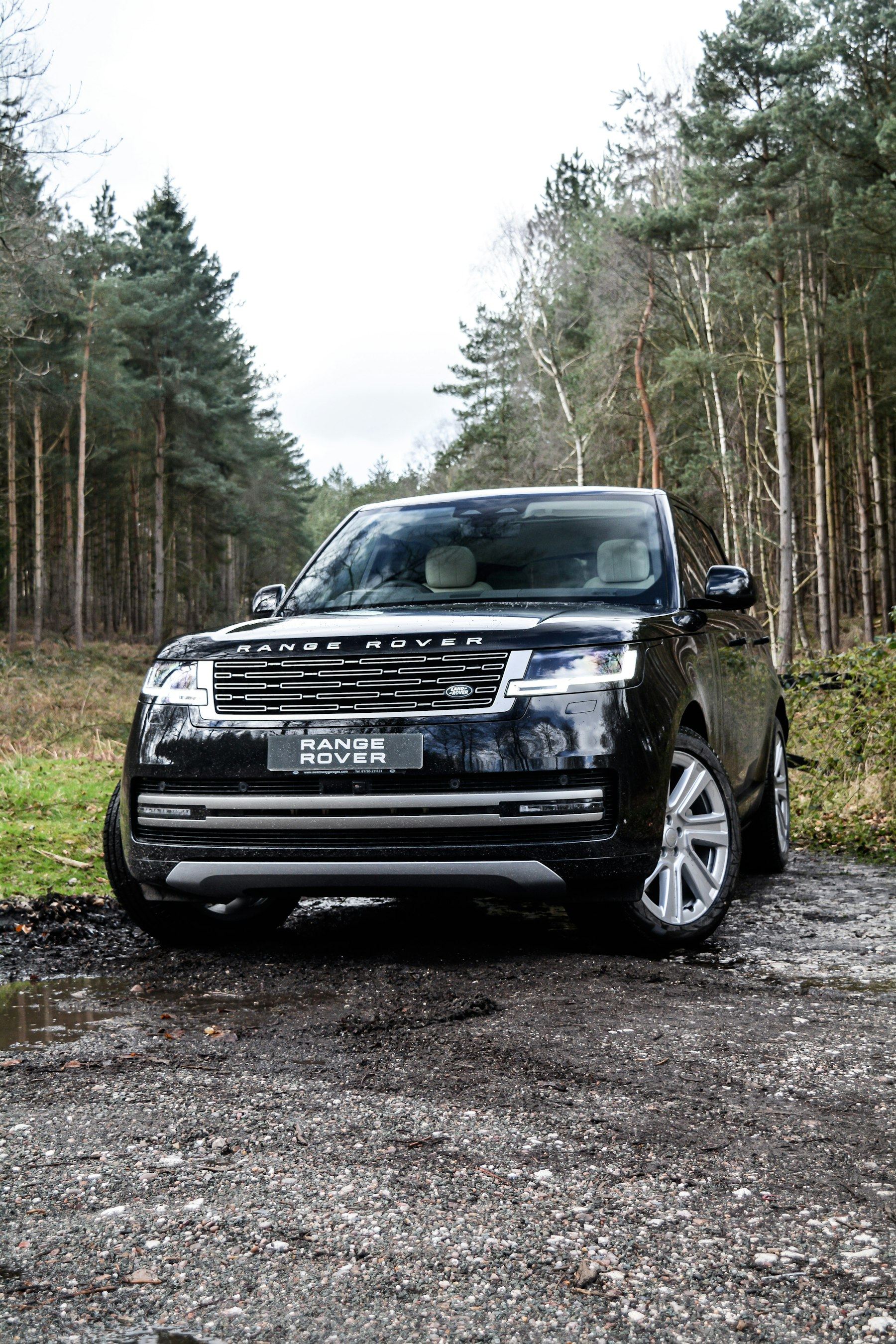
On 26 October 2021, Gerry McGovern pulled the covers off the fifth Range Rover at the Royal Opera House in London — a suitably theatrical venue for a truck that is mostly about refinement. The L460 keeps the family silhouette and the two-speed transfer box, then piles on things no Range Rover has had before: a seven-seat option, four-wheel steering, plug-in hybrids with a real electric range, a BMW-sourced V8 and, from the 2027 model year in America, a fully electric version. It is the most technically ambitious Range Rover yet, and its first few years brought a long list of recalls to match.
MLA-FLEX AND THE BIG STRETCH
The L460 rides on JLR's MLA-Flex architecture, shared with the third-generation Range Rover Sport. It grew in every direction over the L405: 53 mm longer, 63 mm wider and 35 mm taller, on a wheelbase 75 mm longer at 2,997 mm. The long-wheelbase version adds another 200 mm between the axles, and it is the only body that offers seven seats. JLR claims torsional rigidity is up 50 percent to 50,000 Nm per degree, and a steel closed-section front bulkhead cuts road noise entering the cabin by about 24 percent.
Off-road hardware survived the luxury push. US-spec trucks still list a twin-speed transfer box with high and low range, Terrain Response 2, All Terrain Progress Control and hill descent control. Upper trims get an Electronic Active Differential with torque vectoring, while the SE makes do with an open rear diff and torque vectoring by braking. New tricks include all-wheel steering, the first on a Land Rover, which gives a 10.95 m turning circle. An intelligent AWD system can also disconnect the front axle between 35 and 160 km/h to cut drag losses by 30 percent.
SIX, EIGHT, PLUG, BATTERY
Engines are all electrified to some degree. The core is JLR's 3.0-litre Ingenium straight-six, as a 400 PS mild-hybrid petrol, as 249–350 PS mild-hybrid diesels outside the US, or as a plug-in hybrid with a 38.2 kWh battery and a 105 kW motor (160 kW on the later P550e). The P440e and P510e launched the PHEVs, and the P550e replaced the P440e for the 2024 model year. The V8 is BMW's twin-turbo 4.4. Early P530s used the N63, and from the 2024 model year JLR switched to the newer S68, which also powers the 615 PS SV. In EPA testing a 2023 P530 managed 16 mpg city and 21 highway, the P400 18 and 26, and the P440e 51 MPGe on electricity.
Then the big one. Range Rover Electric is available to order in the US as a 2027 model, with twin 260 kW motors, 660 lb-ft, an 800-volt battery architecture and an EPA range of 333 miles. Land Rover is careful to say it is still a Range Rover. It quotes a 35-inch wading depth and 5,511 lb of towing, and the battery sits behind a flat, re-engineered underbody meant to cope with sliding over obstacles.
GROWING PAINS
The launch was rough. Owners on FullFatRR report early cars delivered with downgraded audio and other options because JLR couldn't get the parts. Then came the recalls. NHTSA lists, among others, a blocked cam-carrier oil channel (2022–2023 L460s; the same campaign covers 2020–21 L405s), badly welded second-row seat frames on 2022–2023 seven-seaters, damaged tail-light links, and 2024 trucks with body panels that may not have been bonded properly. UK owners also reported a rear-subframe cracking recall in 2023. The headline problem now is the 48-volt to 12-volt DC-DC converter on mild hybrids: when it fails, the 12-volt battery stops charging. NHTSA recall 26V248000 covers 2020–2024 Range Rovers (including late L405 mild hybrids) with an interim central-software fix, and follow-up campaign 26V599000 adds a further software update, with a final remedy still to come.
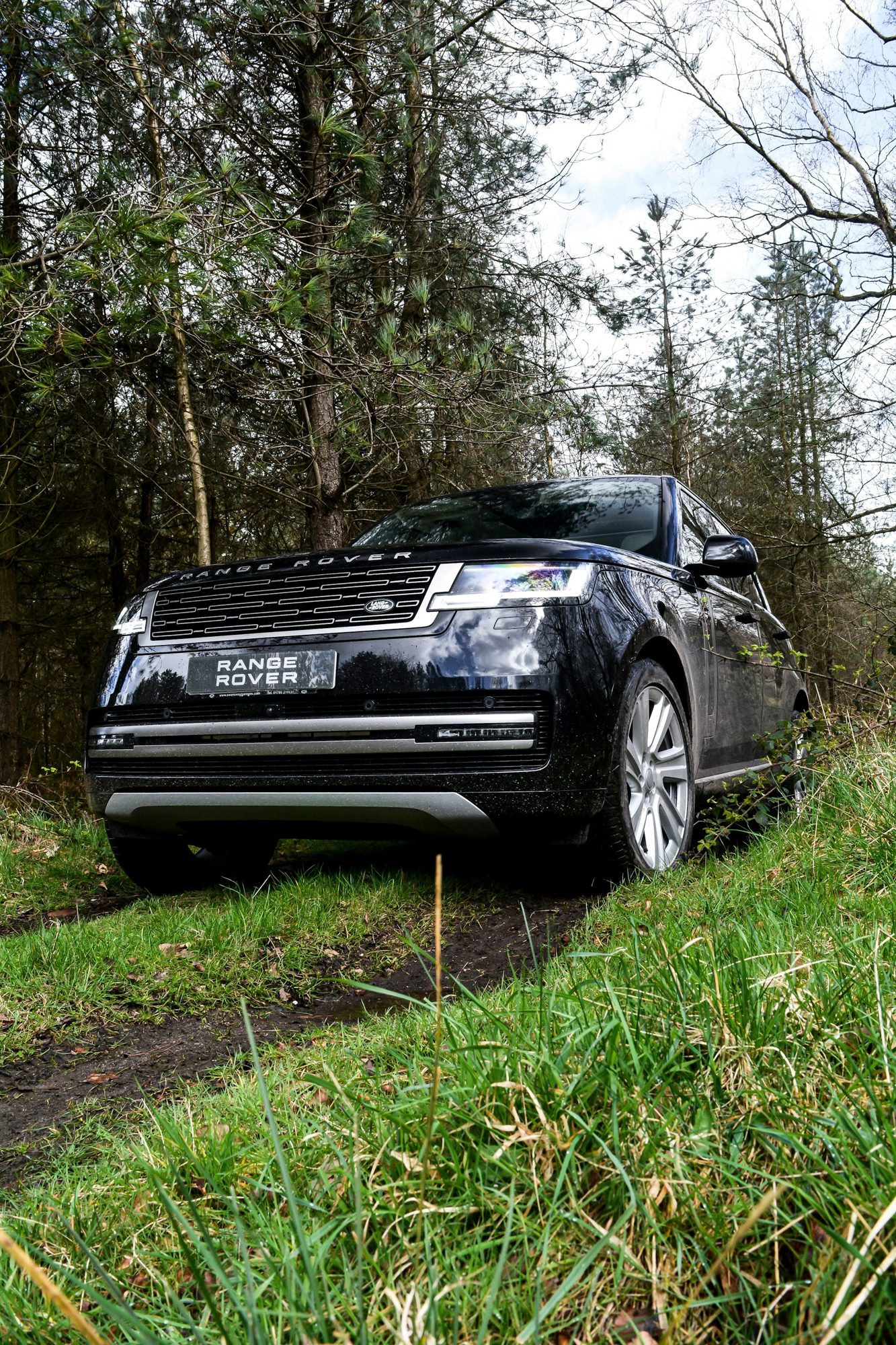
None of that changes what it is on a trail: a very wide, very heavy luxury car with low range, clever traction electronics and air suspension that does its job well. What it lacks is an aftermarket. A 2025 FullFatRR thread asking for sliders and underbody protection was told to budget €3,500–4,000 for a fabrication shop. Owners weighing one for African dirt roads were pointed at a Defender or a Land Cruiser 300. Treat the L460 as a superb gravel-and-green-lane machine, and keep it away from rock gardens.
SIDEBAR · RANGE ROVER ELECTRIC
From −40 °F to the Arabian Desert
Before putting the electric L460 on sale, Land Rover ran it through what it calls one of its most arduous testing programmes. Product engineering director Thomas Müller took it into −40 °F conditions in the Arctic Circle, and test driver Yakub Dino drove it into the heat of the Arabian Desert.
The result: 344 nickel-manganese-cobalt cells stacked in two layers under a flat underbody, twin in-house 260 kW motors, a 35-inch wading depth, and single-pedal driving that works with Terrain Response to bring the truck to a stop on any surface. It's a 333-mile EPA-rated Range Rover that can still wade a ford. Spen King would probably want to know where the V8 went.