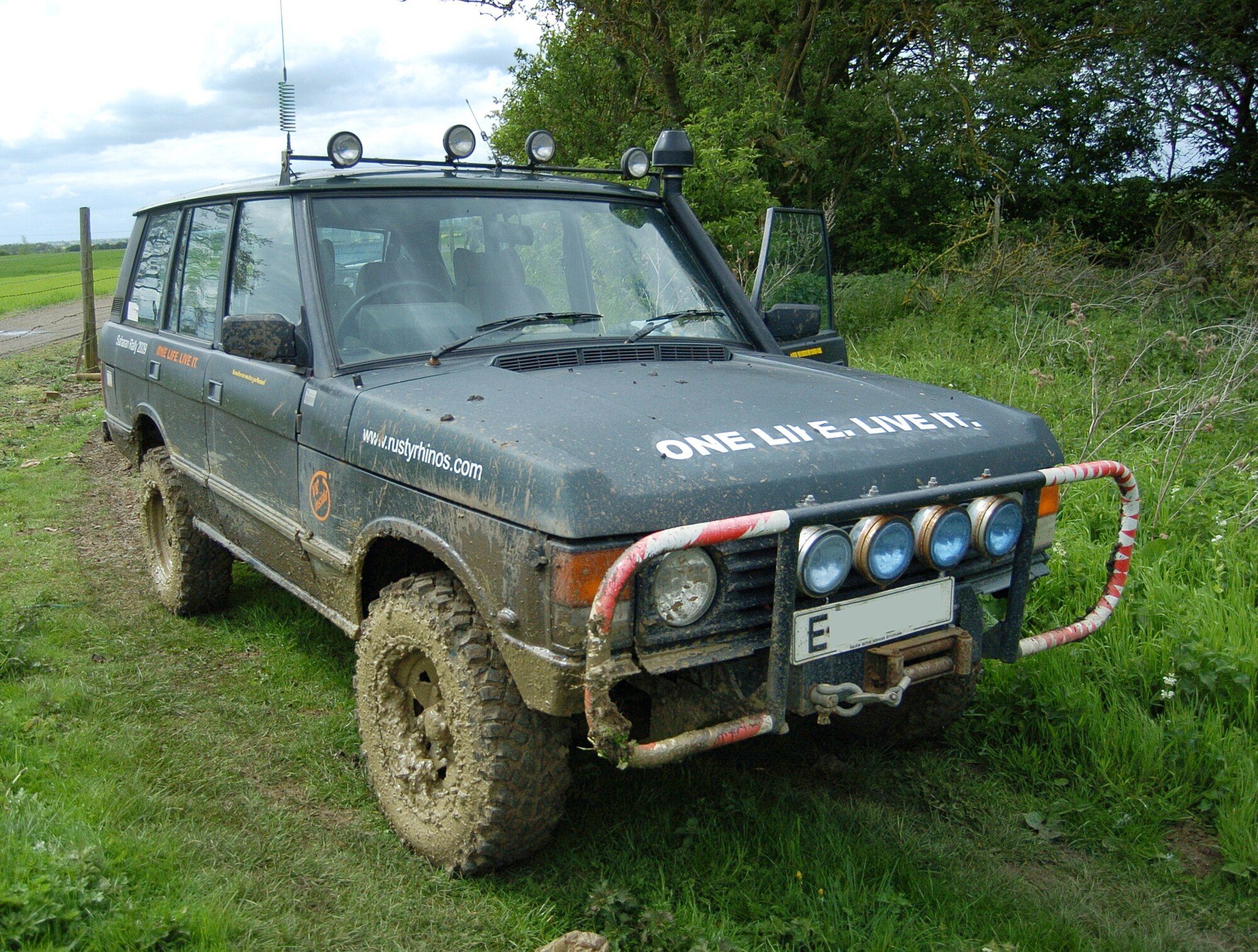
Range Rover
“The truck that taught a farm tool to wear a suit — and, for its first quarter-century, never forgot where it parked its wellies.”
The Range Rover arrived in June 1970 as "A Car For All Reasons": a 100-inch-wheelbase, coil-sprung, permanently four-wheel-drive wagon with an all-alloy Rover V8 and aluminium panels hung on a steel frame. It was conceived as something a Land Rover owner could also drive to dinner, and it accidentally invented the luxury 4x4 in the process.
Five generations later, the name has drifted steadily up-market. The Classic (1970–1996) and the P38A (1994–2002) kept a separate ladder chassis and live axles; the L322 (2002–2012) went monocoque with all-independent air suspension and BMW-shared hardware; the L405 (2012–2021) went all-aluminium; and the L460, revealed in October 2021, added a seven-seat option, plug-in hybrids and a BMW-sourced 4.4 V8.
For BoxyTrucks readers, the sweet spot is the old stuff. The Classic is the one you can fix in a driveway with hand tools, a Rovers North catalogue and a forgiving spouse. The later trucks remain astonishingly capable off-road, but they are rolling networks of sensors and air springs — wonderful when right, ruinous when not.