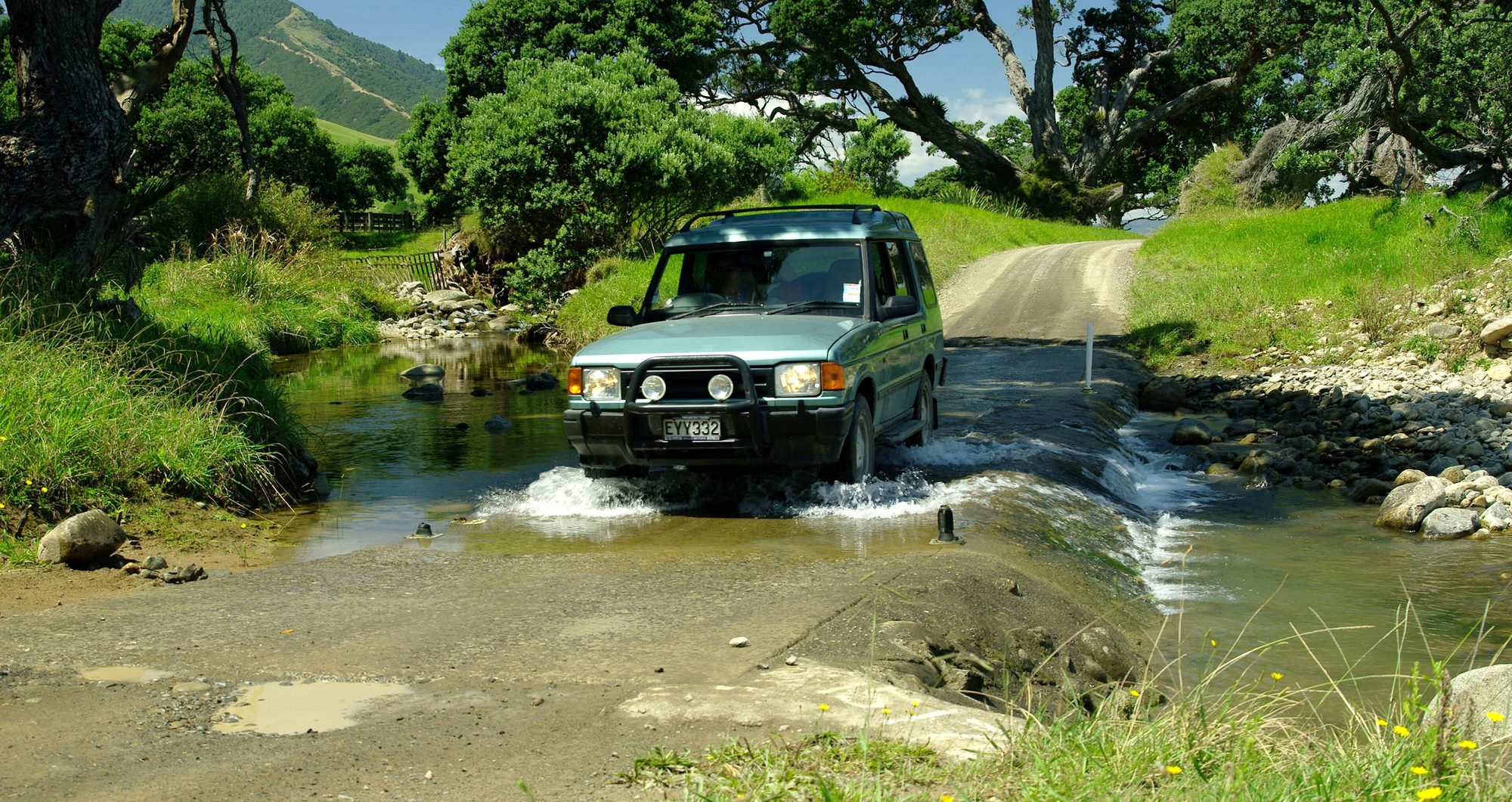
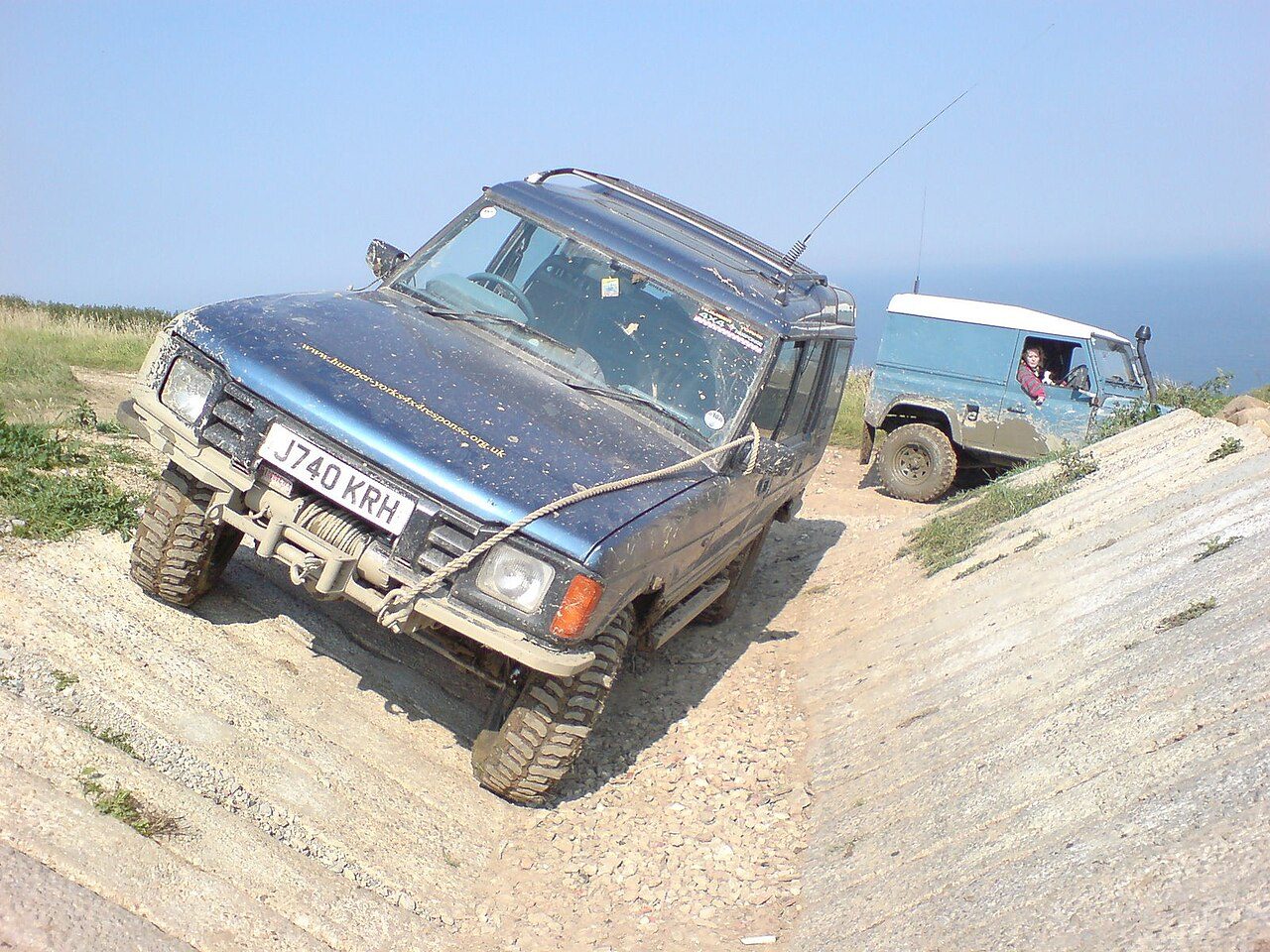
The story
The first Discovery was Land Rover's answer to a simple problem: the Range Rover had drifted upmarket, the Japanese were selling family 4x4s by the boatload, and the company had a superb chassis it could reuse. So it took the Range Rover's frame, coil springs and permanent four-wheel drive, wrapped them in a cheaper, taller, more practical body, and created the first Land Rover sold as a family car. It is tough, simple and endlessly fixable. It also rusts, leaks and was assembled from whatever the Rover Group parts bin had in it that week.
PROJECT JAY
Developed under the code name 'Project Jay', the Discovery was unveiled at the 1989 Frankfurt Motor Show and went on sale in Britain that October. At launch it was a three-door only; the five-door followed in 1990. The 64 original press cars, registered 'G-something WAC', are now known to enthusiasts as 'G-WACs' and are increasingly collectable. The body kept much of the Range Rover's structure, including door shells and window frames under its own aluminium skins, but stretched the rear, raised the roof for optional third-row jump seats and moved the spare wheel onto a side-hinged rear door.
Land Rover handed the interior to Conran Design Group with instructions to ignore conventional car design, and the result won a British Design Award in 1989. Early trucks were trimmed in light 'Sonar Blue', with magazine nets over the windscreen and a removable holdall in the console. The hardware was pure parts bin: switchgear and instruments from the Austin Maestro and Montego, vents from the Rover 800, Freight Rover van headlamps, Maestro van tail lights and Morris Marina door handles.
ENGINES AND THE 1994 REFRESH
At launch you could have the new 2.5-litre 200Tdi or the 3.5 Rover V8, first on twin SU carburettors and from 1990 on Lucas 14CUX fuel injection. A 2.0-litre Mpi petrol four was briefly offered for British and Italian tax reasons and disappeared because it simply wasn't enough engine. In 1992 the Tdi became available with an automatic, beige trim joined the blue, and an SE pack added alloys, driving lights and roof bars.
The 1994 update was the big one: the 300Tdi replaced the 200Tdi, the 3.9 V8 replaced the 3.5, manual trucks got the stronger R380 gearbox, and a new 'soft-feel' dashboard made room for airbags. The LT230 transfer box with its lockable centre differential and the Tdi engines are shared with the Defender of the same era, so drivetrain parts are still easy to find.
AMERICA AND THE CAMEL TROPHY
The Discovery arrived in the US for the 1994 model year, with airbags to meet federal rules and the 3.9 V8 from the Range Rover as the only engine. The 1996–98 US trucks are badged 4.0 but have the same displacement; the changes were a stiffer block, new pistons and the switch from 14CUX to the GEMS engine management that made them OBD-II compliant. Land Rover Special Vehicles built 250 AA Yellow 'XD' trucks for North America in 1997, with Safety Devices roof racks and brush guards.
The Discovery's best publicity came from the Camel Trophy. From the 1990 event in Siberia, when the main vehicle was a three-door 200Tdi, to Mongolia in 1997, the Discovery was the event's principal car, switching to 300Tdis from 1995, all in Sandglow yellow and heavily modified by Land Rover Special Vehicles. In Japan, Honda sold it as the Honda Crossroad thanks to Rover's tie-up with Honda, which ended after BMW bought Rover in 1994.
WHY IT'S A BARGAIN BOXY TRUCK
Underneath, a Discovery 1 is a Range Rover Classic on coils with Defender-grade drivetrain parts, and that makes it a cheap way into proper Land Rover off-roading. The LT230 and the Tdi engines are shared with trucks that have huge aftermarkets, and the coil springs give a far better ride and more articulation than a leaf-sprung Series truck.
The catch is the body. LandyZone's members sum up buying advice as rust: sills, rear floor, boot floor, inner wings and body mounts, plus sunroofs whose drains were badly designed from the start. Every Disco 1 is now more than 25 years old, so European 300Tdi trucks can be imported to the US under the 25-year rule, and the model was replaced in 1998 by the Discovery Series II. Find a dry one, or budget for a welder.
SIDEBAR · SPECIAL EDITIONS
Picnic baskets, saddle racks and the Goodwood that wasn't
Land Rover sold the Disco 1 in a long list of special editions. Switzerland's 1991 Country Life (50 built) came with wood trim, a Nardi wheel and a picnic basket. France's 1993 County Rider was aimed at horse owners and had a saddle rack. Britain's 1998 Safari ran to 1,100 Epsom Green trucks with a rear ladder and extra lamps, and the 1997 Horse and Hound edition to just 20.
The best story is the Goodwood. Land Rover planned 500 British Racing Green 'Goodwood' editions in 1997 before discovering the name was controlled by the owners of the Goodwood circuit. Only the London Motor Show car wore the badge; the other 499 were sold unnamed.