The story
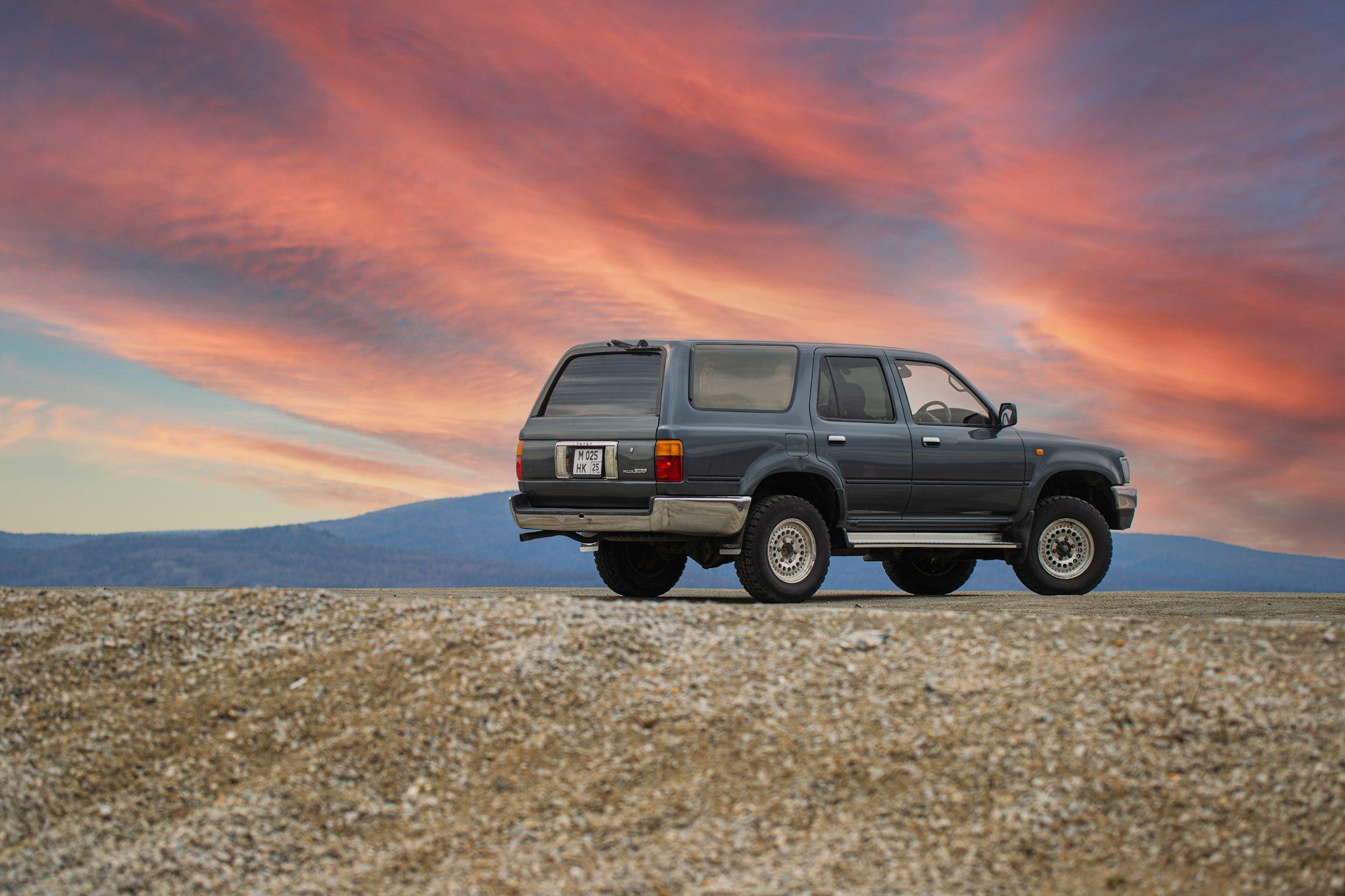
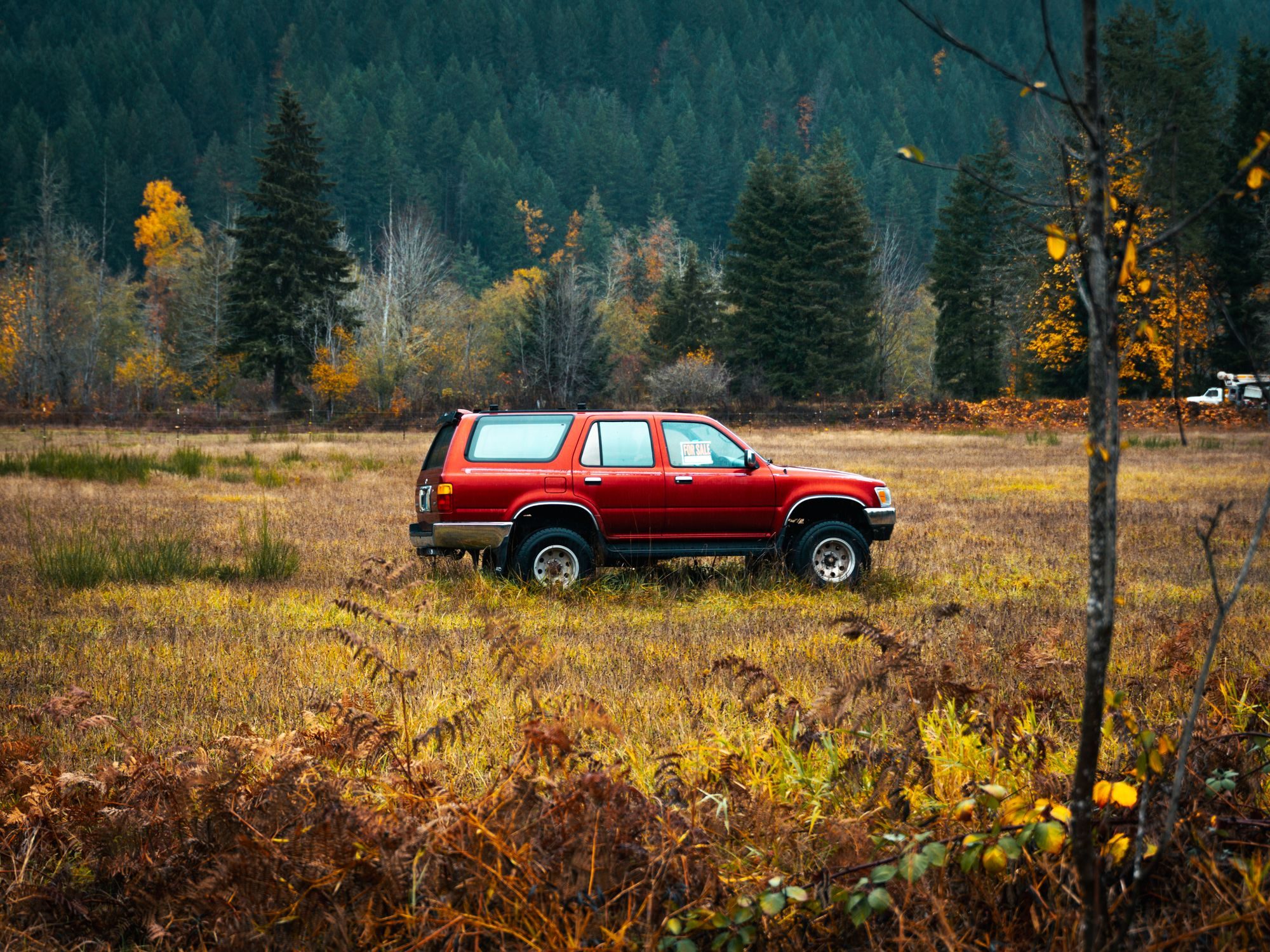
For 1990 the 4Runner grew up a little. The removable fibreglass top went, a one-piece steel body with rear doors arrived, and the rear leaf springs were swapped for coils on a four-link axle. Underneath, though, it was still a Hilux pickup — the same independent front end, the same 22R-E four and 3.0-litre V6. Car and Driver records that the four-door quickly became the volume seller, and US sales passed 74,000 in calendar 1994. Today it's the generation people skip on the way to the 3rd gen, which is exactly why it's worth a look.
DOORS, A ROOF, AND COILS
The second generation was released in 1989 for the 1990 model year, built at Toyota's Tahara plant in Japan. Wikipedia notes that most were four-doors; a two-door was built only from 1989 to May 1993, with US sales ending in August 1992 and Canada carrying on through 1993. The first gen's leaf-sprung rear gave way to a four-link solid axle with a Panhard rod and coil springs — better riding, though Wikipedia notes it was also prone to sagging. The torsion-bar independent front suspension carried over from 1986.
Two engines were offered in the US. The 2.4-litre 22R-E four made 116 hp and 139 lb-ft; the 3.0-litre 3VZ-E V6 made 150 hp and 180 lb-ft. Gearboxes were a five-speed manual or the four-speed A340H automatic. One detail matters to anyone building one: Wikipedia records that the gear-driven transfer case was phased out on V6 models in favour of a chain-driven unit, while the four-cylinders kept the gear drive. Car and Driver's test V6 took 15.7 seconds to reach 60 mph.
UPDATES, SAFETY AND A V6 WITH A REPUTATION
The 1992 model year facelift, introduced in 1991, brought one-piece front bumpers, modular headlamps in place of sealed beams, and a new interior pattern. Rear-wheel ABS was standard on the SR5 V6 from 1990 with four-wheel ABS optional, and side-impact beams were added for 1994 and 1995 after criticism of the early doors. Crash performance was still of its era: Wikipedia lists a one-to-two-star frontal rating for the driver.
Then there's the 3VZ-E. Toyota extended head-gasket warranty coverage on 1988–1994 V6 trucks in October 1996 and later ran Special Service Campaign V06, replacing head gaskets on 1/90–10/94 production 'regardless of leakage or not'. That campaign expired in September 2018. Forum theory blames the exhaust crossover pipe cooking the back of the engine — cylinder 6 is the usual casualty — and owners still swear by cooling-system maintenance and crossover deletes to keep them alive.
THE MIDDLE CHILD
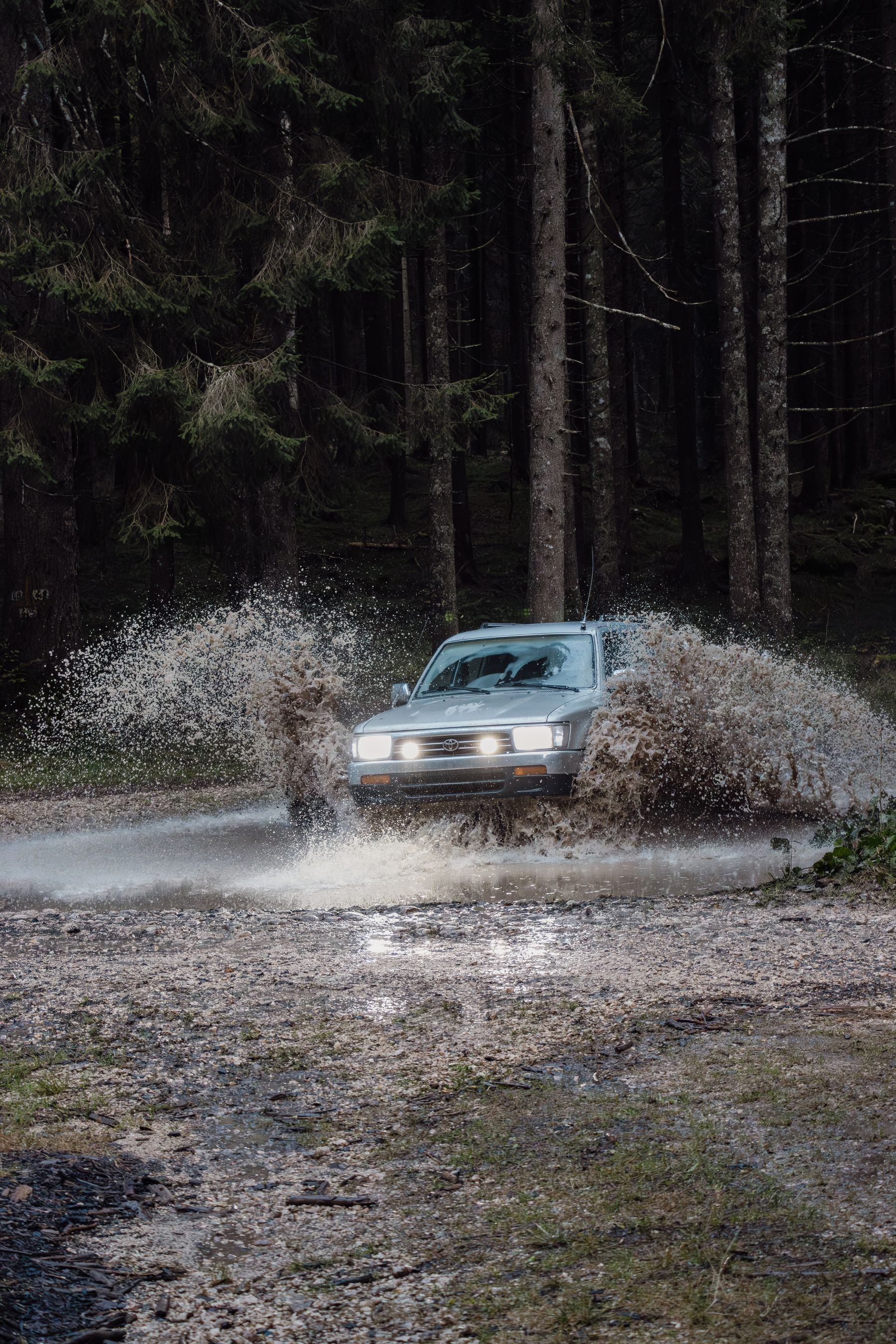
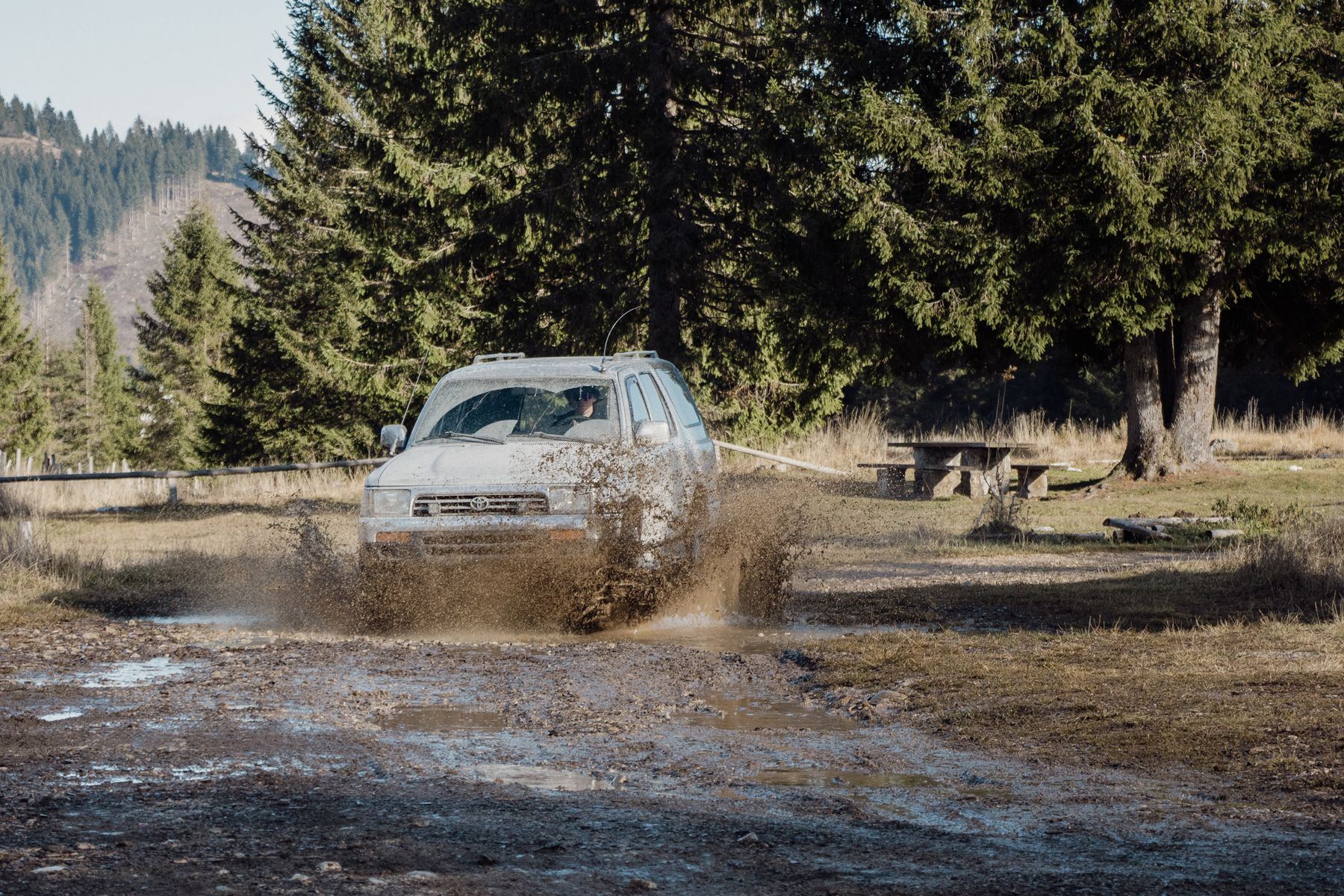
Toyota replaced it for 1996 with the third generation, built on the Land Cruiser Prado chassis with coils all round and an optional rear locker — and the N120/N130 slid into obscurity. 4Runners.com members complain that trim and body parts are now harder to find than for both the 3rd gen and, oddly, the 1st gen. Mechanically it's another story: the front end, 22R-E and much of the drivetrain are shared with Toyota's 1986–95 pickups, so suspension, armour and engine parts are still plentiful.
That makes the 2nd gen the bargain of the old-4Runner world, if you can find a straight one. ToyTec, Old Man Emu, Total Chaos and Coastal Offroad all still make parts for it, and Japan's Hilux Surf twin offered diesels that America never got — the roughly 130 hp 1KZ-TE turbodiesel among them — which the US 25-year import rule now makes fair game. Just budget for rust repair and a head-gasket job, and you'll have the most underrated 4Runner on the trail.
SIDEBAR · THE TWO-DOOR
Two doors, one tax
The rarest 2nd gen is the one that looks most like the first: the two-door. Wikipedia records that two-door models were built from 1989 to May 1993, that US sales ended in August 1992 while Canada continued through 1993, and that the two-door was priced higher than the four-door because of the 'chicken tax' — the 25 per cent US tariff on imported light trucks that dates back to 1964.
With a fixed steel roof and rear windows instead of doors, it kept the short, sporty profile of the original without the leaky lid. Few were sold, fewer survived, and IH8MUD and 4Runners.com owners treat a clean one as a find — just don't expect body parts to be any easier to source than they are for the four-door.