The story
Jeep introduced the Wagoneer in November 1962 for the 1963 model year. It replaced the Willys station wagon that had been built since 1946, and it was the first Jeep line that owed nothing to the CJ. Brooks Stevens shaped it, it shared its SJ chassis with the Gladiator pickup, and it offered features unheard of on other mainstream 4x4s: independent front suspension, power steering, an automatic gearbox and optional air conditioning, all behind an overhead-cam six. For 1974 AMC cut two doors off it and called the result the Cherokee. This page covers both, from 1963 to 1983, before the big wagon carried on alone as the Grand Wagoneer.
THE KAISER WAGONEER (1963–1969)
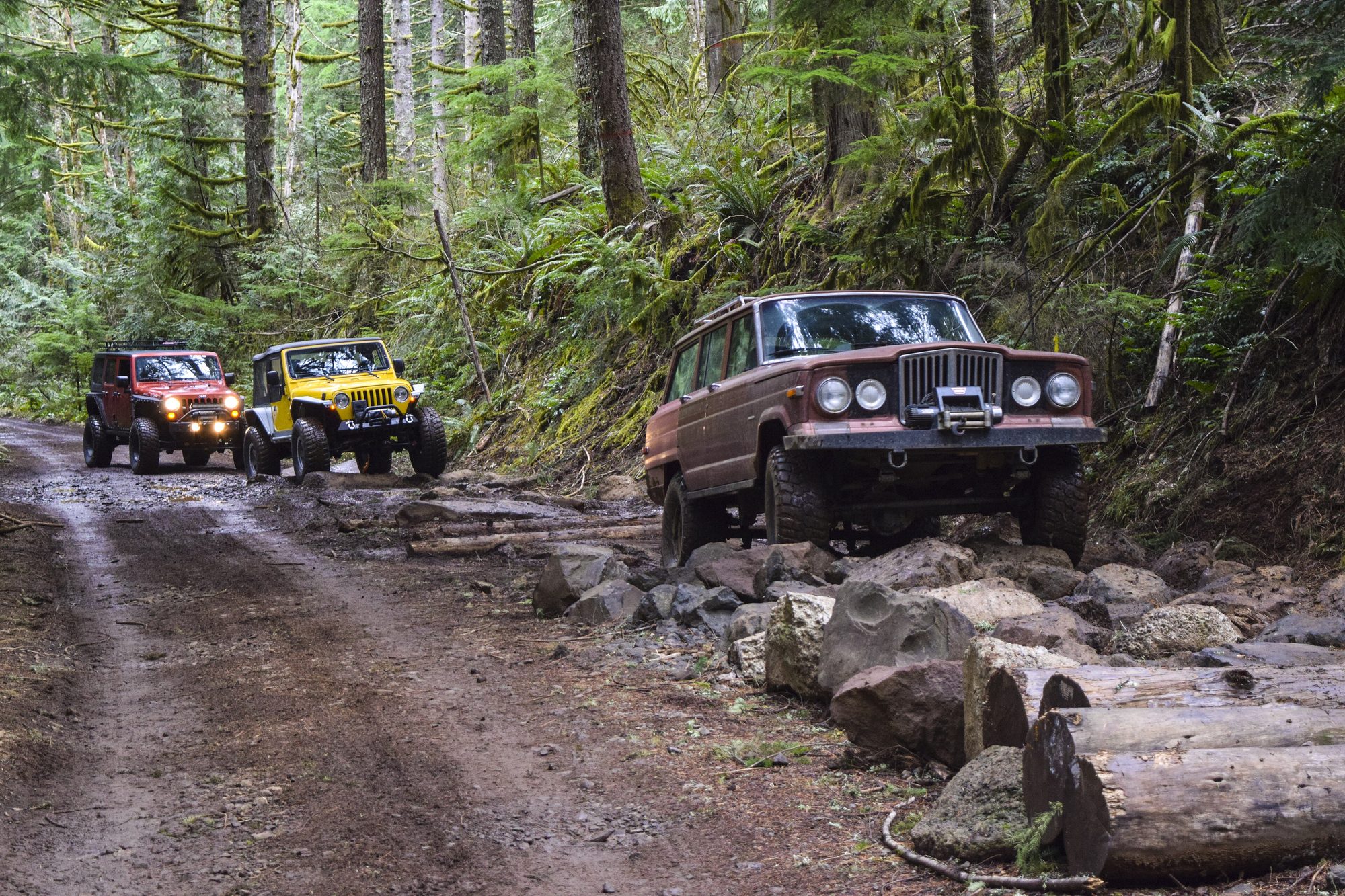
The first Wagoneers came as two- and four-door wagons and a two-door panel delivery with barn doors. Power came from the 230 cu in 'Tornado' overhead-cam six, rated at 140 hp. Independent front suspension was standard on two-wheel-drive trucks and optional on 4x4s. It was not popular and was dropped from 4WD models in 1965, the same year AMC's 327 V8 (250 hp) and 232 six arrived. Development had taken three years and about $20 million, and Wikipedia notes that the Wagoneer had no direct competitor when it launched; the two-door Range Rover was still eight years away.
The 1966 Super Wagoneer pushed the idea further: a 270 hp four-barrel 327, a tilt wheel, a console-shifted TH400 automatic, air conditioning and a power tailgate window. About 3,989 were built before it ended in 1969, and it is widely regarded as the precursor of today's luxury SUVs. From 1968 to 1971 a Buick 350 'Dauntless' V8 replaced the 327. By the end of 1968 the slow-selling two-door had gone, and every Wagoneer had solid axles and leaf springs at both ends.
AMC, QUADRA-TRAC AND A TWO-DOOR CALLED CHEROKEE
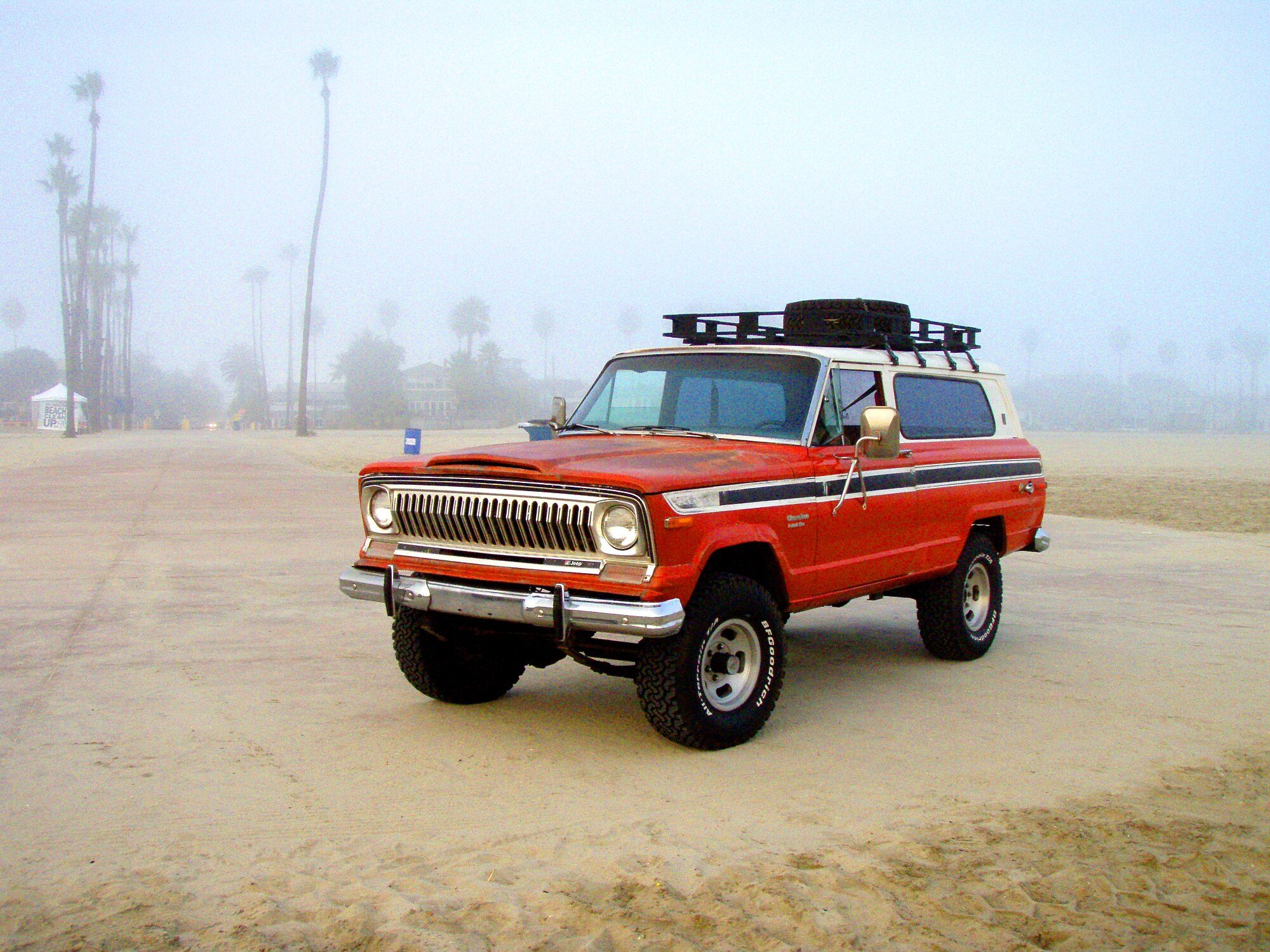
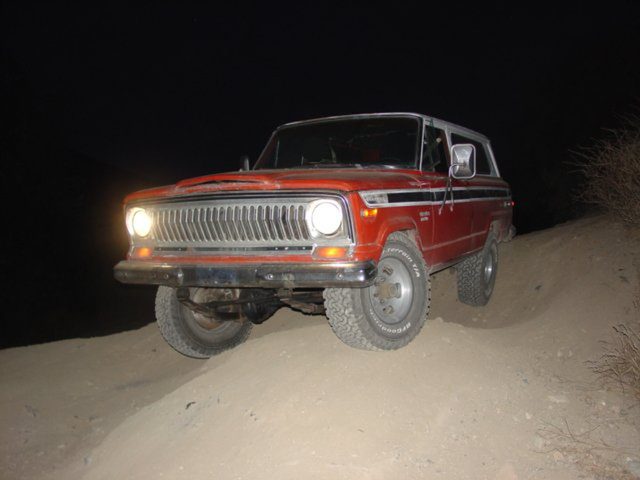
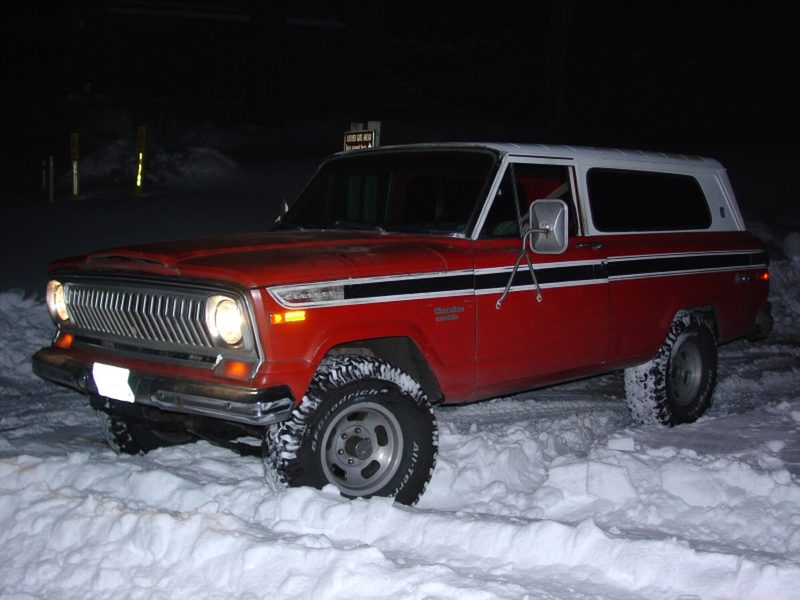
AMC bought Kaiser Jeep in 1970 and replaced the outsourced Buick engine with its own 360 and, later, the 401 V8. In 1973 it added Quadra-Trac, a Borg-Warner full-time 4WD system that saved owners from locking hubs and a stiff transfer-case lever. In 1974 AMC took the dead two-door Wagoneer, gave it wide D-pillars and long single rear side windows, and sold it as the Cherokee. The 1974 Cherokee brochure is where the term 'Sport Utility Vehicle' first appears, and that February the Cherokee became the first winner of Four Wheeler magazine's Achievement Award.
The Cherokee came as a base model or the sportier S. The Chief package arrived in 1976 with wider axles and bigger fender flares so it could run larger tires, and a four-door Cherokee followed in 1977 (never with the wide-track axles). The Golden Eagle and Golden Hawk were graphics packages, the Laredo from 1980 was mostly an upholstery upgrade, and a Pioneer package arrived for 1983. With the 401's forged crank and rods and 3.07:1 gearing, Wikipedia says a Cherokee could top 100 mph; early ones had 120 mph speedometers.
THE WAGONEER GOES UPMARKET (1978–1983)
With the Cherokee taking the sporty buyers, AMC moved the Wagoneer upmarket. The Limited arrived mid-1978 with leather, power seats, cruise control, a CB radio and forged aluminum wheels. At $10,500 it was priced against Cadillacs and Lincolns, and Jeep still built 28,871 Wagoneers that year and 27,437 in 1979. The 1979 restyle brought square headlights, aluminum bumpers and the 'pig nose' grille. The 401 had gone after 1978, and after 1979 Chrysler's TorqueFlite 727 replaced GM's TH400.
The 1979 fuel crisis hit hard. Wagoneer output fell to 10,481 in 1980, the 258 six came back as an option, and from 1981 the range ran Custom, Brougham and Limited. The original Borg-Warner Quadra-Trac was gone after 1979, and an NP219 carried the name to early 1982. For 1983 the Selec-Trac system, with a dash switch for 2WD and 4WD, became standard on the Wagoneer. Wikipedia reports EPA figures of 18 mpg city and 25 highway for the six with the automatic and Selec-Trac, remarkable for a full-size SUV.
1984: THE SPLIT
For 1984 the unibody Cherokee XJ replaced the SJ Cherokee outright, and AMC meant the compact XJ Wagoneer to replace the big one too. Demand kept the old wagon alive. The Brougham was dropped, the Limited became the Grand Wagoneer, and that truck ran until June 1991. Australia's tariff rules treated separate-frame 4x4s more kindly than unibody vehicles, so SJ Cherokees were assembled in Brisbane until about 1985.
Today the 1963–1983 trucks sit in the shadow of the woodgrain Grand Wagoneer, which makes them the better buy for someone who wants to use one. The two-door Cherokee is the rarer and more off-road-minded of the pair, the era rival to the Scout II and the early Bronco with a much bigger cabin. Restomod builders know it too: Bring a Trailer has sold Hemi-, Vortec- and Viper-swapped examples, one of them for $315,000.
SIDEBAR · WHERE 'SUV' CAME FROM
The 1974 Cherokee brochure and the first Four Wheeler award
Wikipedia, citing Jim Allen's Jeep: Collector's Library, says the phrase 'Sport Utility Vehicle' appears for the first time in the 1974 Jeep Cherokee sales brochure. Jeep sold the Cherokee as the 'sporty' two-door version of its station wagon.
In February 1974, Four Wheeler magazine gave the Cherokee its first Achievement Award, the prize that later became the annual Four Wheeler of the Year.