The story
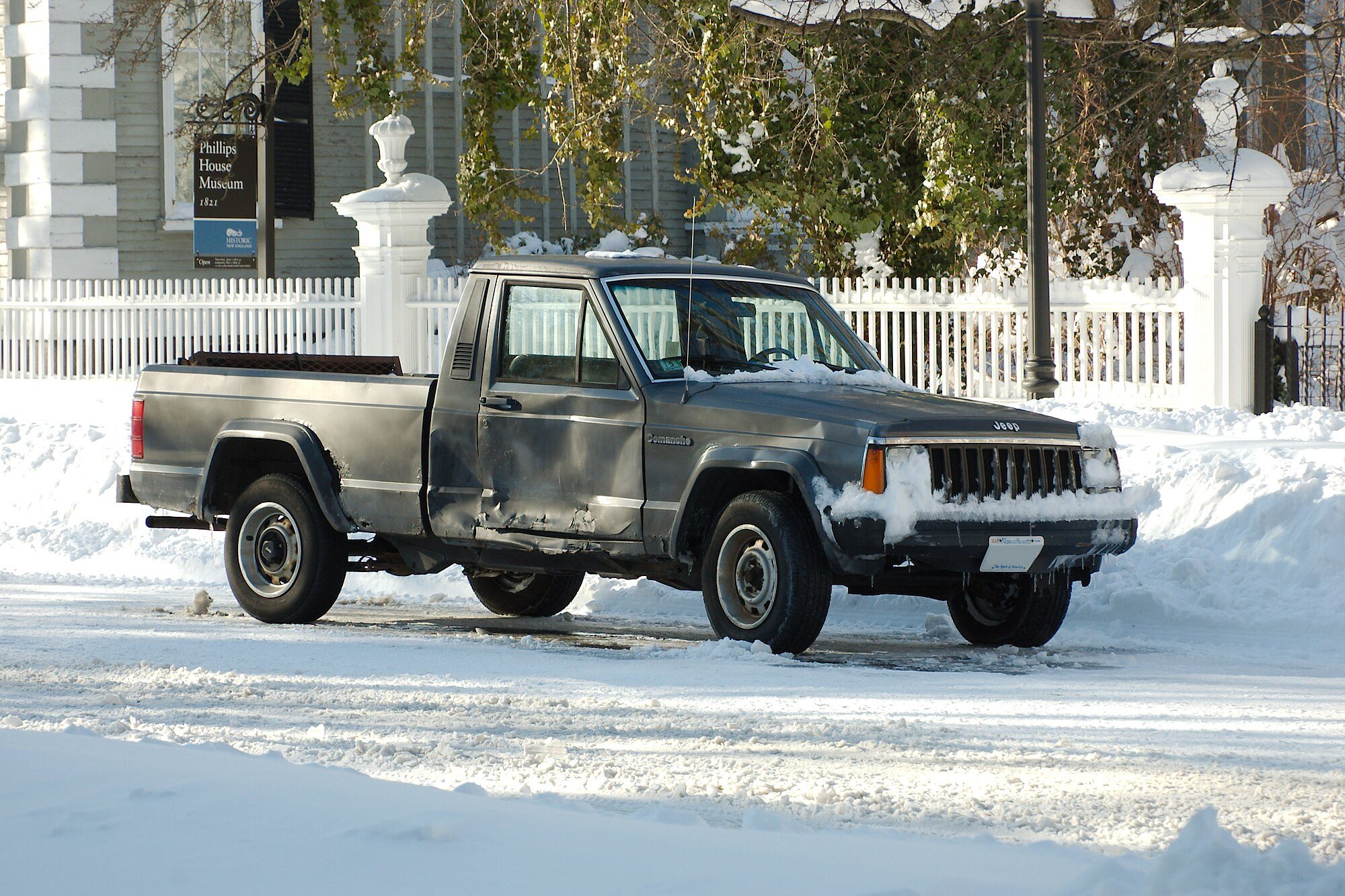
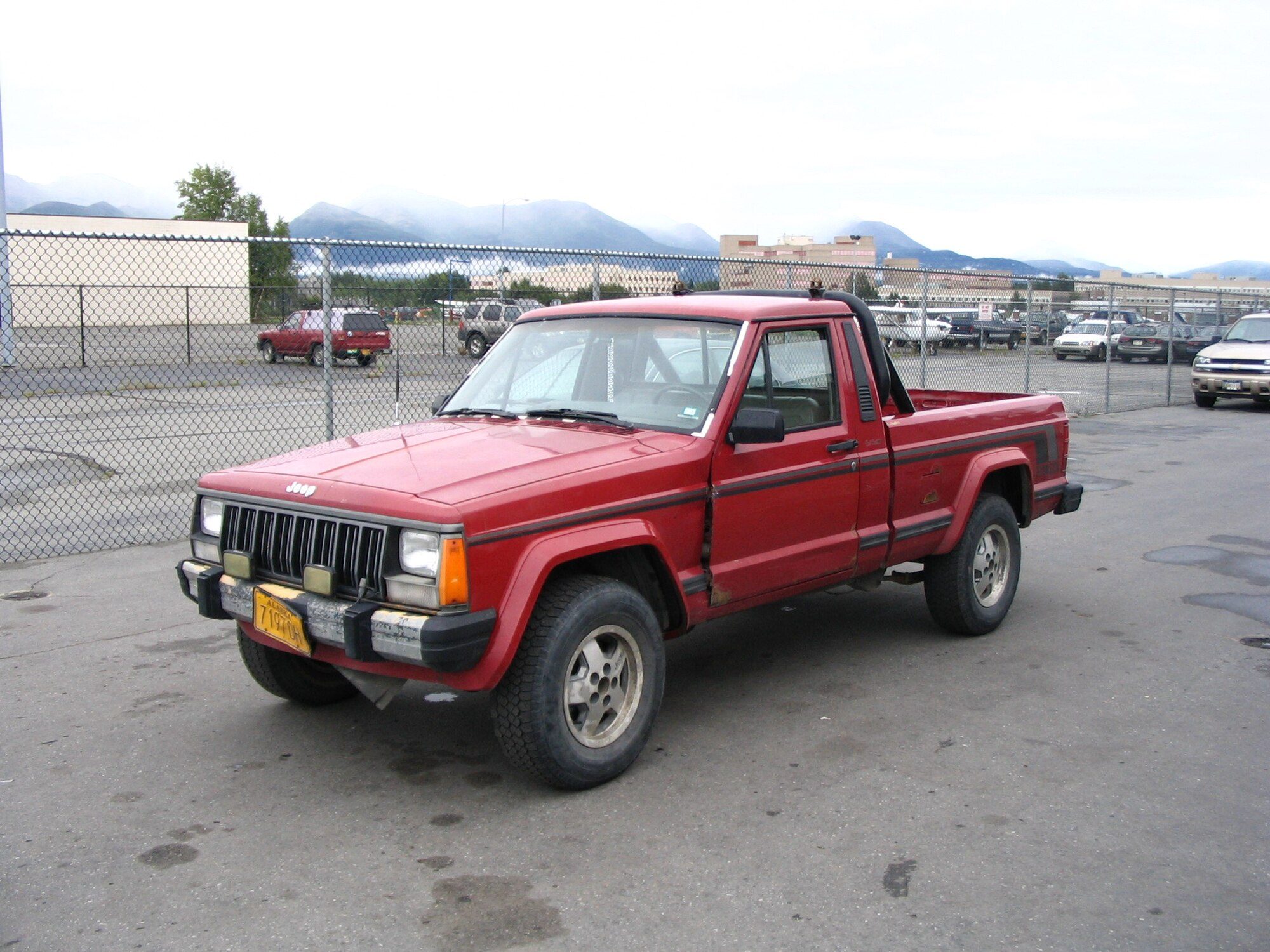
AMC unveiled the Comanche in August 1985 to more than 1,500 dealers in the ballroom of the MGM Grand in Las Vegas. It was a compact pickup built from the Cherokee XJ: the same unibody, Quadra-Link coil front end and engines from the cab forward, and behind the cab a fully boxed frame and a removable bed. At $7,049 for a two-wheel-drive model it was the cheapest Jeep of 1986. It lasted seven model years and 190,446 trucks, and it was Jeep's last pickup until the Gladiator 27 years later.
A CHEROKEE WITH A TRUCK BOLTED ON
AMC needed money and needed a truck. Its finances were weak, a new Canadian plant was being built for the Eagle Premier, and compact pickups were selling. The answer was cheap to engineer: keep the XJ's front half and its 'Uniframe' unibody, and graft on a frame for the bed. Wikipedia describes that rear structure as fully boxed rather than the usual open C-channel, with rails more than eight inches deep and a large X-member over the rear axle. AMC had first tried the idea on its 1971 'Cowboy' pickup prototype.
The long-bed, seven-foot truck came first, for 1986. A six-foot short bed followed for 1987, on a 113-inch wheelbase against 119.9 inches for the long bed. Up front was the XJ's coil-sprung Dana 30 (or a beam axle on 2WD trucks). At the back were rear leaf springs much longer than the Cherokee's and, as standard, a Dana 35. The Metric Ton package for long beds added heavier springs, wheels and tires and a Dana 44, raising payload from 1,400 to 2,205 lb. Wikipedia notes that this was more than many full-size pickups could carry.
FROM A WEAK V6 TO THE 4.0
1986 Comanches had AMC's 2.5-liter four, a carbureted GM 2.8 V6 that made slightly less power than the four, or a Renault 2.1 turbodiesel. For 1987 the 4.0-liter straight-six arrived with 173 hp and 220 lb-ft, about 50% more power than the V6, together with the Aisin AW4 automatic and the NP231 Command-Trac and NP242 Selec-Trac transfer cases. Chrysler bought AMC in March 1987 and mostly left the truck alone. It gained an eight-slot grille for 1988, the sporty Eliminator trim, and the Aisin AX-15 five-speed in place of the Peugeot BA-10/5 during 1989.
For 1991 Chrysler replaced the Renix engine management with its own, and the 4.0 became the 190 hp 'High Output'. Quadratec's fitment listings also show Chrysler 8.25-inch rear axles in 1991–92 trucks. By then, though, the truck had stopped selling. Calendar-year output fell from 43,718 in 1988 to 5,188 in 1991. Jeep-Eagle dealers asked Chrysler to drop it and give them a Dakota-based pickup instead, and Chrysler wanted Jeep to sell SUVs and Dodge to sell trucks. The last Comanche left Toledo on June 12, 1992.
WHY THEY'RE WORTH SAVING
Today the Comanche is the XJ's rarer, more useful sibling. Comanche Club members got vehicle-in-operation figures from Key Parts showing about 18,600 MJs registered in the US and Canada in late 2021, roughly a tenth of production. Mechanically it is the XJ: the same 4.0, AX-15 and AW4, Dana 30 and NP231, so the drivetrain parts aren't hard to find. The cab interior and everything behind the doors are a different story. Bed sides, tailgates, taillights and bench-seat sliders are MJ-only and getting scarce.
On the trail it behaves like a long Cherokee with a bigger rear overhang. The XJ front suspension, the 4.0 and the easy 4WD conversions owners talk about make it a natural budget builder, and a Metric Ton or 8.25-axle truck has the rear end to carry a camper shell full of gear. Like the CJ-8 Scrambler, it suits owners who want a Jeep with a bed. The modern equivalent is the JL Unlimited-based Gladiator.
SIDEBAR · THE NAME THAT DIDN'T COME BACK
Comanche, Scrambler or Gladiator?
When Jeep returned to pickups for 2020, Wikipedia says it considered reviving the Comanche name alongside Scrambler before choosing Gladiator. It suggests the Comanche name's weaker recognition, and sensitivity to the Comanche Nation, likely counted against it.
AMC had other plans for the MJ. When it was setting up Beijing Jeep, it brought Chinese officials into the negotiations with the aim of building and selling Comanches there too. Wikipedia says the aim was to build and sell Comanches in China through the venture. In the end, Beijing Jeep became known for the Cherokee, which it built for decades.