The story
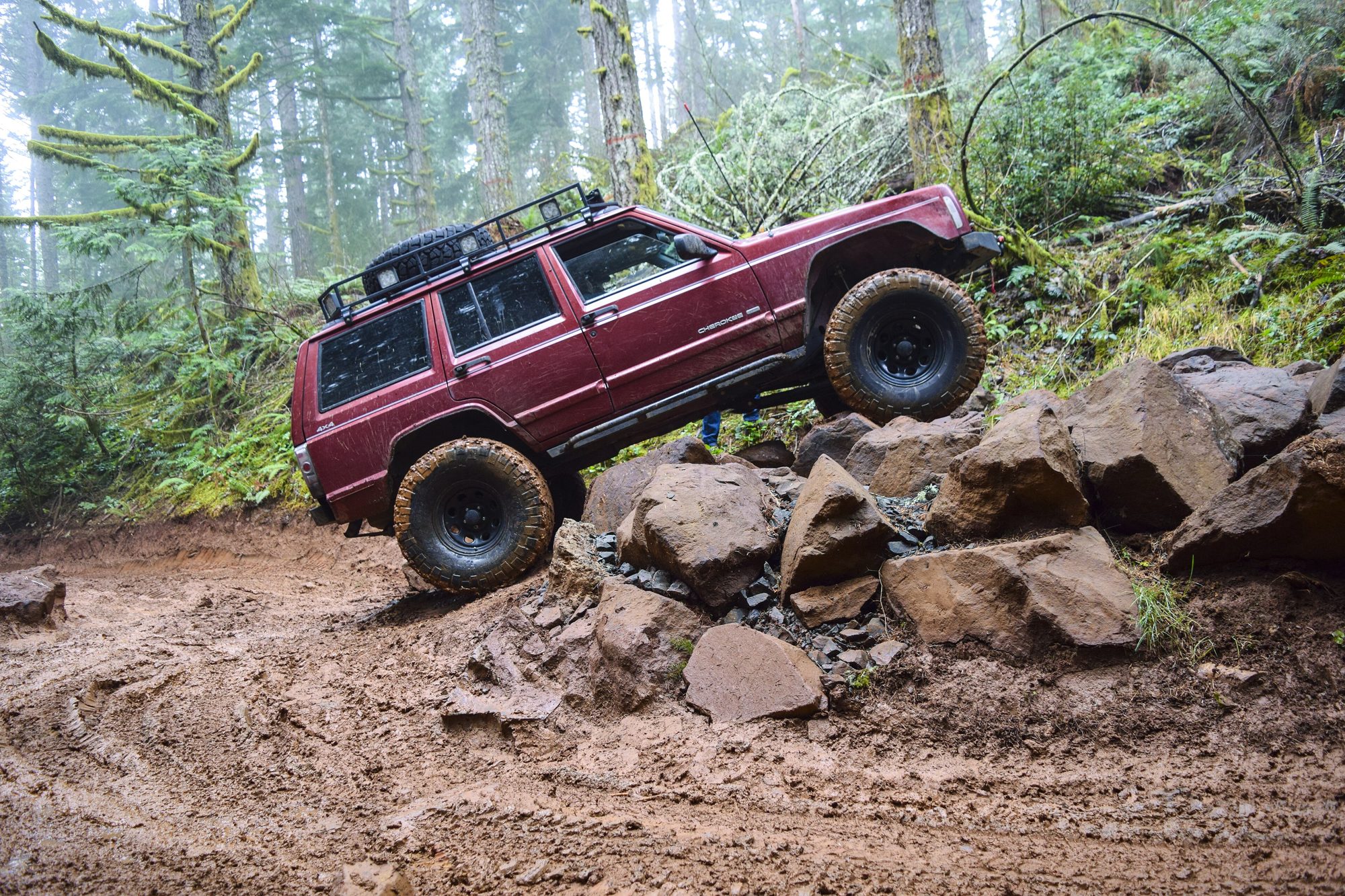
The 1984 Cherokee XJ was Jeep's first all-new design since the 1963 Wagoneer, and the first American off-roader with a unibody, which AMC called 'Uniframe'. It was 1,200 lb lighter, 31 in shorter, 6 in narrower and 4 in lower than the full-size SJ Cherokee it replaced, yet kept 90% of the interior space. It also had better articulation, ground clearance and approach, departure and breakover angles. AMC sold it as a 'Sportwagon'. About 3 million were built through 2001, and it is still the default answer to 'what's a cheap, capable 4x4?'
AMC, RENAULT AND A $250 MILLION BET
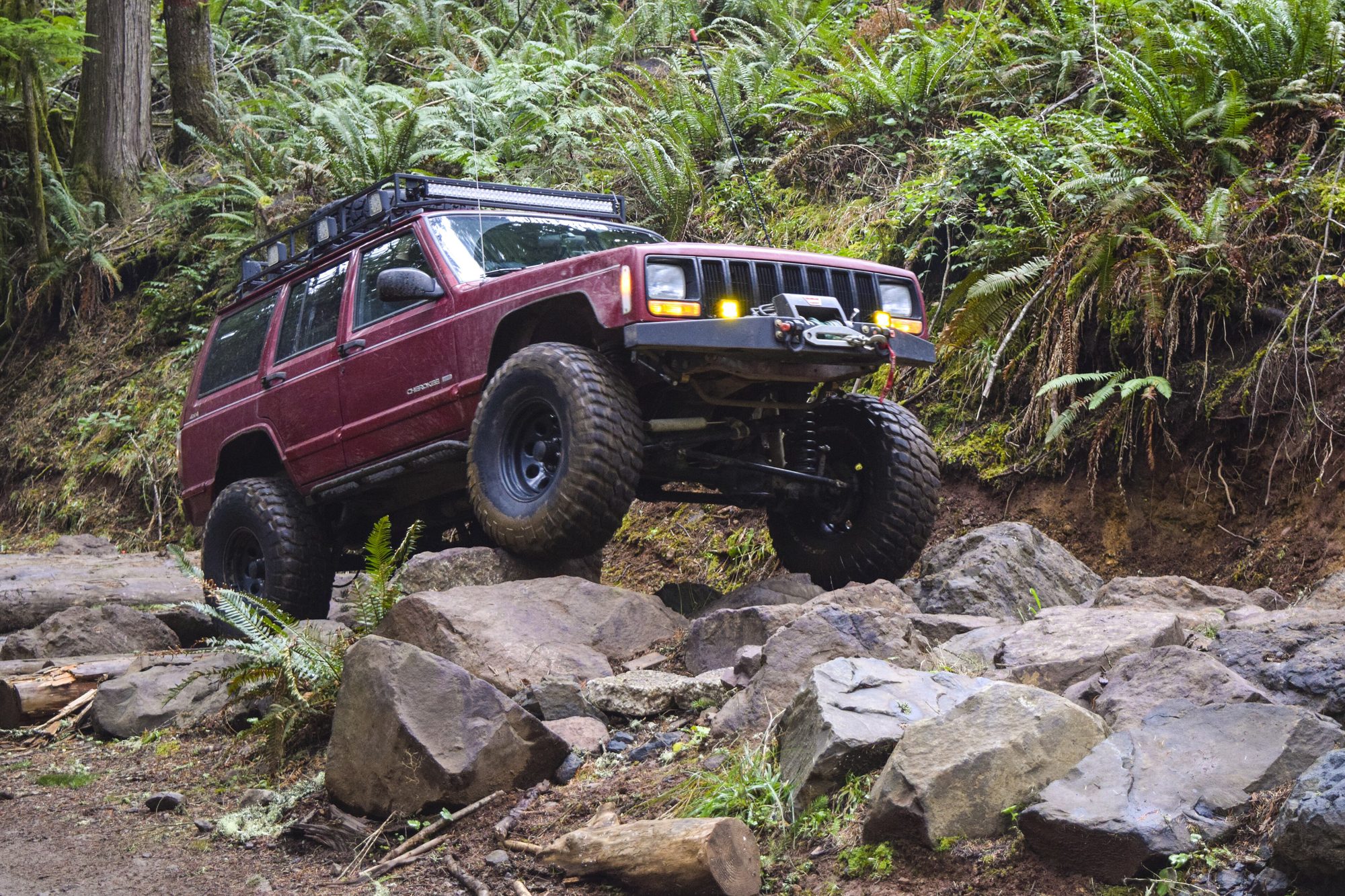
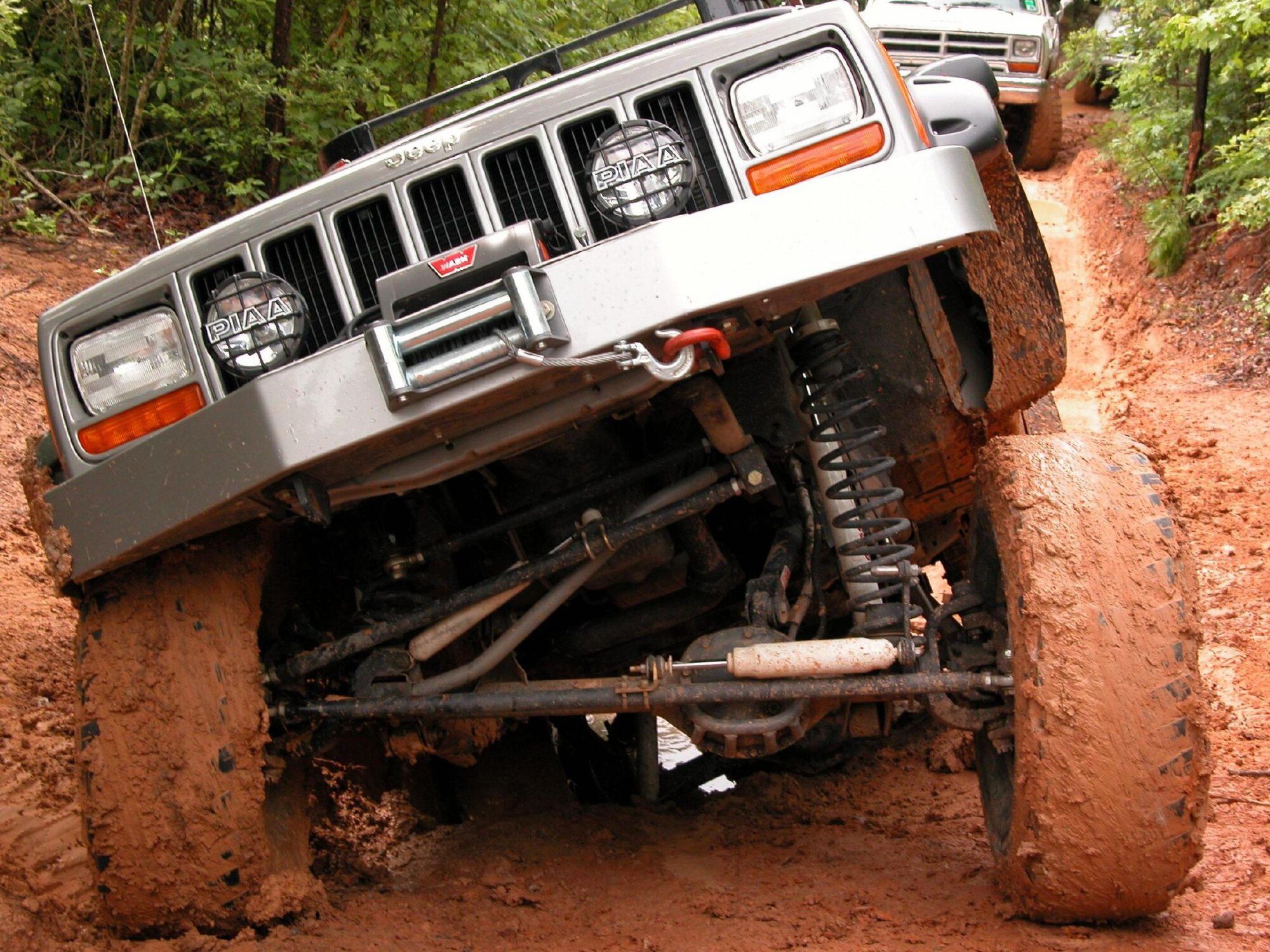
Work began in the late 1970s, when AMC needed something smaller than the SJ and Renault had just bought a 22% stake. Renault pushed for less size and weight and better economy. Styling came from AMC's team under design vice-president Dick Teague. Engineering VP Roy Lunn designed the 'Quadra-Link' coil-sprung front suspension, which locates a solid axle with four control arms and a track bar. Renault's François Castaing planned a light drivetrain around a much smaller engine than 4x4s usually carried. AMC spent $250 million and offered four doors as well as two, which GM's new S-10 Blazer didn't.
Early engines were weak: AMC's 2.5-liter four, a GM 2.8 V6 and a Renault 2.1 turbodiesel. Everything changed for 1987, when AMC introduced its 4.0-liter straight-six with Renix multipoint injection, rated at 173 hp and 220 lb-ft. Wikipedia calls it one of the best 4x4 and off-road engines. It brought the Aisin AW4 four-speed automatic and the NP231 Command-Trac and NP242 Selec-Trac transfer cases. The 1991 'High Output' version made 190 hp with Chrysler's fuel injection and became the engine every XJ shopper looks for.
CHRYSLER KEEPS THE BOX
Chrysler inherited the XJ when it bought AMC in 1987. The plan was to replace it with the bigger ZJ Grand Cherokee, but the XJ sold too well to kill, so both were built from 1993. The 1997 facelift brought a steel liftgate, a new dash with dual airbags, and a stiffer unibody for less noise and vibration. The 2000–01 trucks got coil-on-plug ignition and 193 hp, and also a cylinder head casting, '0331', that is known to crack between cylinders 3 and 4.
Underneath, XJs differ by year and option. The front axle is always a Dana 30: high-pinion until 1999, low-pinion for 2000–01. At the rear you'll find a Dana 35, a Chrysler 8.25 or, on some 1987–91 tow-package trucks, a Dana 44. The Up Country package added an inch of lift and, per Wikipedia, deleted the rear anti-roll bar. The XJ also spawned the Comanche MJ pickup (1986–92) and a woodgrain Wagoneer Limited that shared its name with the full-size Grand Wagoneer.
WHY THE CULT EXISTS
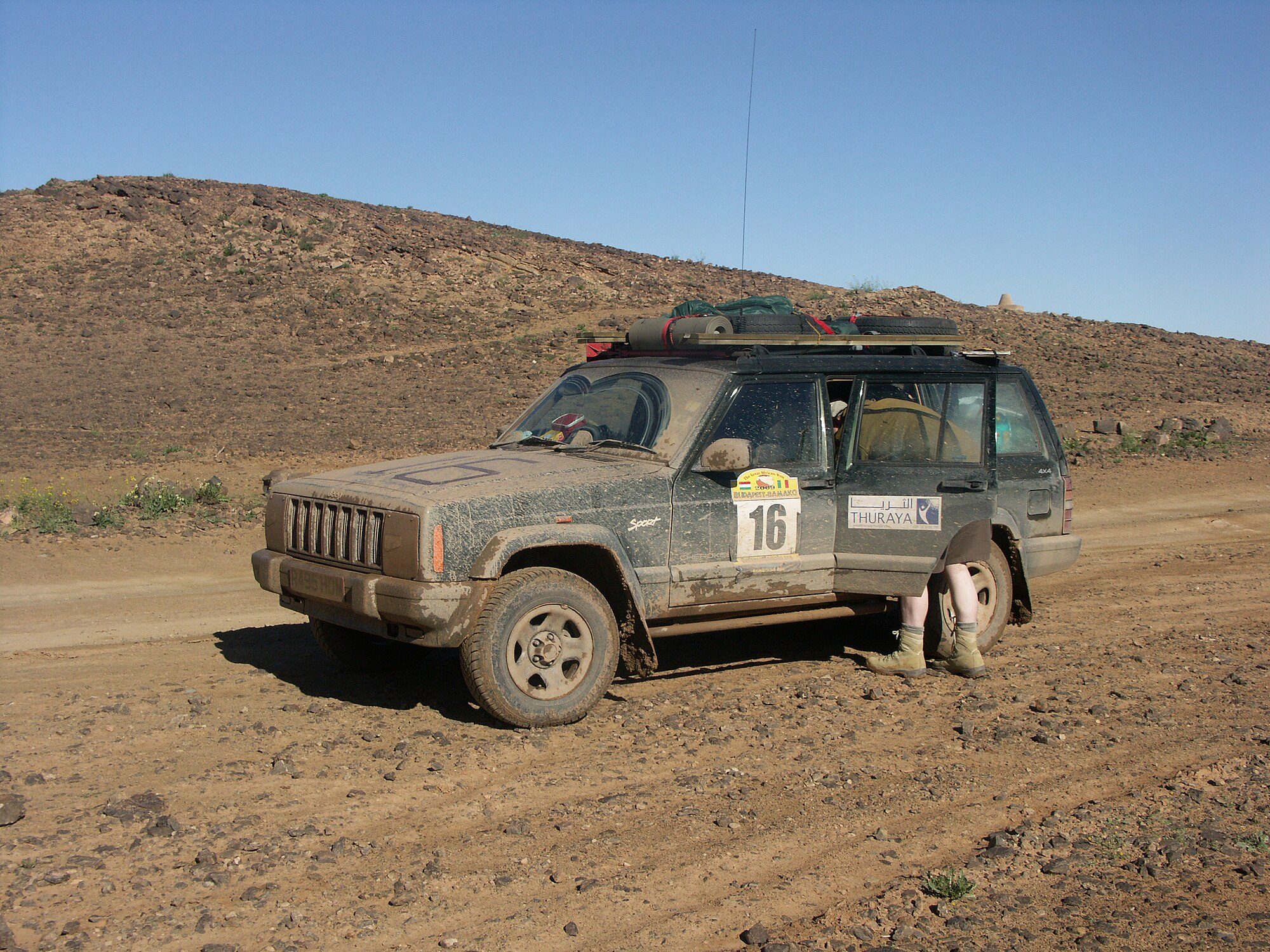
Production in Toledo ended in June 2001, and the Liberty took over. Its reputation has grown since. Automobile's Robert Cumberford named it one of the 20 greatest cars of all time and called it 'possibly the best SUV shape of all time'. Kiplinger listed it among 'cars that refuse to die', and NAXJA members routinely report 250,000–300,000 miles on factory drivetrains.
The appeal on the trail is simple. You get a solid axle at both ends, a torquey six, a body roughly the size of a Wrangler YJ, and an aftermarket that sells everything from a 1.5-inch Budget Boost to 6.5-inch long-arm kits. It's the budget alternative to a CJ-7 or an FJ60 for people who want doors, a heater and room for a dog. Just remember that the unibody is the frame: a rusted rail is not a bodywork problem.
SIDEBAR · THE XJ THAT NEVER DIED
Beijing Jeep and two decades of Chinese XJs
In 1984 AMC set up Beijing Jeep, the first automotive joint venture in the People's Republic of China, to assemble the four-door Cherokee. Chinese BJ2021 (4WD) and BJ7250 (RWD) versions had a raised rear roof for chauffeured passengers. A facelifted 'Jeep 2500' ran until 2005.
After 2009, Beijing Auto Works kept building it as the BAW Qishi ('Knight') with old Nissan-designed four-cylinders, until 2014. That's 30 years for AMC's original design. XJs were also assembled in Argentina, Egypt and Venezuela.