The story
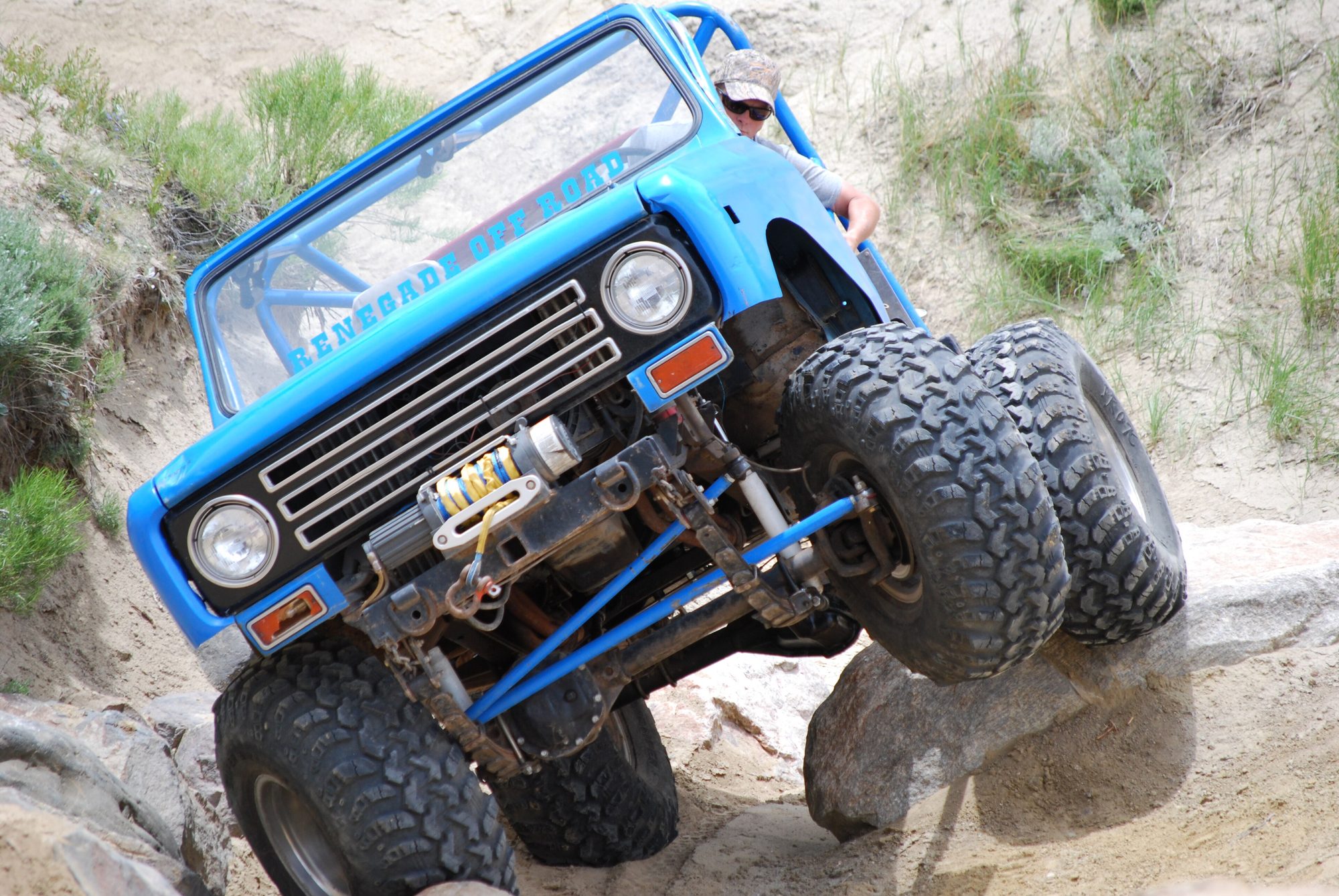
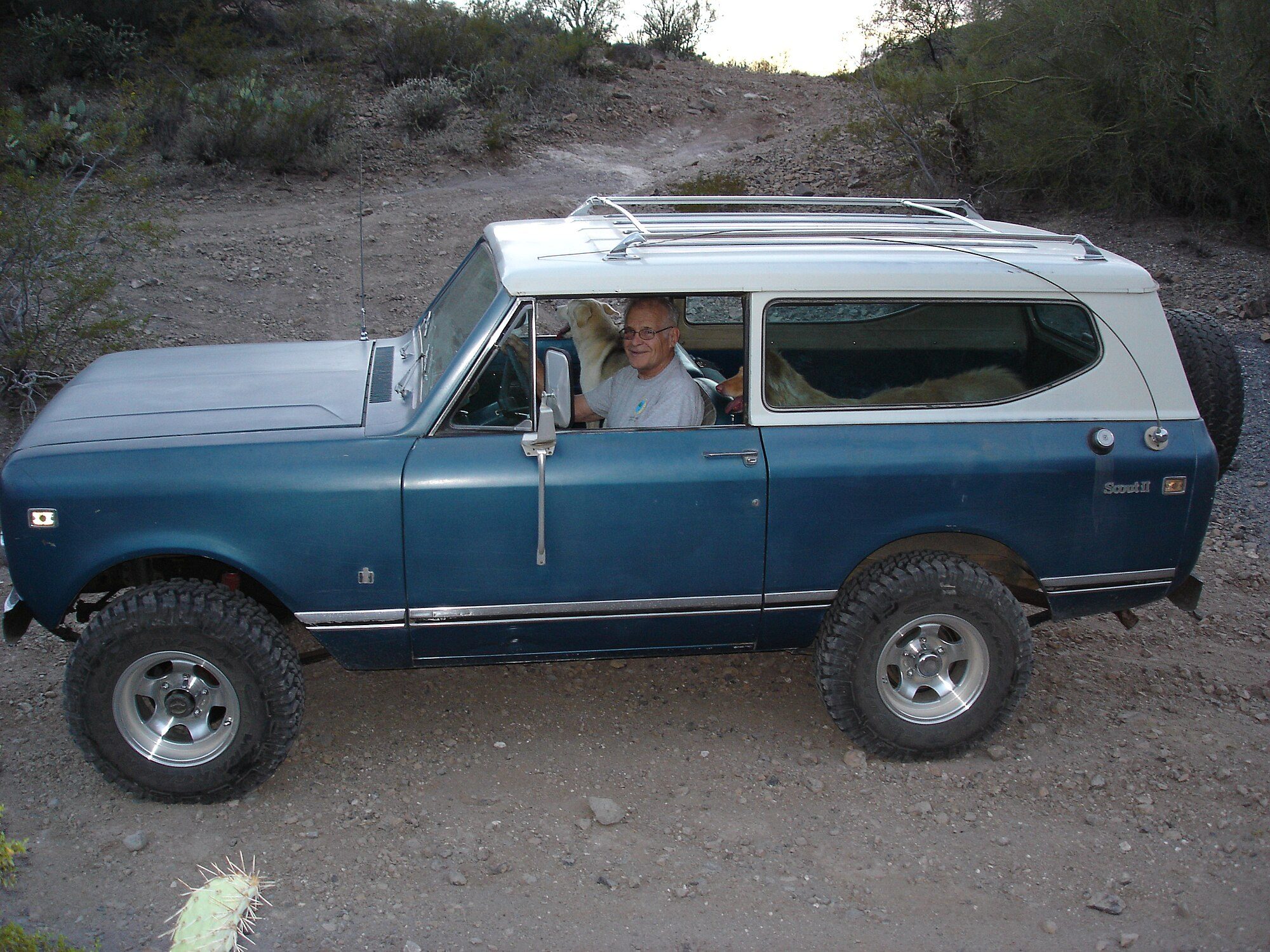
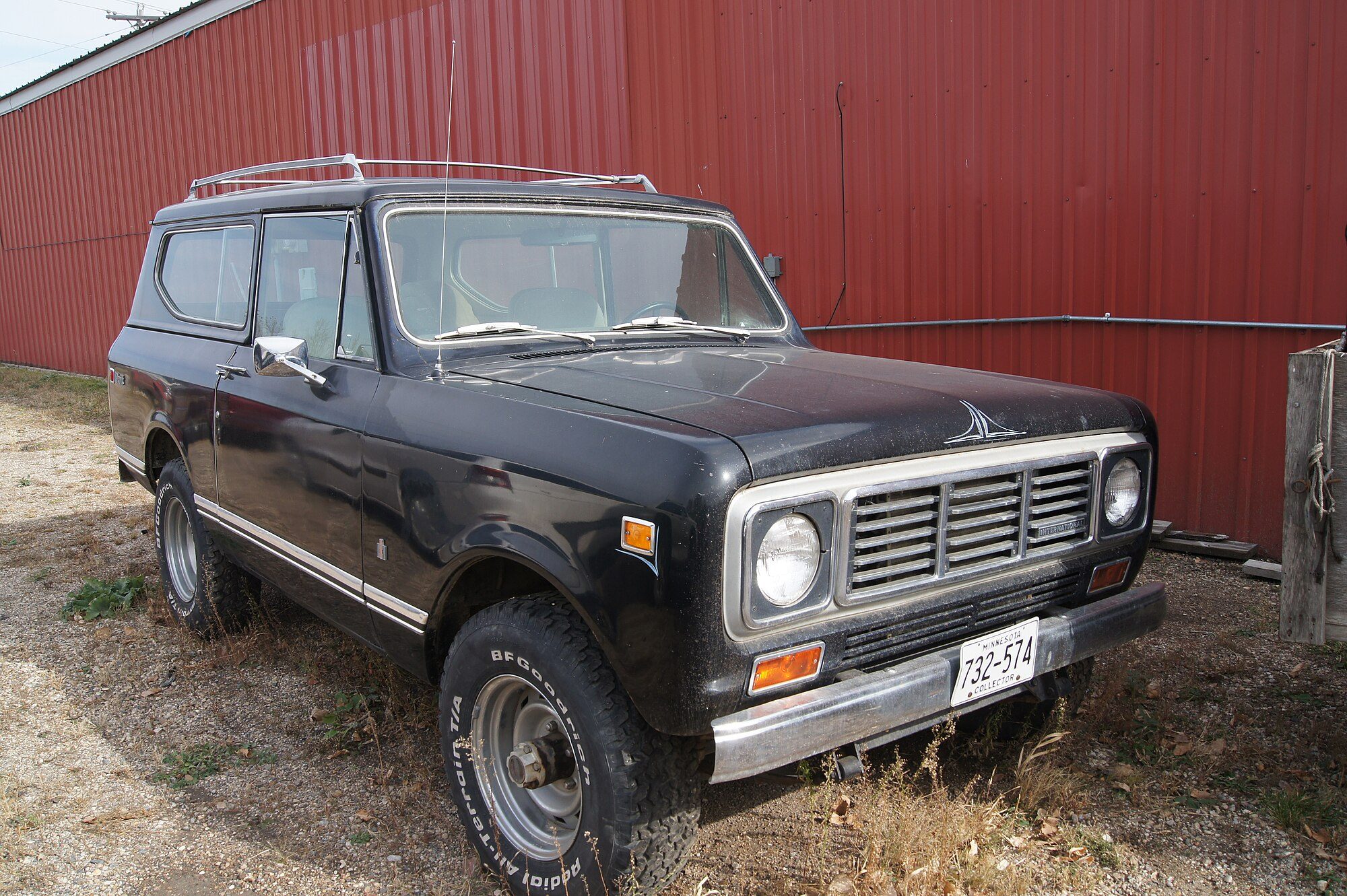
In April 1971 International Harvester replaced the Scout 800B with a truck it had been sitting on for years. A version nearly identical to the production Scout II was shown to IH management in December 1967. It kept the formula: a short ladder frame, leaf springs, solid axles and a removable top. What changed was everything you touched. It was longer, lower, roomier and much more civilized. Over the next decade it became the Scout most people picture, and the one most still on the trail.
REPLACING THE HORSE, TAKE TWO
The first Scout existed because IH engineering manager Mr. Reese told Ted Ornas to 'design something to replace the horse.' By 1964 IH was already planning its replacement, and the concept was approved for production in mid-1965. The Jeep CJ was still the target, but the market had moved. Ford's Bronco and Chevrolet's Blazer had shown that buyers wanted a 4x4 they could live with every day.
So the Scout II launched with a 196-cubic-inch four, a 232 AMC straight-six and IH's own 304 V8, then added the 258 six and the 345 V8. You could order the steel Traveltop, the half-cab Roadster top or a soft top. Early trucks had a Dana 30 front axle and drum brakes. Late in 1974 power front disc brakes became standard, and after 1974 every Scout II got Dana 44 axles at both ends.
LONGER, THEN DIESEL
In 1975 IH raised the Scout's gross weight rating to 6,200 pounds and badged it XLC, for Extra Load Capacity. That put it out of reach of stricter light-duty emissions rules, and Scouts didn't get catalytic converters until 1979. In 1976 the 118-inch Traveler and Terra arrived, 18 inches longer between the door and the rear wheel arch and topped in fiberglass. The Traveler replaced the truck-based Travelall, which ended in 1975, and it became a popular RV tow vehicle.
1976 also brought a 3.3-liter Nissan SD33 straight-six diesel. Jim Allen, author of the International Scout Encyclopedia, credits IH with the first domestically built diesel SUV. In late 1979 the turbocharged SD33T replaced it. Super Scout Specialists' figures give 10,182 diesel Scouts in all, more than half of them 1980 turbos.
BAJA, AND THE SUPER SCOUT
Privateer Jimmy Jones won his class in the 1972 Baja 1000 in a '72 Scout II. Five years later IH was sponsoring four desert racing teams and selling the SSII, a stripped-down Scout with soft doors, a plastic grille and a roll bar, aimed squarely at the CJ-7. It ranged from the barebones four-cylinder Rancher Special, on which even the passenger seat was a cost option, to the dressier Sport and Baja Cruiser.
In the 1977 Baja 1000, an SSII driven by Jerry Boone finished first among production 4x4s, almost two hours ahead of the next car, a CJ-7. Boone later said his team had a month to prepare a stock truck and only got IH sponsorship after the race. About 4,000 SSIIs were built between 1977 and 1979, and today they're the most valuable Scout IIs.
HOW IT ENDED
IH experimented with Scout-based minivans, station wagons, dune buggies, Hurst-built special editions and even a small motorhome, and it built a Scout III SSV concept prototype in 1979. The 1979–80 International Harvester strike and a lack of money ended all of it. The 1980 trucks got a one-piece plastic grille, the turbo diesel and, for one year only, a Dana 300 transfer case. Only 13,106 were built. The last Scout came off the Fort Wayne line on October 21, 1980.
Hagerty counts about 260,000 Scout IIs. Rust has taken many of them, and the survivors are now real money. Gen X buyers make up more than 46 percent of Scout buyers. Volkswagen Group now owns the name, and Scout Motors is reviving the Traveler and Terra badges for new electric and range-extended trucks.
SIDEBAR · THE SWISS SCOUT
Monteverdi Safari: a Scout in a dinner jacket
In 1976 Swiss sports-car maker Peter Monteverdi showed the Safari, a luxury SUV on Scout II underpinnings with a new body by Carrozzeria Fissore. It went into production in 1977, aimed straight at the Range Rover, and offered air conditioning, leather, electric windows and options up to a television and a refrigerator.
Engines were a Chrysler 5.2-liter V8, IH's own 5.7-liter 345 and, Monteverdi claimed, Chrysler's 7.2-liter 440. Unlike the Range Rover of the day it had an automatic and switchable four-wheel drive. A cheaper Sahara kept most of the Scout body, and an estimated 30 were made. Production ended in 1982, after the Scout itself.