The story
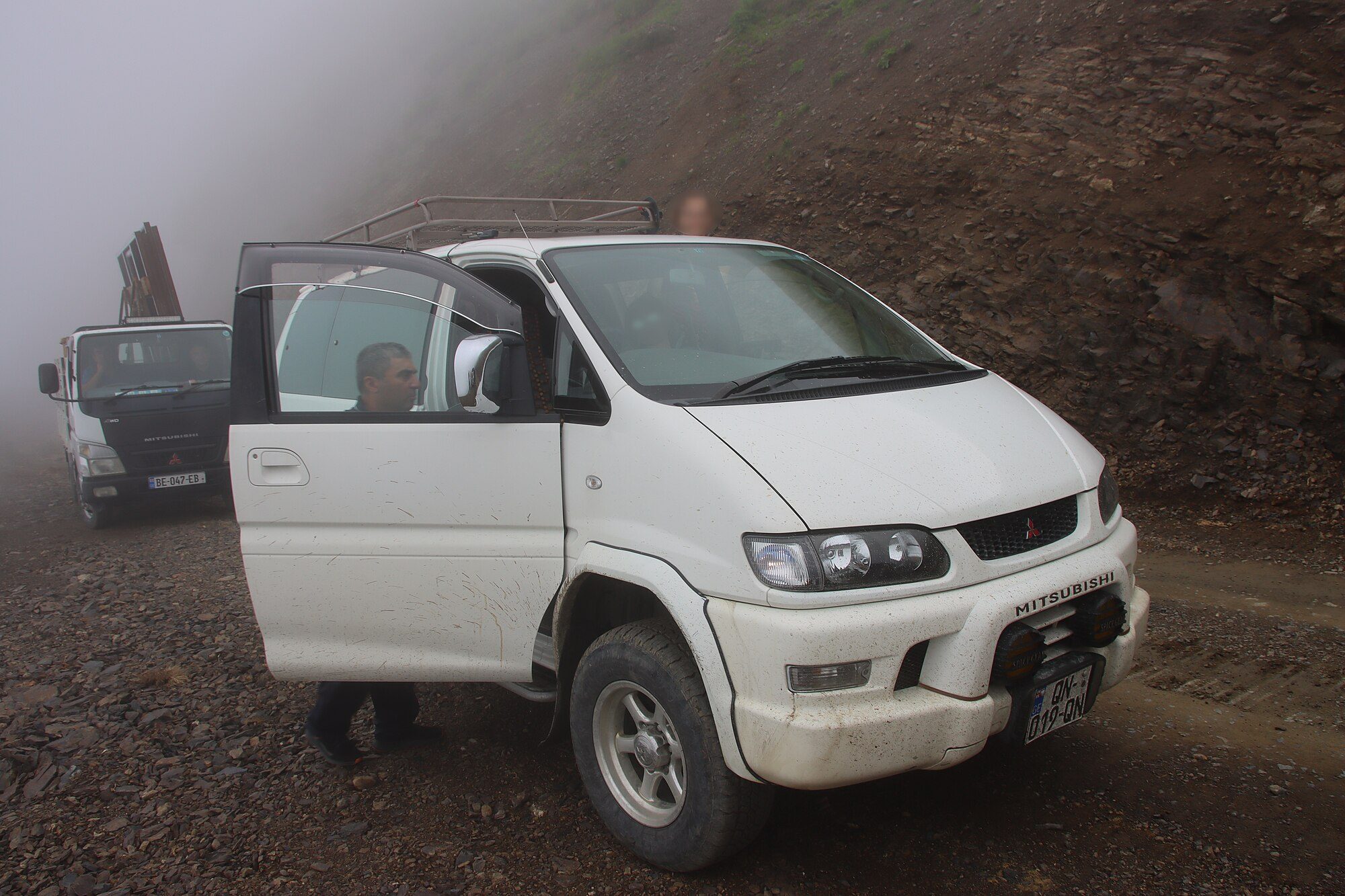
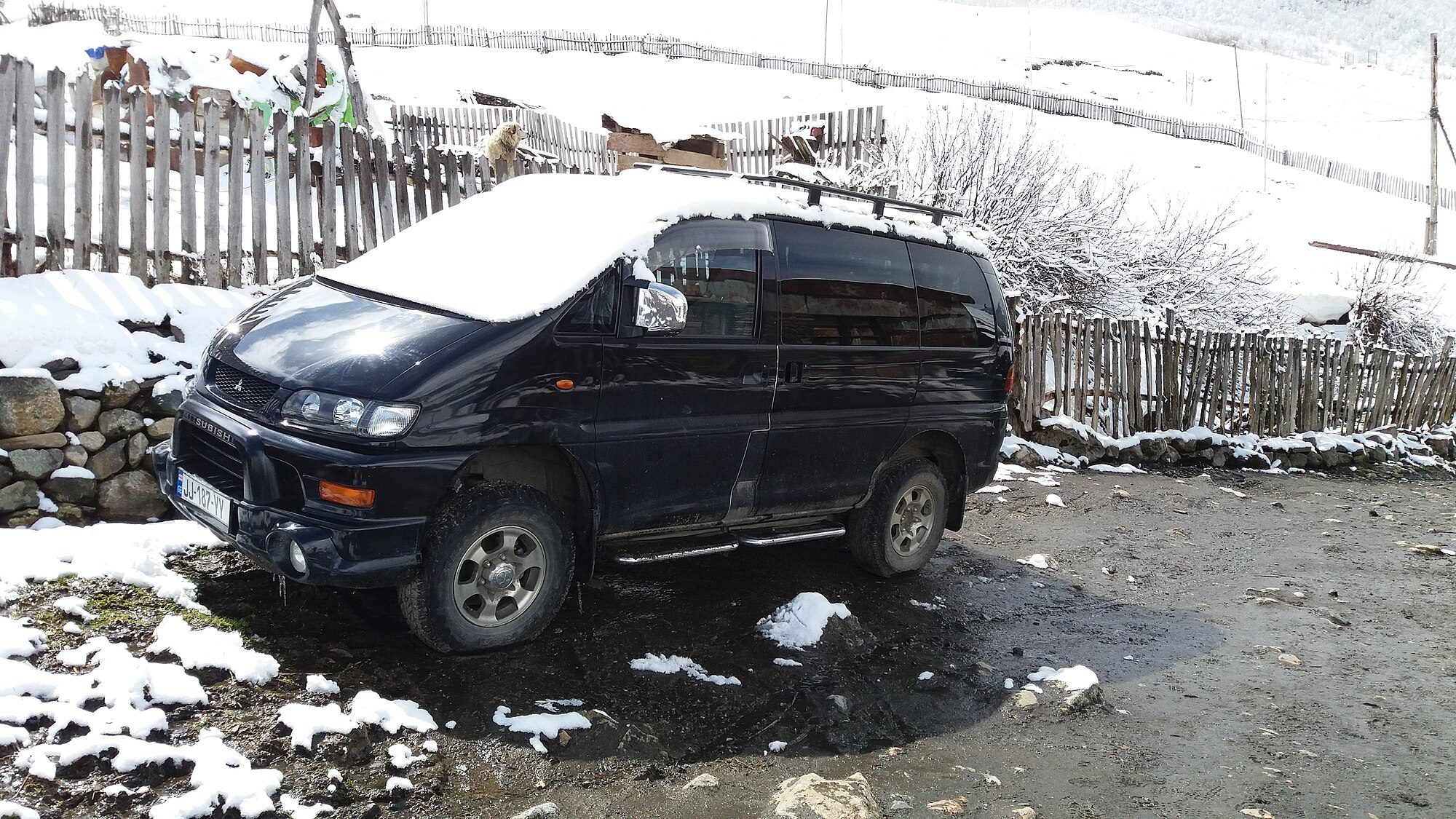
On 12 May 1994 Mitsubishi replaced the cab-over Delica Star Wagon with something that looked like a minivan and drove like a Pajero. The Delica Space Gear moved the engine out from under the driver's seat and into a short nose, sat on the second-generation Pajero platform, and kept a proper 4WD system with high and low range. Japanese magazine Motor-Fan sums it up as a minivan with off-road ability inherited from the Pajero. Thirty years later, that's exactly why North Americans are importing them.
A PAJERO UNDERNEATH
Motor-Fan says the fourth-generation Delica was developed on the second-generation Pajero platform, with a Pajero-derived built-in frame for crash safety and a flat floor from the front seats to the cargo area, so you can walk through the cabin. Wikipedia describes the body as monocoque, unlike the Pajero, with no separate chassis. Underneath it's familiar Pajero hardware: double wishbones and torsion bars at the front, a five-link coil-sprung rear axle, and discs all round, according to the Japanese catalogue data on Gulliver.
At launch the 4WD versions came with a 2.4-litre petrol four, the 3.0-litre 6G72 V6 or the 2.8-litre 4M40 intercooled turbo-diesel. There were rear-drive versions too, with a 2.4, a 2.5 diesel and the V6. Bodies came in standard and long wheelbase, on 2,800 mm and 3,000 mm wheelbases, with an Aero Roof, a High Roof, twin sunroofs or the glass-panelled Crystal Lite Roof. Launch prices were ¥2.408 million for a 2.8 diesel manual and ¥2.80 million for the V6 automatic.
SERIES 1, SERIES 2
Japanese catalogue data lists the early 4M40 at 125 PS and 30 kgf·m. From the mid-1997 facelift it's listed at 140 PS and 32 kgf·m, and Wikipedia notes the diesel got an electronically controlled distributor-type injection pump at the same time. The facelift also changed the lights and front panel and replaced the three-section bull bar with a moulded bumper. Owners call these Series 1 and Series 2 vans. Grades ran from XR and XG through Exceed, Super Exceed and Royal Exceed, plus Chamonix and Jasper specials. By mid-1998 the 4WD diesel manual had left the Japanese catalogue.
A final facelift arrived in August 2002, and the catalogue thinned out after it. The rear-drive versions were gone, the 2.8 diesel last appears in the April–October 2004 listings, and the last vans were 3.0 V6 Chamonix and Active Field Edition models with the four-speed automatic. Mitsubishi's Japanese sales were down to 1,451 in fiscal 2006, according to JDMBUYSELL. The catalogue ends in January 2007, when the Outlander-based Delica D:5 arrived with an electronically controlled 4WD system in place of Super Select.
THE MONTERO WITH A VAN BODY
The Space Gear was never sold new in North America, but Canada's 15-year import rule let Canadians bring them in long before the US 25-year rule caught up. The Delica Canada forum, much of it based in British Columbia and with threads going back to 2006, has the best advice: tell the parts counter it's a Montero with a van body. One long-time member replaced bearings, seals, brakes, U-joints, CV boots, the pitman arm and ball joints using 1995 Montero parts.
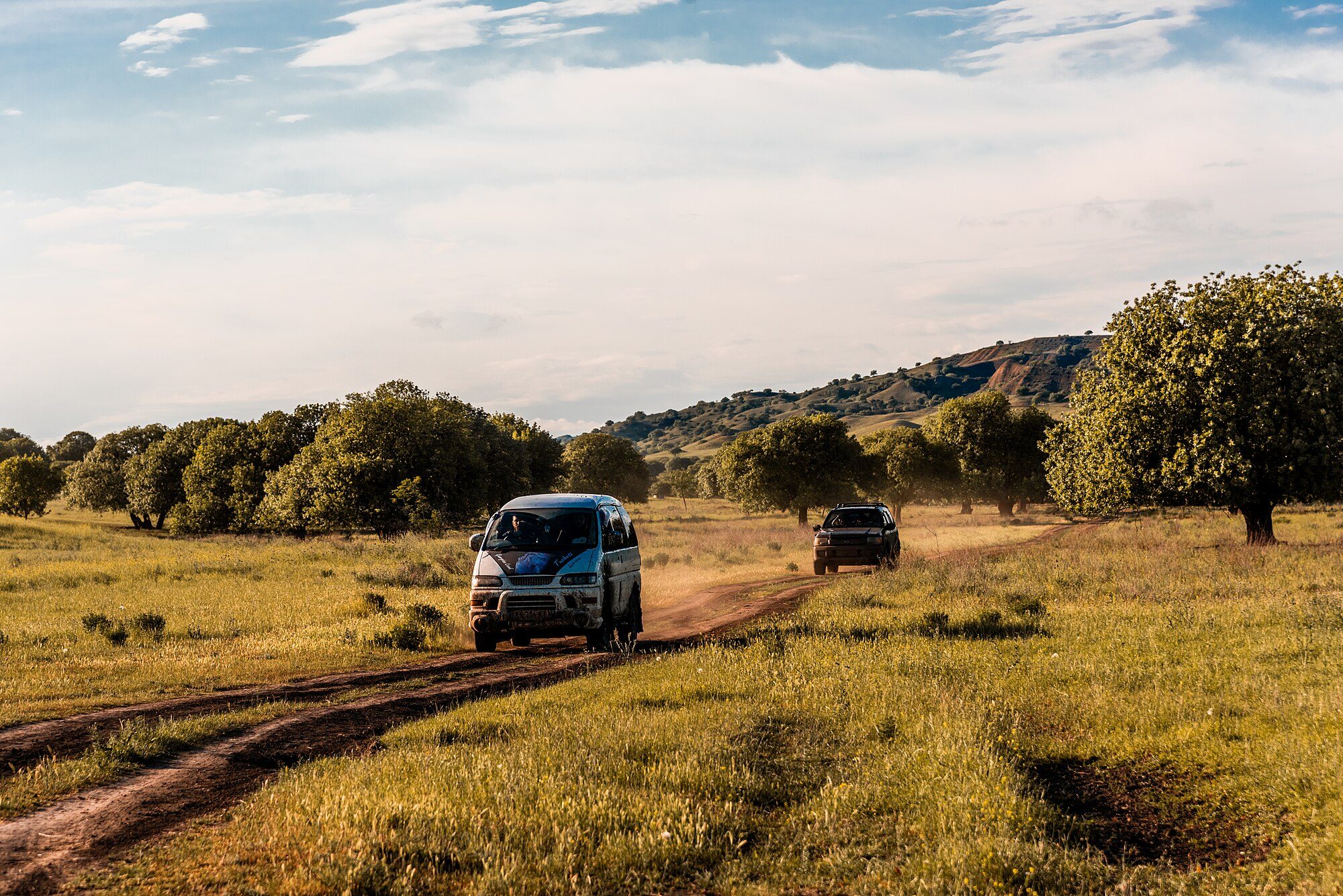
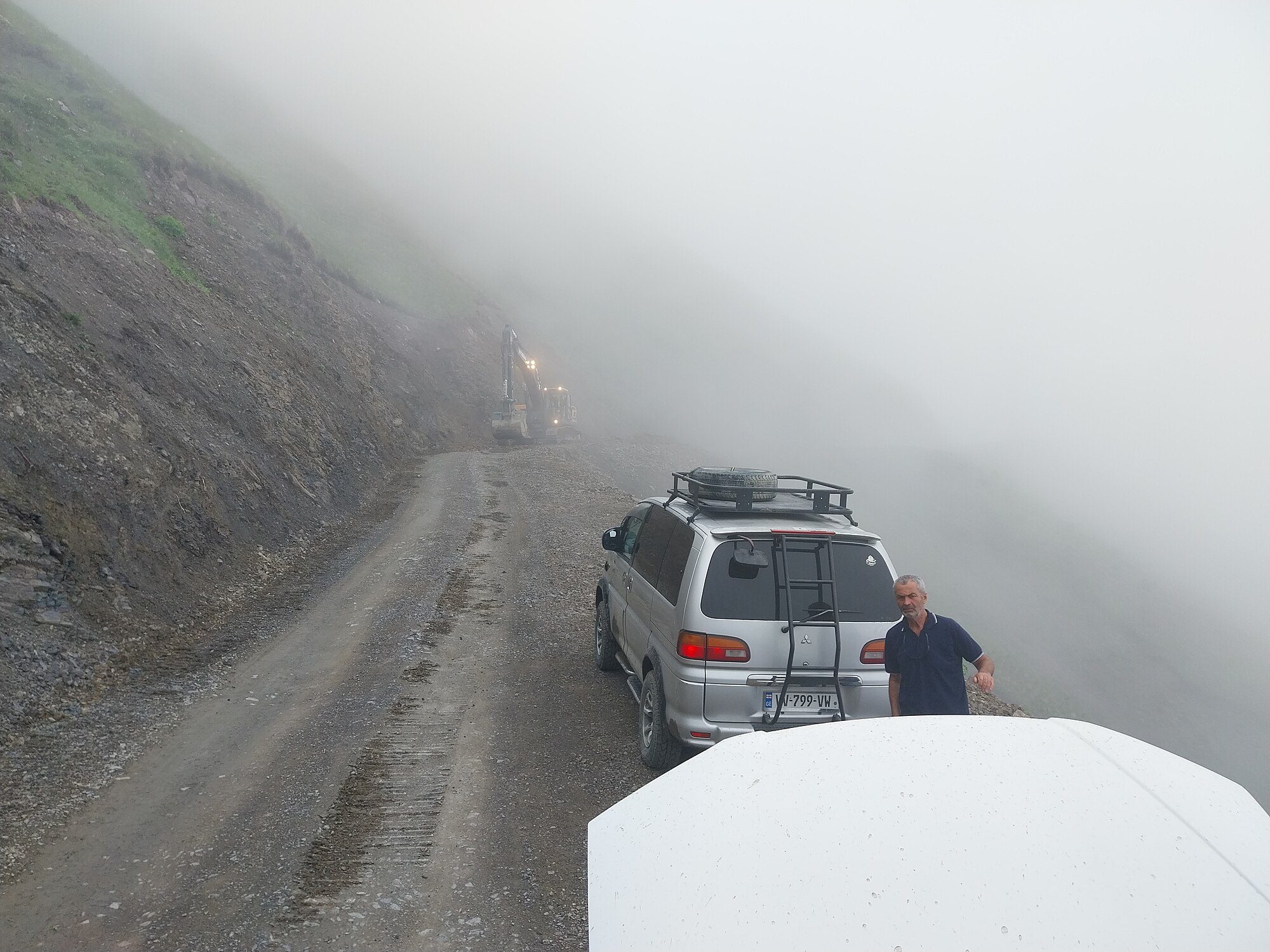
That doesn't always work. Another member bought a Montero head-gasket kit for a V6 Delica and found the head gasket's water passages didn't match. The Drive's 1994 Space Gear owner gives the same advice: cross-reference parts by chassis code, not VIN. In return you get a tall, right-hand-drive, eight-seat van with low range, and the Delica Canada forum is full of owners taking them down gravel and bush roads.
SIDEBAR · THE SPACE GEAR THAT NEVER DIED
Starex, Starwagon and a Chinese van that's still in production
Mitsubishi's L400 lived on well beyond Japan. Hyundai used the Delica as the base for the first-generation Starex, built from 1997 to 2007. In Australia the WA-series Starwagon passenger van ran from September 1994 to 2003 and the Express cargo version until 2005. In Taiwan, China Motor Corporation built the Space Gear and gave it its own facelift in 2005.
Wikipedia says Taiwan's Space Gear tooling then went to Dongfeng Liuzhou, whose Fengxing Lingzhi started life as a rebadged Space Gear. Wikipedia lists Chinese production as continuing to the present. In Europe, the passenger version was simply the Mitsubishi Space Gear and the commercial version the L400.