The story
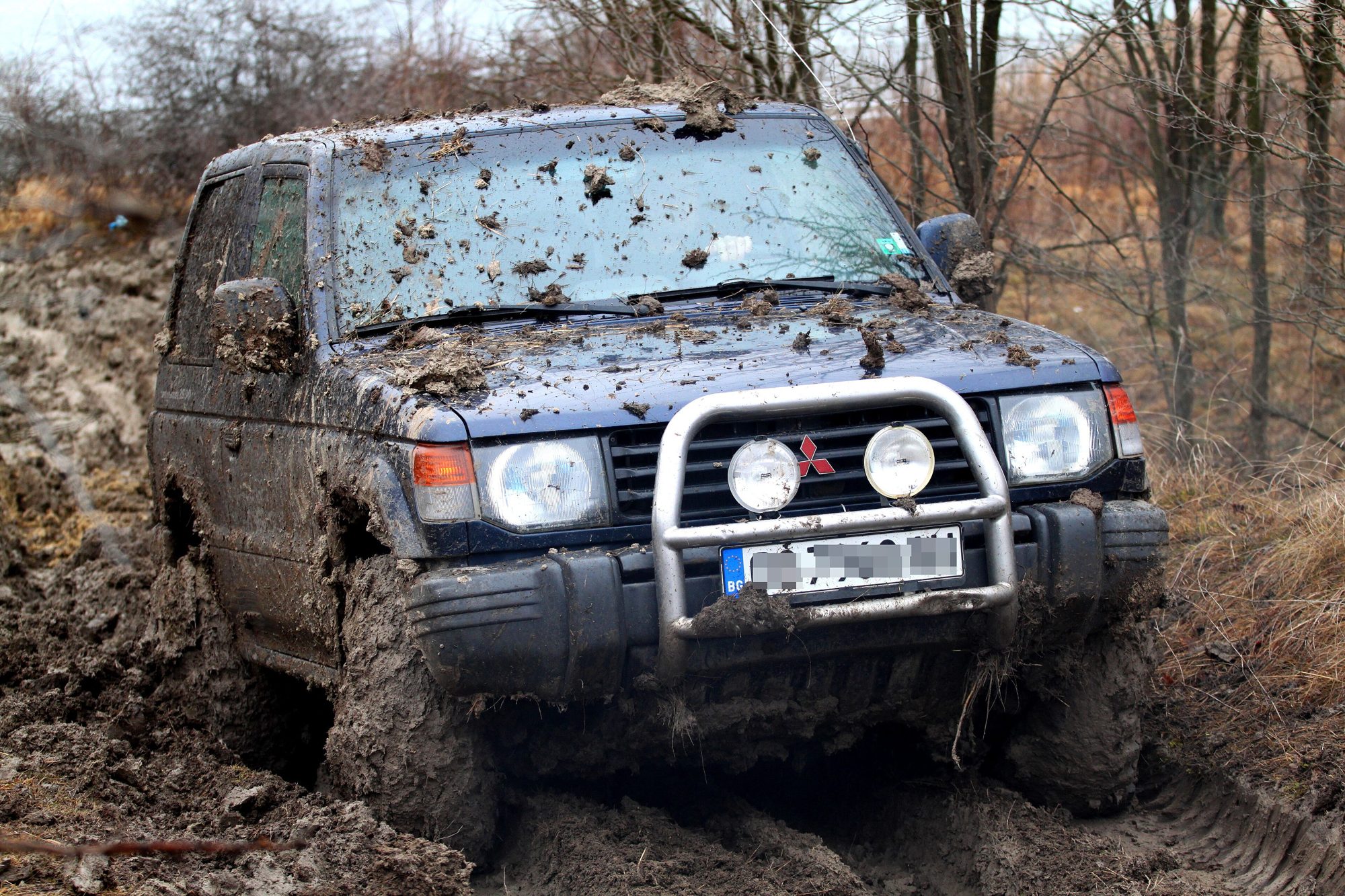
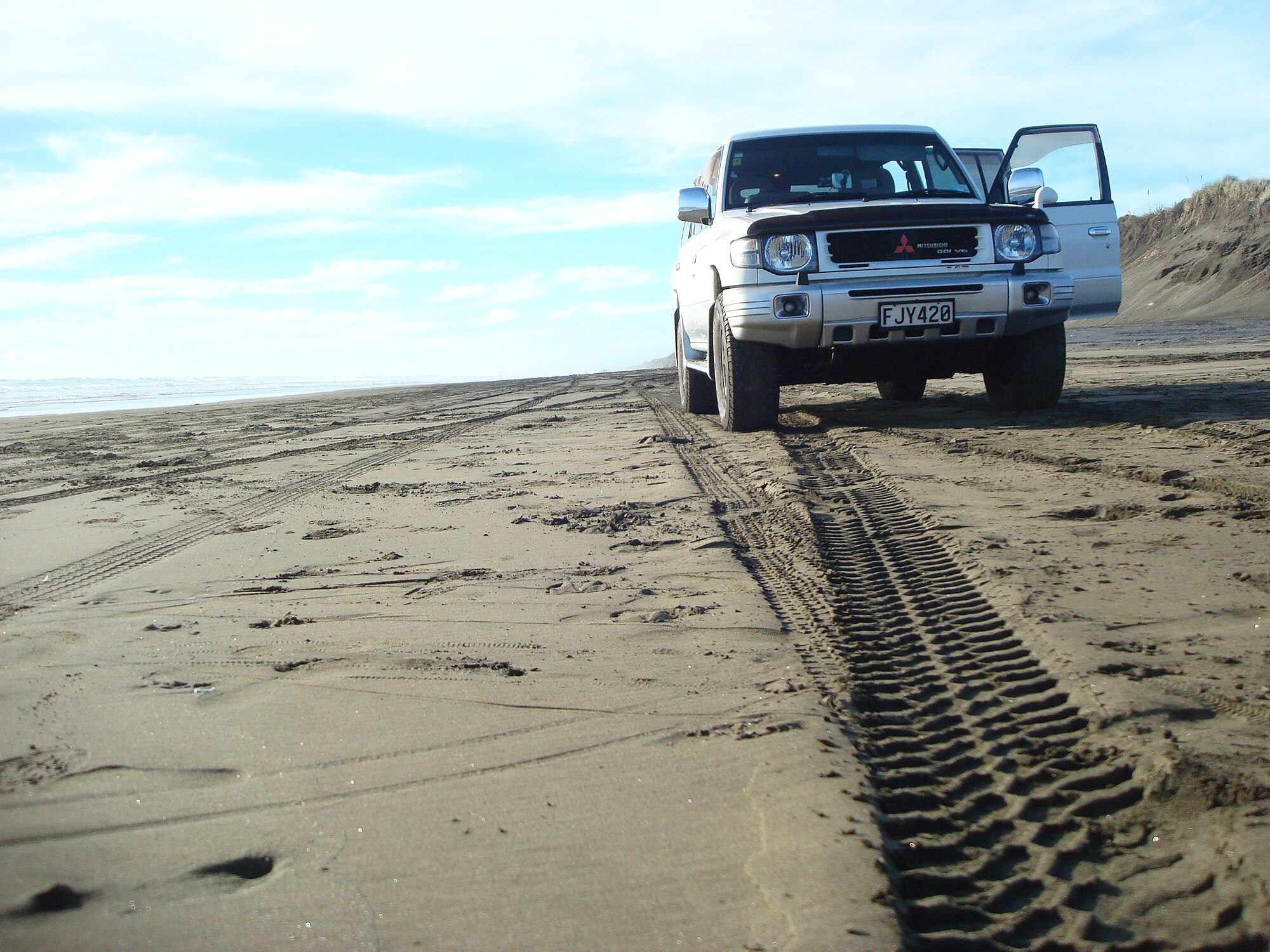
Mitsubishi launched the second Pajero in January 1991, and its designers admit their toughest rival was the first one. Work started in the autumn of 1986, when the original was still selling strongly. Early scale models scored worse in surveys than the truck they were meant to replace. The finished design was longer, wider and 50 mm lower overall, but the driver's eye point dropped only 30 mm, because rally driver Kenjiro Shinozuka insisted that visibility is vital. It worked: Mitsubishi's designers say it sold 1.15 million in eight years and seven months, and at one point it was Japan's best-selling new car of the month.
SUPER SELECT: FOUR MODES, ONE LEVER
The first Pajero's part-time 4WD bound up on tight paved corners. To engage it you had to stop, lock the freewheeling hubs and roll back about a metre. The second generation fixed that with Super Select 4WD, which Mitsubishi calls a world first and which North America knew as Active-Trac. One gated lever offers 2H, 4H with an open centre differential for full-time use on any surface, 4HLc with the centre locked, and 4LLc in low range. You can shift between 2H and 4H on the move; Wikipedia and JDMBUYSELL give the limit as 100 km/h. Instead of hubs, a dog clutch on the front differential disconnects the right-side front axle in 2H and 4H. Bring a Trailer's listings note a viscous coupling in US Active-Trac transfer cases.
The rest of the spec sheet was just as ambitious. A pneumatic rear locker was a factory option and engages only in 4HLc or 4LLc. Multi-mode ABS works in every Super Select mode. Optional electronic dampers have Soft, Medium and Hard settings. Body styles were metal-top and canvas-top short wheelbases and semi-high and high-roof long-wheelbase wagons. Its rivals were the Land Cruiser 80, the Patrol Y60 and the Isuzu Trooper, and Super Select was the Pajero's trump card.
THE ENGINES: TWO V6S, TWO DIESELS
At launch you could have the 6G72 3.0-litre SOHC 12-valve V6 or the 4D56 2.5-litre intercooled turbo-diesel. The diesel's top-mounted intercooler is fed through two hidden scoops at the top of the grille and ducts in the bonnet. In July 1993 Mitsubishi added the 6G74 3.5-litre DOHC 24-valve V6, rated at 215 hp and 228 lb-ft in the US Montero SR, and the 4M40 2.8-litre intercooled turbo-diesel, along with a larger transmission and transfer case. Wikipedia lists 92 kW and 294 Nm for the 4M40 in this Pajero. In 1996 the 3.0 got a 24-valve head and coil-pack ignition; BaT lists a 1995 Montero LS at 177 hp and 188 lb-ft.
Two details matter for owners. The V6s and the 4D56 use timing belts, and the 4M40 uses a chain. And the 3.5 changed: Australian owners say the NJ and NK used the DOHC 3.5 and the 1997-on NL switched to a SOHC 3.5 with less peak power but a broader spread of torque. BaT's 18k-mile 1998 Montero is rated at 200 hp. The US Monteros we found on Bring a Trailer are all V6s; the diesel Pajeros in the US today are Japanese-market imports.
THE EVOLUTION
For 1997 the Dakar banned manufacturers from the prototype class and outlawed petrol turbos, so Mitsubishi built a T2 car from the short-wheelbase second-generation Pajero, kept the production 6G74 V6 and stiffened the chassis. Shinozuka won and became the first Japanese driver to win the Dakar overall, and Pajeros filled the top four places. For 1998, with new FIA rules, Mitsubishi needed a road car to base the next T2 car on. That road car was the Pajero Evolution (V55W): wider tracks, double-wishbone independent rear suspension, overfenders, an aluminium bonnet with a scoop, Recaro seats and a 3.5-litre 6G74 with MIVEC variable valve timing and a dual-plenum variable intake.
Japanese catalogues rate the road car at 280 PS. About 2,693 were built, and Bring a Trailer sellers put the number with a five-speed manual at around 600. Jean-Pierre Fontenay won the 1998 Dakar in the competition version, again with Pajeros in the first four places, and Mitsubishi says its cars won 15 of the 16 special stages. That independent rear end became the basis for the third-generation Pajero.
HOW IT ENDED
The monocoque third generation arrived in Japan in 1999 and reached the US for the 2001 model year, so the last second-generation Monteros are 2000 models. Production carried on elsewhere: as the Pajero SFX in India until 2012, in the Philippines until 2008, and in China, where Changfeng's Leopaard models were built from 1995 to 2021. In 1998 export and Gulf trucks got the 'blister' wide-fender facelift.
Late trucks have one modern problem. NL Pajeros built from 31 May 1996 to 30 September 2000 with the NADI 5-AT driver's airbag inflator are subject to a buy-back in Australia, because no replacement inflator exists. In the US, the same issue is NHTSA recall 20V035000 for 1998–2000 Monteros. Check the VIN before you buy.
SIDEBAR · DAKAR 1992–1998
Prototypes first, then production trucks
The second-generation era began with Mitsubishi prototypes. Hubert Auriol won the 1992 Paris–Cape Town in a works Pajero, ahead of two more Pajeros. Bruno Saby won in 1993 in a prototype developed by SBM, with a 4G6-family turbo four and a six-speed gearbox. Neither car had much in common with a showroom Pajero.
That changed in 1997. The T2 cars that finished first to fourth used the production chassis, the production 6G74 V6 and a rear rigid axle, because the rules didn't allow Mitsubishi to change the rear suspension design. In 1998 the Evolution let Mitsubishi fit independent rear suspension. If you want a Pajero with Dakar DNA, this generation's T2 trucks are the closest link between the rally cars and the ones in showrooms.