The story
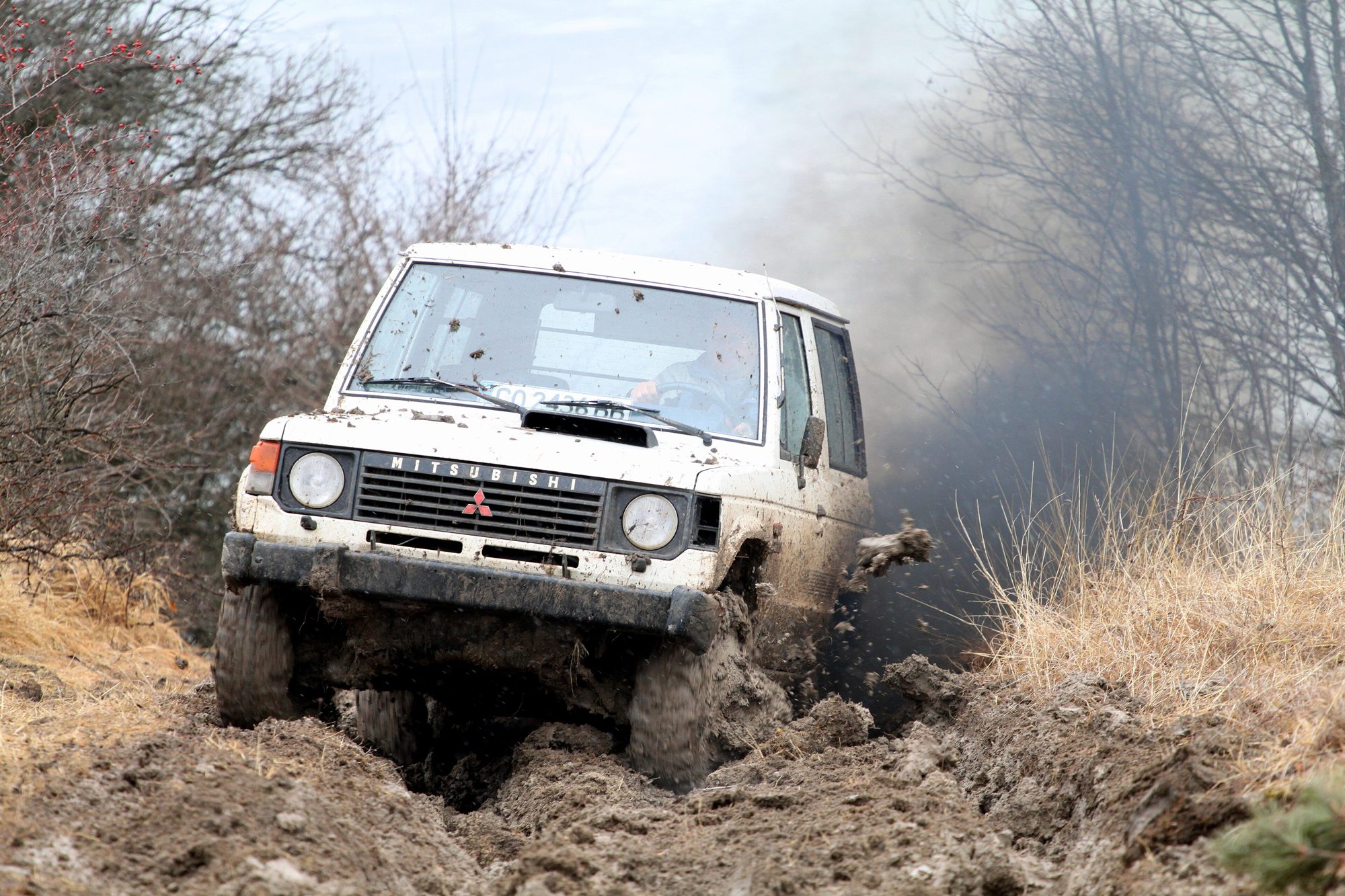
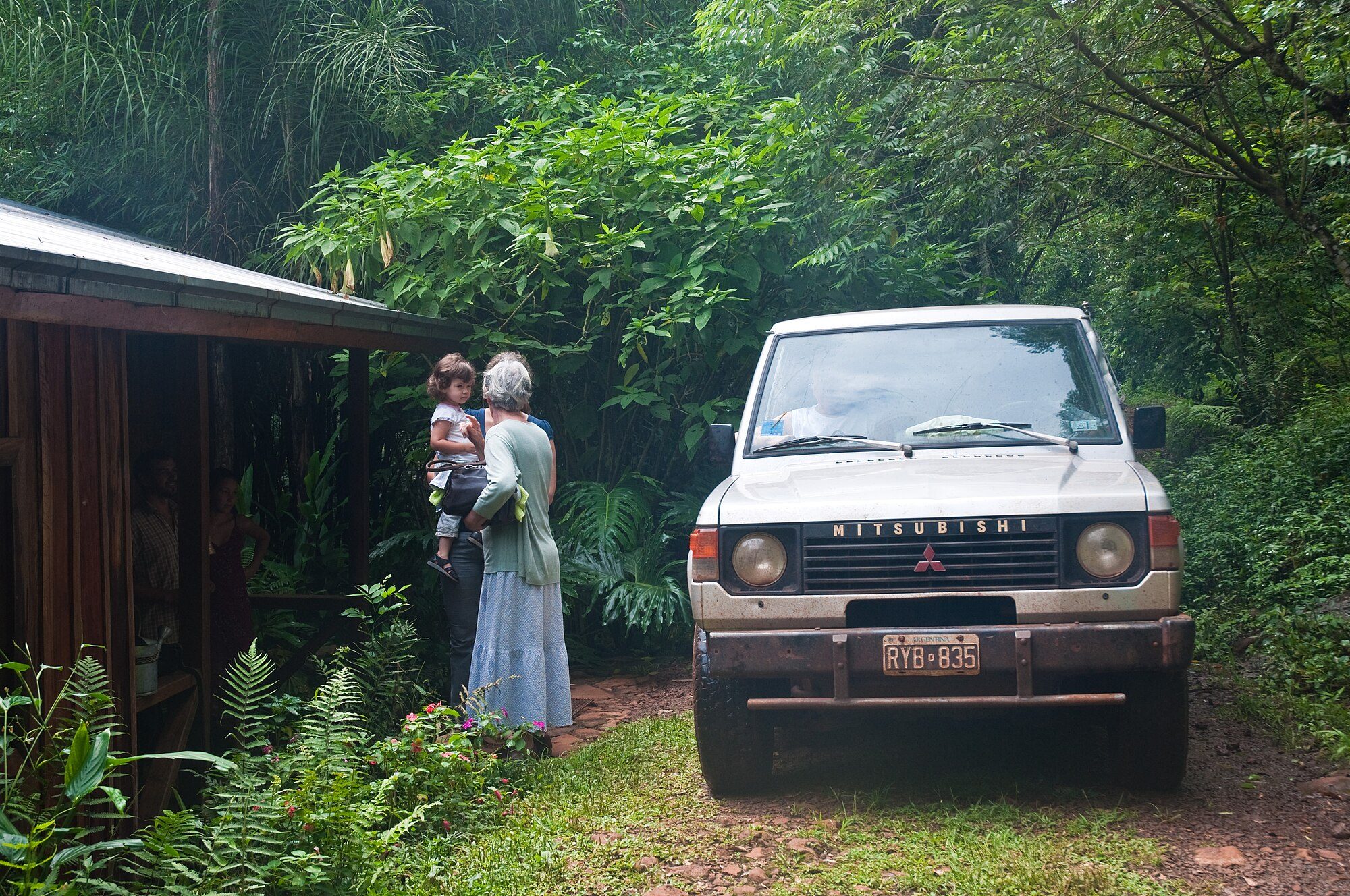
Mitsubishi had built licensed Jeeps since 1953, but the licence wouldn't let it export them, and in Japan the Land Cruiser was taking its customers. In the summer of 1978 a tiny team led by Shinji Yokoyama began a 'preliminary project', because nobody would yet fund a real one. Designer Kiyoshi Honda had a Mercedes G and a Ford Bronco at the technical centre for reference. The open-top Pajero II concept was a hit at the 1979 Tokyo Motor Show, and the production Pajero went on sale in May 1982. Management planned on just 1,000 a month in Japan and 1,600 overseas.
A JEEP WITH A HEATED SEAT
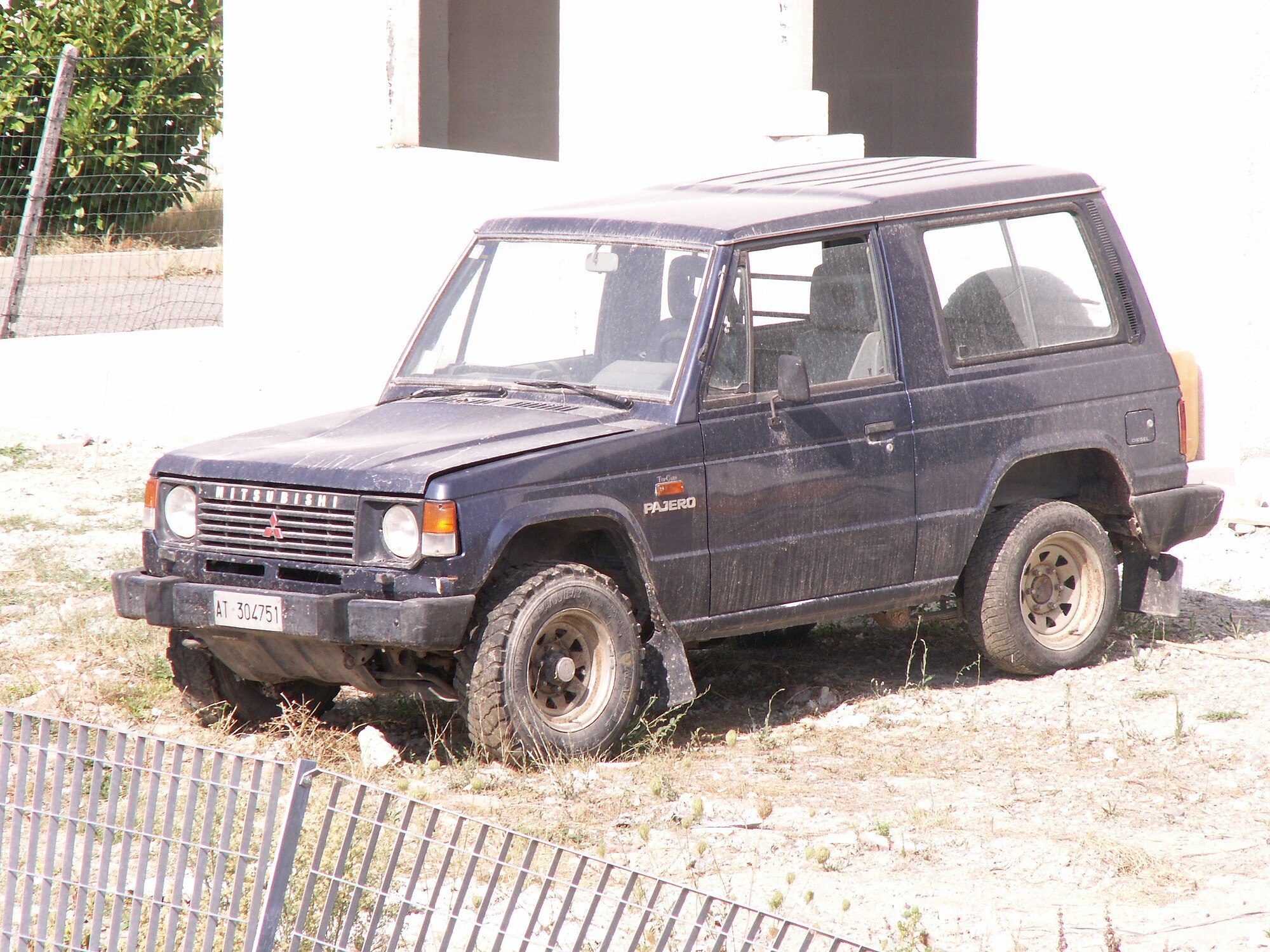
The recipe was new for a Japanese 4x4: a ladder frame with double-wishbone independent front suspension on torsion bars, power steering, suspension seats and a turbo-diesel option. Interior designer Hiroshi Mizutani borrowed from aircraft cockpits and put an inclinometer in the middle of the dash, which he believes was the first three-dimensional inclinometer in any car. The short three-door came with a metal or canvas top. A five-door long wheelbase arrived in February 1983 on a 106.1-inch wheelbase, against 92.5 inches for the short one.
Engines included a 2.0 petrol (turbocharged in some markets), the 2.6 4G54 four, the 2.3 4D55 diesel and turbo-diesel, and from 1986 the 2.5 4D56 turbo-diesel. A four-speed automatic came in 1985. The 1987 Exceed added two-tone paint and heated seats. In 1988 the 3.0 6G72 V6 and an intercooled 2.5 diesel joined the range, and long-wheelbase trucks swapped leaf springs for three-link coil rear suspension. Every truck had part-time 4WD.
PARIS–DAKAR, 1983–1985
Mitsubishi worried buyers would see a comfortable 4x4 as a soft one, so it went to the Dakar. In January 1983 it entered four nearly standard canvas-top Pajeros with the 2.6 four. Andrew Cowan won the unmodified production class and finished 11th overall in a field of 385 entrants, and Georges Debussy was second in class and 14th overall. The overall winner was Jacky Ickx in a Mercedes 280 GE. In 1984 Cowan moved up to the modified class with a metal-top Pajero running the Starion's 2.6 turbo, up from 110 to 170 PS. He finished third overall behind a Porsche and Patrick Zaniroli's Range Rover.
Mitsubishi then signed Zaniroli, and for 1985 built a prototype with a carbon-Kevlar body, a longer wheelbase, three-link rear suspension and 225 PS from the turbo 2.6. Zaniroli and Jean Da Silva won the 22-day, 10,284 km rally from Versailles, with Cowan second, the first overall Dakar win for a Japanese manufacturer. A Toyota 60 Series was third. A privately entered Pajero won the unmodified production and marathon classes as well. Be clear what won, though: the 1985 winner was a works prototype, not a showroom truck.
MONTERO, SHOGUN AND DODGE RAIDER
The name became a problem abroad. 'Pajero' comes from the Pampas cat, but in Spanish it's a crude insult, so North America, Spain and most of Latin America got the Montero. In Britain it became the Shogun. US Monteros had a 2.6 G54B four rated at 109 hp and 142 lb-ft, and later the 3.0 6G72 V6 at 143 hp and 168 lb-ft. They came with automatic locking front hubs, an inclinometer pod and a suspension driver's seat.
Chrysler sold the short three-door as the Dodge Raider from 1987 to 1989, alongside the Ram 50 and the new Dakota, and never offered the five-door. The 2.6 was standard and the V6, with a 'V6' grille badge, followed a year later. A base Raider listed at $12,830 in 1989, cheaper than a Pathfinder or a 4Runner. CarSalesBase counts 19,539 US sales in 1987 and fewer than 10,000 in each of the next two years, and Dodge didn't sell another compact SUV until the 2007 Nitro.
LEGACY
The second generation took over in January 1991. Mitsubishi had underestimated the first: domestic sales started at 670 a month and reached 3,000 a month by the end, and Mitsubishi's designers credit it with starting Japan's RV boom. Hyundai built a licensed version as the Galloper from 1991 to 2003. Mitsubishi also built about 150 yellow short-wheelbase Camel Trophy Editions with the 4D56. The Japan Automotive Hall of Fame named the 1982 Pajero a Historic Car in November 2023, and designer Kiyoshi Honda says the Middle East called it the 'Mercedes-Benz of the Desert'.
SIDEBAR · THE DODGE THAT WASN'T
The Raider: a Pajero with a Dodge badge
The Raider was Mitsubishi-built and Chrysler-sold. It was a Pajero three-door with Dodge badges, covered by Chrysler's 3-year/36,000-mile warranty. The Truth About Cars says Dodge aimed it at the Nissan Pathfinder XE and the Toyota 4Runner, and undercut both on price. Owners added two-tone paint, stripes, bull bars and chrome wheels.
Today Raiders change hands cheaply. On Bring a Trailer they've sold for between $5,100 and $11,300 since 2024, with the low-mileage five-speeds at the top. Parts are the same as for the Montero, so shop by the Montero's engine and year.