The story
In December 1991 Isuzu replaced the Trooper with a completely new one, and Japan liked it enough to give the Bighorn a Special Award in the 1992/93 Japan Car of the Year. It was bigger, softer and far more powerful than the tall, narrow original, with a new aluminium V6 that Isuzu said it had built specifically for the truck. Underneath it was still a ladder frame with a live rear axle and a two-speed transfer case. It also stayed a box, just a wider one with rounded edges, and it went on to wear more badges than almost anything else on the road.
THE V6S: 6VD1 AND 6VE1
Isuzu's 1992 US brochure introduced the 3.2-liter V6 with an aluminium block and heads, four valves per cylinder, a variable intake system and distributorless ignition. The Trooper S got a single-cam version with 175 hp and 188 lb-ft, and the LS a twin-cam with 190 hp and 195 lb-ft. Both are 75-degree V6s with belt-driven cams. For 1996 a revised single-cam engine made 190 hp, and that's what the new Acura SLX used.
For 1998 the 6VE1 arrived: a longer-stroke 3.5-liter twin-cam rated at 215 hp and 230 lb-ft at 3,000 rpm, with cast-iron cylinder liners in an aluminium block. MotorTrend thought it smoother and much torquier than the old 3.2. Owners later found the catch. NHTSA's complaint files for 1998–2000 Troopers are full of 3.5s burning a quart every few hundred miles, and several ran dry and seized with no warning light. One long-time owner on Bob Is The Oil Guy blames too few oil-return drains in the piston skirts, which clog and let the rings stick.
AUTO HUBS, SHIFT-ON-THE-FLY, THEN TORQUE ON DEMAND
The chassis was a big step up. Front suspension is independent, with double wishbones and torsion bars, and the rear is a coil-sprung live axle on a multi-link location, with Acura quoting 7.5 inches of wheel travel at each end. Disc brakes were fitted at all four wheels. Buyers could have a five-speed manual or a GM 4L30-E four-speed automatic with 'power' and 'winter' modes, and in 1992 a limited-slip rear differential was standard on the LS. The trucks were rated to tow 5,000 lb, and Isuzu's brochure claimed they could climb a 39-degree slope.
Four-wheel drive stayed part-time at first, with automatic front hubs. Some 1996 trucks gained shift-on-the-fly, and the 1998 facelift added a Borg-Warner Torque On Demand system on S Performance and S Luxury trucks. In '4WD Auto' it uses sensors in the transfer case to send torque to the front axle when the rear slips, which suited snowy commutes. The 1998 update also brought a new grille, bumper, headlamps and front fenders and a body-coloured hard spare-tire cover. The grille changed again for 2000, and 2000–02 automatics got Grade Logic, which downshifts on steep descents.
'NOT ACCEPTABLE'
On August 20, 1996, Consumers Union, the publisher of Consumer Reports, labelled the Trooper and its Acura SLX twin 'Not Acceptable'. It said both had tipped up high on two wheels in emergency maneuvers during its road tests. The October 1996 issue described the 1995–96 Trooper as dangerously prone to tipping during sudden lane changes, while three other SUVs in the test were not. Consumers Union also petitioned NHTSA to open a defect investigation. The damage was immediate: Trooper sales fell by more than half in the first six months of 1997, to 4,313 from 9,290, and SLX sales fell 63.2 percent to 448.
NHTSA ran its own tests and in July 1997 denied the petition, saying it found no evidence that an investigation would lead to a defect finding or recall. Isuzu then sued Consumers Union for $242 million, arguing that the testers had steered harder than any real driver would. Judge Richard Paez ruled that Isuzu's public campaign made it a public figure, which raised the bar for proving defamation. In April 2000 a federal jury in Los Angeles found that seven of 15 disputed statements were false, and one was made with reckless disregard for the truth. It still awarded Isuzu nothing, and both sides claimed victory.
Isuzu later put the cost of the affair at $244 million, and the bad press is often blamed for the SLX's early death. For owners today the lesson is practical rather than legal. A tall, narrow-tracked truck on soft springs leans, and NHTSA's 1995–96 complaint files include owners worried about rollover; one 1996 complaint records the front ride height being lowered at the torsion bars to cure a top-heavy, tippy feel. Keep lifts modest, keep weight off the roof and keep the shocks fresh.
ONE BOX, MANY BADGES
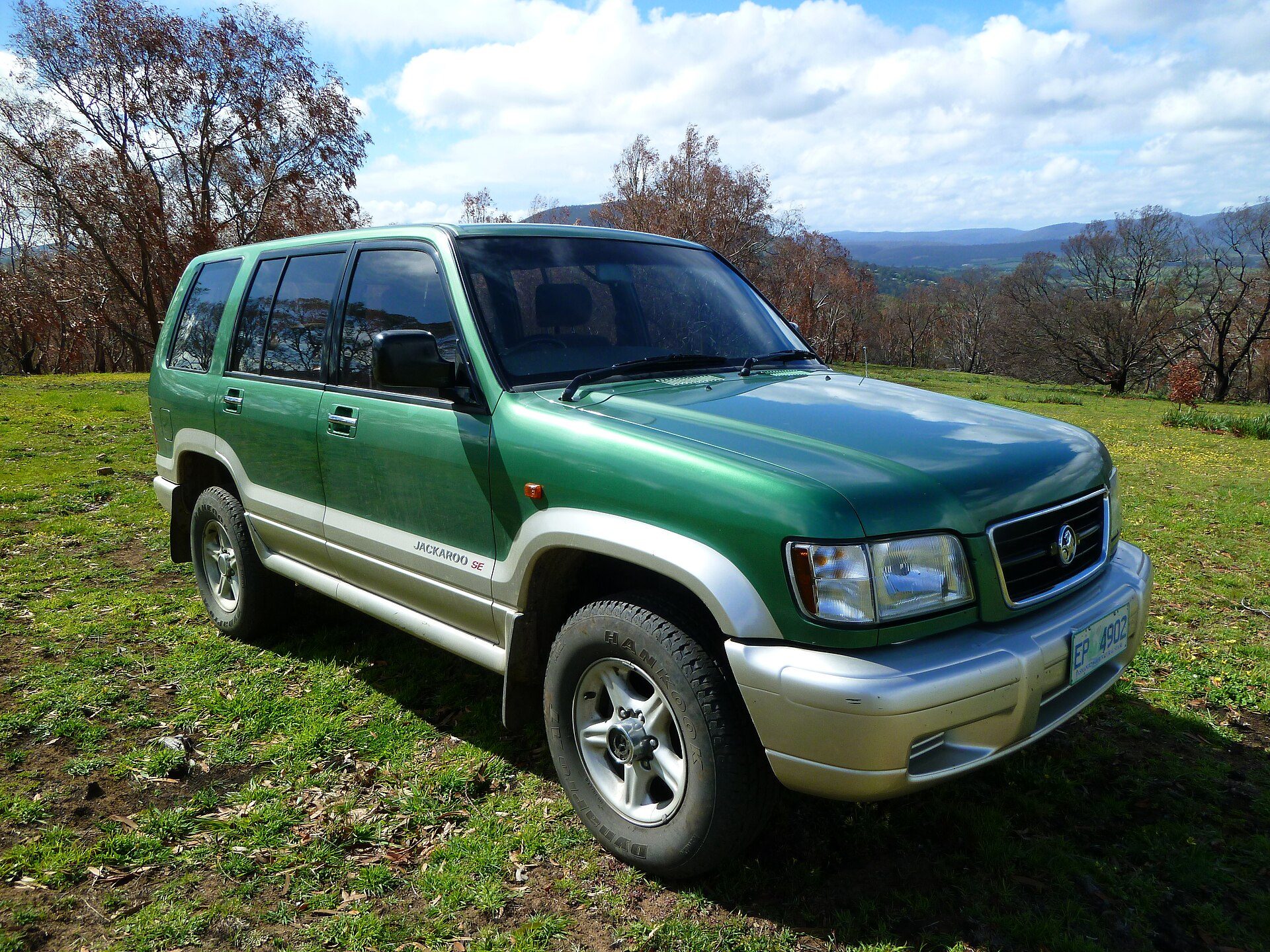
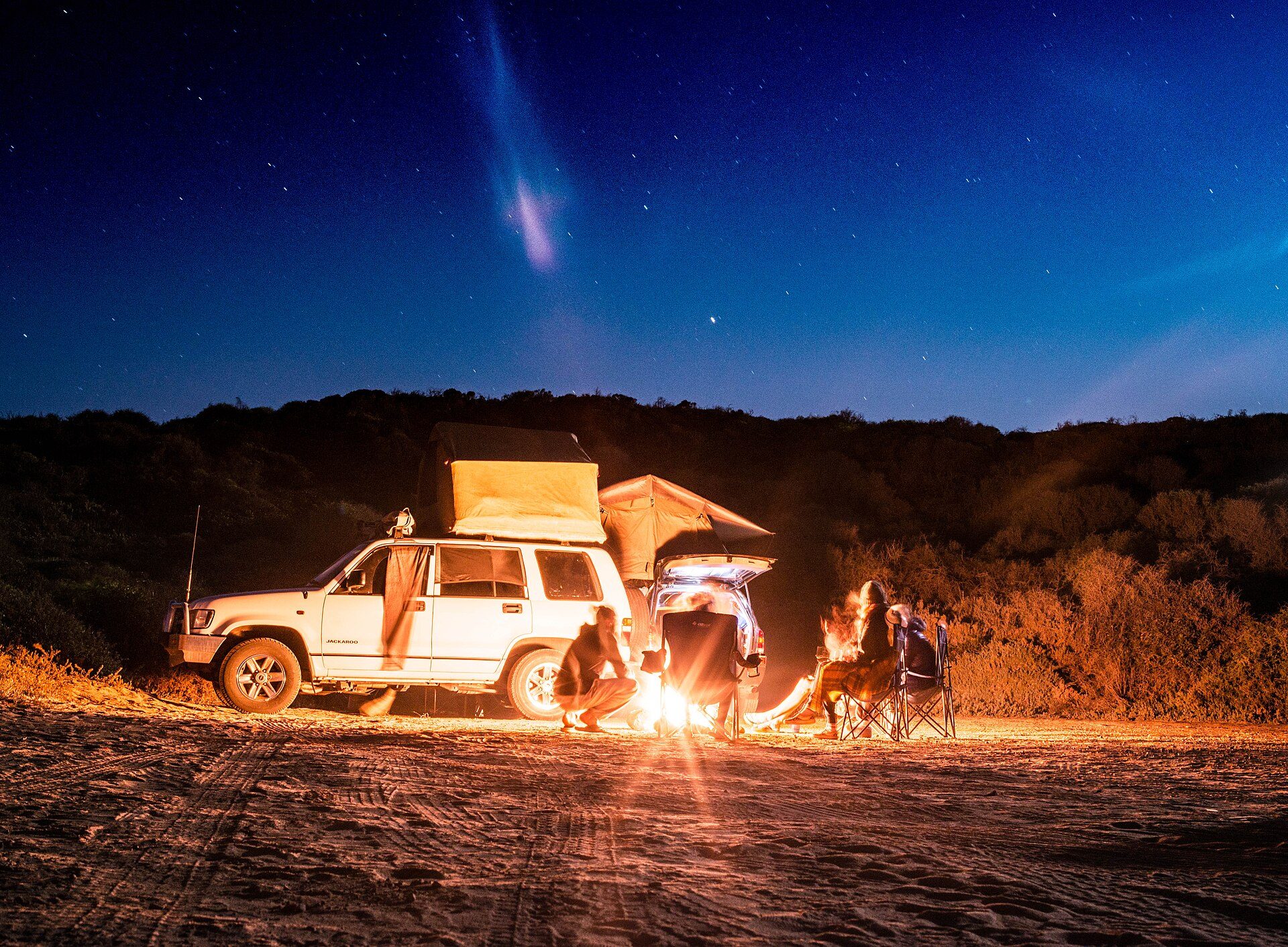
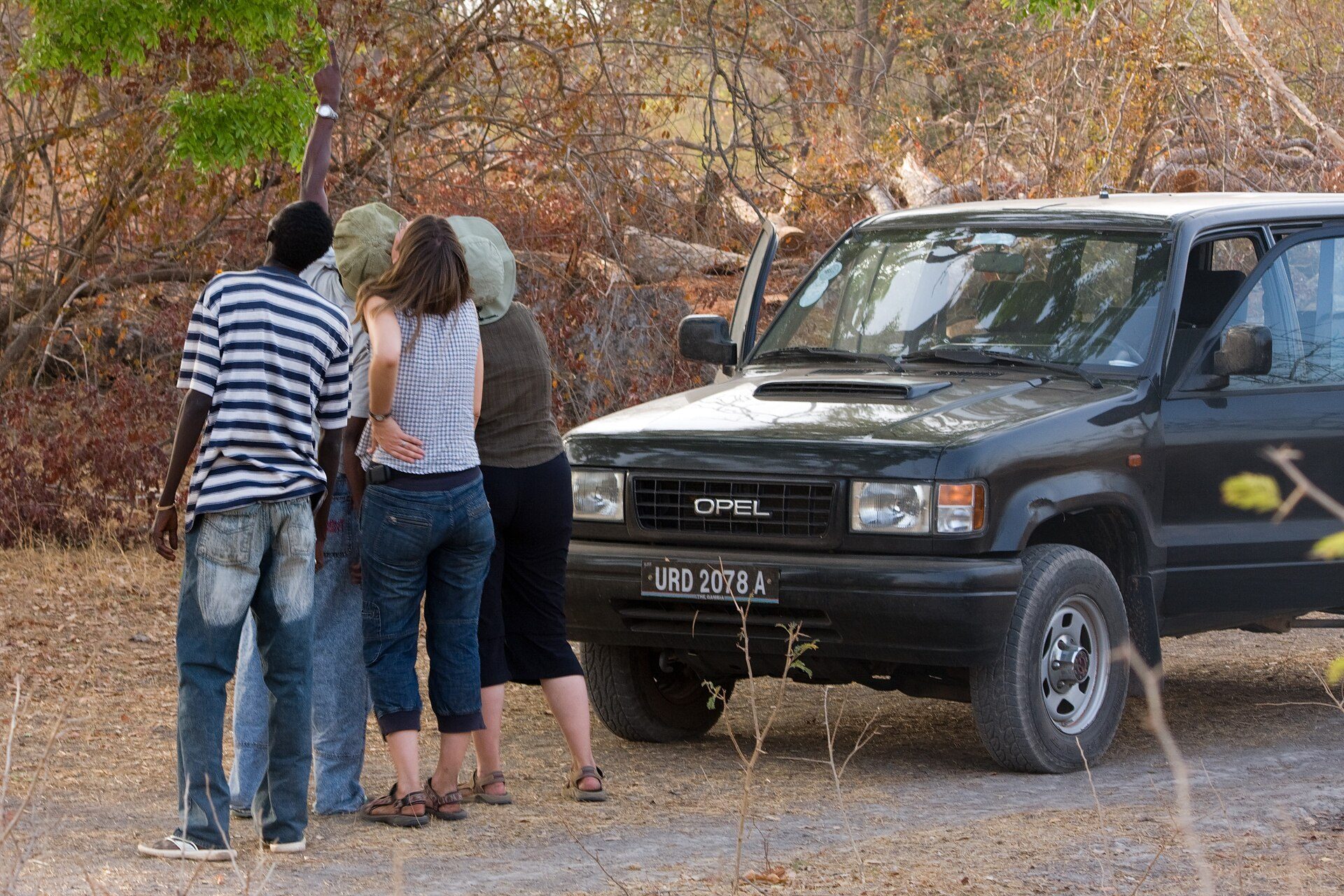
General Motors, Isuzu and Honda turned the UBS into a badge-engineering showcase. Honda sold it in Japan as the Horizon from 1994 to 1999 and in America as the Acura SLX (see the sidebar). In Europe it was the Opel Monterey from 1992 to 1999, and in Britain the Vauxhall Monterey from spring 1994. Hagerty UK says that one was well reviewed, beating a Range Rover and a Mitsubishi Shogun in one 1994 group test, but found little more than 4,000 buyers. Australians bought it as the Holden Jackaroo and the more luxurious Holden Monterey, and Holden Special Vehicles built 79 HSV Jackaroos and 234 Jackaroo SEs. Subaru sold a Lotus-tuned Bighorn until 1994.
Outside North America the engine list was longer. A 2.6-liter four was offered in some markets, and diesels started with the 3.1-liter 4JG2 turbo-diesel (114 PS in export form). From 1998 they moved to the direct-injection 3.0-liter 4JX1 with about 159 PS. What Car? rated the 3.0 turbo-diesel the better buy for towing and off-road work in the UK, and called the Trooper one of the very best in the sticky stuff, though less good on the road.
HOW IT ENDED
Isuzu dropped the Trooper in the US after 2002, replacing it with the smaller Axiom and the GMC Envoy-based Ascender. The last Japanese Bighorn was built in September 2002, when Isuzu stopped making its own passenger vehicles, though the Philippines kept selling a 3.0 diesel Trooper until 2005. The UBS left a good competition record: a Marathon-class win and 12th overall in the 1994 Paris–Dakar, and Australian Safari wins for Bruce Garland's Holden Jackaroos in 1996 and every year from 1999 to 2002.
Today it's a cheap way into a solid-rear-axle, low-range four-door with a huge cargo bay. On Bring a Trailer, second-generation Troopers have sold for $6,000 to $14,250 since late 2024, and an Acura SLX for $11,250. An Overland Bound owner with 203,000 miles on his 1998 summed it up: it averages 16–17 mpg, gets a quart of oil every 700–800 miles, and has needed little else.
SIDEBAR · THE LUXURY TWIN
Acura SLX: Honda's first SUV was an Isuzu
Acura launched the SLX in November 1995 for the 1996 model year. Acura calls it the first SUV from a Japanese luxury brand; it was built by Isuzu and jointly developed with it. Early trucks had the 190 hp 3.2-liter V6 and an automatic only, and the 1998 update brought the 215 hp 3.5, Torque On Demand and the new nose. Caught up in the Consumer Reports rating, it sold just 6,590 units in the US over four model years before the in-house Acura MDX replaced it.
Acura hasn't forgotten it. In December 2019 it showed a 'Super Handling SLX' at the RADwood show in California: a 1997 SLX with an RDX 2.0-liter turbo, a 10-speed automatic and SH-AWD. To make it fit, Acura welded new subframes to the boxed ladder frame and replaced the solid rear axle with independent suspension.