Trooper
“Isuzu drew a box, sold it under about a dozen badges on four continents, then spent four years in court defending its honour. The first one is a tall, honest tool; the second is a roomy V6 cruiser with a solid rear axle and a thirst for oil.”
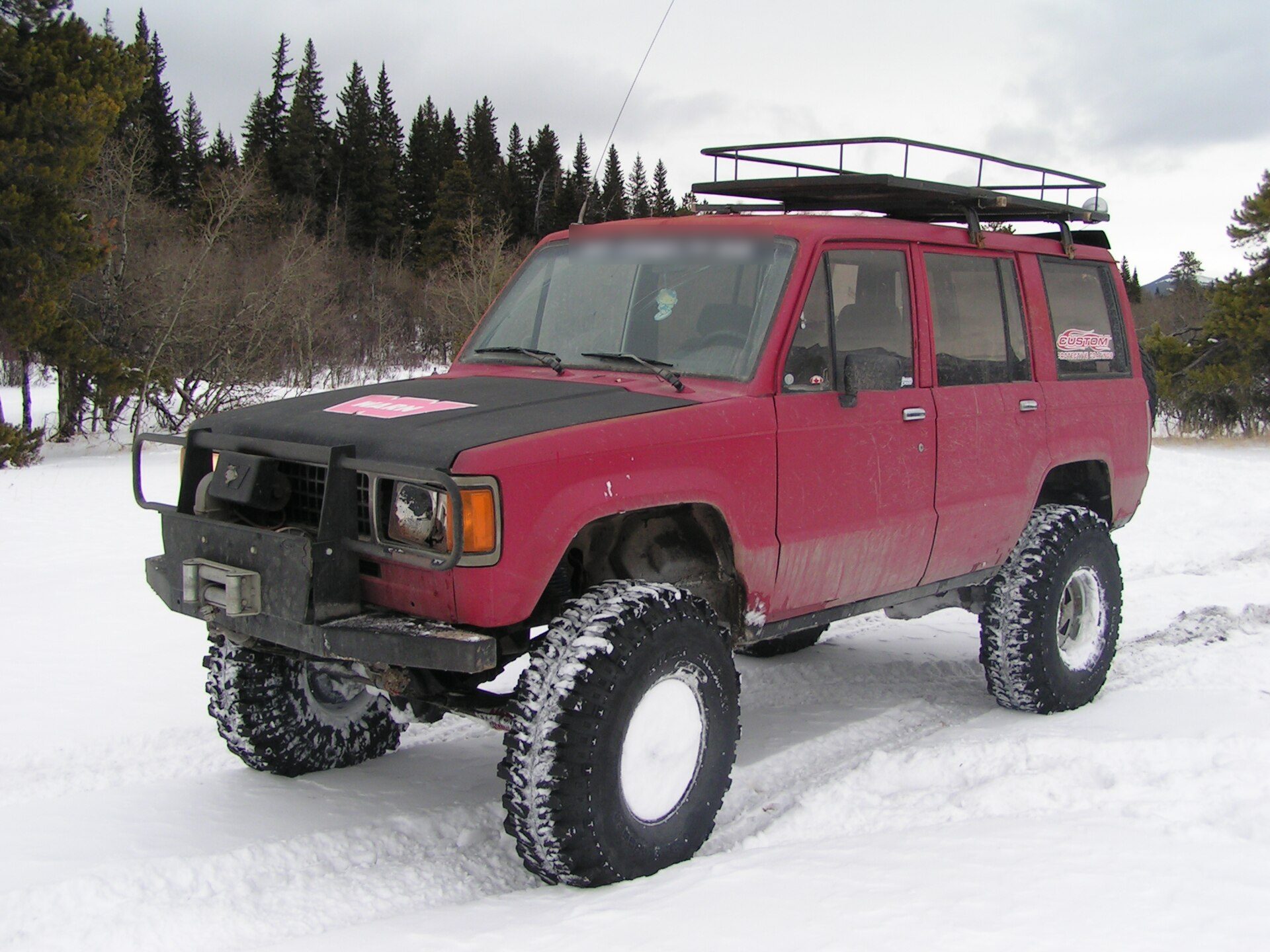
Isuzu built the Trooper from September 1981 to September 2002, across two generations. It started life as a wagon on the company's pickup chassis and grew into a full-size, V6-powered family 4x4. Japan knew it as the Bighorn, and the rest of the world met it under other names: Holden Jackaroo and Monterey in Australia, Opel and Vauxhall Monterey in Europe, Honda Horizon in Japan, Acura SLX in the US, plus Chevrolet Trooper and Subaru Bighorn. SsangYong even built it under licence with its own bodywork, as the Korando Family.
The first generation (1981–1991) is the boxiest: a narrow, upright wagon with independent torsion-bar front suspension, leaf springs at the back and four-cylinder engines, sold in the US from 1984 as the Trooper II. The second generation (1991–2002) added Isuzu's aluminium 3.2- and 3.5-liter V6s, coil springs at the back and, from 1998, Torque On Demand. It won its class in the 1994 Paris–Dakar and won the Australian Safari again and again as the Holden Jackaroo.
In America the second generation is also remembered for a fight. Consumer Reports rated the 1995–96 Trooper and Acura SLX 'Not Acceptable' for rollover risk in 1996. NHTSA declined to open a defect investigation, Isuzu sued, and in 2000 a jury found some of the magazine's statements false but awarded no damages. Today both generations are cheap, capable boxes. Buy a first-generation truck for its simplicity and check it for rust; buy a second-generation one for space and towing, and check the oil.