The story
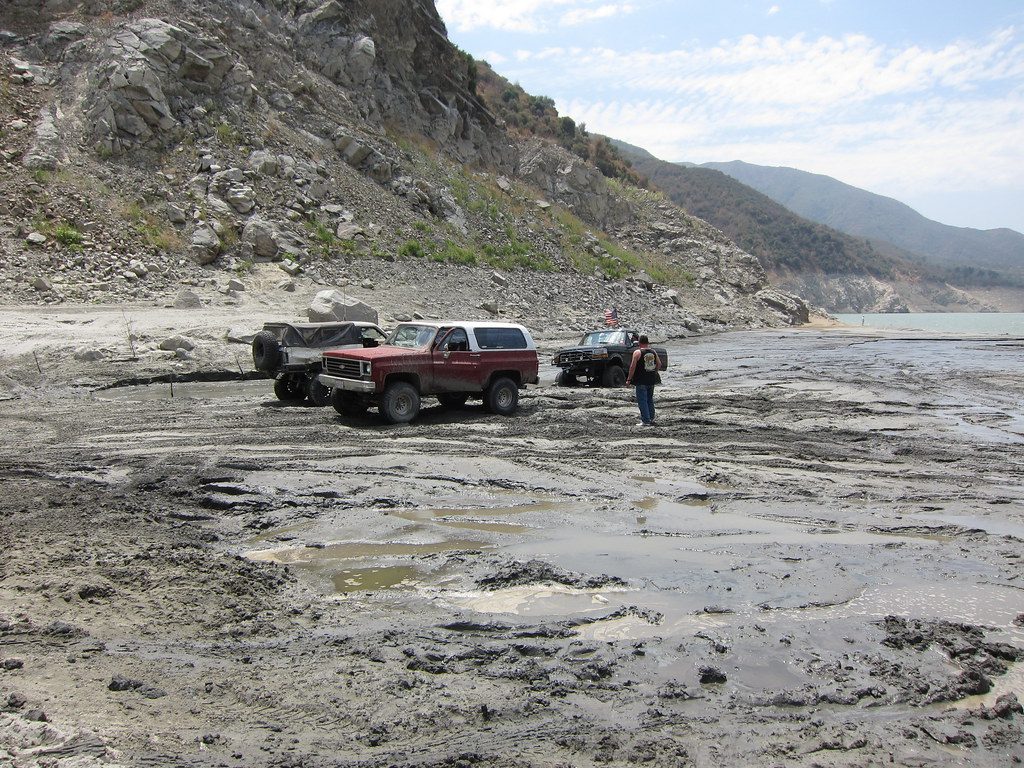
For 1973 General Motors redesigned its whole light-truck line. GM called it the 'Rounded Line', but everyone else calls it the square body, and the K5 Blazer came along with it. The formula stayed the same: take a four-wheel-drive half-ton pickup, shorten it, and make the roof removable. The new Blazer was 7 inches longer than the first generation on a wheelbase 2.5 inches longer. It stayed in production for 19 model years, through two facelifts, a diesel and an Army contract. GMC sold the same truck as the Jimmy, and the long-wheelbase Suburban as the GMC Suburban.
A PICKUP WITH THE ROOF OPTIONAL
The K5 was built as an answer to the International Scout and the Ford Bronco. Because it shared its platform with the C/K pickups, it was bigger, roomier and more stable on the road than either. It also cost less to build, and buyers could add pickup options such as automatic transmissions, air conditioning and radios. By 1970 it was outselling its rivals. Rivals soon copied the idea. Jeep shortened its Gladiator into the Cherokee for 1974, and Ford moved the Bronco onto the F-100 platform for 1978.
From 1973 to 1975 the Blazer was a fully open truck behind the windshield, with a choice of a removable hardtop or a convertible top. In 1976 GM made it a half-cab: a fixed steel roof over the front seats, which improved rollover protection and shared more parts with the pickups, and a removable fiberglass top over the back. That rear top still came off in 1991. The tailgate had a glass window that wound down inside it, either by hand crank or by an electric motor. The motor is a known weak point, so many of these windows no longer work.
SMALL BLOCKS, ONE DIESEL AND FOUR TRANSFER CASES
The 250 straight-six was the base engine until 1982. Most buyers chose a small-block V8: a 307, 305 or 350, or from 1975 a 400. In 1973 Popular Science tested a 175 hp 350 automatic with full-time 4WD. It took 22.5 seconds to reach 60 mph, and the testers recorded 9.6 mpg at a steady 45 mph. For 1982 GM added a 6.2-liter diesel V8 developed with Detroit Diesel. It made 130 hp and 240 lb-ft at launch and fit the same mounts as the gas V8. In 1987 throttle-body injection arrived, and after that the TBI 350 was the standard engine.
Transfer cases tell you the truck's age. From 1973 to 1980 you got either the gear-driven, part-time NP205 or the chain-driven, full-time NP203 with a lockable center differential. GM dropped full-time 4WD after 1979. For 1981 the aluminum NP208 arrived, a part-time case you could shift into 4WD at up to 25 mph, along with automatic locking hubs. From 1989 the NP241 replaced it. Up front, early trucks had a Dana 44, and GM switched to its own corporate 10-bolt from 1977. The rear axle was a 12-bolt, then a 10-bolt. A full-floating 14-bolt from a three-quarter-ton truck is the swap owners usually make.
SILVERADO, CHEYENNE AND THE ARMY
Trim levels followed the pickups. Custom Deluxe was the base model. Cheyenne added carpet, a headliner and extra insulation, and from 1975 Silverado was the top trim. Cheyenne trucks are usually 1970s models, because the name was dropped after 1981 and came back as a lower trim on the 1989–91 R/V trucks. Silverado ran to the end. GMC's Jimmy used Sierra names. In 1976 and 1977 a camper conversion was also offered: about 1,800 Blazer Chalet and Jimmy Casa Grande trucks with a pop-up camper body built by Chinook.
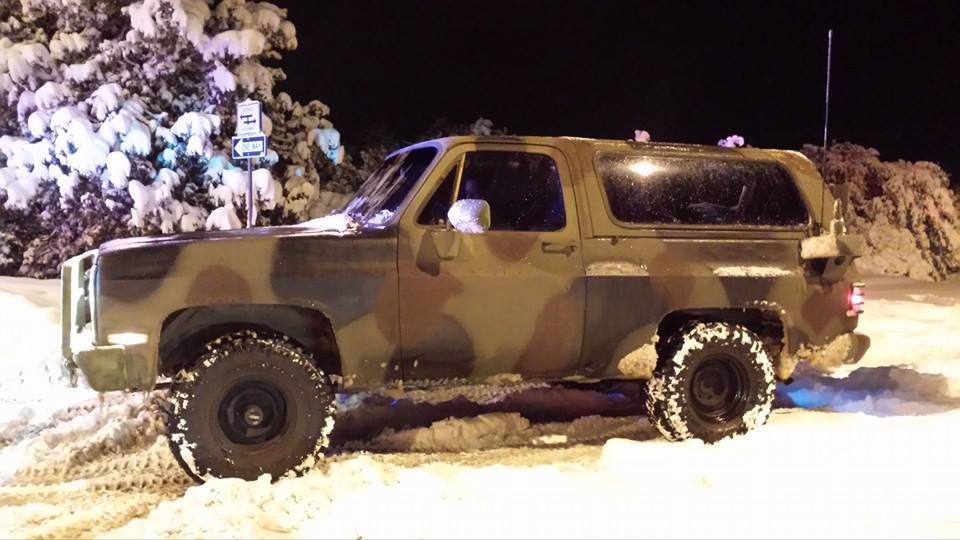
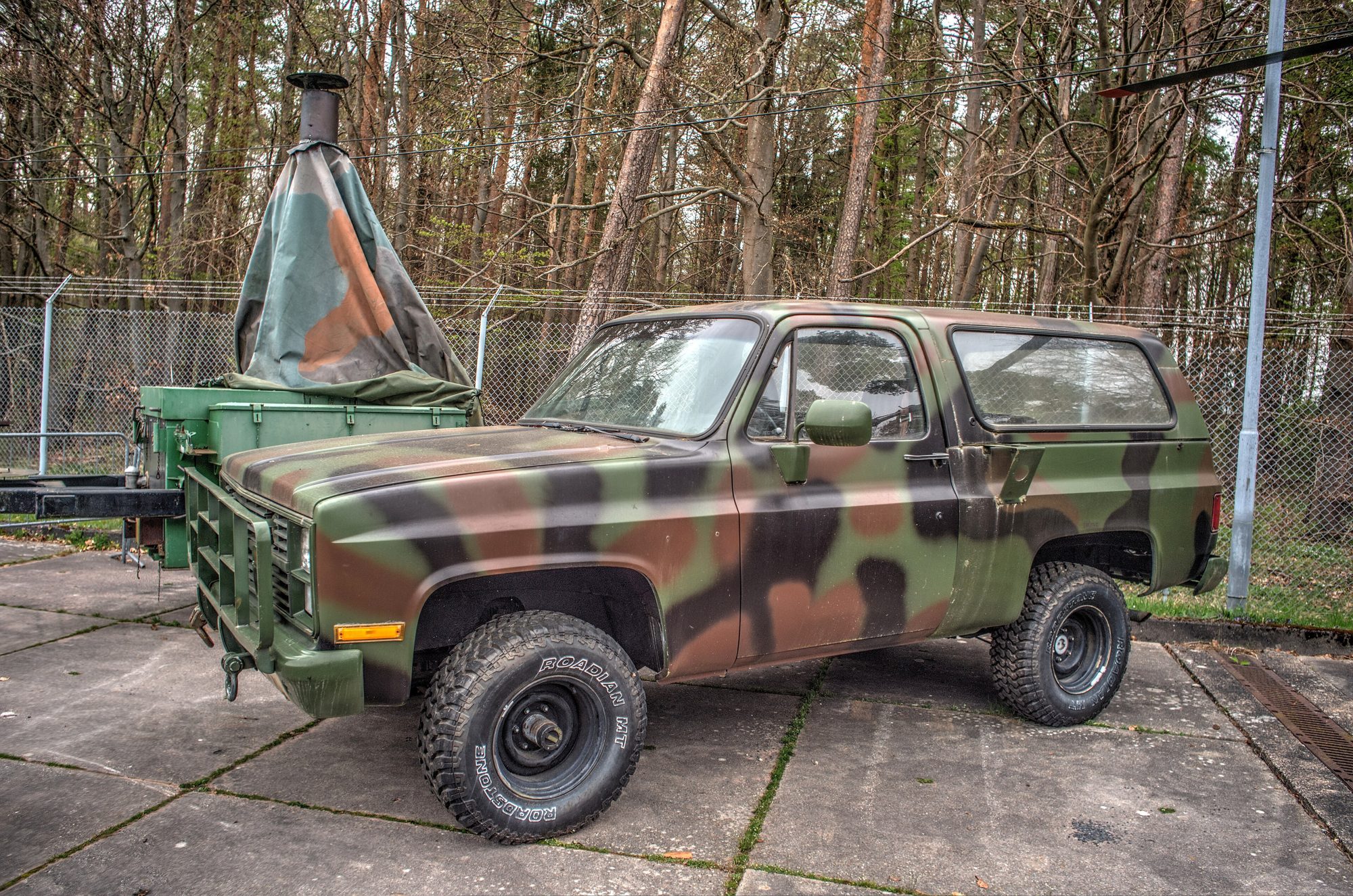
Then the Army bought some. Between 1983 and 1987 GM built the M1009, a K5 rated at three-quarter-ton capacity, as part of its Commercial Utility Cargo Vehicle program. It used the 6.2 diesel, a TH400 automatic and an NP208 transfer case. GM built about 70,000 CUCVs of all types, and many have since gone through government surplus sales. Some were replaced by the Humvees they had been bought to supplement. Ex-military M1009s now come up for sale regularly, and one sold on Bring a Trailer for $20,500 in 2026.
HOW IT ENDED
When the smaller S-10 Blazer appeared in 1983, GM officially renamed the big one the 'Full-Size Blazer' and the GMC version the 'K-Jimmy'. For 1987 the old trucks were renamed the R/V series, because the new GMT400 pickups took over the C/K name, and the Jimmy became the V-Jimmy. The Blazer, Suburban and crew cabs stayed on the old chassis. In 1988 the K5 badges disappeared. The 1989 trucks got a flatter grille in the style of the GMT400, plus the NP241 and 30-spline 10-bolt axle shafts. Rear anti-lock brakes and double-sided galvanized panels arrived for 1990.
1991 was the last year. The 1992 replacement moved to the GMT400 platform with a fixed roof, the Jimmy became the GMC Yukon, and in 1995 the full-size Blazer was renamed Tahoe. The square-body K5 is now an affordable classic that's very easy to modify. On Bring a Trailer, stock trucks often sell for less than $30,000, while LS-swapped restomods have reached six figures.
SIDEBAR · THE ARMY BLAZER
M1009 CUCV: a K5 with a 24-volt system
Around 1976 Vic Hickey, known as the father of the Humvee, used a K5 as a test vehicle for what became the CUCV program. The production M1009 had no air conditioning, an extra leaf in the springs, blackout lights, a brush guard, a rifle rack and paint in olive drab, woodland camouflage or desert tan. It ran on 10.00-15 tires and 3.08 gears, with open 10-bolt axles front and rear except for an Eaton automatic locker in the rear. It was rated for 1,200 lb of payload and a 3,000 lb towed load.
The odd part is the electrics. Two 12-volt alternators and two batteries are wired in series. The starter, the injection pump, the glow-plug circuit and the NATO slave receptacle use 24 volts, and everything else uses 12. The glow plugs are actually 12-volt plugs fed through a resistor pack on the firewall. Many civilian owners bypass the pack, fit a 12-volt starter and remove the second alternator.