The story
For 1973 GM rebuilt its whole truck line, and the Suburban came out the other side as something new: a full-size wagon with four passenger doors. Chevrolet's 1973 brochure called it a 'Superwagon' and, counting the standard double rear doors, a 'six-door wagon.' Underneath it was still all truck, with a pickup frame, leaf springs and, on the K-series, a solid front axle and a two-speed transfer case. Its short-wheelbase sibling was the K5 Blazer. That mix of wagon body and truck hardware ran for 19 model years, and it's why these Suburbans still tow trailers, haul families and turn up at trailheads.
FROM CARRYALL TO 'SIX-DOOR WAGON'
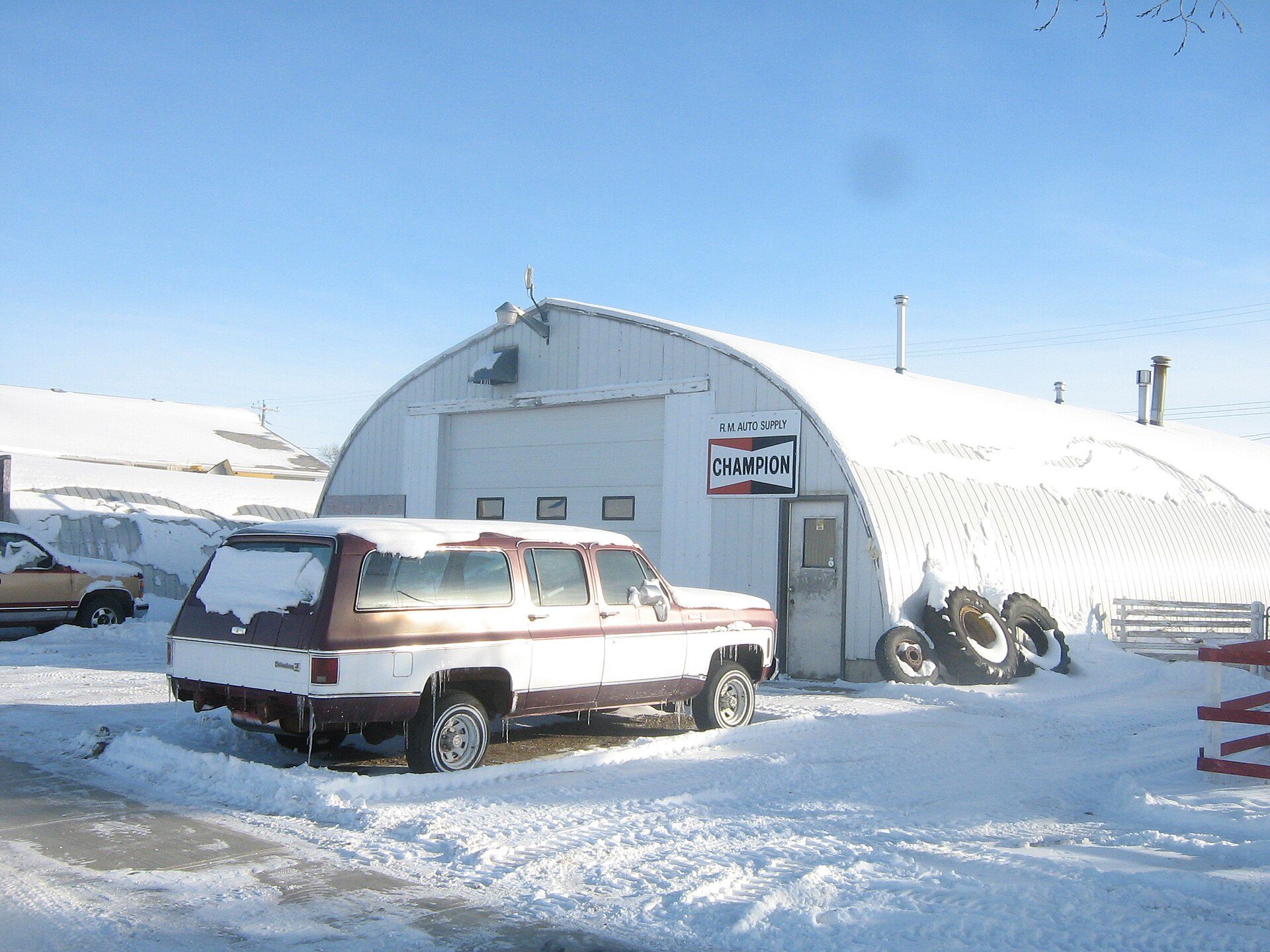
The 1967–72 Suburban had an odd door count: one door on the driver's side and two on the passenger side. The 1973 truck switched to four side doors, more than a decade after the Jeep Wagoneer and International Travelall, according to Wikipedia. From the front doors back it shared its body with the new crew-cab pickup. Double panel-type rear doors were standard, and Chevrolet quoted an opening 40 inches high and 59.6 inches wide. A tailgate with a wind-down window was optional, cranked by hand or by an electric motor.
Chevrolet sold it in two series: the half-ton 10 and the three-quarter-ton 20, with C for two-wheel drive and K for 4x4. GMC used 15 and 25. The 1973 brochure lists GVWs of 5,400 to 8,200 lb, up to 144 cubic feet of load space and seating for nine with the second and third seats fitted. It also claims that a properly equipped Series 20 could move up to 14,000 lb of trailer, truck, passengers and luggage combined.
WHAT'S UNDER A 4x4 SUBURBAN
The engine you most often find in a K-series Suburban is the 350 small-block, rated at 175 net horsepower in four-barrel form at launch. The 400 V8 was a K-series-only option from 1975 to 1980, and the 6.2-liter Detroit Diesel V8 arrived for 1982. The 454 big-block is the exception. Hagerty and Chevrolet's own 1982 and 1987 spec sheets list it only in two-wheel-drive Suburbans, so a 454 4x4 'Burb is a swap.
Four-wheel-drive hardware changed several times. Early trucks used the gear-driven NP205 part-time case or, with a V8 and automatic, the NP203 full-time case, which had a lockable center differential. Full-time 4WD was dropped for 1980. For 1981 the aluminum, chain-drive NP208 arrived with automatic locking hubs that let you shift into 4WD at up to 25 mph. Its low range is 2.61:1, against 1.96:1 for the 205. Behind it sat a TH350 or TH400 automatic, an SM465 four-speed manual, or, from 1981, the 700R4 overdrive automatic.
NINETEEN YEARS OF RUNNING CHANGES
Hagerty's quick spotter's guide: 1973–80 trucks have round headlamps, a styled hood and vertical side markers; 1981–88 trucks have rectangular lamps, a flat hood and horizontal markers; and 1989 brought four small rectangular headlamps. For 1987, gasoline engines switched to throttle-body fuel injection and, because the new GMT400 pickups had taken the C/K name, the Suburban became the R (2WD) or V (4x4). Badging moved to 1500 and 2500.
The 1989 facelift gave it a flush, mostly black grille and a new steering wheel. For 1990 came power mirrors and optional rear-wheel ABS, and Wikipedia says the electronically controlled 4L80-E replaced the 700R4 for 1991. That was the last year: for 1992 the Suburban moved to the GMT400 platform, after 19 model years on the square body, and the K5 Blazer moved over with it. Late V1500s are the most refined of the breed, with fuel injection and an overdrive automatic, but they share the same frame, axles and rust problems as the early trucks.
WHY OVERLANDERS AND TOWERS STILL BUY THEM
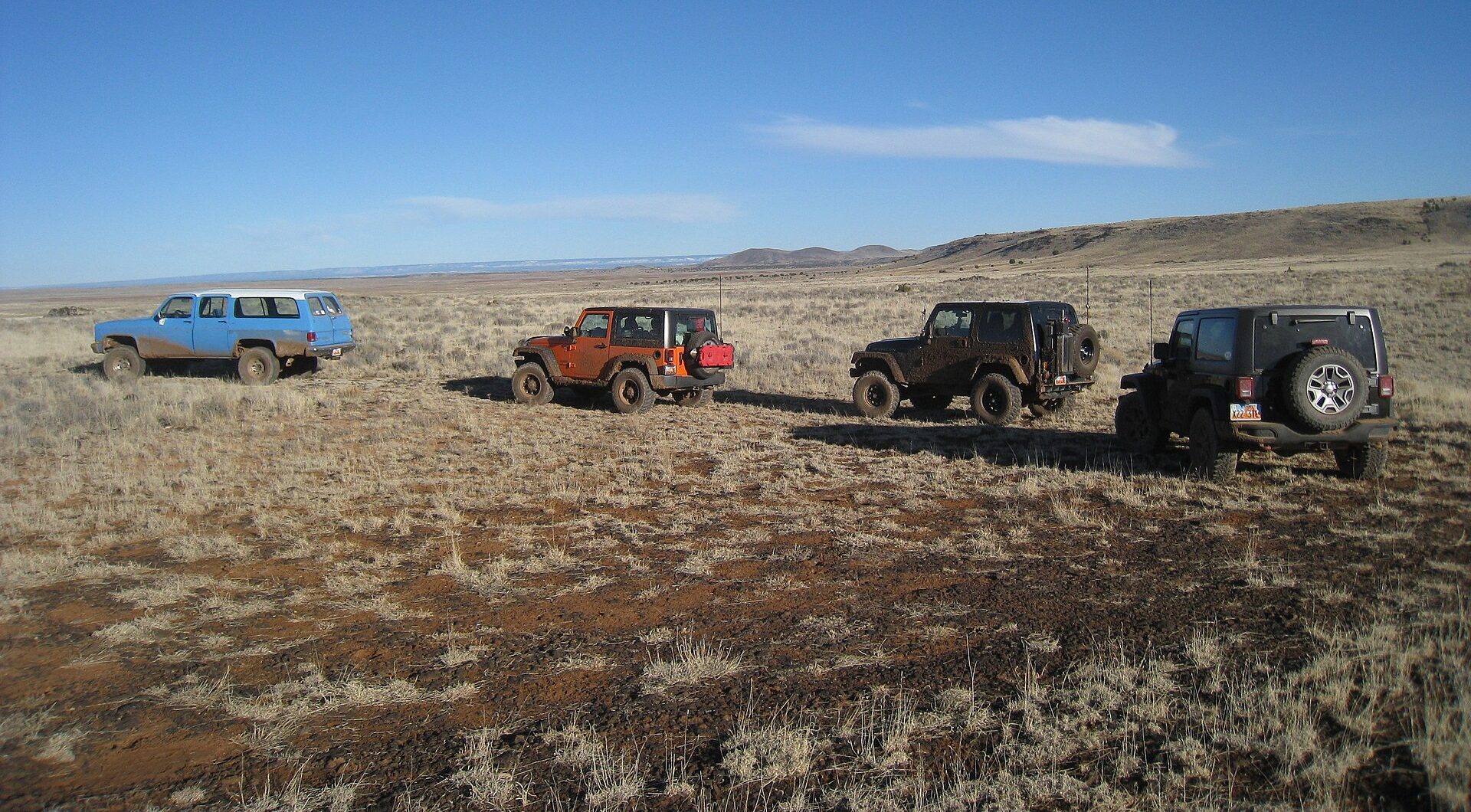
Its appeal today is what Chevrolet sold it on in 1973: space and pulling power. Chevrolet's 1982 spec sheet lists gross combination ratings of 11,000 lb for a gas K10 and 12,000 lb for a K20. Behind the second row there's room for a fridge, a drawer system and a sleeping platform. When Offroad Design needed a family camping and four-wheeling truck, it bought a fuel-injected 1988 Suburban, gave it a modest lift and 33s, and drove it on Moab's Hell's Revenge, Kane Creek and Steel Bender trails without a winch or strap.
Plenty of dealers saw the same appeal when these trucks were new. Bring a Trailer has sold a 1990 GMC V1500 that Trail Wagons of Yakima, Washington, converted when new with its Chinook Trail Boss package, and a 1990 V1500 modified when new by Truk-Mate of Minnesota. The price for that ability is fuel and rust. Hagerty warns about rockers, floors and wheel wells, and says lifted trucks on big tires need frame bracing at the steering box or the frame will likely crack.
SIDEBAR · A SHOP TRUCK GOES TO MOAB
Offroad Design's 'Burly Burb'
Colorado's Offroad Design builds suspension for these trucks, and its own family hauler was an '88 Suburban. It started with a stock TBI 350, a TH700, an NP208, 10-bolt axles front and rear and 235/75 tires. The shop added 3 inches of lift at the front and 4 at the rear (the rear with a shackle flip), greasable bushings, braided brake lines, sway-bar disconnects and 33x12.50R15s on 15x8 military steel wheels. ORD put the suspension cost at $1,003.
Then it loaded the family and went to Moab for Memorial Day 2002. ORD wrote that the 'Burb was never winched or strapped and needed only a few stacked rocks, and returned 11–12 mpg on the road trip with the air conditioning running. ORD called that 'Not bad for a truck the size of a whale with open diffs.'