The story
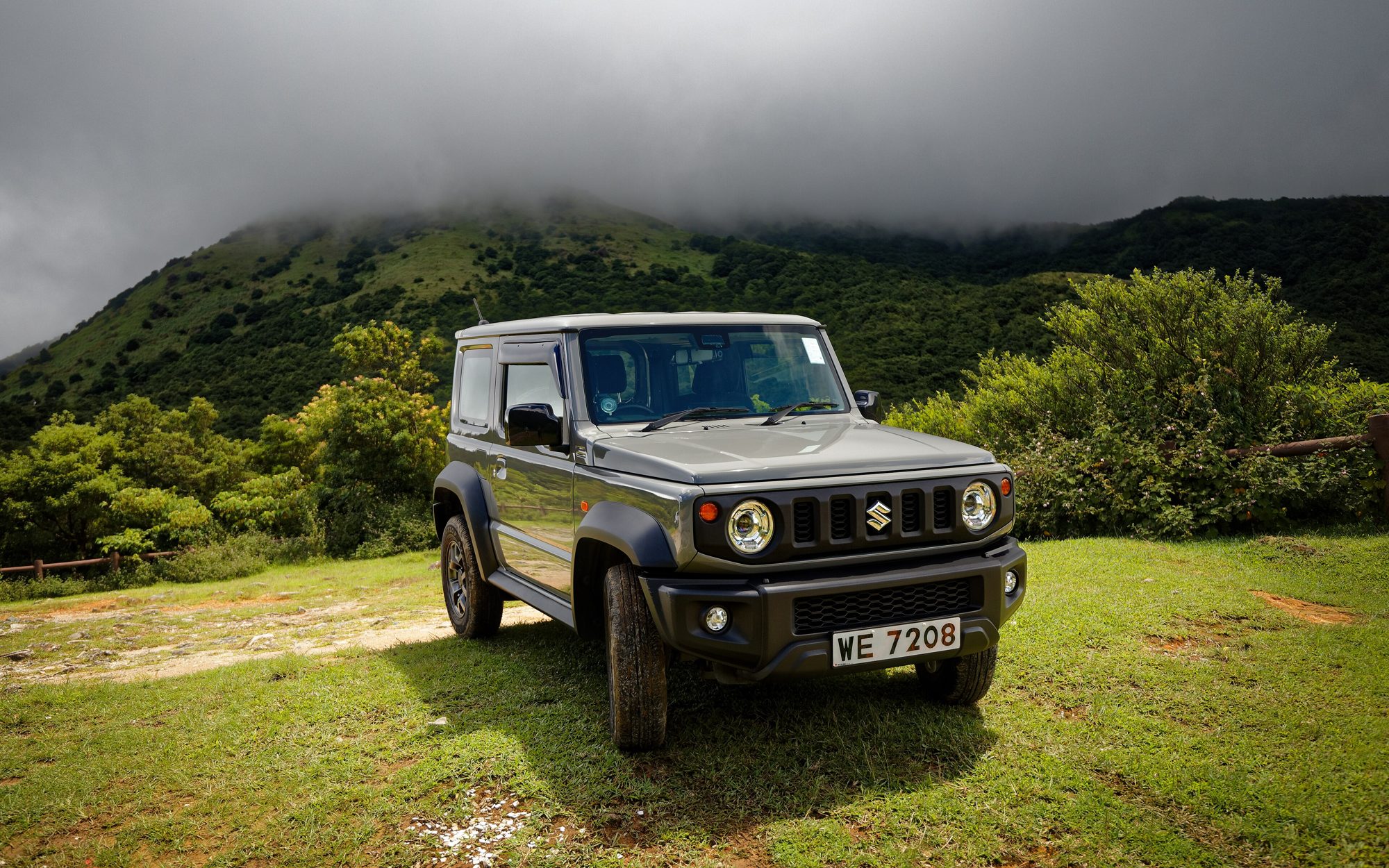
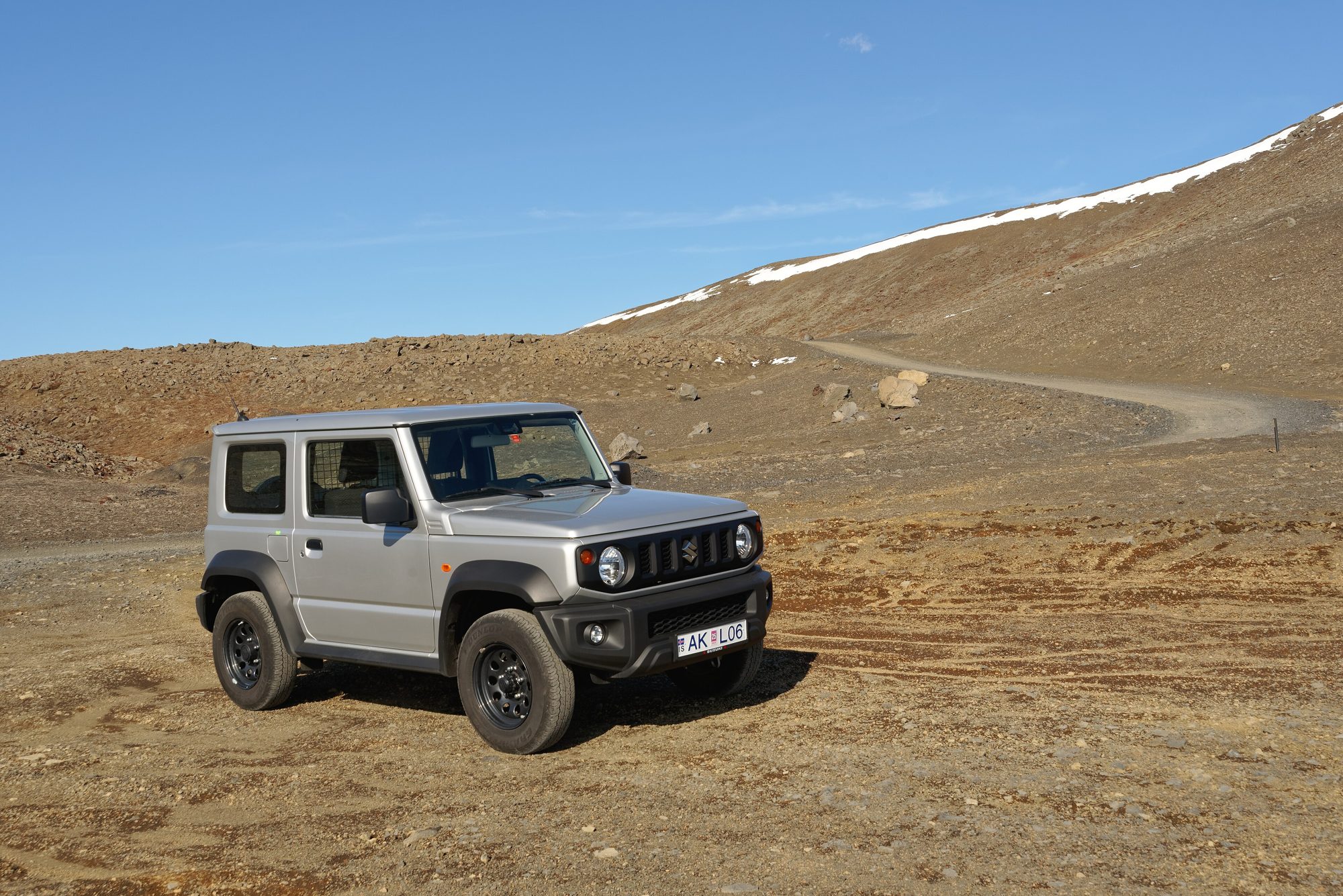
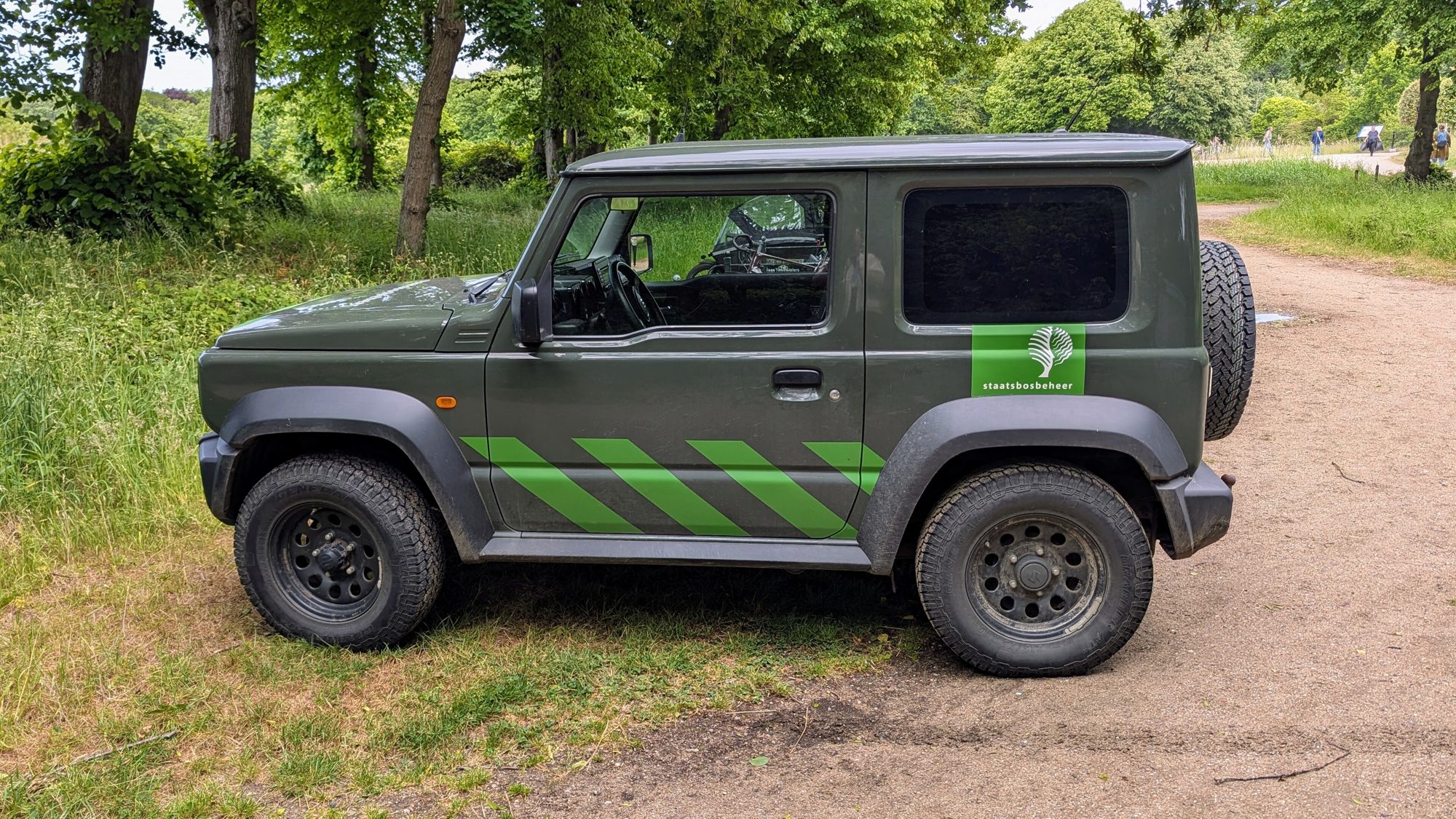
Production of the fourth-generation Jimny started at Suzuki's Kosai plant on 29 May 2018, the first time Jimnys had been built there, and the truck went on sale in Japan on 5 July, the first all-new Jimny in twenty years. Its styling looks back to the LJ and SJ/Samurai generations, with flat panels, round lamps and drip rails. Underneath, Suzuki kept the ladder frame, the front-engine rear-drive layout, the part-time 4WD with a low-range transfer gear, and three-link solid axles at both ends. Then demand outran supply in almost every market it entered, and it hasn't fully caught up since.
KEI JB64 VS SIERRA JB74
As with the JB23 generation, there are two widths. The JB64 is the kei car, sold only in Japan: 3,395 mm long and 1,475 mm wide, with no fender flares, tucked-in bumpers and a turbocharged 658 cc R06A three-cylinder, in XG, XL and XC trims. The JB74 is the one the world knows. Japan calls it the Jimny Sierra (JL and JC trims), and everyone else simply calls it the Jimny. It's 1,645 mm wide with bolt-on flares and has the 1.5-liter K15B.
Both share the 2,250 mm wheelbase, a reworked ladder frame with extra cross members that Wikipedia's development notes credit with about 1.5 times the torsional rigidity, a choice of five-speed manual or four-speed automatic, and standard brake-LSD traction control. That system brakes a spinning wheel so the one opposite can keep pulling, which is useful but no substitute for a locker. Suzuki Australia quotes 210 mm of ground clearance, with approach, breakover and departure angles of 36°, 27° and 47°.
THE K15B
The K15B replaced the JB43's M13A. It's a 1,462 cc all-aluminum DOHC 16-valve four with variable valve timing, a 74 x 85 mm bore and stroke, a 10:1 compression ratio and a timing chain. In Suzuki Australia's spec it makes 75 kW (102 PS) at 6,000 rpm and 130 Nm (96 lb-ft) at 4,000 rpm. That's a real gain over the old 1.3, but it's still only 1,095 kg of truck being pulled up hills by a naturally aspirated four.
Unsealed 4X4's staff, many of them Suzuki owners, are blunt about it. The engine is 'begging for a few more killer-wasps, or even better, a turbo.' The four-speed automatic is 'way too old to be put into a vehicle in this decade,' and next to it the manual 'feels like it has an extra 30kw available.' Gearing is the other complaint: the transfer case is 'geared way too high for anywhere near sizeable tyres,' so a set of lower gears tends to arrive alongside the first set of bigger tires.
THE QUEUE
Suzuki UK's entire 2019 allocation of 1,200 cars was sold by December 2018, with waits of up to a year, and some dealers stopped taking deposits. Suzuki blamed a bottleneck at the Japanese factory. In Australia the queue was still up to twelve months in mid-2021, and in Mexico the first 1,000 reserved units sold out in three days. At home, Japanese Jimny sales went from about 11,000–16,000 a year in the old truck's last decade to 30,281 in 2019 and roughly 40,000 a year from 2021. Maruti Suzuki began building Jimnys in India in January 2021 to help supply export markets.
Europe shows the other side of the coin. At 154–178 g/km of CO2, the Jimny dragged Suzuki's fleet average well above the EU target, so the passenger car was withdrawn from the UK in 2020 and returned as a two-seat light commercial vehicle. That too was withdrawn from European sale in 2025.
FIVE DOORS, AND THE AMERICAN QUESTION
The five-door Jimny (JC74) was revealed in India in January 2023 and launched there on 7 June 2023. Its wheelbase is 340 mm longer at 2,590 mm, and it's built only at Maruti Suzuki's plant in Gurugram for export to almost 100 countries. Australia got it in December 2023 as the Jimny XL. Japan got it on 30 January 2025 as the Jimny Nomade and took about 50,000 orders in four days, against roughly 1,200 cars a month allocated for Japan. Suzuki suspended orders, apologized, raised output to about 3,300 a month and reopened the books on 30 January 2026.
For Americans, none of this is available. Suzuki left the US car market in 2012, and the JB74 was never certified here. In September 2022, CBP seized a 2022 Jimny that a US citizen had bought in Mexico and driven across the border, because DOT ruled it ineligible: it was 'less than 25 years old from the date of manufacture.' The earliest JB74s turn 25 in mid-2043. Until then, the legal way into a small Suzuki in the US is a 25-year-old JB23 or JB43.
SIDEBAR · CO2 AND THE TWO-SEAT JIMNY
How Europe turned the Jimny into a van
In July 2020 Suzuki stopped taking new UK orders for the passenger Jimny. Even its cleanest version, the manual, emitted 154 g/km of CO2, 59 g/km above the fleet average Suzuki had to hit the following year, and the WLTP figure Autocar reported at launch was 178 g/km. Every Jimny sold made Suzuki's fines bigger.
Suzuki's answer, from September 2020, was the Jimny Commercial: the same truck re-homologated as an N1 light commercial vehicle, with no rear seats, a partition behind the front seats and up to 863 liters of load space. Vans face a looser target of 147 g/km rather than 95 g/km. It cost £16,796 plus VAT and kept the ladder frame, solid axles and ALLGRIP PRO low range. Wikipedia records it being withdrawn from European sale in 2025.