The story
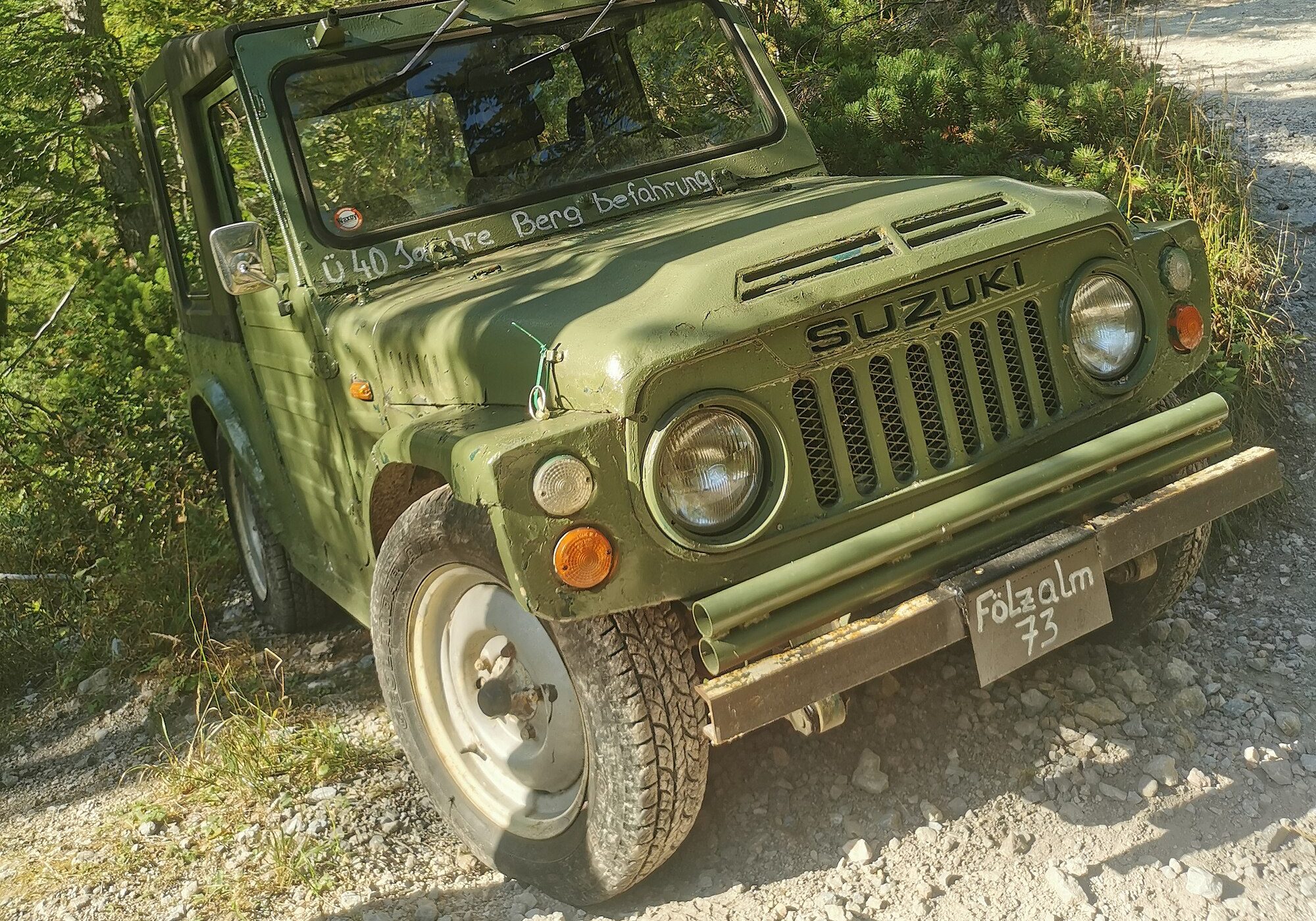
In April 1970 Suzuki launched the Jimny LJ10, the first four-wheel-drive kei car to go into series production. It had a ladder frame, leaf springs on rigid axles, 16-inch wheels and a two-speed transfer case, all powered by a 359 cc air-cooled two-stroke twin making 25 PS. Suzuki pitched it as a 'professional's tool' for surveyors, foresters and anyone hauling goods up mountain roads. Nearly 5,000 sold in Japan in the first year, outselling the Mitsubishi Jeep, and the line that runs through the Samurai to today's Jimny started here.
A HOPE AND A KEI LOOPHOLE
The design wasn't originally Suzuki's. Hope Motor Company built the HopeStar ON360, a doorless two-seater with a Mitsubishi two-stroke, a Mitsubishi Colt rear axle and Mitsubishi Jeep wheels. It went on sale in April 1968, but Hope sold only a handful, about 15 in Japan and 30 for export by Wikipedia's count, before passing the design to Suzuki that year.
Suzuki fitted its own engine and a new body, and it put the spare wheel inside the truck to keep the length under the 3-metre kei limit, which made the first Jimny a three-seater. As a kei car it got Japan's tax and registration breaks. Early trucks were largely hand-built by a subcontractor, but demand forced Suzuki to set up its own assembly line, and more than 6,000 sold in 1971.
WATER COOLING, THEN THREE CYLINDERS
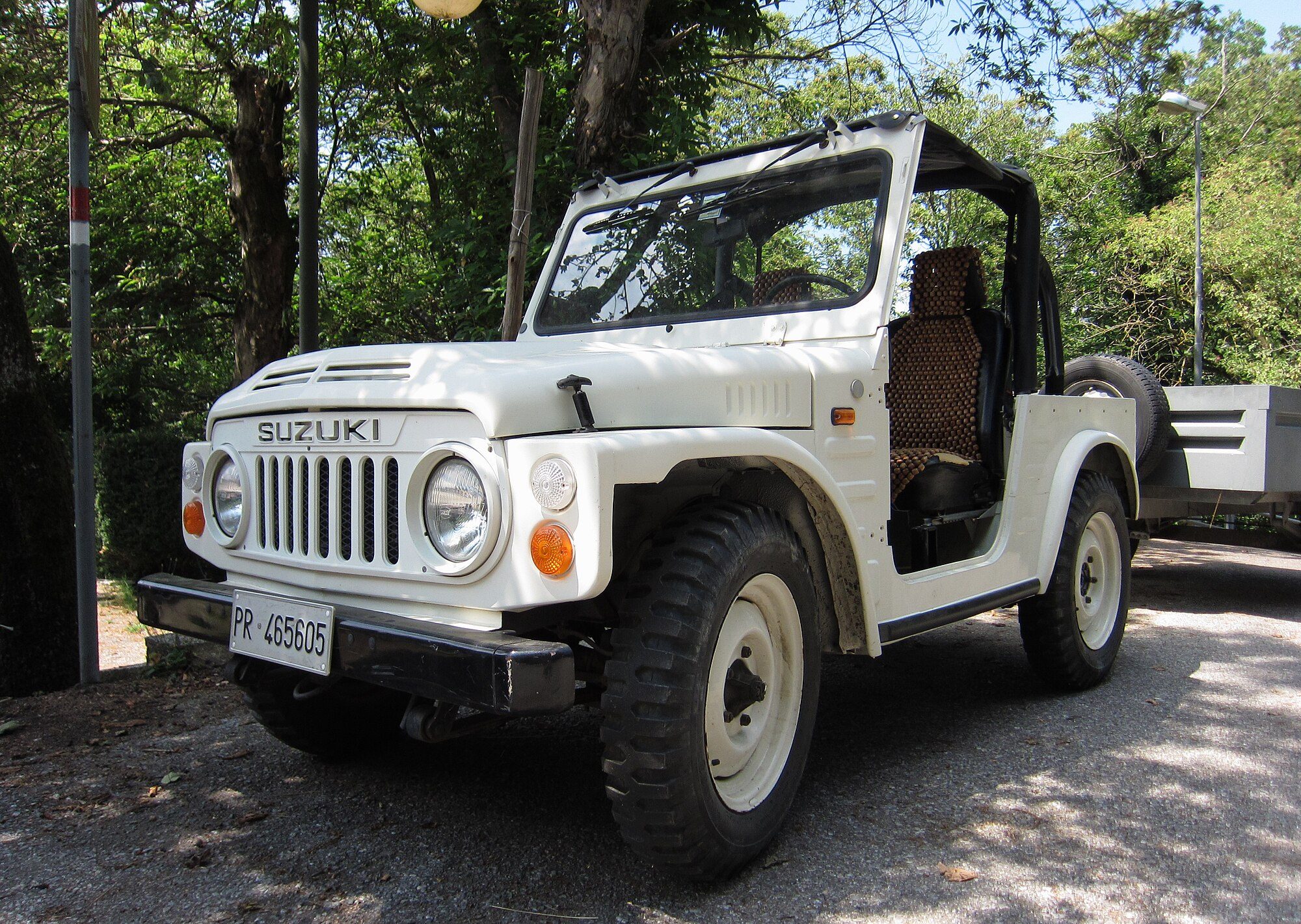
The May 1972 LJ20 switched to the water-cooled L50 twin with 28 PS, a vertical-slat grille and a steel-roofed van body. Suzuki says it would climb a 35-degree slope, and that it finished the Mexican 1000 race against 3- to 7-litre foreign rivals after 34 hours without an accident. Left-hand drive signalled export plans. In the US, an importer called International Equipment Co. sold it as the Suzuki Brute.
Kei rules changed in 1976, so the home-market Jimny 55 (SJ10) got the 539 cc LJ50 two-stroke triple. That engine was first used in export trucks from September 1975 with 33 PS, and the export LJ50 went to Australia and, from late 1976, was assembled in New Zealand. Suzuki says the SJ10 could climb 39.7 degrees.
LJ80: FOUR STROKES AND THE WORLD
The 1977 Jimny 8, the LJ80 abroad, was Suzuki's first car with a four-stroke engine. Its 797 cc F8A four made 41 PS, which allowed taller gearing, and the track was about 100 mm wider. It was also the first Jimny registered in Japan as a small car rather than a kei car, and only 1,799 sold there, because it was really built for export. In Germany it was meant to be called the Eljot until Disney's Pete's Dragon got in the way. Australia called it the Stockman.
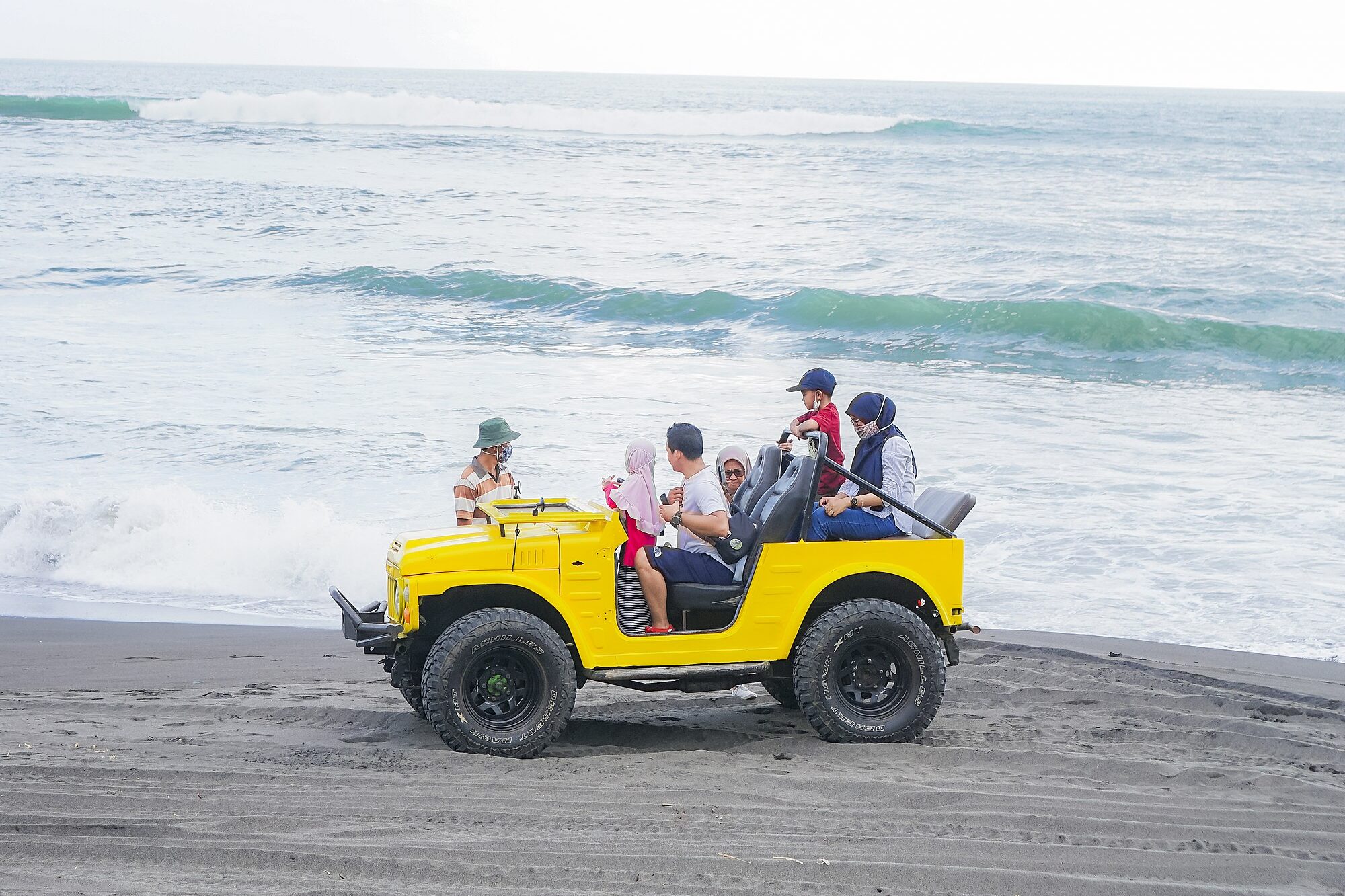
Metal doors arrived in 1979, along with the LJ81 pickup on a 2,200 mm wheelbase. The LJ80 was also assembled in New Zealand and Indonesia. Suzuki says it made the Suzuki name known around the world as a four-wheel-drive maker. It was replaced in 1981 by the SJ410, the first of the SJ and Samurai generation.
SIDEBAR · THE FIRST JIMNY'S STORY
HopeStar ON360: the 4x4 before the Jimny
Hope Motor Company had built three-wheeled trucks before its ON360. The ON360 used a 359 cc Mitsubishi ME24 air-cooled two-stroke with 21 PS, Daihatsu brakes, a Mitsubishi Colt 1000 rear axle and Mitsubishi Jeep wheels. Top speed was 70 km/h, or 30 km/h in four-wheel drive.
Hope bought 100 engines from Mitsubishi but built very few trucks. When Mitsubishi declined to take over production, Hope sold the design to Suzuki in 1968. Two years later it became the LJ10.