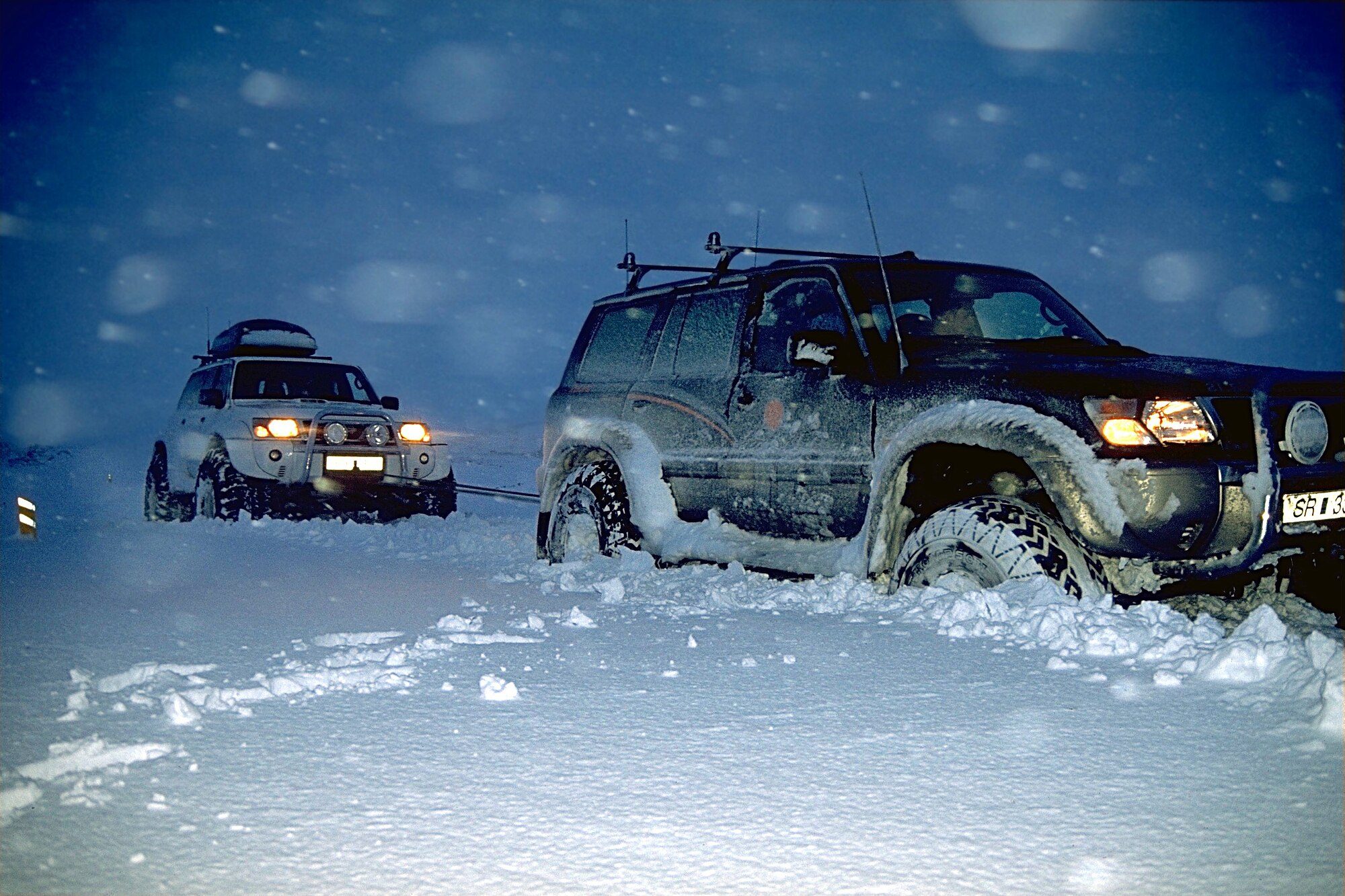
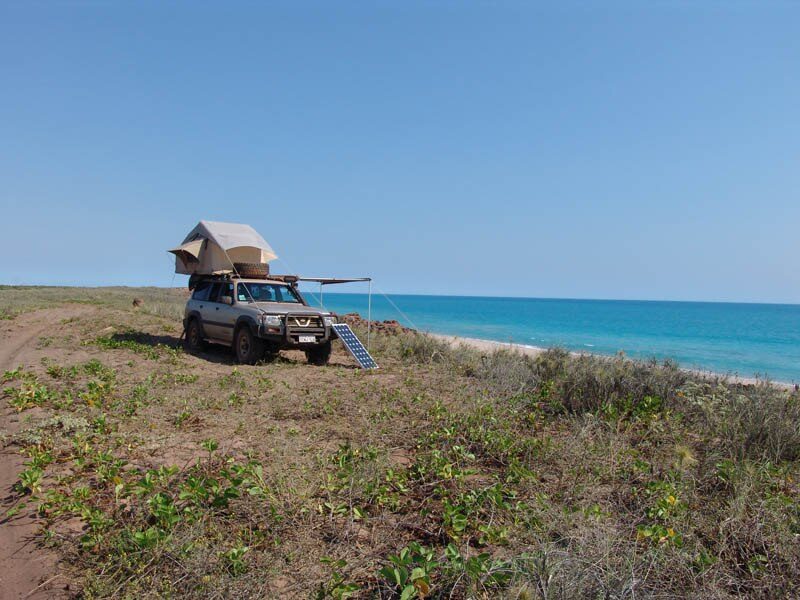
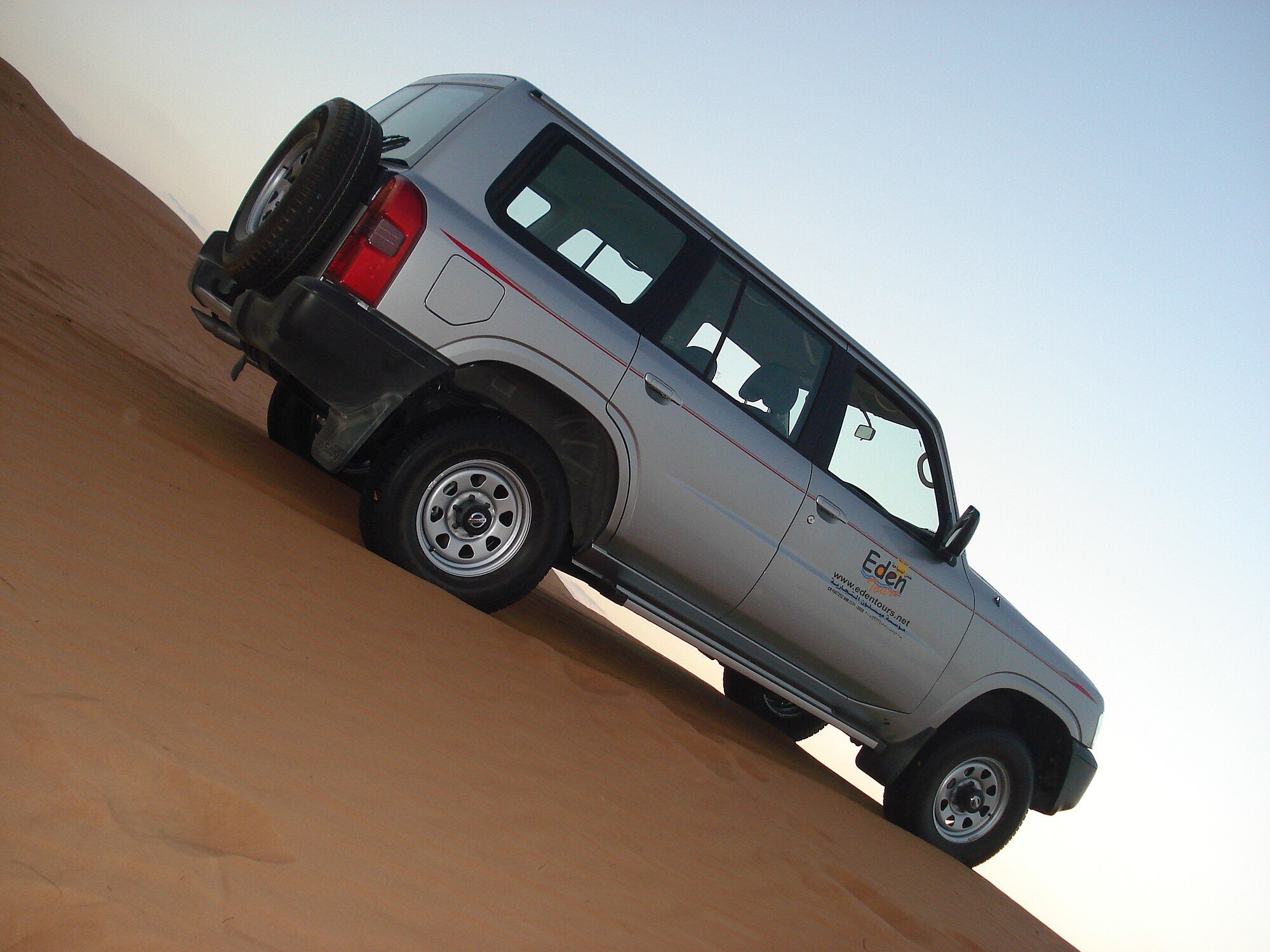
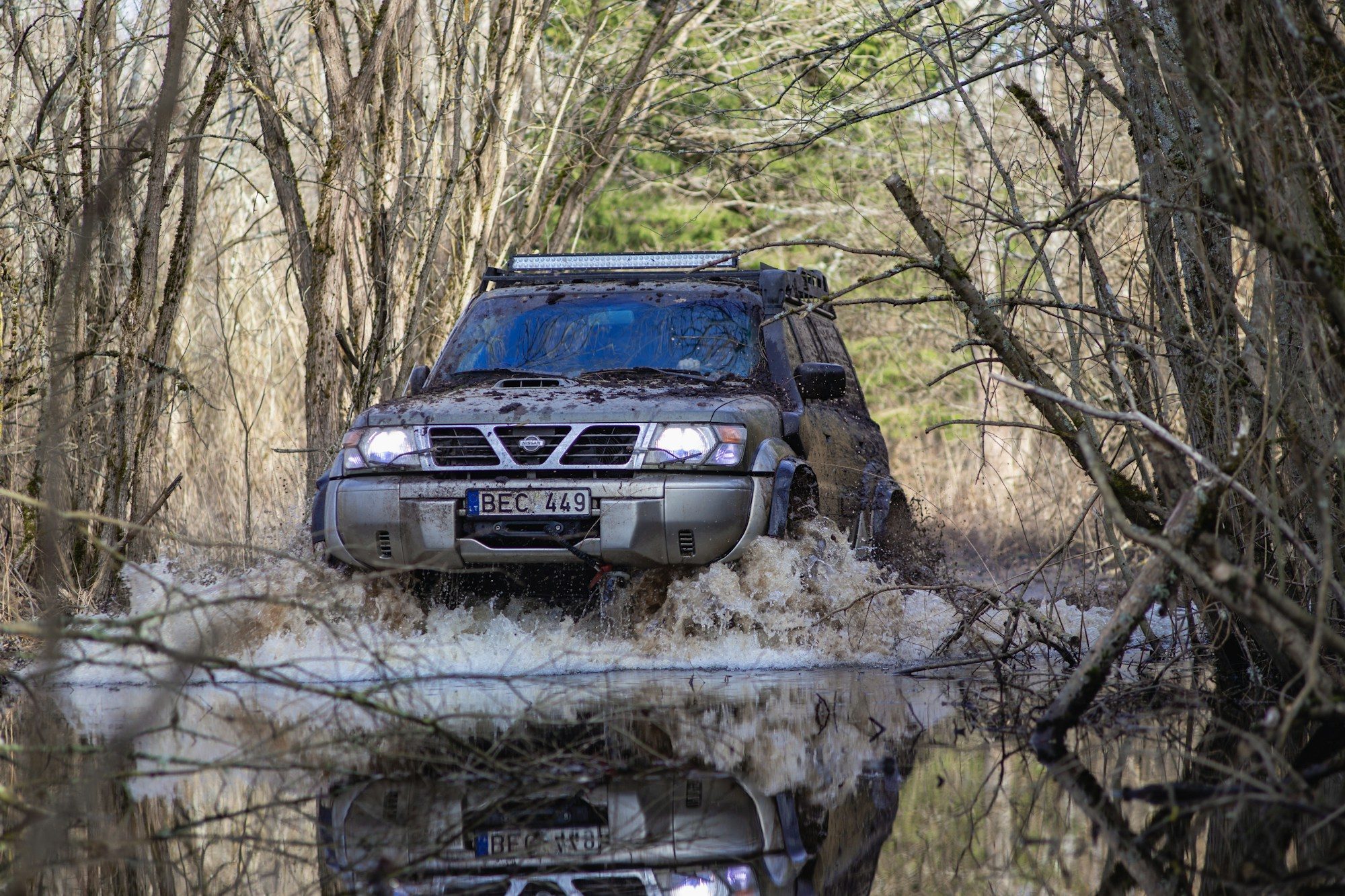
A silver facelifted Nissan Patrol Y61 wagon climbing a steep sand dune in Oman
NISSAN PATROL · Y61 'GU' · 1997–2016 (LATER IN SOME MARKETS)

Patrol Y61 (GU)

Y61 / UY61TB45 · TB48 · RD28 · ZD30 · TD42SOLID AXLES BOTH ENDSH233B / H260 DIFFSWAGON · CAB-CHASSIS · UTE

“The GU is the Patrol that kept the solid axles and coils of the GQ, added a squarer body and spent nineteen years in Australian showrooms. Buy the right engine and it's one of the great touring wagons. Buy an early ZD30 without paperwork and you might be buying a set of pistons.”

PART 01

Overview

Where it came from, why it matters, and how it changed year to year.

The story

In December 1997 Nissan replaced the Y60 'GQ' with a Patrol that looked new but thought the same way. The Y61, sold as the GU in Australia and the Safari in Japan, kept a separate chassis, coil springs and a live axle at each end on the wagon, at a time when Toyota was giving the 100 Series independent front suspension. Nissan Australia sold 104,510 GU wagons and 37,112 cab-chassis between 1997 and October 2016, according to figures quoted by JDM Buy Sell, and Middle East production carried on into 2024. Few 4x4s have had a run that long.

SAME RECIPE, SQUARER BOX

Underneath, the GU is an evolution of the GQ. Wikipedia notes larger CV joints, manual gearboxes with fewer synchros, and wider axle housings to suit the new body, with the same H233 and H260 differential centres. The five-door wagon rides on a 2,970 mm wheelbase, and some markets also got a 2,400 mm three-door. Body styles were the seven-seat wagon, a cab-chassis (the UY61 in Australia), sold with either a leaf-sprung or a coil-sprung rear, and a two-door pickup. Japan also got a two-door hardtop and a four-door van.

The engine list at launch covered every taste. Australian Series I trucks offered the 4.5-litre TB45E petrol six, the 2.8-litre RD28ETi turbo-diesel six, and the 4.2-litre TD42 diesel. The TD42T turbo-diesel joined the ST in 1999. CarsGuide notes that the RD28 had a timing belt, the TD42 timing gears, and the ZD30 and petrol sixes chains. Manuals were five-speeds: the FS5R30A behind the RD28 and the FS5R50B behind everything else.

THE ZD30 PROBLEM

Series II arrived in 2000 with the engine that defines the GU's reputation: the 3.0-litre ZD30DDTi, a four-cylinder turbo-diesel with a Bosch VP44 pump, rated at 116 kW. It was cheaper than the 4.2 six and could be had with an automatic. CarsGuide says it 'has a history of breaking pistons due to poor engine management and boost spikes'. Too many engines died early, usually through a holed crown or a cracked ring land on the number three or four piston, and the fix was a bottom-end rebuild.

Nobody has published a definitive cause. The suspects are the EGR system upsetting the mixture and creating hot spots, oil from the crankcase vent fouling the mass-airflow sensor, and boost spikes from a slow-reacting turbo control. Nissan also originally specified 6 litres of oil. After reports of oil starvation it raised the capacity to 8.3 litres and told dealers to shorten and recalibrate the dipsticks. In September 2004 a Nissan service bulletin, quoted by owners on ExplorOz, also tightened the oil spec to ACEA B3 or JASO DH-1 with 10W-40 strongly recommended. Owners responded with what forums call 'engine saver' mods: boost and EGT gauges, catch cans, and in many cases a blanked EGR.

SERIES BY SERIES

Series III, from late 2001, brought the 4.8-litre TB48DE petrol six, a DOHC 24-valve engine rated at 185 kW in Australia, and later the intercooled TD42Ti. The 2003 Japanese facelift is credited to Junichi Sakai. The big visual change came with Series IV in October 2004: boxy wheel-arch flares, new headlights, grille and tail-lights, a new interior, and 17-inch alloys on the ST and Ti. There was no Series V; the next update was GU VI in September 2007.

By 2007 the TD42 was gone (4X4 Australia says 2006; Wikipedia says the TD42Ti couldn't meet Euro IV for 2007), and a common-rail ZD30 became the only diesel, at 118 kW and up to 380 Nm. CarsGuide suggests that the common-rail system may have helped with the boost and mixture problems. Dual front airbags only became standard across the range that year. By the end in Australia, the 3.0 was the only engine left.

THE LONG GOODBYE

The petrol-only Y62 reached Australia in 2013, so the GU stayed on sale beside it until 2016. It finished with the 300-unit Legend Edition: an ST with the common-rail 3.0, a rear diff lock, and $10,000 of genuine accessories including a steel bull bar with a Warn winch, a snorkel, a roof rack and a tow bar. Because the newer truck had no diesel, late GUs held their value. Wikipedia lists a worldwide phase-out in 2014, but sales continued in South Africa, the Middle East and parts of Africa, Asia and South America. Production reportedly ended in 2024.

Its rivals were Toyota's IFS 100 Series and its solid-axle 105, with the 70 Series as the cab-chassis alternative. The GU's case is simple: coil-sprung solid axles, a huge aftermarket and a truck that UN agencies and armies still drive. Pick the engine carefully and it can last for decades.

SIDEBAR · THE DESERT PATROL

Super Safari: the Y61 that refused to retire

Outside Australia the Y61 lived on as the Patrol Safari and Super Safari, built in Japan until 2024 for markets such as the Gulf. A 2017 Middle East brochure lists the TB48DE at 280 hp (SAE gross), a five-speed automatic, a rear differential lock, VDC, an electric winch and tan leather. Wikipedia notes that the TB48DE has a following among Middle Eastern tuners, and that the Gulf had special editions with names like Falcon, Gazelle and Al Ostoura.

Japan's version was the Safari, and it took a different route: the 245 PS TB48DE in the Granroad Limited from November 2002, and a rear limited-slip diff on every model from September 1999. The Safari name disappeared from Japanese showrooms in the mid-2000s, while the Gulf trucks kept going for most of another twenty years.
Year by year

What changed, model year by model year. Sweet spot Beware

  1. 1997Y61 (GU) launches in late 1997. Widened diff housings around the same H233/H260 centres, bigger CVs, better seats and NVH. Engines: TB45 petrol, RD28ETi turbo-diesel and naturally aspirated TD42
  2. 1999TD42T turbo-diesel added (to the ST in Australia). It's mechanically injected with no electronic engine controlSweet spot
  3. 2000GU II (April): 3.0 L four-cylinder ZD30DDTi diesel arrives with an optional automatic. The naturally aspirated TD42 reportedly left the wagon range around this time. Early ZD30s are known for piston and bottom-end failuresBeware
  4. 2001GU III (October): new nose and the 4.8 L DOHC TB48DE petrol six (185 kW / 420 N·m)
  5. 2003Factory-intercooled TD42Ti arrives, with electronic injection timing from February. ST-L grade added. The TD42Ti is the most sought-after TD42Sweet spot
  6. 2004GU IV facelift (October): new headlights, box flares and larger tail lights. Wikipedia credits this refresh with fixing the ZD30's variable-geometry-turbo trouble
  7. 2006Revised 180 kW / 400 N·m TB48 from February (GoAuto). 4X4 Australia and Marque News date the end of the TD42 family in Australian GUs to 2006; CarsGuide and Wikipedia say 2007
  8. 2007GU VI (September; there was no GU V): the common-rail ZD30 is the only diesel, and Wikipedia says the TD42Ti couldn't meet Euro IV. CarsGuide's Q&A still fields piston-failure questions from owners of 2008–09 ZD30s
  9. 2010–2013GU VII from early 2010. In Australia the petrol models are replaced by the Y62 in February 2013, and the diesel GU carries on alongside it
  10. 2016Australian run ends with the ST-based Legend Edition, limited to 300 units. Production for the Middle East, Africa and fleet buyers continued into 2024
PART 02

Specs & capability

How it’s built, what it can do, and what fits under it.

How it’s built

The GU is a traditional ladder-frame 4x4 with a beam axle and coil springs at each end on the wagon. The front axle is located by radius arms and a panhard rod, which is why lifted GUs need caster correction. Drive is part-time 4WD with low range and auto-locking free-wheel hubs as standard on many trucks. The engine range is the main thing that separates good GUs from expensive ones.

CHASSISLadder frame · 2,970 mm (5-door) / 2,400 mm (3-door, some markets)Wagon, UY61 cab-chassis and two-door pickup. Cab-chassis trucks came with either leaf or coil rear suspension.
SUSPENSIONLive axles on coils (wagon)Radius arms and a panhard rod at the front. Lifts of about 2 in or more usually need caster-correction bushes. Series 2-on wagons use a different front panhard rod and bushes from GQ and early GU trucks (per Patrolapart's listings), so order for your build.
DIFFERENTIALSH233B and H260 centresWider housings than the GQ, with the same centres. Some GUs have an H233B rear and some an H260, so check before you buy a locker.
4WD SYSTEMPart-time, dual rangeEngaged mechanically (CarsGuide). Auto-locking hubs can unlock when you rock a stuck truck, so many owners fit manual hubs.
ENGINESTB45E / TB48DE petrol; RD28ETi, ZD30DDTi, TD42 / TD42T / TD42Ti dieselOutput ranged from 91 kW for the non-turbo TD42 to 185 kW for the TB48 (Australian figures).
GEARBOXESFS5R30A / FS5R50B manual; RE4R03A 4-sp / RE5R05A 5-sp autoThe four-speed auto was offered with the TB45 and ZD30, and the five-speed auto with the TB48.

Variants & engines

YEARSPLATFORMENGINEOUTPUTWORTH KNOWING
1997–1999 (Series I)Y61 / UY61TB45E 4.5 petrol · RD28ETi 2.8 TD · TD42 4.2 D · TD42T (from 1999)145 kW · 95 kW · 91 kW · 114 kWAustralian launch range. RD28 was manual only.
2000–2001 (Series II)Y61ZD30DDTi 3.0 TD (Bosch VP44)116 kWAutomatic available. The non-turbo TD42 reportedly left the wagon range. This is the ZD30 era to check most carefully.
Late 2001–2004 (Series III)Y61TB48DE 4.8 petrol · TD42Ti (2003)185 kW (TB48, Australia)ST-L petrol added in mid-2003; intercooled TD42Ti (114 kW / 360 Nm) from 2003.
Oct 2004–2007 (Series IV)Y61Carry-over range—Facelift with box flares, new headlights, grille and tail-lights, a new interior and 17-in alloys on ST and Ti. Revised 180 kW / 400 Nm TB48 from February 2006 (GoAuto). There was no Series V.
2007–2016 (Australia)Y61 / UY61ZD30 3.0 common-rail TD118 kW / 380 Nm (manual), 354 Nm (auto; 4X4 Australia quotes 345 Nm)TD42 dropped because it couldn't meet Euro IV. Dual airbags standard from 2007. Ended with the 300-unit Legend Edition.
1997–2024 (Middle East, Africa, etc.)Y61 Patrol Safari / Super SafariTB48DE 4.8 · ZD30 3.0280 hp SAE gross (TB48, 2017 brochure)Built in Japan until 2024. Rear diff lock on the Super Safari.

Capability numbers

Towing3,500 kg (7,716 lb) braked (2003 ST 4.8 L manual); 3,200 kg (7,055 lb) braked / 750 kg unbraked (2012 ST 3.0 L manual)Australian spec. The 2016 Legend Edition is rated 3,200 kg (manual) or 2,500 kg (automatic).
Payloadabout 480 kg (1,060 lb)GVM minus kerb weight: 3,060 − 2,581 kg (2012 ST 3.0) and 3,000 − 2,516 kg (2003 ST 4.8)
Fuel tank95 L main plus 30–36 L sub-tank (25.1 + 7.9–9.5 US gal)2003 and 2012 Australian ST; the Middle East Super Safari has a 40 L sub-tank
Ground clearance210 mm (8.3 in)unladen, Australian ST
Approach / departure37° / 31°Australian ST
Fuel economy10.9 L/100 km combined (about 21.6 US mpg)ADR 81/02, 2012 ST 3.0 L diesel manual
Curb weight2,516 kg (5,547 lb) for the 2003 ST 4.8; 2,581 kg (5,690 lb) for the 2012 ST 3.0
Turning circle12.5 m (41 ft)kerb to kerb, LWB wagon

Wheels & tires

FACTORY TIRES
235/80R16 on 6x16 steel (base fitment)275/70R16 on 16x8 alloy (2003 Australian ST)275/65R17 on 17x8 alloy (2012 ST; 2016 Legend Edition)265/75R16 (Australian cab-chassis)
Bolt pattern6x139.7 (6x5.5")
Offsetabout +35 mm (6x16 steel); about +10 mm (8x16 and 8x17 alloy)
Center bore110.1 mm
Lug threadM12x1.25
Lug-nut torque118–147 N·m (87–108 lb-ft)
LIFTBIGGEST TIREWHAT IT TAKES
Stock265/75R16 (popular); 285/75R16 fitsExplorOz owners call 265/75R16 the best size for a stock GU. Others run 285/75R16 (about 33 in) on stock height without trouble.
2 in285/75R16 or 33-inchExpect to trim or remove the front mud flaps, and the rear-door spare may need a spacer to clear the bar. 315s and 35s scrub without more lift or offset wheels.
3 in285/75R16Fits fine. 315s will scrub at full lock. At 4 in, owners run 315/75R16 on wheels with about 20 mm more offset.

Forum consensus, not a guarantee: wheel offset, tire brand and suspension wear all change clearance. Confirm before you buy.

Production & special editions

Production started in October 1997, and the Y61 outlived its Y62 replacement in many markets. It was still being built for Middle East, African and fleet buyers in 2024.

ProductionOctober 1997–2024 (Australia to 2016)
AssemblyJapan (Nissan Shatai), Spain (Barcelona, 1998–2009), South Africa (Rosslyn, 2001–2024), Philippines (Santa Rosa, 2000–2018), Pakistan (Karachi, 2005–2012), Morocco (Tangier, 2009–2024)
Australian sales104,510 wagons (1997 to October 2016) and 37,112 UY61 cab-chassis, Nissan Australia figures as quoted by JDM Buy Sell
Legend Edition2016Australia's farewell edition: ST-based, limited to 300, with bull bar, winch, tow bar, roof rack and snorkel
Super SafariMiddle EastSeven-seat TB48 wagon with rear diff lock, VDC, electric winch, sunroof and tan leather. Special editions included the Falcon, Gazelle and Al Ostoura.
Presidential and 4XPROPhilippinesRegional special editions
PART 03

Buying one

What to pay, what to check, and how to tell a good one from a clone.

What they cost

The Y61 is only just becoming legal in the US, so there are very few American sales so far. The ones that have sold are late-1990s Japanese and Gulf trucks bringing driver money.

Project / non-runningabout $5k
Driver$13k–17k

Based on four 1998–99 Bring a Trailer sales from 2023 to 2026: $5,300 for a Gulf Super Safari whose automatic wouldn't engage forward gears, $12,900 for a Japanese TD42 turbo automatic, $14,250 for a TB45 Granroad and $16,600 for an ex-US-Embassy 1999 Safari 5-speed. A 1998 LHD TD42 manual and a 1998 European GR SE turbo-diesel failed to sell at $13.5k and $15.5k. There's too little data yet for an 'excellent' band. Prices move; checked October 2026. See live listings below.

What to check before you buy

  1. 01
    Identify the engine and series firstMake sure the engine and gearbox match the build date and series. A 'Series III ZD30' and a 'Series IV TB48' are different buys. A ZD30 sold as 'overhauled' should come with an itemised list: head, bores, pistons, bearings and rings, not just new pistons and a turbo.
  2. 02
    ZD30: demand oil history and check the dipstickLook for regular oil changes and the right grade: a September 2004 Nissan bulletin, quoted by owners, calls for ACEA B3 or JASO DH-1 oil with 10W-40 strongly recommended. Nissan Europe's Y61 service manual schedules ZD30 oil and filter every 15,000 km or 12 months, or every 7,500 km or 6 months in severe use such as towing, dust or short trips. Check your own market's service book; many owners change it more often. Fuel in the oil is bad news. One forum veteran says heavy soot within 5,000 km points to an open EGR, and another warns that factory intercoolers eventually leak, so check for oil staining. Listen for knocks on a cold start.
  3. 03
    Cooling under loadEvery GU engine can overheat when towing, and the TD42 has a particular reputation for it. Check the radiator core, the foam seals between condenser and radiator, and the fan clutch (it should drag and turn only about half a revolution when cold). Watch the temperature gauge on a long climb.
  4. 04
    Manual gearboxDrive through every gear. Owners report fifth-gear spline and hub problems and worn 2nd-to-3rd synchros on the five-speed.
  5. 05
    Rear axle seals, diffs and underbodyPut it on a hoist. Look for wet rear backing plates from leaking axle seals, bash plates pushed up into what they're meant to protect, and damage to sills and bumpers. Find out whether the rear diff is an H233B or an H260 if you plan to fit a locker.
  6. 06
    Cab-chassis: look behind the cabExplorOz members report cracks in GU cab-chassis frames just behind the cab and near the rear axle on heavily loaded trays, repaired by plating. Check under any big service body.
  7. 07
    Rear barn door and dashOwners report cracks in the big rear door that carries the spare, down the side of the window on the left-hand side. Dashboard tops can blister; Nissan Japan extended the warranty to seven years on specified wagons built August 2004 to June 2007.
  8. 08
    Previous lift workA lifted GU that wanders or steers vaguely probably needs caster correction. Lifts of about 3 in or more also need longer panhard rods, drag-link changes and longer brake lines. Ask what was fitted and whether it was certified.

Spotting the real thing

The Y61 spans more than two decades, five engine families and several plants, and the US never sold one new. Pin down the series, the engine and the build date. The build date decides whether the truck can be imported at all.

  1. ID
    Names and codesY61 is Nissan's series code. Australia calls it the GU, Japan sold it as the Safari, and Europe called it the Patrol GR. Known codes include WRGY61 (1997 Japanese TD42T wagon) and UY61 (Australian cab-chassis).
  2. ID
    Which seriesGU I runs from 1997 and GU II from April 2000. GU III (October 2001) brought a new nose. GU IV (October 2004) is the easy one to spot, with new headlights, boxy wheel-arch flares and larger tail lights. Later series are GU VI (September 2007) and GU VII (2010).
  3. ID
    Which enginePetrol trucks have the 4.5 L TB45 (1997–2001) or 4.8 L TB48DE (late 2001 on). Diesels are the 2.8 L RD28ETi, the 4.2 L TD42 family (naturally aspirated, then TD42T from 1999, then intercooled TD42Ti from 2003) or the 3.0 L four-cylinder ZD30. Every ZD30 carries the ZD30DDTi name, but before 2007 it used a VP44 distributor pump and from 2007 it's common-rail, so check which one you're looking at.
  4. ID
    Coil or leaf rearWagons have coil springs at both ends. Cab-chassis utes were also sold with a leaf-spring rear axle, such as the 2011 'DX (Leaf Spring) Wide Wheel' in Australia.
  5. ID
    Build date for US importUS eligibility runs 25 years from the vehicle's own manufacture date, not its model year. Read the build plate before money changes hands. A late-2001 GU III with a TB48 may not be legal to import yet even though the model launched that year.

Recalls & service bulletins

Service bulletins & known fixes
ZD30 oil capacity and dipstick change ↗After piston failures on the 3.0 L ZD30, Nissan raised the oil fill from 6 L to 8.3 L and had dealers shorten and recalibrate the dipsticks (CarsGuide).
ZD30 oil specification revised (Sept 2004) ↗Owners on ExplorOz quote Nissan service bulletin MA-04-001 (30 September 2004): ZD30 oil must meet ACEA B3 or JASO DH-1, with 10W-40 strongly recommended, retrospectively for all ZD30 engines.
Common-rail ZD30 injection components ↗Nissan's 2007 manual lists a warranty-repair bulletin for Bosch diesel-injection components on the common-rail engine.
Dashboard blistering (Japan) ↗Nissan Japan extended the warranty to seven years for blistering dashboards on specified wagons built August 2004 to June 2007.

Importing & legality

Nissan never sold the Y61 new in the US. Its successor platform reached Americans only as the Infiniti QX56/QX80 and, from 2017, the Armada. Every US Y61 is a gray import.

NHTSA's exemption covers vehicles at least 25 years old, counted from each truck's manufacture date. As of October 2026, that means trucks built up to about October 2001: GU I and GU II wagons with the TB45, RD28, TD42, TD42T and early VP44 ZD30. The first TB48s (late 2001) are only just becoming eligible. The intercooled TD42Ti (2003) won't qualify until 2028, and GU IV facelift trucks (October 2004) not until late 2029. The EPA's separate exemption (Form 3520-1, code E) requires the vehicle to be at least 21 years old and in original configuration; a replacement engine must be the same model as originally installed.

California's emissions rules make registering an overseas vehicle difficult there even when the federal rules are met, and other states vary. Canada's 15-year rule means newer Y61s are already legal north of the border, which doesn't make them legal to bring into the US. Check your state's titling and emissions rules before you buy.

Rules change and vary by state and country. Confirm with your DMV and a licensed importer before you buy.

The one you’ll own someday

For sale now

1997–2001 · 25-YEAR IMPORTSPatrol / Safari Y61
2002–2016Patrol Y61 (GU)
PART 04

Owning one

Baseline service, the repairs you’ll actually do, and where the manuals live.

Post-purchase baseline

After you buy it

Assume nothing has been done without receipts. On a GU, the job that matters most depends on the engine. A ZD30 needs proof of frequent oil changes and the revised oil level. A TD42 needs a cooling system that can cope with towing. Every GU needs the diff, transfer and hub servicing that bush trucks skip. Fluids and capacities below come from Nissan's Y61 service manual unless marked. Its maintenance schedules are the European ones, so check your own market's service book, and fill to the plug rather than by volume.

Engine oil & filterZD30: ACEA B3 or JASO DH-1, 10W-40 strongly recommended (Nissan bulletin, Sept 2004), revised capacity 8.3 L. TB48: owner's manual says 5W-30. Nissan's 2002 service manual: ZD30 outside Europe API CD, CE, CF, CF-4 or JASO DH-1 (in Europe API CF-4 or ACEA B3; never API CG-4), 8.2 L with filter. TD42/TD42T: API CC to CF-4 or JASO DH-1, 10.5 L with filter. TB45: 7.6 L, and TB48DE: 6.8 L with filter (petrol API SE to SL or ILSAC). Nissan Europe's 2004 supplement prefers 5W-30 for diesels there, so the grade depends on market and climateNissan Europe schedule: ZD30 and TB48 every 15,000 km or 12 months, RD28 every 10,000 km or 6 months, halved in severe use such as towing, dust or short trips. Other markets: [CONFIRM IN MANUAL]. Many owners change ZD30 oil more often when towing
Air filter & MAF sensorDry element; engine-specific (check the listing for your engine)Inspect at every service, more often in dust

On the ZD30, oil on the MAF sensor (from crankcase venting or an over-oiled aftermarket filter) is a suspected cause of bad fuelling. Clean it with MAF cleaner and consider a catch can.

Diesel fuel filterZD30: spin-on filter with water-drain cock. Screw it on until it seats, then turn a further 2/3 of a turn, and bleed the air afterwards (Nissan service manual)Replace at purchase. Nissan Europe schedule: ZD30 every 45,000 km or 36 months (every 22,500 km in dusty or extreme conditions); RD28 every 40,000 km. Drain the water trap regularly

Early ZD30s are known for fuel-pump and fuel-system trouble (the Bosch VP44 pump), and clean fuel is cheap insurance.

Glow plugs (diesels)[CONFIRM IN MANUAL]Test if cold starts are slow
Timing driveRD28: belt. ZD30 and TB45/TB48: chain. TD42: gearsRD28 belt: Nissan Europe's schedule replaces it at 80,000 km or 48 months (90,000 km for high-mileage use). Replace it if there's no record

Only the 2.8 RD28 has a belt to budget for. Wikipedia warns the RD's crank/balancer bolt can work loose, so use thread-locker on reassembly.

Coolant, radiator & fan clutchEthylene-glycol Nissan Genuine Engine Coolant or equivalent (L2N in Europe), at a 50% mix (Nissan's L2N comes premixed; 50% protects to −35 °C). Capacity with front heater ≈ 12.7–13.2 L (ZD30), 15.1 L (TD42), 12.0 L (TB45), 13.0–13.8 L (TB48) (Nissan service manual)Flush and refill at purchase. Nissan Europe: first at 90,000 km or 60 months, then every 60,000 km or 48 months
Manual gearbox oilAPI GL-4. Nissan's service manual lists the FS5R30A at 5.1 L (75W-90), and the FS5R50B at 3.8 L in the 1998 edition (also the handbook figure quoted on ExplorOz) but 3.5 L in the 2001–02 supplements, which give 75W-90 and then 75W-85. Check which gearbox you have before fillingChange at purchase

Check the fifth gear and the 2nd-to-3rd shift while you're under there. Both are known weak spots.

Automatic transmission fluid≈ 3–4 L drains from the pan, about 12 L total (2001 ZD30 owner). Nissan service manual: 4-speed RE4R03A 11.8 L with converter, Genuine Nissan ATF or equivalent (Dexron III/Mercon); TB48 5-speed RE5R05A 10.4–10.7 L, Nissan Matic Fluid J onlyOne owner cites Nissan at 40,000 km for ATF

A pan drain changes only about a third of the fluid. Do several drain-and-fills, or have a transmission shop exchange it through the cooler line (about 16 L).

Transfer case≈ 1.9 L (handbook figure, and also quoted by a 2001 ZD30 owner as Dexron III). Nissan's service manual confirms the TX12A transfer at 1.9 L, Genuine Nissan ATF (Dexron III) or API GL-4 (75W-90 preferred)Change at purchase

Nissan schedules it with the LSD oil: replace every 60,000 km (30,000 km when towing or on rough roads). Don't mix ATF and gear oil; drain fully if you switch.

Front & rear differentialsFront ≈ 5.4 L (Nissan service manual; also the handbook figure on ExplorOz). Rear: 2.1 L with LSD (outside Europe); H233B 2.4 L open or 3.0 L with diff lock; H260 4.7 L open or 3.7 L with lock (Nissan service manual; the older ExplorOz handbook figure is also 2.1 L). Open diffs take API GL-5, with 80W-90 preferred in cold and warm climates. An LSD takes Nissan Hypoid LSD gear oil (KLD31-14002) or API GL-5 SAE 140 plus 10% LSD friction modifier (38469-C6000); owners also use 85W-140 LSD oilChange at purchase and after deep water crossings
Front wheel bearings, hubs & swivelsRepack with wheel-bearing grease. Nissan's service manual (and Gregory's, quoted on ExplorOz): lock nut to 167–196 Nm while rotating, back off to zero, retighten to 3–5 Nm twice, preload 0–18.6 N at a hub bolt, zero end play. Repack the axle joint with NLGI No. 2 lithium greaseAt purchase, then Nissan Europe replaces the grease every 30,000 km on the ZD30 schedule (40,000 km on the 1998 RD28 schedule), and after water crossings

CarsGuide also recommends lubricating the front swivel joints on hard-used trucks. Auto hubs should be warm, not hot, after a drive.

Brakes & brake fluidDOT 3 (Nissan service manual, outside Europe); DOT 3 or DOT 4 in Europe. Never mix the twoFlush at purchase, then every 2 years (Nissan Europe schedule)

Check for gear oil on the rear brakes from leaking axle seals, and that the calipers clear your wheels. Caliper sizes vary by year.

For the hands-on owner

Common repairs

The jobs owners actually end up doing, rated for a competent home mechanic with a decent tool kit. Always confirm torque figures, fluids and procedures against the factory service manual for your VIN, and work safely — support the truck on stands, never just a jack. You do this work at your own risk; see the disclaimer. Some parts links are affiliate links.

ZD30 'engine saver' setup (gauges, oil level, breather)
DIFFICULTY · 2 / 5TIME · ≈ Half a day to a daySHOP COST · Parts plus labor
SYMPTOMSNone until a piston fails, usually number three or four. Warning signs include high EGTs when towing, boost spikes or drops under load, sooty oil, and oil consumption.
THE FIXMake sure the dipstick and service fill reflect Nissan's revised 8.3-litre capacity (a Nissan representative quoted on ExplorOz advised 9 litres at a change), use ACEA B3 or JASO DH-1 10W-40 oil, then check the oil daily on hard trips. Fit a boost gauge and a pyrometer (EGT gauge) and learn what's normal. One owner saw 300–450 °C at highway speed with the EGR working and about 600 °C on a steep climb at full throttle. Back off before EGTs climb. Fit a catch can so crankcase oil doesn't reach the intake and MAF sensor, and keep the MAF clean. Blanking the EGR is common but disputed: one owner saw lower highway boost and higher EGTs after blanking it and refitted the valve. It is also an emissions device, so check your local rules.
TOOLS & PARTSPyrometer probe drilled into the exhaust manifold (pre-turbo) · boost gauge tee into the intake · catch can kit · MAF cleaner
Front wheel bearing service and hub seals
DIFFICULTY · 3 / 5TIME · ≈ 2–3 hours per sideSHOP COST · Parts plus labor
SYMPTOMSPlay in the wheel when rocked top to bottom, grinding, grease on the inside of the rim, or an auto hub that runs hot after a drive.
THE FIXPut the axle on stands and remove the wheel. Set the auto-locking hub to LOCK, remove its six 8 mm Allen bolts and pull the hub. Undo the two 22 mm caliper (torque member) bolts and tie the caliper out of the way. Remove the snap ring, washer and thrust ring, the lock-washer screws and lock washer, then the bearing lock nut. Pull the hub, catching the outer bearing, then lever out the seal and remove the inner bearing. Clean and repack both bearings, and fit a new seal. On reassembly, the Gregory's manual quoted on ExplorOz says to torque the lock nut to 167–196 Nm while rotating the hub, back it off, retighten to 3–5 Nm, then check the preload with a spring gauge (0–18.6 N starting force). Nissan's own Y61 service manual (FA section) gives the same figures, with zero axial end play. A Lonard's procedure gives different figures, so follow the Nissan ones.
TOOLS & PARTS8 mm Allen key · 22 mm socket and breaker bar · GU hub-nut socket · circlip pliers · seal driver (the old seal flipped over works) · wheel-bearing grease · spring gauge
Cure overheating under load (TD42 and others)
DIFFICULTY · 2 / 5TIME · ≈ 2 hours to a daySHOP COST · Parts plus labor
SYMPTOMSTemperature gauge climbs when towing or climbing in fifth gear on hot days, and the A/C cuts out because of the radiator temperature sensor.
THE FIXClean the radiator core thoroughly. Owners note that blocked internal tubes won't clear with a flush, so a recore or new radiator may be needed. Refit or replace the foam seals between the condenser and radiator so air can't bypass the core. Check the viscous fan clutch: when cold it should drag and spin only about half a turn. Check that the underbody air dam and wheel-well rubbers are in place, especially on lifted trucks. Fit a new thermostat and coolant at the correct mix. Fit an EGT gauge and drive by it: drop from fifth to fourth when towing, and back off when temperatures climb past what you've learned is normal. One ZD30 owner sees 300–450 °C at highway speed and about 600 °C on a long, steep climb.
TOOLS & PARTSRadiator brushes and fin comb · coolant pressure tester · EGT gauge
Caster correction after a lift
DIFFICULTY · 3 / 5TIME · ≈ Half a day (bushes) to a full day (arms)SHOP COST · Parts plus labor
SYMPTOMSLight, wandering steering that won't self-centre after a suspension lift.
THE FIXLifting a radius-arm front axle rotates it and reduces caster. One owner with a nominal 2 in kit (closer to 3 in in practice) fitted 2° caster-correction bushes and reported a clear improvement. Press the old radius-arm bushes out at the chassis end and press in offset bushes, set to add caster. For lifts of about 3 in or more, forum members also recommend an adjustable or longer panhard rod to re-centre the axle, drag-link changes and longer brake lines. Get a wheel alignment afterwards. Series 2-on wagons use a different front panhard rod from GQ and Series 1 trucks, so order for your build.
TOOLS & PARTSBush press or a shop press · jacks and stands · alignment afterwards
Rear axle seal and bearing leak
DIFFICULTY · 3 / 5TIME · ≈ Half a day per sideSHOP COST · Parts plus labor
SYMPTOMSWet backing plate or inner rim, oily brake shoes or pads, a falling diff oil level.
THE FIXRear axle oil seals are a known GU leak. Drain or lower the diff oil, remove the wheel and brake, and undo the axle retainer. Pull the axle with a slide hammer, then replace the inner oil seal in the housing. If the bearing is rough, have the bearing and collar pressed off and on at a shop. Clean contaminated brake parts or replace them, refit the axle and refill with LSD-rated gear oil if the diff is a limited-slip. Nissan's Y61 service manual specifies Nissan Hypoid LSD gear oil (KLD31-14002), or API GL-5 SAE 140 with 10% by volume of LSD friction modifier (38469-C6000), which matches what an owner quoted on ExplorOz. A non-LSD diff takes API GL-5, with 80W-90 preferred in cold and warm climates.
TOOLS & PARTSSlide hammer · seal puller and driver · access to a press · brake cleaner
Fit a rear locker
DIFFICULTY · 4 / 5TIME · ≈ A full day (setup is critical)SHOP COST · Parts plus labor
SYMPTOMSNot a fault. The rear LSD on many GUs isn't enough on rocky climbs and cross-axle ruts.
THE FIXFirst find out which rear diff you have. Harrop's GU ELocker and the Detroit H233 unit suit the H233B only, and the GU used both H233B and H260 rear centres. Remove the axles and carrier, swap the ring gear onto the locker, and fit new carrier bearings. Set preload and backlash and check the tooth pattern before refilling. Air lockers need a compressor and air line, and electric lockers need wiring to a dash switch. Shops usually do this, because a bad setup ruins the ring and pinion.
TOOLS & PARTSBearing puller and press · dial indicator · inch-pound torque wrench · marking compound
Swap auto-locking hubs for manual hubs
DIFFICULTY · 2 / 5TIME · ≈ 1–2 hoursSHOP COST · Parts plus labor
SYMPTOMSFront drive drops out when you rock a stuck truck back and forth. CarsGuide notes this is a known trait of the auto hubs.
THE FIXWith the axle on stands, remove the six Allen bolts holding each auto hub (as in the bearing service above), pull the hub assembly and fit the manual hub kit according to its instructions. Check the bearing preload while you're there. Run both hubs in LOCK whenever you're in 4WD.
TOOLS & PARTS8 mm Allen key · circlip pliers · grease
Asked on every forum

Patrol Y61 (GU) questions, answered

What's the biggest tire I can fit without a lift?

265/75R16 is the popular stock-height size on ExplorOz, and some owners run 285/75R16 (about 33 in) on 16-inch rims. One owner runs 305/70R16 on a 2004 GU with only a 'tiny' scrub at full lock in reverse. Bigger sizes such as 305/70R17 and 35s are generally reported with at least a 2 in lift and the mud flaps removed. Many GUs won't take 15-inch rims over their brakes. In Australia, check your state's current limit on tyre-diameter increases; owners note Nissan sold a replacement tyre placard for 265/75R16.

SOURCE · EXPLOROZ / NISSANPATROL.COM.AU
Which engine should I buy?

CarsGuide says it would be 'very leery of any RD28 or ZD30-powered example, especially if it has covered a lot of kilometres', and that the 4.2 diesel and petrol sixes 'seem to offer a better package'. It names injection-pump failures and blown head gaskets as the RD28's problems, and calls the petrols 'guzzlers'. Owners describe the TD42T as very reliable if it's kept cool and full of oil.

SOURCE · CARSGUIDE
Is the ZD30 really that bad, and which years were fixed?

Nobody agrees on a cut-off and no failure rate has been published. Typical failures are a holed or cracked number three or four piston. Nissan raised the oil capacity to 8.3 L and recalibrated the dipsticks. One forum veteran says most bugs were ironed out by 2003, while others point to the 2007-on common-rail engine. Many high-mileage ZD30s run fine. Buy on service history and condition, not on the year alone.

SOURCE · CARSGUIDE / FORUMS
Should I blank the EGR on a ZD30?

It's the most argued-about ZD30 mod. Some owners blank it to keep soot out of the intake and report quicker spool. Others have seen highway boost drop and EGTs rise after blanking it, and refitted it. If you do it, fit boost and EGT gauges so you can see the effect. The EGR is an emissions control device, so check your local roadworthiness rules.

SOURCE · EXPLOROZ
How much can a GU tow?

CarsGuide lists braked towing limits of 3,500 kg for the 4.2 turbo-diesel and 4.8 petrol wagons, 3,200 kg for the 3.0 diesel wagon, 3,140 kg for the 4.5 petrol, 2,800 kg for the 2.8 diesel, and up to 2,500 kg for the cab-chassis and ute, all with a suitable heavy-duty towbar. The 2016 Legend Edition is rated at 3,200 kg as a manual and 2,500 kg as an auto.

SOURCE · CARSGUIDE / 4X4 AUSTRALIA
What fuel economy should I expect?

Nissan Australia quoted 17.2 L/100 km (ADR combined) for the 4.8-litre petrol, and CarsGuide expects at least 15 L/100 km on a highway cruise from the petrols and 20-plus in town. A 2010 common-rail ZD30 DX cab-chassis is listed at 12.5 L/100 km combined (15.9 urban, 10.5 highway), and the 2012 ST manual wagon at 10.9 L/100 km. A loaded touring truck on big tyres will use more.

SOURCE · JDM BUY SELL / CARSGUIDE / NISSANPATROL.COM.AU / CAREXPERT
Does it have lockers?

Japanese Safaris had a rear LSD as standard from September 1999, and later Australian cab-chassis list an LSD as standard. A factory rear diff lock is documented on the 2016 Legend Edition and the Middle East Super Safari. For everything else, ARB Air Lockers, Harrop ELockers and Detroits are the usual upgrades. Check whether your rear diff is an H233B or an H260 before you order.

SOURCE · JDM BUY SELL / 4X4 AUSTRALIA / HARROP
What oil does a ZD30 take, and how much?

Nissan's September 2004 service bulletin, quoted by owners on ExplorOz, requires ACEA B3 or JASO DH-1 oil and strongly recommends 10W-40. The capacity was raised from 6 L to 8.3 L, and dealers recalibrated the dipsticks, so make sure yours has been done and fill to the revised mark. A Nissan representative quoted on ExplorOz advised using 9 L at changes and checking the oil daily when working hard. Confirm the change interval in your handbook.

SOURCE · CARSGUIDE / EXPLOROZ
How do I tell the series apart?

Series I–III (1997–2004) have the original smooth arches and smaller tail-lights; GU III (October 2001) got a new nose. The October 2004 Series IV facelift added box-style flares, new headlights, grille and tail-lights, and 17-inch alloys on the ST and Ti. There was no Series V; GU VI arrived in September 2007 and GU VII in 2010. A diesel GU built from 2007 has the common-rail ZD30, because the TD42 had gone by then.

SOURCE · GOAUTO / 4X4 AUSTRALIA / WIKIPEDIA
Can I import one to the US or Canada?

The US 25-year exemption counts from each vehicle's month of manufacture, so early GUs from 1997 to 2001 are now eligible. EPA rules also require the original engine configuration or a certified replacement. Canada's limit is 15 years. Bring a Trailer has sold several Y61-era Safaris and Patrols.

SOURCE · JDMBUYSELL / BAT
Why does the front drive drop out when I'm stuck?

CarsGuide says the standard auto-locking hubs 'have the potential to disengage when, for instance, rocking back and forth to free a stuck vehicle'. That's why many owners fit manual hubs and lock them whenever they're in 4WD. The GU's transfer case is engaged mechanically, so follow the owner's-manual procedure for shifting into 4WD.

SOURCE · CARSGUIDE
PART 05

Building one

Who makes the good stuff, where owners gather, and who to watch.

Common modifications & who does them

SUSPENSION LIFTA 2 in lift with new coils and shocks clears 33s and makes up for touring weight. Plan for caster correction on the radius-arm front axle.
CASTER & PANHARD CORRECTIONOffset radius-arm bushes restore caster, and an adjustable panhard rod re-centres the axle on taller lifts.
LOCKERSThe factory LSD gives up on cross-axle climbs. A rear locker is the biggest single traction upgrade, and a front one for serious rock work.
ENGINE MONITORING (ZD30 / TD42)Boost and EGT gauges are what owners use to keep a ZD30 or a towing TD42 alive.
BARS, ARMOUR & TOURING GEARThe GU is a touring truck, so bull bars, winches, rock sliders, roof racks and drawers all have a big aftermarket.

Clubs & events

Resources

Channels, accounts & forums

All Patrol resources →
SourcesWikipedia — Nissan Patrol (Y61 section)JDM Buy & Sell — Nissan Patrol Y61 buyer's guideCarsGuide — Nissan Patrol GU Y61 used review 1997–2015 (David Morley, 2020)CarsGuide — ZD30 Patrol: your guide to the Nissan Patrol ZD30 engine (David Morley, 2020)CarsGuide — Nissan Patrol problems (Q&A)NissanPatrol.com.au — GU 6 DX cab-chassis spec listingNissanPatrol.com.au forum — when was the ZD30 fixed? (buyer checks)NissanPatrol.com.au forum — what to look for when buying a 2003 STNissanPatrol.com.au forum — GU wheel bearing servicingNissanPatrol.com.au forum — radius arms on a GUNissanPatrol.com.au forum — TD42 running hot when towingNissanPatrol.com.au forum — TD42T overheatingNissanPatrol.com.au forum — 305/70R17 tyresExplorOz — Tyre size for GU PatrolExplorOz — Dangers of blocking EGRExplorOz — 3.0L auto turbo Patrol: chip or notExplorOz — GU Patrol 3.0L EGR (Series 2)ExplorOz — 3.0 L Nissan Patrol piston blownExplorOz — GU leaf cab-chassis crack in chassisExplorOz — Wheel bearing tightening torque, GU PatrolExplorOz — Patrol GU4 oil capacitiesExplorOz — Oil volume in GU PatrolPatrol4x4.co.za — TB48 oil changes4X4 Australia — Nissan Patrol ST road test (2016)Fulcrum Suspensions — radius arms for Patrol GU cab-chassis, coil front and leaf rearHarrop — ELocker Patrol GU-GQ 33 spline (fitment notes)Bring a Trailer — Nissan Patrol4X4 Australia — Nissan Patrol buyers guide: every generation4X4 Australia — Nissan Patrol Legend Edition review (2016)CarsGuide — 2016 Nissan Patrol Legend Edition newsGoAuto — Nissan Patrol review (GU series history)Marque News — Nissan Patrol 2004–2017Wikipedia — Nissan ZD engineWikipedia — Nissan RD engineExplorOz — GU 3.0 L engine oil: the spec has changed (Nissan bulletin MA-04-001)ExplorOz — GU Patrol 3.0 L EGR, Series 2 (Nissan rep: 9 L oil)ExplorOz — Nissan Patrol's tires (stock GU sizes, replacement placard)CarExpert — 2012 Nissan Patrol ST 3.0L diesel manual specsPatrolapart — GU panhard rods (Series 2-on vs GQ/GU1 fitment)Nissan Europe — Patrol GR Y61 Electronic Service Manual (1998 edition and Supplements I–IV: MA maintenance and FA front-axle sections)Wikipedia — Nissan PatrolWikipedia — Nissan TD engineWikipedia — Nissan TB engineWikipedia — Nissan ZD engineJDM Buy Sell — Nissan Patrol Y61 buyer's guideGoAuto — Nissan Patrol review (includes Y61 GU series history)CarsGuide — Nissan Patrol problemsKoleso.ee — Nissan Patrol Y61 (1997–2004) wheel and tyre fitmentCarExpert — 2003 Nissan Patrol ST 4.8L petrol manual price & specsCarExpert — 2012 Nissan Patrol ST 3.0L diesel manual price & specsExplorOz forum — Nissan Patrol's tiresExplorOz forum — Will 35's fit under a GU with 2" lift??NissanPatrol.com.au forum — 31inch to 33inchExplorOz forum — Patrol steel wheel nut tensionNissanPatrol.com.au forum — Alloy rims and wheel nuts (GU Patrol)Bring a Trailer — Nissan Patrol auction resultsWikipedia — Grey import vehicle (US 25-year rule)US EPA — Form 3520-1 (2024-08), exemption code E for vehicles 21+ years oldNissan Patrol Four Wheel Drive Club of NSW and ACTMarque News — Nissan Patrol 2004–2017 (TD42 discontinued 2006)4X4 Australia — Nissan Patrol buyers guide: every generation