The story
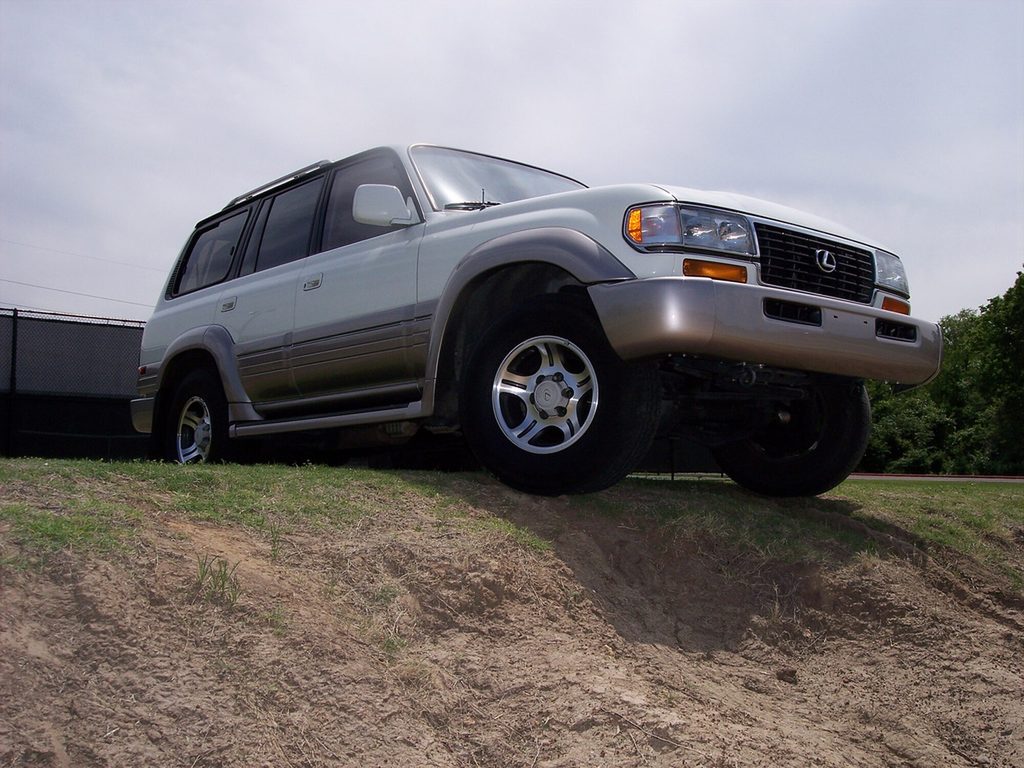
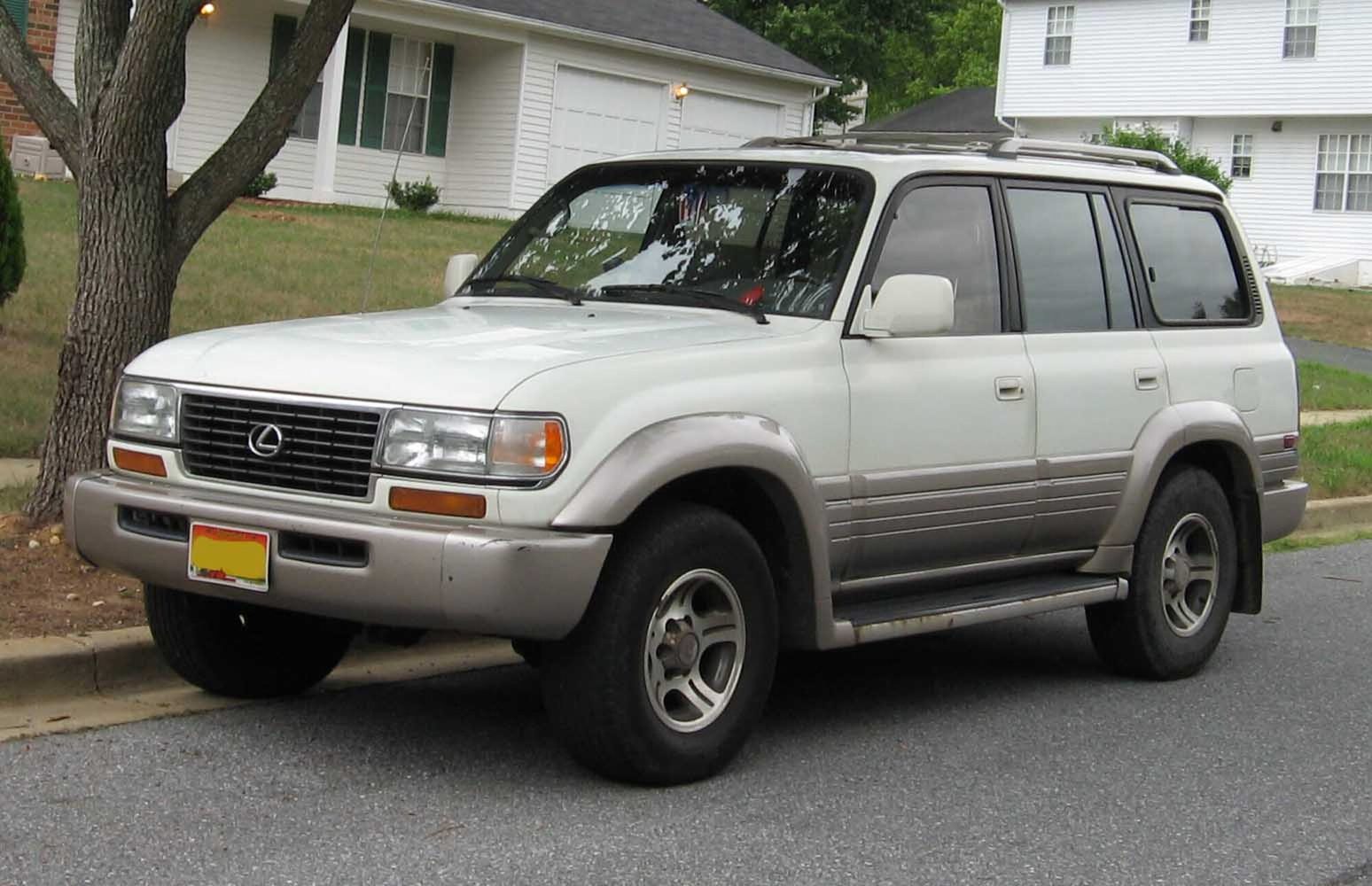
The LX 450 was Lexus's first SUV, and it was barely disguised. Take a late 80 Series Land Cruiser, give it a new grille, body cladding, different wheels, softer suspension and extra sound insulation, and you have it. Underneath sit a ladder frame, coil-sprung solid axles front and rear, full-time four-wheel drive with a lockable center differential and Toyota's 4.5-liter 1FZ-FE straight-six. Electric front and rear lockers were optional. It was sold in the US for just two model years, 1996 and 1997, and it remains the only LX with a solid front axle.
A TRUCK BORN OF A TRADE WAR
The LX 450 exists because of a tariff threat. In the mid-1990s trade fight between the US and Japan, Washington threatened 100 percent tariffs on Japanese luxury cars, but SUVs weren't on the list. A rebadged Land Cruiser gave Lexus a flagship that was exempt, and it needed very little development money. Production began in November 1995, the first truck came off the line that December, and US sales started in January 1996. The tariffs never happened, because the two governments reached a gentlemen's agreement.
Lexus aimed it squarely at the Land Rover crowd, meaning the Range Rover and the Discovery. The ad line was "It's everything a Lexus is, and everything a Lexus isn't." Canada got it from 1997. Toyota had pulled the Land Cruiser from Canada in 1996, so for a while the LX was the only way Canadians could buy an 80 Series new.
WHAT $7,000 BOUGHT YOU
At launch the LX 450 listed at $47,995, about $7,000 more than a base Land Cruiser at $40,678. A Land Cruiser optioned to match cost $46,968, so the real premium was closer to a thousand dollars. Slee Off-Road's 80 Series guide lists the differences. The LX got a revised stereo with a subwoofer in the center console, an optional factory cell phone, softer suspension, cladding on the doors, fenders and tailgate, bigger rear bumper corners, a plastic cover over the rear crossmember, two-tone mud flaps, automatic climate control, softer leather and more sound deadening.
Mechanically it was the 1995–1997 FZJ80 drivetrain. That means the 24-valve 1FZ-FE (212 hp and 275 lb-ft by most period spec sheets, although Wikipedia gives 215 hp), the A343F four-speed automatic, 4.11 axle gears and 275/70R16 tires. The only factory options were a console CD changer, a moonroof and the electric lockers. Those lockers are the option to look for today. On an Expedition Portal thread, forum regulars valued them at about $2,500 on a used truck.
THE SLOW-SELLER THAT WASN'T
Lexus expected to sell around 4,000 in 1996. It sold more than 5,000, sold out its first allocation and had a two-month waiting list. Sales passed 9,000 in 1997, and the truck topped J.D. Power's Initial Quality Survey among full-size SUVs. The weak spot was the engine. Critics thought 212 hp wasn't enough for a 5,000-lb truck, so the model cycle was cut short. For 1998 the 100 Series-based LX 470 took over, with a V8, independent front suspension and hydraulic height control.
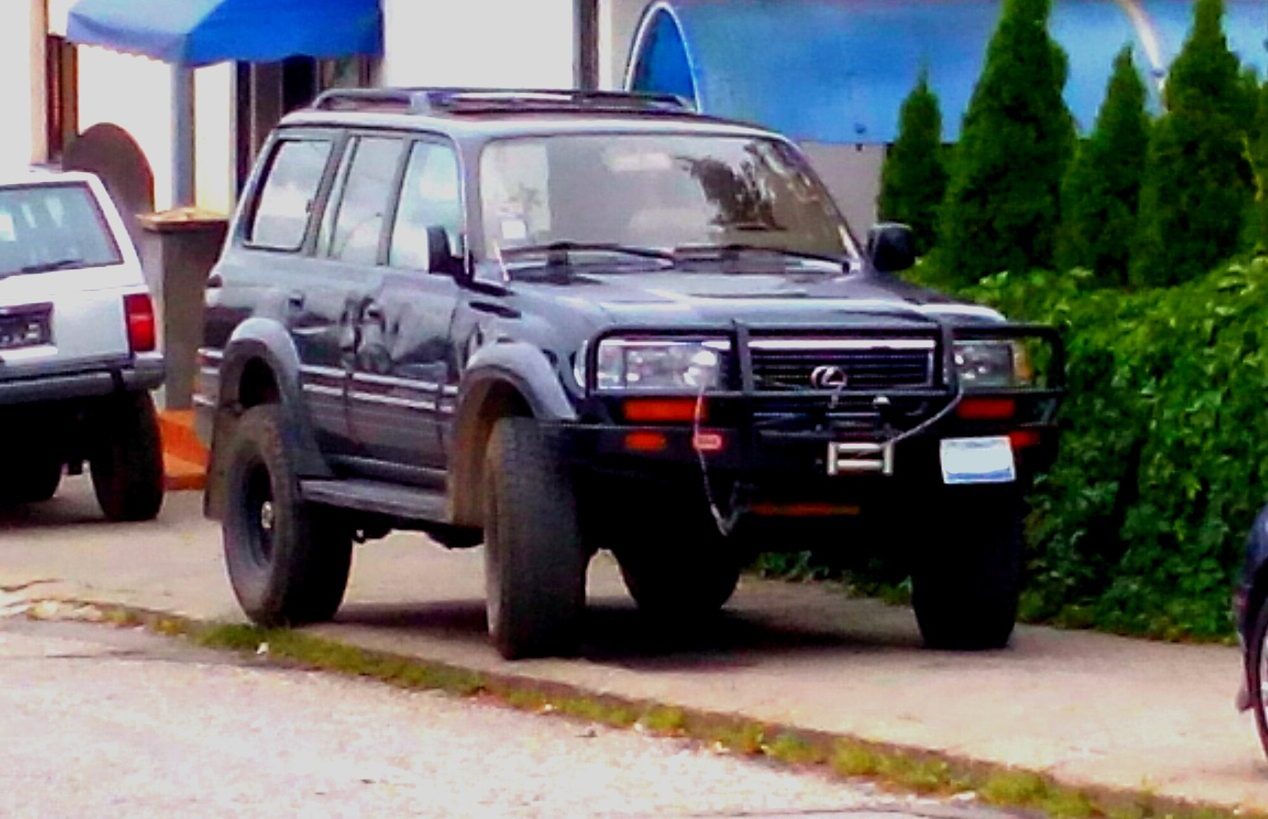
That changeover is the reason the LX 450 has a cult following now. It was the last LX with a live front axle, and the LX 470 that replaced it dropped the factory lockers in the US. Every 80 Series part, lift and armor kit fits, and Metal Tech 4x4 sells sliders and rear links labeled for both the 80 Series and the LX 450. You pay a little more for the badge, and in return you usually get a truck that spent its first decade on a country-club driveway.
LIVING WITH ONE NOW
The newest LX 450 is now nearly 30 years old, so condition matters far more than spec. The forums agree on the big three. The 1FZ-FE head gasket becomes a concern past about 150,000 miles. The front knuckles and birfields need a rebuild when their seals start weeping. And there's the PHH, short for "pesky heater hose": a 3-inch coolant hose under the intake that can strand you when it pops. None of these is exotic. Each one is documented on IH8MUD and Slee's site, and each is the kind of weekend job the owners' community has turned into a rite of passage.
SIDEBAR · LOCKED OR NOT?
Factory lockers and the hidden center-diff switch
The factory lockers were electric, front and rear, and were the most valuable option on the LX 450. Slee's buying advice is to make sure they actually engage by turning them on in low range on a low-traction surface. Slee also says the usual cause of a locker that won't engage is the actuator, which can be rebuilt. Retrofitting factory lockers to an unlocked truck needs the locker ECU, harnesses and new or re-splined axle shafts, plus some welding, so it is rarely worth it. ARB Air Lockers are the usual alternative.
The center differential is a separate story. US trucks from 1993 on lock the center diff automatically in low range but had no switch for high range, even though the wiring is there. Slee's plug-in center-diff-lock switch for 1995–1997 trucks (TOY1002) cost $79 and took Off-Road.com's tester less than an hour to install.