Early Ford Bronco vs Land Cruiser FJ40
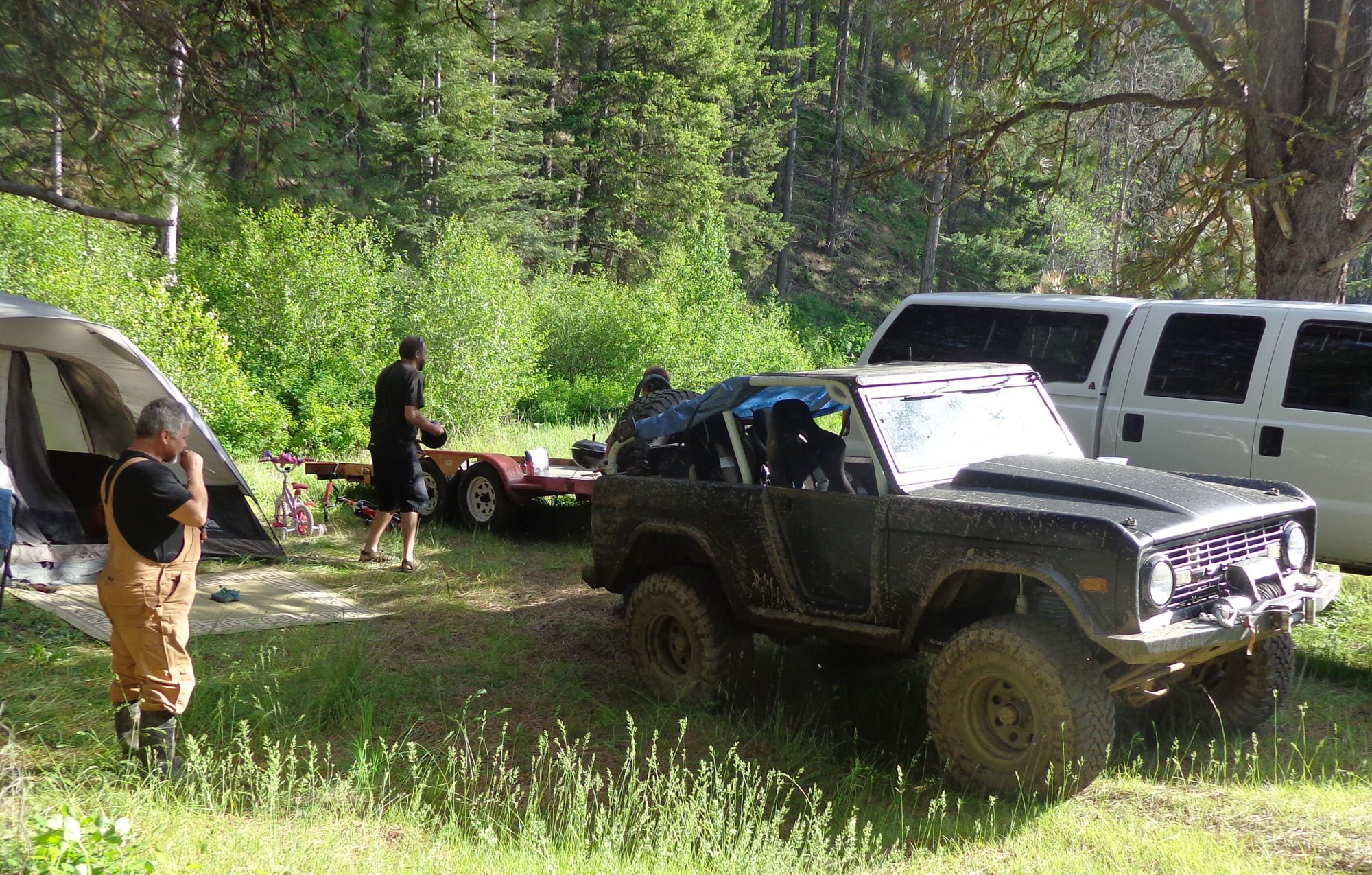
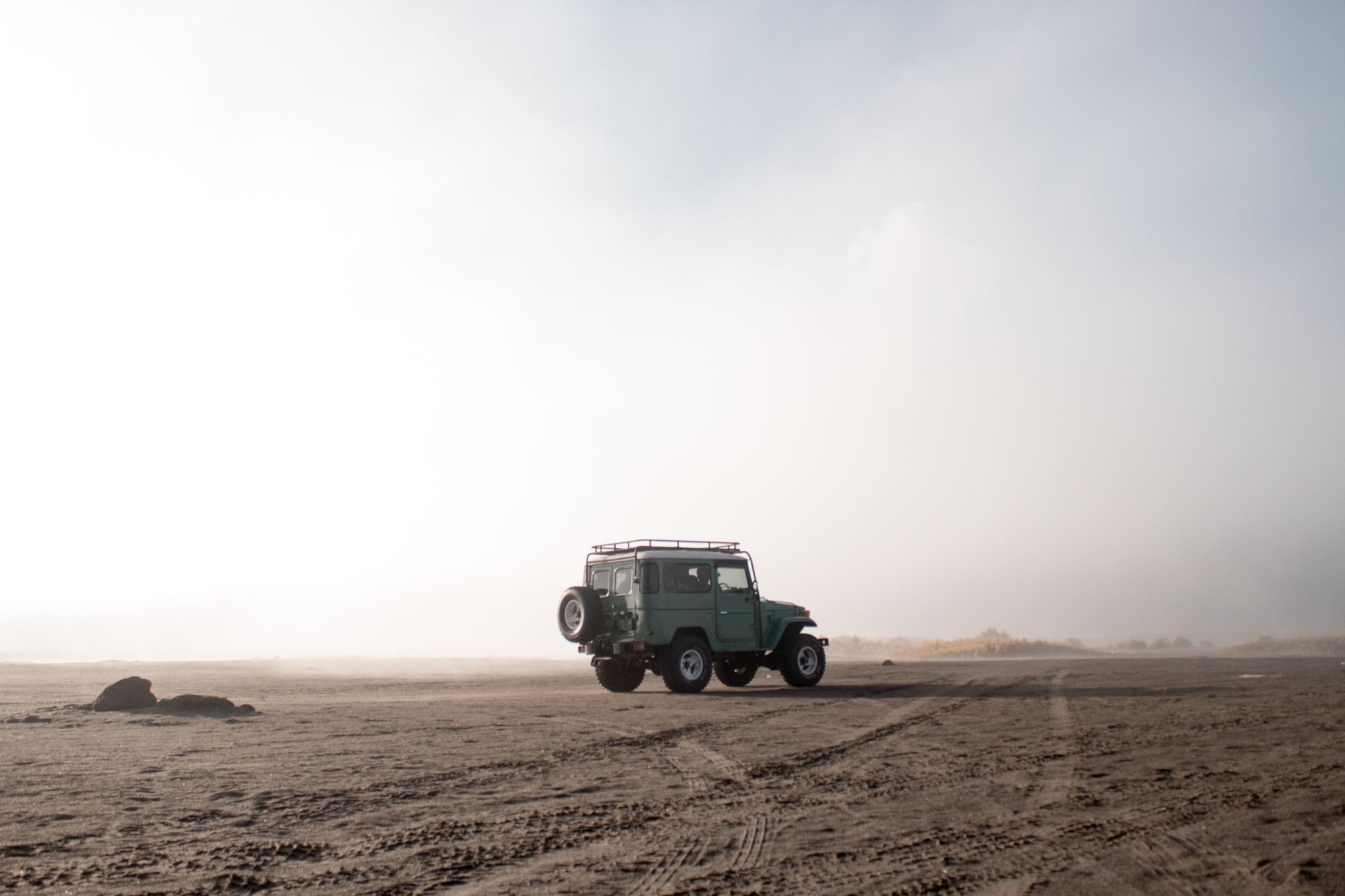
Buy the FJ40 if you want the cheaper, simpler vintage trail truck; buy the early Bronco if you want a V8, a coil-sprung front end and the option of an automatic and power steering, and can pay nearly twice as much. They're nearly the same size, they rust in the same places, and both are better bought on condition than on year.
The short answer
you want V8 power, a coil-sprung front axle, an automatic or power steering from 1973, Ford and Dana parts at any parts store, and you're ready for Bronco prices
you want a bulletproof straight-six, leaf springs and Birfield knuckles you can fix with a 17 mm wrench, and a good driver for not much more than half the price of a good Bronco
Side by side
| FORD BRONCO (1966–1977) | TOYOTA LAND CRUISER FJ40 | |
|---|---|---|
| Years (US) | 1966–77 (on sale Aug 1965) | From 1960 (Toyota) or 1963 (Hagerty) to 1983 |
| Engines | 170 I6, 105 hp; 200 I6 from '73; 289 V8, 200 hp ('66–68); 302 V8 ('69–77), 125 hp net in '75 | 3.9 F I6, 125 hp (to '75); 4.2 2F I6, 135 hp / 200–210 lb-ft |
| Transmission | 3-spd manual, column shift; C4 3-spd auto optional from '73 | 3-spd manual; 4-spd from '75 (US) |
| Transfer case | Dana 20, gear-driven: 2.46 low ('66–72), 2.34 low ('73–77) | Two-speed, part-time; split case from about 1980 |
| Front axle | Dana 30, Dana 44 from mid-'71; coils, radius arms, track bar | Solid axle, closed Birfield knuckles, leaf springs |
| Rear axle | Ford 9-inch on leaf springs | Solid axle on leaf springs |
| Factory limited-slip | Optional (data-plate axle code) | — |
| Brakes | Drums; power front discs '76–77 | Drums; front discs from '76 (US) |
| Steering | Manual; power optional from '73 | Manual; power optional on petrol trucks from '79 |
| Wheelbase | 92 in | 90.0 in (2,285 mm) |
| Length | 151.5 in | 151 in (3,840 mm) |
| Curb weight | — | 3,263 lb soft top (Japan-market figure) |
| Wheel bolt pattern | 5 x 139.7 (5 x 5.5 in) | 6 x 139.7 (6 x 5.5 in) |
| Biggest tire, no lift | 30x9.50R15 (31x10.50 may rub) | 31x10.50R15 (33x9.50 rubs) |
| Typical prices now | $9.6k–37k project; $41.5k–70k driver; restomods $122k–166.5k+ | $3k–16k project; $22k–42k driver; $55k–110k+ excellent |
| Best years | No consensus: '69–72 for feel, '73–77 for comfort | 1976 on (discs, 2F, four-speed); '78 most coveted |
Same size, different ideas
These two were rivals from the start. When Ford planned the Bronco in the early 1960s, its targets were the Jeep CJ-5, the International Scout and Toyota's Land Cruiser. They ended up almost the same size: the Bronco has a 92-inch wheelbase and a 151.5-inch body, the FJ40 a 90-inch wheelbase and a 151-inch body.
Underneath they part ways. Both have a ladder frame, two solid axles, a two-speed transfer case and leaf springs at the back. The Bronco hangs its front axle on coil springs with radius arms and a track bar, and offered V8s from March 1966. The FJ40 uses leaf springs at both ends, closed Birfield knuckles and a big, slow-revving straight-six that Hagerty calls 'virtually indestructible.'
Off-road
Stock, it's closer than either camp admits. Both crawl through a two-speed transfer case, and both clear about 31-inch tires: the FJ40 takes 31x10.50R15s on stock springs, while an uncut Bronco is happiest on 30x9.50s, and 31s may rub at full stuff or full lock. The Bronco's coil-sprung front axle is the more modern design, and Ford quoted a 34-foot turning circle. The FJ40's leaf springs are cruder and ride harder, but there's very little in them to go wrong.
Lifted, the usual Bronco recipe is 2.5–3.5 inches for 31–33-inch tires. Every lift needs the right offset C-bushings, because a lift pushes caster negative and Wild Horses says about 90 percent of wandering Broncos have the wrong caster. On the FJ40 it's a 2-inch Old Man Emu kit with anti-inversion shackles, so the rear shackle can't flip over center, or a spring-over for about 6 inches. On a Bronco, buy a Dana 44 truck (mid-1971 on) if you plan big tires; the 9-inch rear is strong, but bigger tires break axle shafts, and chromoly shafts are the usual fix.
On-road and daily use
The Bronco is the easier truck to live with, at least in later trucks. A C4 automatic and power steering were optional from 1973, power front discs arrived in 1976, and a V8 was available almost from launch. The catch is the steering. A Bronco with wrong caster or worn track-bar bushings wanders and shimmies, and Autotrader Classics says the 1976 Y-type steering linkage was poorly received.
The FJ40 never got friendlier in the US. Its transmissions were manual three- and four-speeds, power steering was only offered on petrol trucks from 1979, and front discs came in 1976. Retro Rides sums up the experience as vague steering, wayward handling, a harsh ride and a cabin that gets very hot in summer. Toyota fitted taller 3.70 axle gears from 1979 to help on the highway, and owners who run 33s often swap in an H55F five-speed to stop the engine screaming at speed.
Rust and what breaks
Rust is the main worry with both. On a Bronco, Autotrader Classics and Velocity Restorations say to check the rockers and floor pans, the cargo floor, the door posts, the firewall and inner fenders, the tailgate and the frame rails, and the frame where the steering box bolts on can crack. On an FJ40, IH8MUD veterans rank rust above every mechanical issue combined: door bottoms, rear sill, wheel wells, windscreen pillars, rear frame horns and body mounts, with 1980-and-later bodies seeming to rust more readily.
Mechanically, the Bronco's regular jobs are caster and C-bushings, track-bar bushings, Dana 20 leaks and front-end rebuilds: king pins on the Dana 30, ball joints on the Dana 44. The FJ40's are weeping knuckle seals and Birfield repacks, valve adjustments on the pushrod six, carburetor rebuilds and drum brakes that need constant adjustment. A compression test tells you more about an FJ40's engine than the odometer does.
Parts, costs and modifying
Bronco mechanical parts are easy, because Autotrader notes the trucks use common Ford engines and Dana axles. Body parts like grilles and tailgates are harder to find. FJ40 owners rely on specialists such as Cruiser Corps, CruiserTeq and Cool Cruisers of Texas, and since 2021 Toyota's GR Heritage Parts program has reproduced 40 Series engine, driveline and exhaust parts. Typical jobs cost about the same: a front disc conversion runs about $550–700 for an FJ40 and $675–850 for a Bronco, and power-steering conversions run about $900 (FJ40 Saginaw) and $1,199 (Bronco Delphi kit).
Engine swaps split the market. Coyote-swapped and shop-built Bronco restomods sold for about $122,000–166,500 in the middle of the range on Bring a Trailer, with a top sale of $325,000. Small-block Chevy V8s are common in FJ40s, but on BaT V8-swapped 40s sold for a median of about $25,300, below stock trucks. If resale matters, keep a 40's six and build a Bronco as far as you like.
Buying one now
The Bronco costs much more. Of 306 complete early Broncos sold on Bring a Trailer from August 2025 to October 2026, the middle half of stock and mildly modified trucks went for about $41,500–70,000, with a median near $55,500. Hagerty recorded a 12 percent drop in the second quarter of 2026 but says a driver still costs $50,000 or more. Across 244 FJ40 sales on BaT from January 2025 to October 2026, drivers ran about $22,000–42,000 and the median was about $29,400.
For a Bronco, pay for uncut rear fenders and solid metal, check that the frame VIN and glovebox data plate make sense, and treat any Baja claim as a clone until documents prove otherwise; only 650 were sold. For an FJ40, buy a 1976-or-later truck if you want discs, the 2F and the four-speed, match the frame number to the VIN plate, and remember that diesel 40s were never sold to US retail buyers, so a US diesel is an import or an ex-mine truck.
Questions, answered
Is the early Bronco or the FJ40 better off-road?
Stock, they're close. The FJ40 fits slightly bigger tires without a lift (31x10.50R15 against the Bronco's safe 30x9.50R15), while the Bronco has a coil-sprung front axle and, from mid-1971, a Dana 44 front. Built, both are very capable. Bronco owners need to get caster right, and FJ40 owners need anti-inversion shackles.
Which is cheaper to buy?
The FJ40, by a lot. Recent Bring a Trailer results put FJ40 drivers at about $22,000–42,000 and a typical stock or mildly modified early Bronco at about $41,500–70,000. Restomod Broncos regularly sell for well over $100,000.
Can I get either with an automatic or power steering?
The Bronco offered a C4 three-speed automatic and power steering from 1973. US FJ40s were manual only, with a three-speed and then a four-speed from 1975, and power steering was offered only on petrol trucks from 1979. Plenty of owners have converted both trucks since.
Do Bronco and FJ40 wheels interchange?
No. Early Broncos use a 5 x 139.7 mm (5 x 5.5 in) bolt pattern, and FJ40s use 6 x 139.7 mm (6 x 5.5 in).
Which years should I look for?
For the FJ40, 1976 and later, for the front discs, 2F engine and four-speed; IH8MUD veterans like the 1978. For the Bronco there's no single answer: Velocity Restorations calls 1969–72 the sweet spot for the 302 with a vintage feel and 1973–77 the most refined, and the stronger Dana 44 front arrived in mid-1971.
Should I V8-swap either one?
It depends on resale. Coyote-swapped restomods are the top of the early-Bronco market. FJ40s with small-block Chevy swaps are common, but on Bring a Trailer they sold for less than stock trucks, a median of about $25,300.
The full guides
- Wikipedia — Ford Bronco
- Autotrader Classics — 1966–77 Ford Bronco collector's guide
- Wild Horses 4x4 — 1966 Ford Bronco announcement publicity releases
- Velocity Restorations — Ultimate guide to buying a classic Ford Bronco
- Hagerty — Vintage Ford Bronco values: a breakdown by generation
- Ford Authority — First-gen Ford Bronco values may finally be heading back down to earth (July 2026)
- Bring a Trailer — Ford Bronco U13/U14/U15 1966–1977 auction results
- Wild Horses 4x4 — Early Bronco Dana 20 transfer case
- Wild Horses 4x4 — How to stop your early Bronco from wandering
- Wild Horses 4x4 — Steering tech
- Wild Horses 4x4 — Front disc brake conversion kit, 1966–75 Bronco
- Bronco Graveyard — 1966–77 Bronco Delphi power-steering conversion
- CJ Pony Parts — 1968 Bronco VIN decoder
- CJ Pony Parts — 1975 Bronco VIN decoder
- CJ Pony Parts — Ford Bronco bolt patterns by generation
- Performance Plus Tire — Early Bronco wheels and tires: the 1966–1977 fitment guide
- ClassicBroncos — What's the largest tire you can run on an uncut stocker?
- Wikipedia — Toyota Land Cruiser (J40)
- Toyota Pressroom — A Toyota global icon for nearly 70 years
- Hagerty — As the Toyota FJ40 market settles, now might be the time to buy
- Retro Rides — Top tips for buying a Toyota LandCruiser FJ40 (1976–83)
- GoAuto — Toyota to reproduce 40 Series LandCruiser parts
- IH8MUD — Purchasing an FJ40: buyer's guide (FAQ)
- IH8MUD — What to look for when buying an FJ40?
- IH8MUD — FJ40 tire size
- IH8MUD — 33x9.50 on stock 40?
- IH8MUD — So you want to swap an H55F 5-speed into your 40, 60 or 62?
- Off-Road.com — Disc brakes for your Toyota 4x4 Land Cruiser
- Cruiser Corps — ARB/OME 2" lift kit, FJ40 1975–1980
- Cruiser Corps — Saginaw power steering conversion
- Cruiser Corps — 15" wheel rim, OEM
- JDMBUYSELL — Toyota Land Cruiser J40 guide
- Bring a Trailer — Toyota Land Cruiser FJ40 results