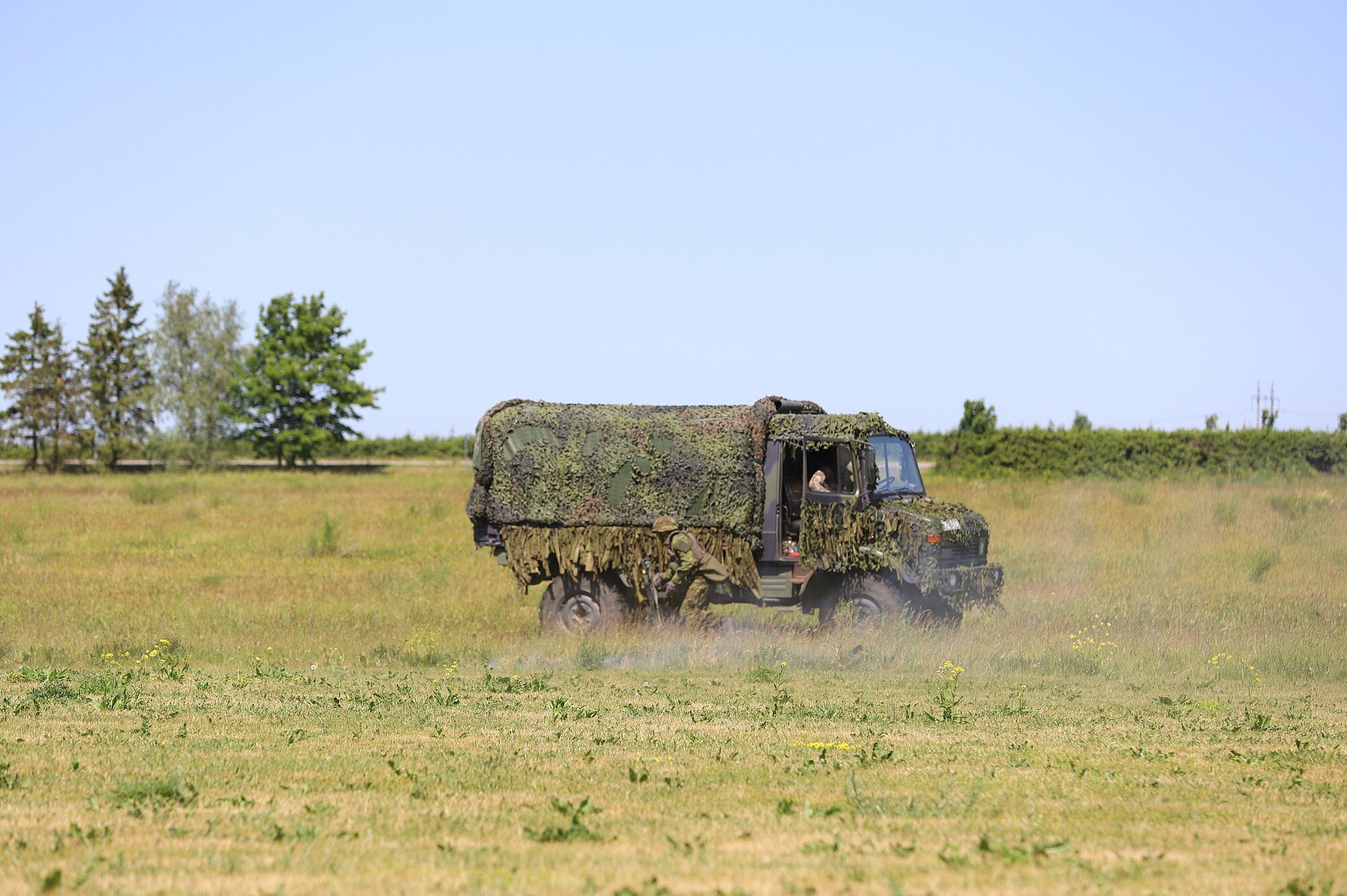
Unimog
“A farm tractor that joined the army and never came home. Portal axles, locking diffs and a frame that twists like a pretzel make it close to unstoppable. It isn't quick, quiet or cheap to fix, and nobody who owns one cares.”
The Unimog began in 1946 as a 'Universal Motor Device for Agriculture'. Engineers Albert Friedrich, Heinrich Rößler and Hans Zabel developed it at Erhard & Söhne in Schwäbisch Gmünd, and Zabel shortened the project name to Unimog. It had all-wheel drive, differential locks and portal axles, yet could do 50 km/h. After a debut at the 1948 DLG fair, Gebrüder Boehringer built about 600 of the first series. Daimler-Benz then built it at Gaggenau until production moved to Wörth on 26 August 2002.
Armies wanted one too. The Unimog 404, or Unimog S, arrived in the mid-1950s with petrol engines and a big cargo bed. Gaggenau built 64,242 of them up to 1980, more than any other Unimog series. The heavy series followed in 1974–75 with an angular cab and an eight-speed gearbox. Its best seller, the 435-series U1300L, became the Bundeswehr's 2-tonne truck and later the favorite base for expedition campers.
Most American examples of both are used imports, many of them ex-military. Both trucks are now well past the 25-year import threshold. Parts, manuals and know-how come from a few specialists and a busy international owner community.
Every generation
Best Mercedes-Benz Unimog years to buy, and which to avoid →
 YT