Land Cruiser 80 Series vs 100 Series
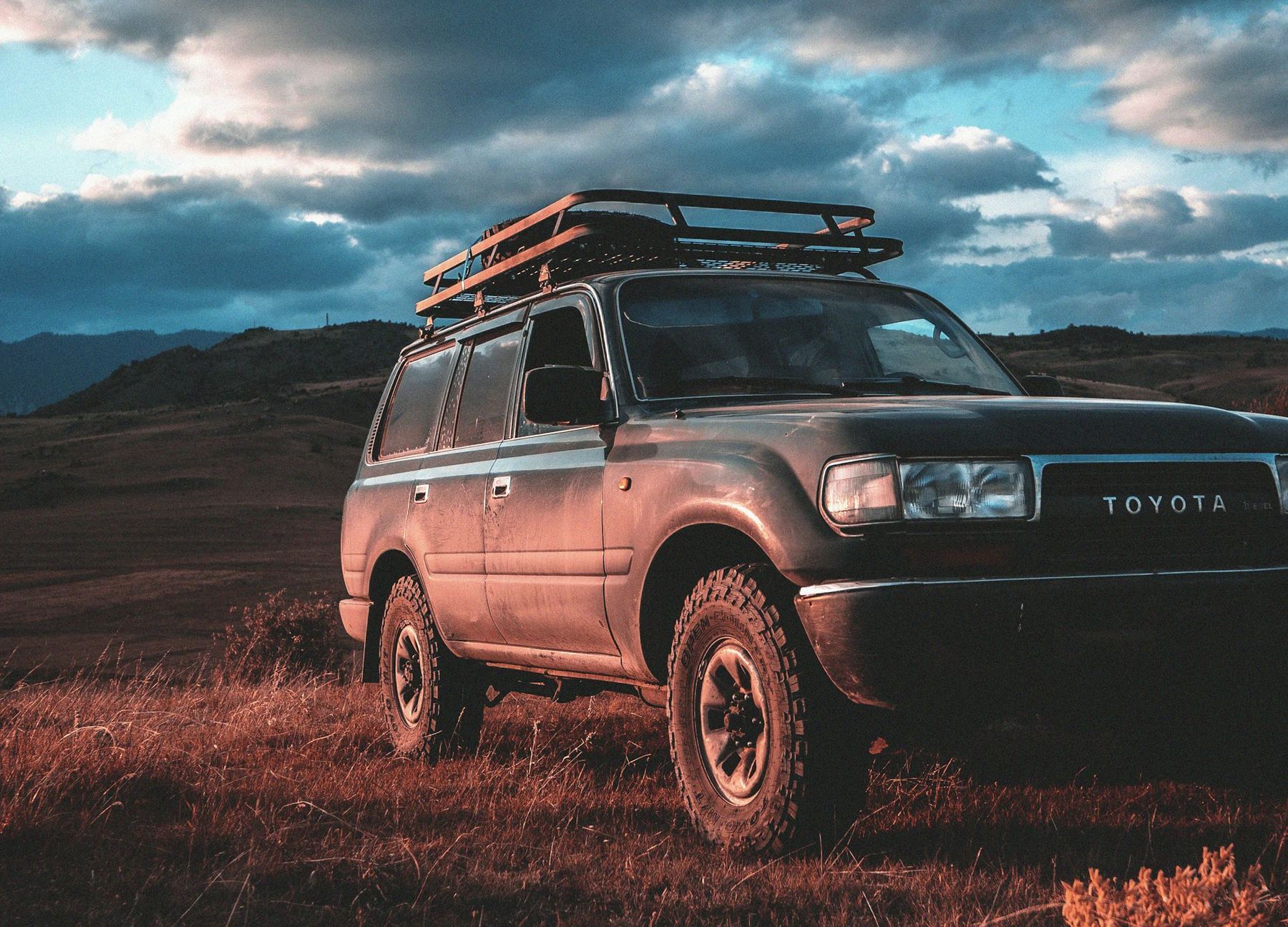
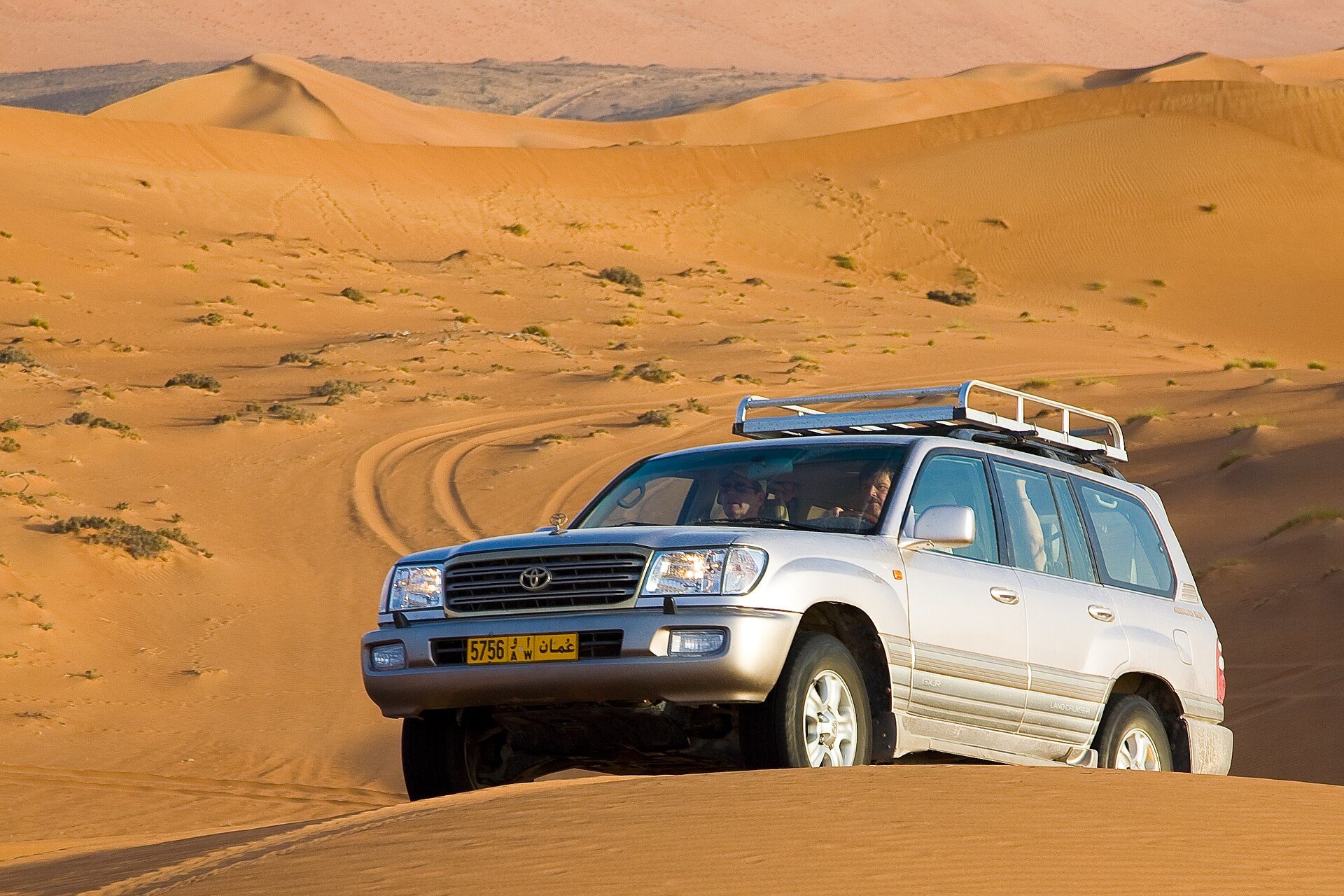
If you plan to wheel hard enough to dent things, buy a locked 80; for towing, highway miles and family duty, buy the 100. The 80 has solid axles and optional factory lockers at both ends, while the 100 trades them for a V8, independent front suspension and a much better road manner.
The short answer
you want solid axles, factory front and rear lockers and the simplest Land Cruiser to fix in a driveway
you tow, drive long highway stretches or carry a family, and want V8 power, a five-speed (2003 on) and a quieter cabin
Side by side
| TOYOTA LAND CRUISER 80 SERIES | TOYOTA LAND CRUISER 100 SERIES | |
|---|---|---|
| Years (US) | 1991–97 | 1998–2007 |
| Engine | 4.0 I6 3F-E, 155 hp ('91–92); 4.5 I6 1FZ-FE, 212 hp / 275 lb-ft ('93–97) | 4.7 V8 2UZ-FE, 230 hp / 320 lb-ft; 235 hp ('03); 275 hp / 332 lb-ft with VVT-i ('06–07) |
| Transmission | 4-spd auto (A440F, A442F, A343F) | 4-spd A343F; 5-spd A750F from 2003 |
| 4WD | Full-time, lockable center diff (viscous HF2AV on ABS trucks from '93) | Full-time HF2A, lockable center diff; VSC and A-TRAC from 2000 |
| Front suspension | Solid axle on coils, Birfield knuckles | Independent, torsion bars |
| Rear axle | Solid on coils; full-float with discs on ABS trucks from '93 | Solid on coils; semi-float, 9.5-in ring gear |
| Factory lockers | Front and rear optional, 1993–97 | Rear optional, 1998–99 only |
| Wheelbase | 112.2 in | 112.2 in |
| Ground clearance | 10.8 in ('97) | 9.8 in ('05) |
| Curb weight | 4,751 lb ('97) | 5,115–5,425 lb |
| Towing | 5,000 lb | 6,500 lb (2002–06) |
| Fuel economy | 12 city / 14 hwy ('97) | 12 city / 16 hwy ('05) |
| Wheel bolt pattern | 6 x 139.7 (6 x 5.5 in) | 5 x 150 |
| Biggest tire, no lift | 285/75R16 (≈33 in) | 285/75R16 or 285/65R18 (≈33 in) |
| Typical prices now | $18k–34k driver; $45k–90k+ excellent | $15k–36k driver; $40k–65k excellent |
| Best years | 1993–97 FZJ80 | 2003–07 (five-speed) |
Off-road
This is where the 80 wins, and IH8MUD's answer hasn't changed in years: solid axles at both ends, coil springs, a lockable center diff on every truck and, on 1993–97 trucks optioned with K294, electric front and rear lockers. That's three lockers from the factory. It also sits higher, with 10.8 inches of ground clearance against the 100's 9.8 inches in Kelley Blue Book's figures.
The 100 is still a proper four-wheel-drive, with a ladder frame, a live rear axle and a lockable center diff, but it has independent torsion-bar front suspension. The factory rear locker was only offered on 1998–99 trucks; after that Toyota relied on A-TRAC brake traction control. One IH8MUD member who has owned both says the 100 is better at pretty much everything except serious off-road work. Another member came away from trail runs unimpressed by A-TRAC compared with real lockers. Lower wishbones on 100s that have been driven hard onto the bump stops can crack, so check them.
On-road and daily use
The 100 is the better road truck by a wide margin. The V8 makes 230 hp at launch and 275 hp on late VVT-i trucks, against the FZJ80's 212 hp. From 2003 it has a five-speed automatic, which owners on IH8MUD rate as a bigger step than the later engine's extra power. Owners who have both describe the 100 as softer, quieter and roomier, with smoother power. It's also rated to tow 6,500 lb against the 80's 5,000 lb.
Neither one is economical. KBB lists 12 city and 14 highway for a 1997 80, and 12 and 16 for a 2005 100, with tanks of about 25 gallons in both. For families, one IH8MUD member points out the 100 has LATCH child-seat anchors, which makes car seats much easier than in an 80.
Reliability and what breaks
Both are durable, and both have one big expensive item. On the 80 it's the 1FZ-FE head gasket; on the 100 it's the 2UZ-FE timing belt, due at 90,000 miles along with the water pump and thermostat. An IH8MUD owner with both trucks reckons the two jobs cost about the same.
The 80's other usual faults are leaking front knuckle seals (a Birfield and knuckle rebuild every so often), the 'pesky heater hose', starter contacts and frame cracks around the steering box on trucks that have run big tires. The 100's list is brittle plastic heater-hose tees, spark plugs that work loose in the head, lower ball joints and starter contacts. Avoid hard-wheeling a 1998–99 100: those years have the two-pinion front differential that fails most often under shock loads. Toyota fitted a four-pinion diff from the 2000 model year.
Running costs and parts
Fuel costs are a wash. Parts don't swap between the two trucks: the 80 uses a 6 x 139.7 mm wheel pattern and the 100 moved to 5 x 150 mm, so wheels, as well as nearly all suspension and front-axle parts, are specific to each truck. Both have deep specialist support from Slee Off-Road, Cruiser Outfitters and Cruiser Corps.
Typical jobs: a Cruiser Outfitters knuckle rebuild kit for the 80 is about $125 before bearings, grease and labor, and one IH8MUD owner spent about $600 on parts for a full 100 timing-belt kit. The 100's heater-hose tees cost under $15 in parts. If the 100 you're looking at is actually a Lexus LX 470, add hydraulic AHC suspension to the maintenance list.
Modifying
The 80 is the easier truck to build. A 2-inch Old Man Emu lift is the classic start, and Christo Slee says 35s work on it but will probably rub at full flex unless you lower the bump stops. Re-gear to 4.56, 4.88 or 5.29 from the stock 4.11s. ARB Air Lockers are usually cheaper than retrofitting factory lockers to an open truck. An IH8MUD member adds that a diesel swap is more doable in an 80 than a 100 because of the solid front axle.
The 100 lifts with Old Man Emu torsion bars, rear coils and shocks (about 1.5 inches), and the torsion-bar adjusters set front height. With 2–3 inches of lift, 315/75R16s fit but rub the front liner and rear sheet metal at full compression. Air lockers are the usual way to add lockers to a post-1999 truck. If you want a 100 with solid axles, Toyota built one, the FZJ105, but it was never sold in the US.
Buying one now
The 80 has become a collector truck. Bring a Trailer sales from January 2025 to October 2026 put drivers at about $18,000–34,000 and the best low-mile trucks at $45,000 to over $90,000, with 1991–92 FJ80s selling for a median of about $15,750. The 100 is still the cheaper way into a Land Cruiser: drivers run about $15,000–36,000, though clean, low-mile, well-documented 100s now sell for 80 Series money ($40,000–65,000).
Buy the 80 on condition, lockers and head-gasket evidence; a 1993–97 FZJ80 is the one to have. Buy the 100 on timing-belt receipts. 2003–07 trucks are the ones most owners recommend, mainly for the five-speed.
Questions, answered
Is the 80 Series more capable off-road than the 100 Series?
Stock for stock, yes. The 80 has solid axles front and rear and could be ordered with factory front and rear lockers from 1993 to 1997, and KBB lists more ground clearance (10.8 in against 9.8 in). The 100 has independent front suspension and only offered a factory rear locker in 1998–99. A built 100 is still very capable on overland routes.
Which is more reliable?
Both are known for durability, and each has one big maintenance job: the head gasket on the 80's 1FZ-FE, and the 90,000-mile timing belt on the 100's 2UZ-FE. Leaky knuckle seals are the 80's chronic chore; heater-hose tees, spark plugs walking out and the 1998–99 two-pinion front diff are the 100's.
Will 80 Series wheels fit a 100 Series?
No. The 80 uses a 6 x 139.7 mm (6 x 5.5 in) bolt pattern, while the 100 uses 5 x 150 mm with M14 x 1.5 studs.
Which is better for towing?
The 100. KBB lists 6,500 lb for 2002–06 trucks, against 5,000 lb for a 1997 80, and the V8 and later five-speed automatic make it far more relaxed with a trailer. Toyota offered a bolt-on factory hitch on the 100 from 2003.
Was there a solid-axle 100 Series?
Yes, the 105 (FZJ105 and HZJ105), with solid axles front and rear and straight-six engines carried over from the 80. It was sold in Africa, Australia, Russia and South America, never in the US.
Which years of each should I look for?
For the 80, a 1993–97 FZJ80 with the 4.5-liter engine, ideally with factory lockers. For the 100, owners point to 2003–07 for the five-speed automatic, and 2000 on if you want the stronger four-pinion front diff at a lower price.
The full guides
- Slee Off-Road — 80 Series Newbie Guide
- Slee Off-Road — 100 Series Newbie Guide
- IH8MUD — 80 vs 100 series LC
- IH8MUD — 80 vs 100 Series
- Wikipedia — Toyota Land Cruiser
- Kelley Blue Book — 1997 Toyota Land Cruiser specs
- Kelley Blue Book — 2005 Toyota Land Cruiser specs
- Kelley Blue Book — 2002 Toyota Land Cruiser specs
- IH8MUD — 100-series FAQ
- IH8MUD — Biggest tire size (80 Series)
- IH8MUD — What is the largest tire I can fit with no lift? (100 Series)
- IH8MUD — Max tire size (100 Series, lifted)
- IH8MUD — FJ80 vs FZJ80
- IH8MUD — New 100 owner (year-by-year buying notes)
- IH8MUD — 90k service parts list
- IH8MUD — Timing Belt for Dummies writeup
- IH8MUD — DIY: Replacing heater hose pipe T's
- IH8MUD — Pesky heater hose
- IH8MUD — Spark plugs alert
- Unsealed 4X4 — Toyota LandCruiser 80 Series: common problems & solutions
- Cruiser Outfitters / CruiserTeq — 80 Series knuckle rebuild kit FA9097
- Cruiser Outfitters — 100 Series parts (OME torsion bars and coils)
- Koleso.ee — Toyota Land Cruiser 80 Series wheel and tyre data
- ThreePiece — 1999 Toyota Land Cruiser wheel & bolt pattern specs
- Expedition Portal — Which 100 Series is "best"
- Bring a Trailer — Toyota Land Cruiser 80-Series results
- Bring a Trailer — Toyota Land Cruiser 100 Series results