Jeep Wrangler JK vs JL
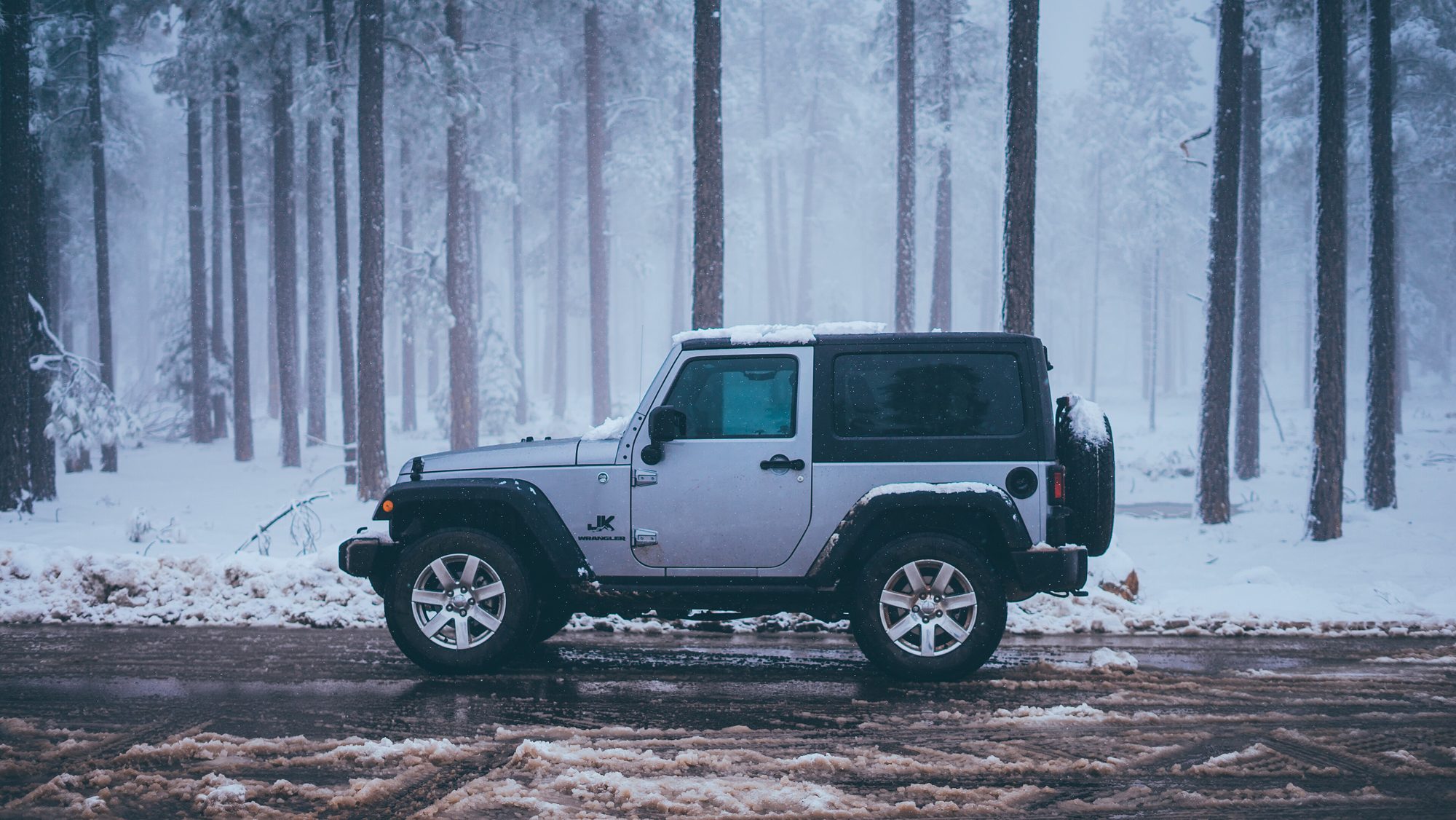
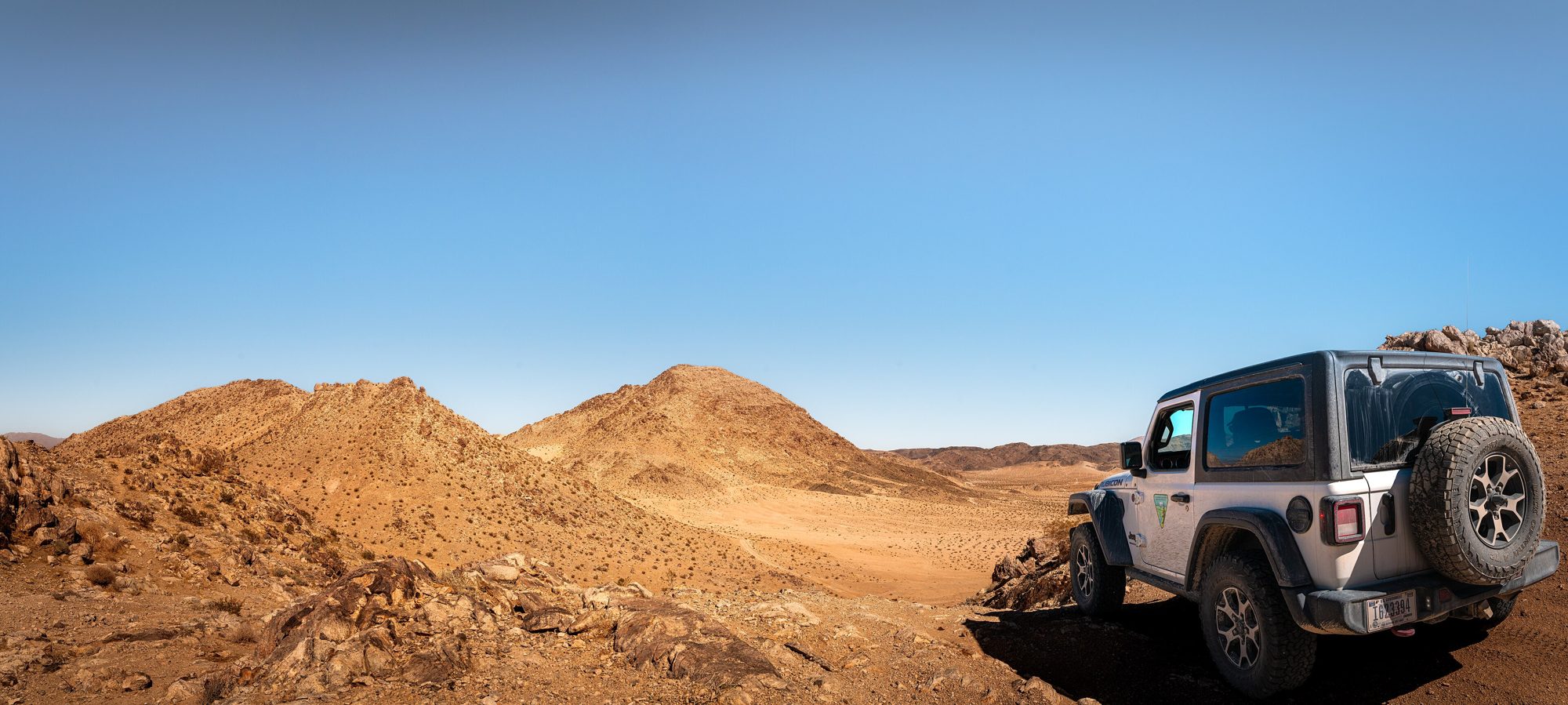
Buy the JL if the budget stretches: it has the eight-speed, stronger base axles, a turbo option and factory 35s from 2024. Buy a 2012-on JK if you'd rather spend the difference on tires and a lift, because a Pentastar JK Rubicon does almost everything a JL does on the trail.
The short answer
you want the cheapest way into a Pentastar, solid axles and Rubicon lockers, and don't mind rebuilding the front end along the way
it's also your daily driver, you want the eight-speed or the 2.0 turbo, or you want 35s straight from the factory
Side by side
| JEEP WRANGLER JK (2-DOOR) | JEEP WRANGLER JL | |
|---|---|---|
| Years (US) | 2007–2018 | 2018–present |
| Engines | 3.8 V6, 202 hp / 237 lb-ft (2007–11) · 3.6 Pentastar V6, 285 hp / 260 lb-ft (2012–18) | 3.6 Pentastar V6, 285 hp / 260 lb-ft · 2.0 turbo I4, 270 hp / 295 lb-ft |
| Transmissions | 6-spd manual · 4-spd auto (to 2011) · 5-spd auto (2012–18) | 6-spd manual · 8-spd auto (2.0T auto only) |
| Transfer case | Command-Trac 2.72:1 · Rock-Trac 4:1 (Rubicon) | Command-Trac 2.72:1 · Selec-Trac (full-time option) · Rock-Trac 4:1 (Rubicon) |
| Axles | Dana 30 front, Dana 44 rear · Rubicon Dana 44 / Dana 44 | Dana M186 front, M200 rear (M220 opt.) · Rubicon M210 / M220 |
| Suspension | Solid axles, coils, four links and a track bar each end | Solid axles, coils, links and track bars each end |
| Lockers | Rubicon: front and rear electric | Rubicon: front and rear electric · Willys (2024+): rear |
| Wheelbase | 95.4 in (Unlimited 116 in) | 96.8 in (Unlimited 118.4 in) |
| Ground clearance | 8.8–10.2 in (2007, X to Rubicon) | 9.7–10.9 in (2018, Sport to Rubicon) · 12.6 in Xtreme 35 |
| Approach / departure (Rubicon) | 44.3° / 40.4° | 44° / 37° (2018) · 47.2° / 40.4° Xtreme 35 |
| Towing (2-door) | 2,000 lb | 2,000 lb |
| Fuel economy (EPA) | 17 city / 21 hwy (2012 3.6) | 18 / 23 (2018 3.6 auto) · 23 / 25 (2.0T) |
| Biggest tire, no lift | 33 in (255-width is the safe bet) | 33 in · 35 in on Rubicon with bump-stop spacers |
| Typical prices now | $12k–20k driver · $20k–33k best Rubicons | $17k–27k early Sport · $27k–50k Rubicon |
| Best years | 2012–2018 Pentastar (2013+ for daily use); avoid 2007 | 2019-on, or 2018 with every fix documented; 2024+ refresh |
Off-road
Rubicon against Rubicon, it's closer than the price gap suggests. Both two-doors have a ladder frame, coil-sprung solid axles at each end and a part-time transfer case, and both Rubicons get front and rear electric lockers, a 4:1 Rock-Trac and an electronic front sway-bar disconnect. The JK Rubicon's 44.3° approach and 40.4° departure are actually a shade better than a 2018 JL Rubicon's 44° and 37°, on a wheelbase 1.4 in shorter.
The JL pulls ahead below the Rubicon and in the details. Sport and Sahara JLs get the Dana M186 front and M200 rear, which Quadratec calls 'beefier' than the old Dana 30 and 35, and the eight-speed's first gear crawls well even without the 4:1 case. From 2024 a two-door Rubicon or Willys can leave the factory on 35s with 4.56 gears and a 1.5 in lift, and the 2024 Willys has a standard rear locker. A JK owner gets there with a lift, gears and a checkbook.
Need the back seat? The same argument applies to the JK Unlimited (116 in wheelbase) and the JL Unlimited (118.4 in), except the four-door JL also offers the EcoDiesel, the 4xe and the 392 Hemi, none of which the two-door ever got.
On-road and daily use
This is where the JL earns its premium. The 2007–11 JK's 3.8 V6 with a four-speed automatic is the slow one: Quadratec says the 2012 Pentastar ended the JK's 'rolling brick' era. A Pentastar JK with the five-speed is fine. A JL with the same 285 hp engine and the 850RE eight-speed is better, and the 2.0 turbo adds 295 lb-ft and the best EPA rating of the lot, 23/25 mpg.
Neither drives like a crossover. Both use recirculating-ball steering and a solid front axle, and both can death-wobble when the front end wears. Early JLs had steering trouble of their own, including a damper campaign, a track-bar bracket weld recall and loose aluminum steering boxes. The 2024 refresh brought side-curtain airbags and a 12.3-inch screen.
Reliability and what breaks
The JK's list is long but mostly cheap: ball joints that wear quickly under 35s, snapped rear exhaust manifold bolts on both engines, TIPM and clockspring electrical faults, the Pentastar's plastic oil filter housing, and left cylinder heads on some 2012–13 engines, which Chrysler covered for 10 years or 150,000 miles. 2007 is the year to avoid, with first-year recalls and the most complaints.
The JL's list is shorter, with bigger items on it. SlashGear counted 11 recalls and more than 1,000 complaints for the 2018 model, mostly about highway wander. Manual trucks are in three clutch recalls, 2018–19 trucks in the track-bar weld recall, and 2021–25 trucks in a power-steering pump wiring fire recall. The Pentastar's oil cooler housing still leaks, and the 2.0T adds coolant-line leaks and 30,000-mile spark plugs.
Running costs, parts and modifying
Parts for both are everywhere, and twelve years of JK production means a deep pool of used take-offs. Don't copy service numbers across, though: the JK Pentastar takes 6 qt of 5W-20, the JL's 5 qt of 0W-20. Wheels swap (both are 5x5 in with a 71.5 mm bore) but lug nuts don't: 1/2-20 on the JK, M14x1.5 on the JL.
The modifying path is the same on both: a 2.5–3.5 in lift with proper geometry correction for 35s, then heavier steering parts and, on a JK with the Dana 30, gussets or a truss before the C's bend. A JK needs about 2.5 in of lift for 35s; a JL Rubicon runs them on bump-stop spacers, and an Xtreme 35 truck has them from new.
Buying one now
A JK is used-truck money. Driver-quality two-doors sold for $12k–20k on Bring a Trailer in 2025–26 (median about $15.8k), with a one-owner, 5,000-mile 2015 Rubicon topping out at $32,750. Two-door JLs start around $17k for an early Sport and run to about $50k for a late Rubicon X or a heavily modified truck.
Buy a 2012-on JK, ideally 2013 or newer, and check the oil filter housing and ball joints. Buy a 2019-on JL, or a 2018 only with every recall and steering fix on paper. Where the budgets overlap, a tidy late JK Rubicon and an early JL Sport cost about the same: take the Rubicon if you'll wheel it, the JL if it's your commuter.
Questions, answered
Is the JL better off-road than the JK?
Slightly, and mostly below Rubicon level. Both Rubicons have front and rear electric lockers, a 4:1 transfer case and a sway-bar disconnect, and the JK Rubicon's angles (44.3° / 40.4°) are a little better than the 2018 JL Rubicon's (44° / 37°). The JL's advantages are stronger standard axles on Sport and Sahara, the eight-speed's low first gear and, from 2024, factory 35s on the two-door.
Can I fit 35s without a lift?
On a JL Rubicon, yes, with bump-stop spacers: Driving Line's test truck cleared 35x12.50R17s at ride height but hit the inner fenders when flexed, and the spacers cost about 2 in of up-travel. On a JK, 33s are the stock-height limit, and 35s want about 2.5 in of lift.
Which engine should I get?
Avoid the JK's 2007–11 3.8 if you can. From 2012 both generations use the 3.6 Pentastar (285 hp, 260 lb-ft). The JL's 2.0 turbo makes 270 hp and 295 lb-ft, and the EPA rated the 2018 two-door at 23/25 mpg against 18/23 for the 3.6 automatic, but it's automatic-only and wants spark plugs every 30,000 miles.
Will my JK wheels fit a JL?
Usually. Both use a 5x5 in (5x127) bolt pattern and a 71.5 mm center bore. The lug threads differ, though: 1/2-20 on the JK and M14x1.5 on the JL, so buy the right lug nuts. Check backspacing against your tire size too.
Which tows more?
Neither two-door: both are rated at 2,000 lb. The four-door JK Unlimited and JL Unlimited are rated at 3,500 lb, and a 2024-on JL Unlimited automatic with the Dana 44 HD rear axle (non-4xe) is rated at 5,000 lb.
Does the JL still get death wobble?
Yes. Any solid front axle can. FCA fitted early JLs with a new steering damper in 2019, and later fixes covered the track-bar welds and steering boxes. On both generations the real cure is replacing worn track-bar, tie-rod and ball-joint parts; a new damper alone only hides it.
The full guides
- Wikipedia — Jeep Wrangler (JK)
- Wikipedia — Jeep Wrangler (JL)
- Quadratec — Differences in off-roading a Wrangler TJ, JK and JL
- Quadratec — 2007 Jeep Wrangler JK specs
- Quadratec — 2012 Jeep Wrangler JK specs
- Quadratec — 2018 Jeep Wrangler JL specifications
- Quadratec — 2020 Jeep Wrangler JL specs
- Quadratec — Used Jeep Wrangler inspection checklist by generation
- Quadratec — Jeep death wobble Q&A
- Quadratec — Jeep to 'fix' JL death wobble issue (August 2019)
- Quadratec — How to do an oil change on a 2018-and-newer JL 3.6 Pentastar
- ExtremeTerrain — Wrangler JK fluid capacities
- Way of Life — JL Wrangler axles: Dana M186 & M210 front / M200 & M220 rear
- ExtremeTerrain — How big can my Jeep tires be without a lift kit?
- JEGS — Biggest tires for a Jeep Wrangler JK
- Driving Line — Tested: what it takes to run 35s and no lift on the Rubicon JL
- Stellantis North America blog — 35-inch tires come to the two-door 2024 Wrangler
- Stellantis North America blog — Heading off-road with the all-new 2018 Jeep Wrangler
- Hagerty — 10 things Jeep changed on the 2024 Wrangler
- fueleconomy.gov — 2012 Jeep Wrangler 4WD 3.6 automatic
- fueleconomy.gov — 2018 Jeep Wrangler (JL) 4WD 3.6 automatic
- fueleconomy.gov — 2018 Jeep Wrangler (JL) 4WD 2.0 turbo
- JeepFan — Chrysler extends JK Pentastar V-6 warranties (2014)
- Driving Line — Jeep Wrangler JK buyer's guide
- SlashGear — The best years for Jeep Wrangler (and some to steer clear of)
- CarGurus — Jeep Wrangler buying guide
- Pickup Truck + SUV Talk — 2018–2026 Jeep Wrangler known problems
- NHTSA — recalls API, Jeep Wrangler 2018
- Northridge4x4 — JK/JL bolt sizes and torque quick-reference chart
- ExtremeTerrain — Jeep wheel specifications tech guide
- CJ Pony Parts — How much can Jeep Wranglers tow?
- Bring a Trailer — Jeep Wrangler JK (2007–2018) results
- Bring a Trailer — Jeep Wrangler JL (2018+) results