Jeep Cherokee XJ vs Grand Cherokee ZJ
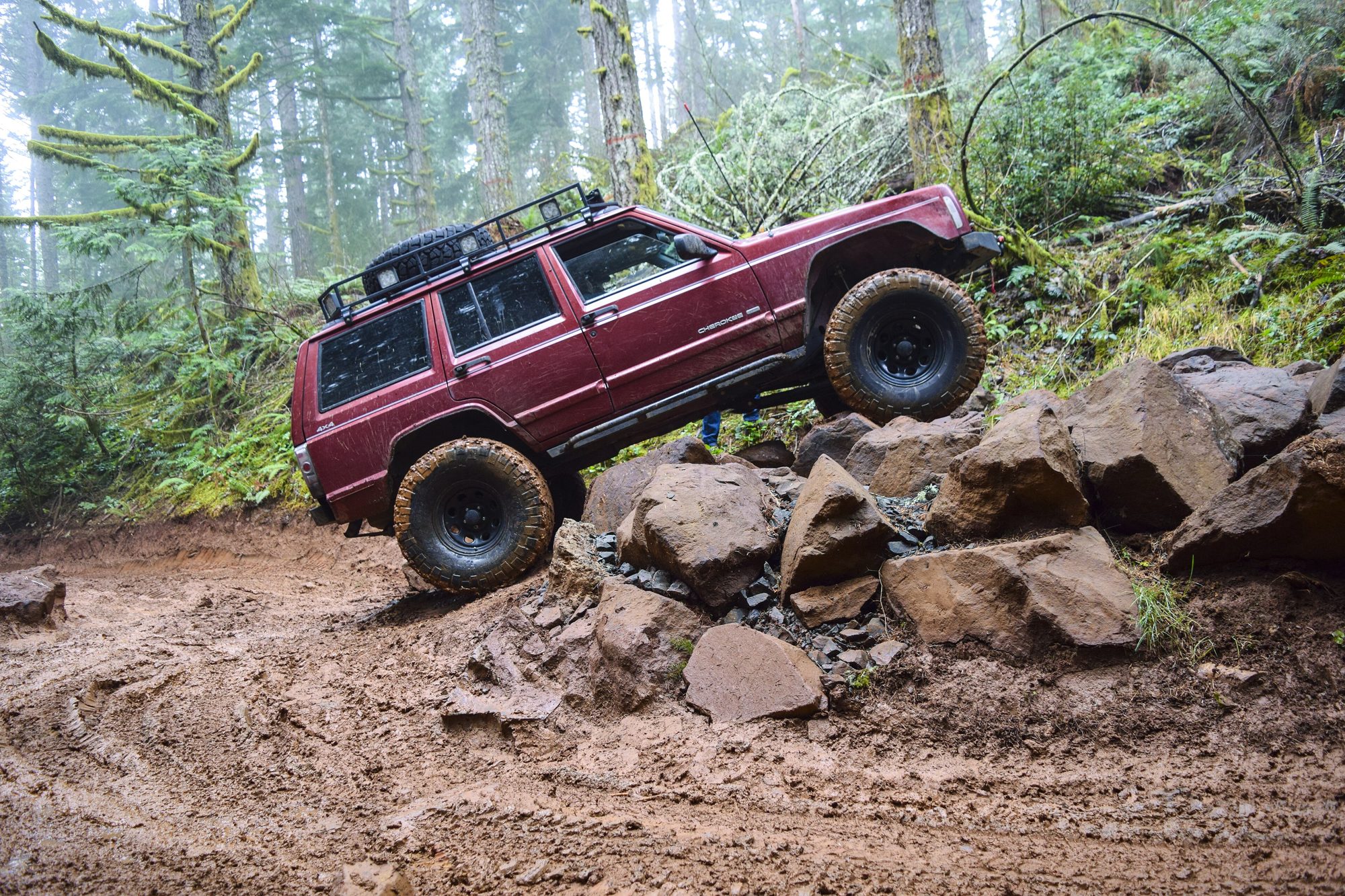
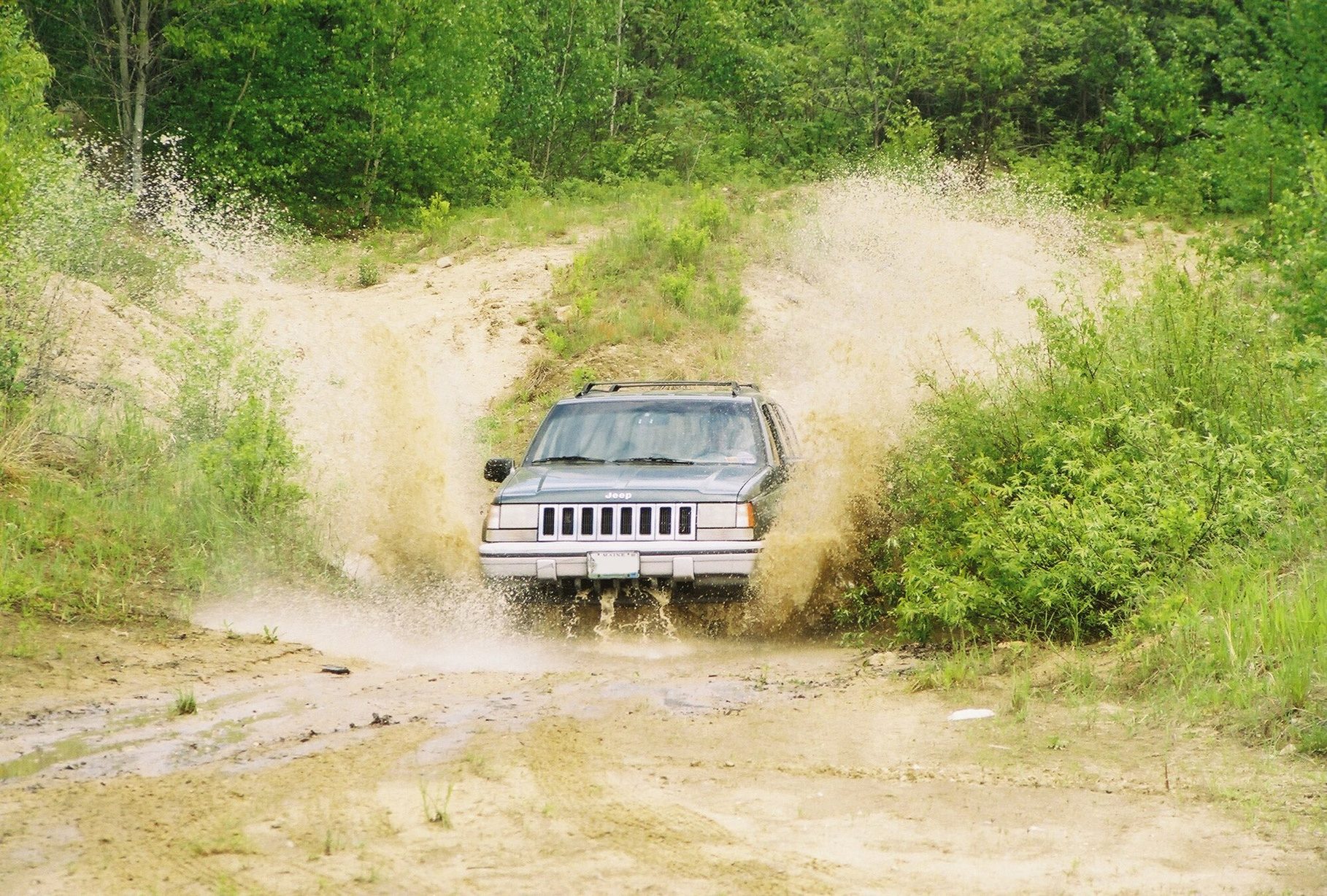
The XJ for the trail, the ZJ for the road. The XJ is lighter, simpler and cheaper to build, with the bigger aftermarket; the ZJ rides on coils at all four corners, has more room and offers V8s, but builders rate its rear axles and transfer-case options below the XJ's.
The short answer
you want the lightest, cheapest solid-axle Jeep to build for the trail, with the biggest parts pool behind it
you want coils at both ends, more room and a quieter ride, a V8 for towing, or the collectible 1998 5.9 Limited
Side by side
| JEEP CHEROKEE XJ | JEEP GRAND CHEROKEE ZJ | |
|---|---|---|
| Years (US) | 1984–2001 (4.0 from 1987) | 1993–1998 |
| Engines | 4.0 I6: 173–177 hp (Renix) · 190 hp / 225 lb-ft (HO) · 193 hp / 231 lb-ft (2000–01) | 4.0 I6: 190 hp / 225 lb-ft, 185 / 220 from 1996 · 5.2 V8: 220–225 hp / 300 lb-ft · 5.9 V8: 245 hp / 345 lb-ft (1998) |
| Transmissions (4.0) | AW4 4-spd auto · BA-10/5, AX15, NV3550 5-spd manual | AW4 then 42RE auto · AX15 manual (1993–94) · 44RE, 46RH, 46RE behind V8s |
| Transfer case | NP231 Command-Trac · NP242 Selec-Trac, both 2.72:1 | NP231 (1993–95) · NP242 Selec-Trac · NV249 Quadra-Trac (full-time) |
| Front | Dana 30 on coils, four links and a track bar | Dana 30 on coils, four links and a track bar |
| Rear | Dana 35, Chrysler 8.25 or Dana 44 (1987–91 tow pkg) on leaf springs | Dana 35, Chrysler 8.25 or Dana 44 on coils, four links and a track bar |
| Limited slip | Trac-Lok rear on some trucks | Trac-Lok rear on some, standard on the 5.9 Limited |
| Wheelbase | 101.4 in (2- and 4-door) | 105.9 in |
| Curb weight | 3,297 lb 2-door · 3,355 lb 4-door (2001 Sport) | 3,574 lb (I6) · 3,901 lb (V8) |
| Ground clearance | 10.6 in (2001 Sport) | — |
| Towing | 5,000 lb (2001 4.0) | 5,000 lb (5.2 at launch, 4.0 by 1995) |
| Fuel economy (EPA) | 14 city / 18 hwy (2001 4.0 4WD) | 14 / 19 (4.0) · 12 / 17 (5.2) · 11 / 16 (5.9) |
| Biggest tire, no lift | 235/75R15; 30x9.50R15 is the practical limit | 30x9.50R15 |
| Typical prices now | $8k–16k driver · $20k–38k best low-mile originals | $6k–12k driver · $13k–18.5k best low-mile |
| Best years | 1991–2001 4.0 HO; non-ABS 1998–99 a favorite; check the head on 2000–01 | No consensus; buy on condition. 1998 5.9 Limited is the collectible |
Off-road
Both are unibody Jeeps with solid axles, a Dana 30 front on coils with four control arms and a track bar, and the same 4.0 straight-six. The XJ is the smaller tool: a 101.4 in wheelbase and about 3,300 lb, against the ZJ's 105.9 in and 3,574 lb with the six (3,901 lb with a V8). That light weight is why an XJ goes so well on a modest lift.
The rear end is the real difference. The XJ's leaf-spring rear is simple and cheap to lift. The ZJ's coil-sprung, link-located rear rides and articulates better, which NC4x4 members call 'a much better suspension setup in the rear'. The catch is what's bolted to it: many trucks of both kinds have the weak Dana 35, and the same NC4x4 thread rates ZJ rear axles poorly. Both were also built with the Chrysler 8.25 or a Dana 44 on some trucks, so read the tag.
Transfer cases differ too. Every 4.0 XJ has an NP231 or NP242, both 2.72:1. The ZJ adds the full-time NV249 Quadra-Trac with a viscous coupling, common behind the V8s, and OffroadXtreme says ZJ Selec-Trac linkages often stick; swapping in a part-time NP231 is the most common ZJ drivetrain change.
On-road and daily use
The ZJ wins this one easily. On NAXJA, owners describe it as bigger and 'a hell of a lot more comfortable', with a nicer interior, while a loaded XJ is said to cap out at two people and a dog. Coils at the back, a longer wheelbase and, from 1996, dual airbags make the ZJ the better road car. NC4x4 members add that it's quieter and smoother.
Neither is economical. The EPA rates a 2001 XJ 4.0 at 14/18 mpg and a ZJ 4.0 at 14/19, with the 5.2 V8 at 12/17 and the 5.9 at 11/16. Both are rated to tow 5,000 lb with the right package, and the ZJ's V8s do it with far less effort.
Reliability and what breaks
They share an engine, so they share its habits: rear main seal and oil filter adapter leaks, crankshaft position sensors that fail when hot, and cooling systems that punish neglect. Death wobble on both usually starts at the track bar. Rust in the unibody frame rails is the deal-breaker on both, and nearly every ZJ outside the desert has some, according to OffroadXtreme.
XJ-specific: the 0331 cylinder head on 2000–01 trucks can crack and put coolant in the oil, and 1987–90 Renix trucks store no fault codes. ZJ-specific: sticky Selec-Trac linkages and NV249 viscous couplings, stuck rear hatches, fuel-pump failures that cluster on 1995–96 trucks, and the 13V-252 fuel-tank recall, whose remedy was a free tow hitch.
Running costs, parts and modifying
The XJ has the bigger aftermarket, and NAXJA members say it needs very little to be capable. Lifts run from TeraFlex's 1.5 in Budget Boost to 4.5–6.5 in long-arm kits, and NC4x4 members say an XJ is easier to upgrade with junkyard parts. ZJ lifts are mostly coil spacers and short-arm kits up to Rough Country's 3.5 in, and the same thread says there's no cheap way past 2–3 in.
Both top out around a 30x9.50R15 on stock springs. With 3 in of lift an XJ takes 31x10.50s, and a ZJ needs Rough Country's 3.5 in kit to be rated for them. Wheels swap freely: both use a 5x4.5 in bolt pattern, 1/2-20 studs and a 71.5 mm center bore.
Buying one now
Neither is expensive yet. Driver-quality XJs sold for $8k–16k on Bring a Trailer through October 2026, and the best low-mile 1998–2000 Sports and Classics reached the mid-$30k range. ZJs are cheaper: $6k–12k for a driver, with an 11,000-mile 1998 Limited topping the year at $18,500. Even the 5.9 Limited has sold for $6,500–25,500 since 2019.
Buy a 1991-on 4.0 XJ (NAXJA favors non-ABS 1998–99 trucks with the AW4, NP231 and 29-spline 8.25) and check the head on any 2000–01. There's no consensus best ZJ year, so buy on rust, leaks and a transfer case that works in every mode. On either one, rust-free beats low miles.
Questions, answered
Is the ZJ just a bigger XJ?
No. It's a different unibody on a 4.5 in longer wheelbase, with coil springs and links at the rear instead of leaf springs, optional 5.2 and 5.9 V8s, and the full-time Quadra-Trac transfer case. They share the 4.0 six, the Dana 30 front, the 5x4.5 in bolt pattern and some rear axles.
Which is better off-road?
Built, the XJ, mostly because it's lighter and cheaper to lift and upgrade. Stock, it's close: NC4x4 members call the pair roughly equal, with the ZJ's coil rear articulating better and the XJ more likely to have a usable rear axle.
Can I get either one with a V8?
Only the ZJ from the factory: the 5.2 Magnum from 1993 (220–225 hp) and the 1998-only 5.9 (245 hp). The XJ's biggest factory engine is the 4.0 six; early trucks also had a 2.8 V6.
Which rear axle should I look for?
On both, the Chrysler 8.25 or a Dana 44 over the Dana 35, which is fine stock but weak with big tires. XJs with ABS have the Dana 35. Read the axle tag before paying for 'the good axle'.
Which has fewer problems?
They share the 4.0's leaks, crank-sensor stalls and cooling needs. The XJ adds the 2000–01 cracked-head risk; the ZJ adds more complex transfer cases, a stuck rear hatch and fuel pumps. A rust-free example of either matters more than the badge.
Which is cheaper to buy?
The ZJ. In the year to October 2026, Bring a Trailer ZJs sold for a median of about $9,700, against about $11,500 for XJs, and clean, low-mile XJs now bring real money.
The full guides
- Wikipedia — Jeep Cherokee (XJ)
- Wikipedia — Jeep Grand Cherokee (ZJ)
- Wikipedia — AMC straight-6 engine (4.0 and 0331 head)
- NAXJA — New to Jeeps: difference between Cherokee and Grand Cherokee
- NC4x4 — ZJ or XJ, which is more capable?
- OffroadXtreme — Buyer's guide: how to buy the perfect Jeep Cherokee XJ
- OffroadXtreme — Buyer's guide: ZJ Grand Cherokee (2017)
- NAXJA — XJnewb crash course
- NAXJA — Biggest tire for stock 2001 Cherokee Sport
- Off-Road.com forums — stock '93 Grand Cherokee on 30x9.50s
- Quadratec — Rough Country 3.5 in ZJ lift (max tire 31x10.50)
- Quadratec — 1984–2001 Cherokee XJ parts catalog
- Quadratec — Jeep wheel bolt patterns and lug nut torque specs
- Offroaders.com — Factory Jeep rear axles
- Offroaders.com — Factory Jeep transfer cases
- Kelley Blue Book — 2001 Jeep Cherokee specs
- FuelEconomy.gov — 1993–1998 Jeep Grand Cherokee 4WD
- NHTSA recalls API — Jeep Grand Cherokee 1993–1998
- NHTSA complaints API — 1995 Jeep Grand Cherokee
- Bring a Trailer — Jeep XJ Cherokee sold results
- Bring a Trailer — Jeep ZJ Grand Cherokee results